Five miles south-east of the centre of Lille is an airport. With an instrument landing system, VOR/DME and a main runway 2825m long it is now more than capable of handling aircraft up to about Boeing B767 size, and indeed today you can catch a flight direct from Lille to some 70 destinations around France, Europe and northern Africa.
But in 1944 it was the Luftwaffe air base known as Flugplatz Vendeville. Based there between April and September of that year was Fliegerhorst-Kommandatur E (v) 220/XI. On the north-west of the base was a battery of three heavy 88mm flak gun positions and it was this battery which probably shot down a 97 Squadron Lancaster, JB708, during the raid on the marshalling yards to the north on 10 May. [1]And after his own aircraft, B for Baker, was hit attacking the same target, Phil Smith landed nearby:
Not long after [being shot down and landing safely], I came to a heavy barbed wire fence, which I took to be the boundary of the fighter aerodrome to the SE of our target. Basis the guarding of English aerodromes, I reckoned that it would be better to walk across the aerodrome rather than make a long detour around it. Accordingly I started to look for a way under the wire but as soon as I did this, shots rang out. I had not been challenged but felt sure that they were meant for me. I changed my mind immediately and crept off as quietly as possible in a North-Easterly direction… -Phil Smith, ‘Recollections of 1939-1945 War’
About ten hours short of exactly sixty five years after Phil Smith stumbled onto the boundary fence of an airfield near Lille, I was in a car being driven by my friend Olivier Mahieu across the boundary of the same airfield. We had spent the morning at the graves of the crew of B for Baker and Olivier had organised for me to go flying in a light aeroplane with a local instructor. His sister Sylvie came along in the aircraft to act as translator.
The aircraft was F-GKVV, a TB-9 (a French design, unsurprisingly), a type I had never been in before so I enjoyed the chance to fly something a little different.
F-GKVV, the TB-9 we flew over Lille
Though English is the international language of aviation, the local air traffic controllers use French if you’re flying in a French-registered aeroplane. Which is fair enough, but can present some problems if you don’t speak French. The instructor pilot – whose name was Frank – had English as non-existent as my French and I could barely hear Sylvie’s translation over the headset, but with much gesturing going in both directions between Frank and myself we managed reasonably well.
Flying, particularly in a weird aeroplane in a foreign country, is always good fun. But this flight was memorable for more than just this. Because this was the same area where, sixty five years before, the crew of B for Baker had been flying in a Lancaster.
Not long after taking off we were already over Lezennes. The cemetery where we had spent the morning was clearly visible down below.
Lezennes Communal Cemetery from the air
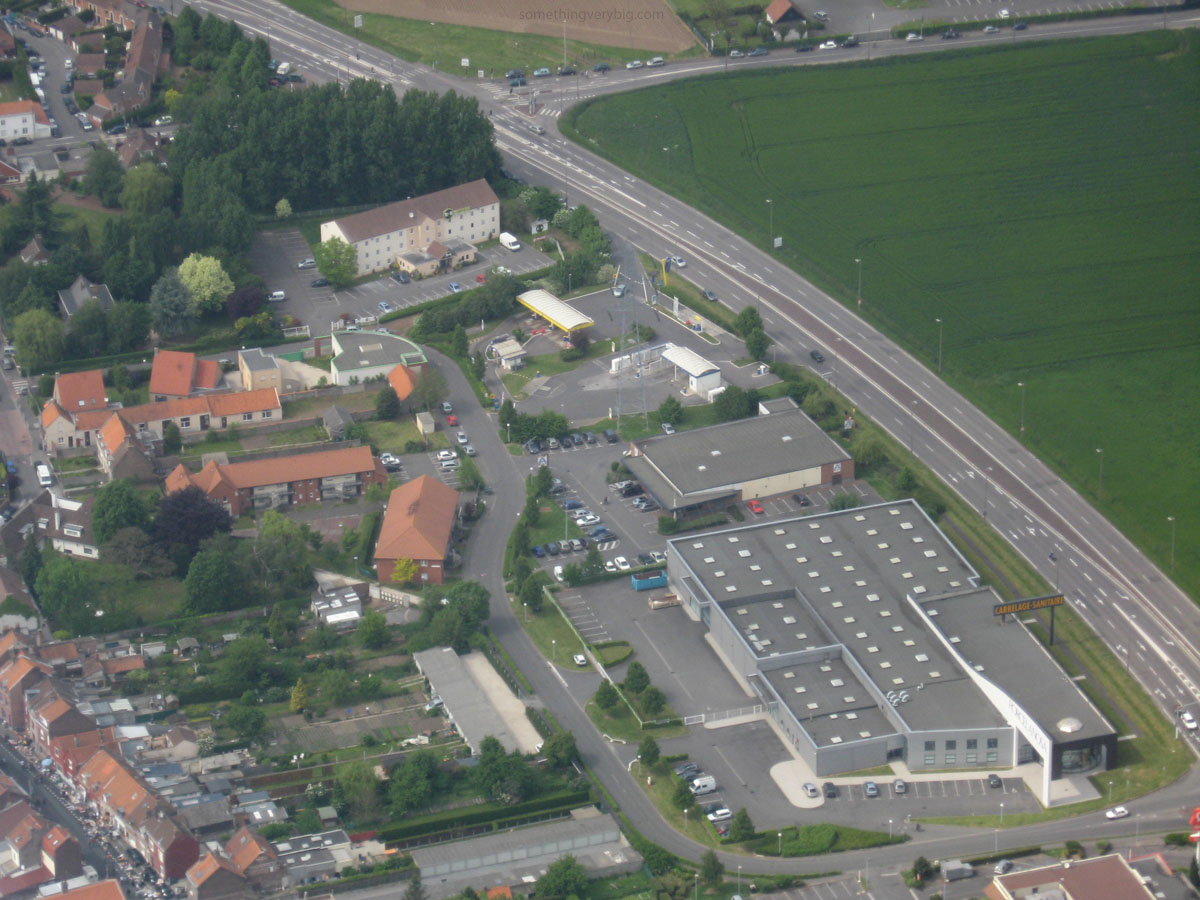
And not all that far away I could see the petrol station and hotel that are now built on the site where B for Baker crashed.
The crash site of LM475 B for Baker – between the motel and service station at top centre.
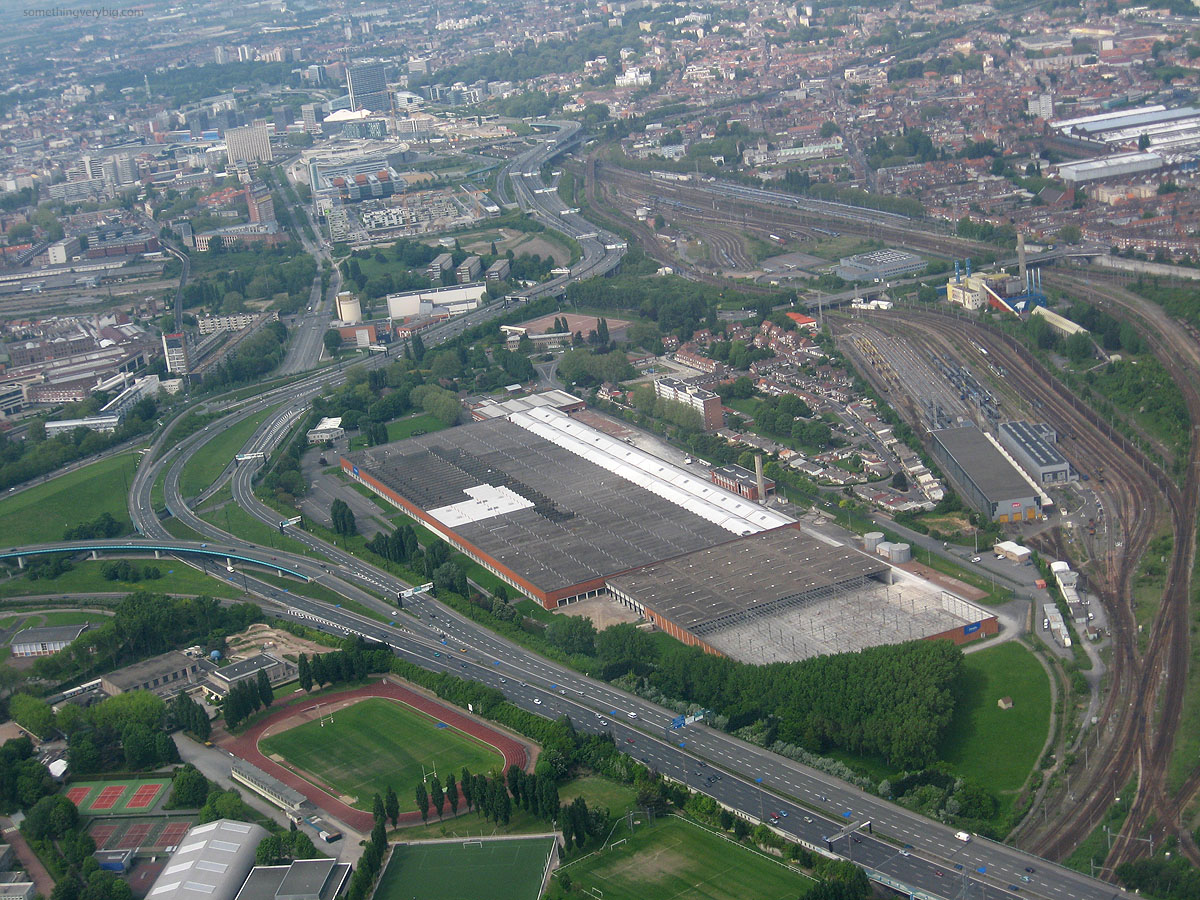
And also visible, a mile west of the crash site, were some of the big sheds and railway yards that formed part of the target that night. The Fives marshalling yards are the further set in this photo, just above centre.
Part of the Lille marshalling yards
Though the passage of time has unavoidably altered the landscape as more areas have been developed and the suburbs have sprawled, from the air the relationship between the target, the airfield and the place where the aeroplane crashed stands out clearly. They really did crash very close to the target area.
Flying over the same area where my great uncle Jack and his crew were lost was for me a profoundly moving experience. It can never come close, of course, to exactly what it was like that May night in 1944. The weather was good, we were flying in daylight and, critically, no one was shooting at us. At 1,500 feet we were also considerably lower than where the Lancasters would have been flying. But to be in the air, over the same railway yards, was to feel for a moment just a little closer to the crew of B for Baker.
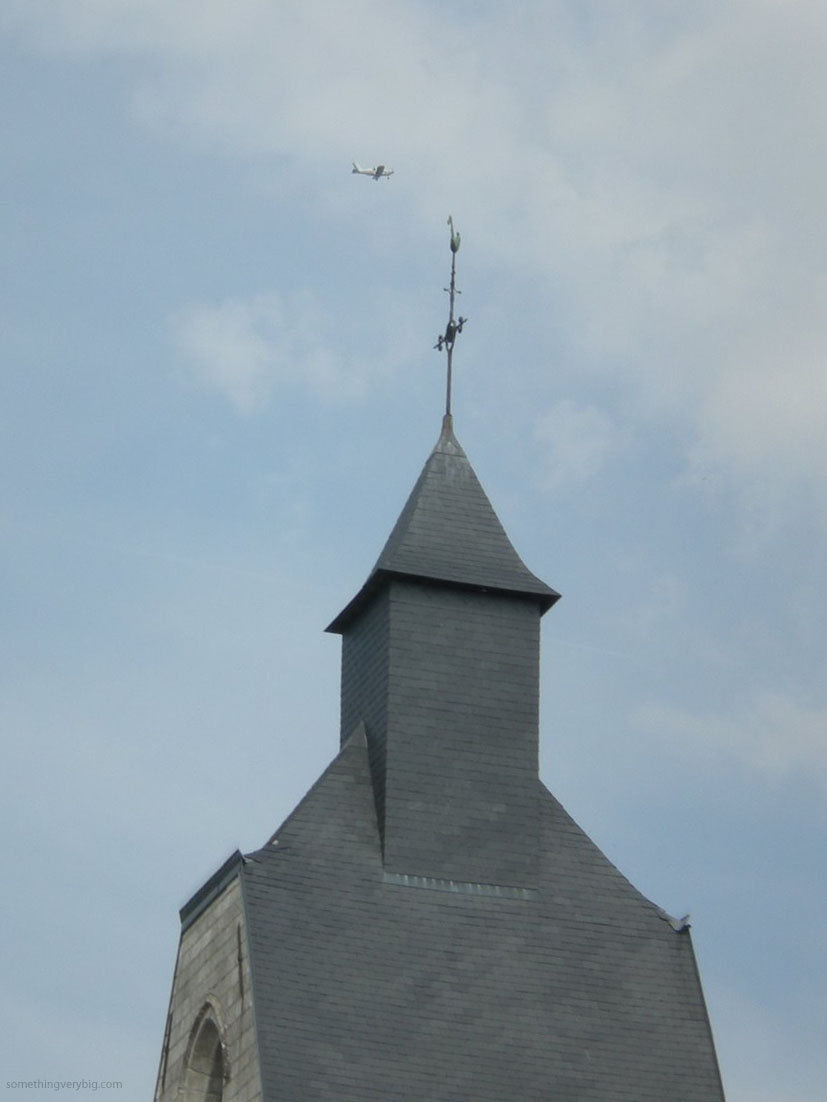
F-GKVV passing a church in Hellemmes – snapped by a friend of Olivier’s while we were flying
(c) 2014 Adam Purcell
[1] Jozefiak, Richard 1995. Crash of a RAF bomber occurred on the airfield Vendeville (Lesquin) during the Second World War. Unpublished typescript translated by Peter Harvey
My sleuths in Brisbane have uncovered three more photos from the Bomber Command Commemorations held there on 1 June 2014. These images were taken by Vicki Gray, used here by permission via Diane Strub. As you can see the weather was more co-operative than what we ‘enjoyed’ in Canberra!
Ethel Braun – widow of 467 Sqn wireless operator William Braun – on her way to lay a wreathEthel Braun and Bryan McGill (463 Squadron gunner) right of centre, with Allan Vial of the Pathfinders left of centre, amongst the crowd at AmberleyThe Australian Squadrons memorial following the service
Thanks to Vicki Gray – Ethel’s daughter – for taking and giving me permission to post these photos, and to Diane Strub for chasing them down for me.
On Sunday 1 June 2014, Bomber Command commemorations took place all around Australia. In Queensland, the ceremony was held at the Memorial Gardens, near the front gate of RAAF Amberley. Tiana Walker-Adair, whose father was a Halifax navigator, sent me these photos:
Ron Hickey DFC, a pilot with 462 and 466 Squadrons, giving his addressRon Hickey with his son DavidHer Excellency The Honourable Ms Penelope Wensley AC, Governor of Queensland, with Ron HickeyJoanne Adair (who was a former Secretary for Winston Churchill – and is Tiana’s mother) with Her Excellency The Honourable Ms Penelope Wensley AC, Governor of QueenslandGroup photo of Bomber Command veterans at Amberley
Thanks to Tiana for these photos. Only Perth to go now, and I’ve collected the whole set!
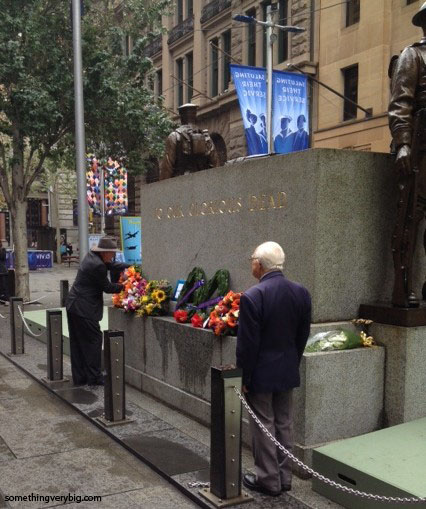
While many of the Bomber Command veterans who still live in Sydney travelled down to Canberra for the commemorations held there in early June, a small number attended a ceremony held at the Cenotaph in Martin Place in the middle of the city. I’m still waiting for ‘official’ photos from one of the organisers but, in the meantime, here are three photos from the 460 Squadron Veterans and Friends Group, courtesy of committee member Ray Berghouse.
460 Squadron veteran Fred Sargeant with his wreathFred Sargeant laying the 460 Squadron wreath at the CenotaphA rare photo of the four Bomber Command banners together in Sydney: Left to right, they represent 460 Squadron, the Bomber Command Association, 463/467 Squadrons and 462/466 Squadrons.
Images passed on to me via Richard Munro, Honourary Historian, 460 Squadron Veterans and Friends Group.
This is the next post in what I hope will be an occasional series following the events at the various Bomber Command Commemoration Days that happened around Australia earlier this month. This time it is Adelaide’s turn.
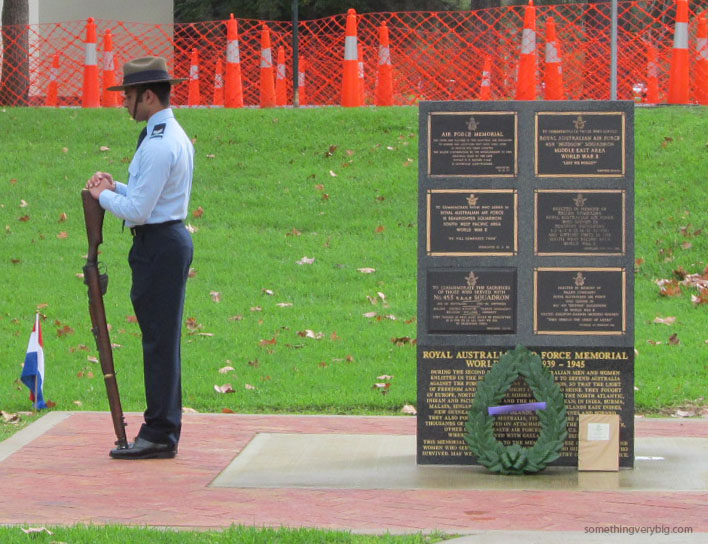
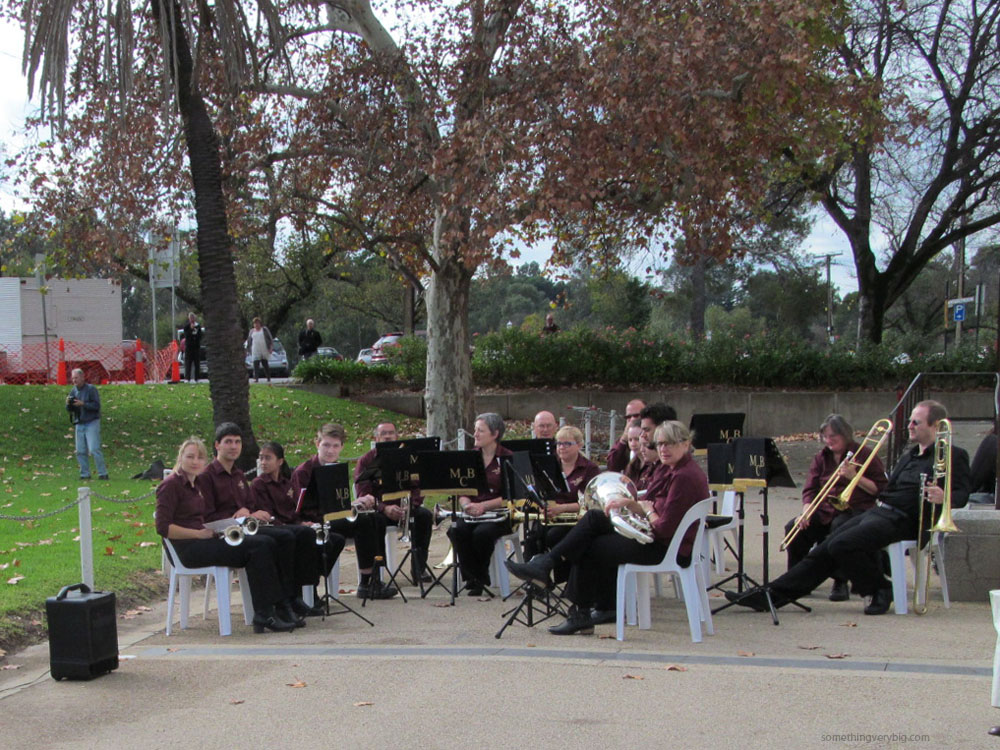
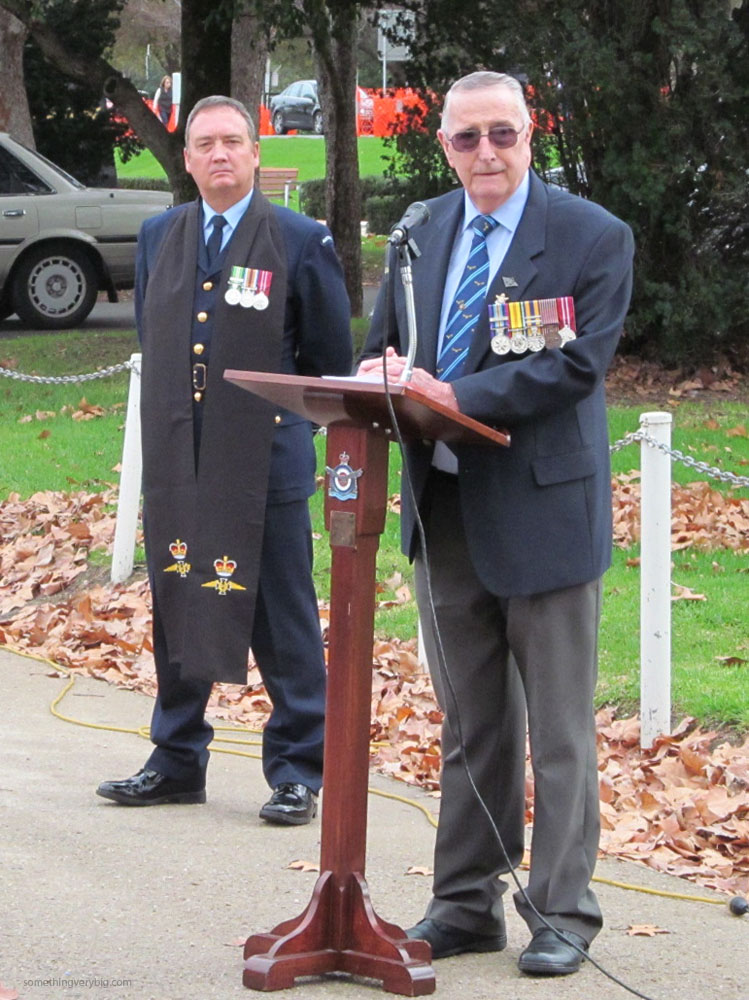
The ceremony was held at the Air Force Memorial at the Torrens Parade Ground, just north of the centre of the city. Some 70 people were present, including the Hon Martin Hamilton-Smith, the South Australian Minister for Veterans Affairs. The following photos by Arthur Jeeves were sent to me by Dave Helman, President of the Royal Australian Air Force Association (South Australia), who was one of the organisers.
Cadet Guard at the MemorialThe Marion City Band at the Bomber Command Ceremony in Adelaide. They donate their time to play at this ceremony each year.The Padre, Squadron Leader Mark ButlerSquadron Leader Dave HelmanMs Nikki King – daughter of Australian Dambuster pilot Squadron Leader Dave ShannonBomber Command veterans and other VIPs amongst the crowd: Left to Right: Squadron Leader Lyne Skinner, Dudley Mitchell, Wing Commander (AAFC) Peter Gill OC AAFC, Group Captain Ross Bender (92 Wing), Hon Martin Hamilton-Smith (State Minister for Veterans Affairs), Wing Commander Martin Ball (24 Sqn), Wing Commander Bob Macintosh AFC MID. 2nd row far left Squadron Leader David Leicester OAM DFC* (behind right shoulder of Martin Hamilton-Smith)Squadron Leader Dave Helman with Group Captain Robert Black AM RFD and Wing Commander Bob Macintosh AFC MIDKevin Fisher and Bill BurnettSquadron Leader David Leicester OAM DFC*, of the Pathfinders
Following the ceremony there was an opportunity for drinks and conversation at the Combined Mess at the Parade Ground.
So it looks as if the Adelaide ceremony also went well. I’m hoping to source some photos from the three other events that were held around the same time in Western Australia, Queensland and New South Wales. I’ll post them when I get them.
All photos on this post courtesy Arthur Jeeves via Dave Helman
It is right, that the nine men who perished that day, ready and willing to defend the United Kingdom, Australia, Canada and all those standing with us… are remembered with honour and dignity on the quiet walls of an English church.
With these words, Reverend Chris Harrington closed the service held last year to dedicate a memorial stone to the crew of 83 Squadron Lancaster ED439, which crashed in the English village of Scredington 71 years ago today.
I’ve posted about Scredington before, but I recently received a small package in the mail from the UK. Mike Galvin – Honorary Secretary of the National Service (RAF) Association, Lincolnshire Branch – sent me a DVD made up of footage that was taken on the day. It’s quite a production.
St Andrews Church in Scredington is fairly small, as these things go, though it does have an imposingly tall steeple. The building – decorated for the occasion with red white and blue RAF standards – can nominally seat 145 people, but somehow on the day they managed to squeeze 185 inside, including 33 relatives of six members of the crew. The ceremony appears to have gone off to plan. A reading from a book written by a local man who was a young lad at the time of the crash set the scene. Neil Trotter, the man whose childhood memories and dedication sparked the memorial project, addressed the congregation and made a point that resonates with the ethos behind somethingverybig.com.
Having retired after 37 years serving in the Royal Air Force, Neil wanted to find out what he could about the crash he remembered as a child. He wrote a letter which was posted online and, eventually, seen by someone who knew more of the story and got in touch. This contact came about because of the extraordinary reach of the internet. I’ve had similar success connecting with people from all over the world as a direct result of posts I’ve made on this blog. In part, that’s why I write here. It lets me get the story out to a much wider audience than has ever been possible before, and the power of search engines means that anybody with an internet connection can find it and get in touch. It’s certainly been a really useful concept for my research so far, as it was for Neil.
The main section of the video ends with the bugler inside the church. It’s been over-dubbed and merged with footage of the Battle of Britain Memorial Flight Lancaster making a fly-past over the village. The Merlins swell as the Last Post rings out.
It’s spine-tingling stuff, even if you weren’t there.
There’s a television news report from ITV available online here, and footage of the Lancaster flypasts here.
This post written by Squadron Leader (Retired) Ron Ledingham, Shrine Governer, Shrine of Remembrance, Melbourne, who I worked with on the committee which organised the Melbourne event
The annual Victorian Memorial Bomber Command service was held at the Nurses Memorial Centre (NMC) St Kilda Road Melbourne at 2 PM Sunday 1 June 2014.
All up some 100 people attended and we all but bulked out the NMC facility. The Shrine of Remembrance was unavailable due to the significant extension works currently underway there so the nearby NMC facility was chosen instead. The NMC staff were very helpful and of great assistance.
Of interest, as we did not have the traditional direct support of the Shrine facilities, we ported all of the service music requirements, etc to a lap top computer and ran this through the NMC integrated IT network-worked well. We also introduced specific Bomber Command popular band music and pictures from the Bomber Command Memorial in London-all well appreciated by those attending.
The Shrine did provide direct support in the form of:
SQNLDR RAAF (Retired) Ron Ledingham, Shrine Governor, as the convener of the service on behalf of the Shrine Trustees.
Supply of 100 poppies.
Printing of a number of Order Of Service (OOS) booklets.
Printing and distribution of a flyer for the service particularly since it was being held off site from the Shrine.
We also received support from the Air Cadets and had some 8 boys and girls with adult escorts who held banners and basically assisted with seating of guests and general support during and after the service.
The list of dignitaries was most impressive including the Hon.Josh Frydenberg MP, Parliamentary Secretary to the Prime Minister who laid a wreath before departing to Canberra. Some 12-15 wreaths total were laid.
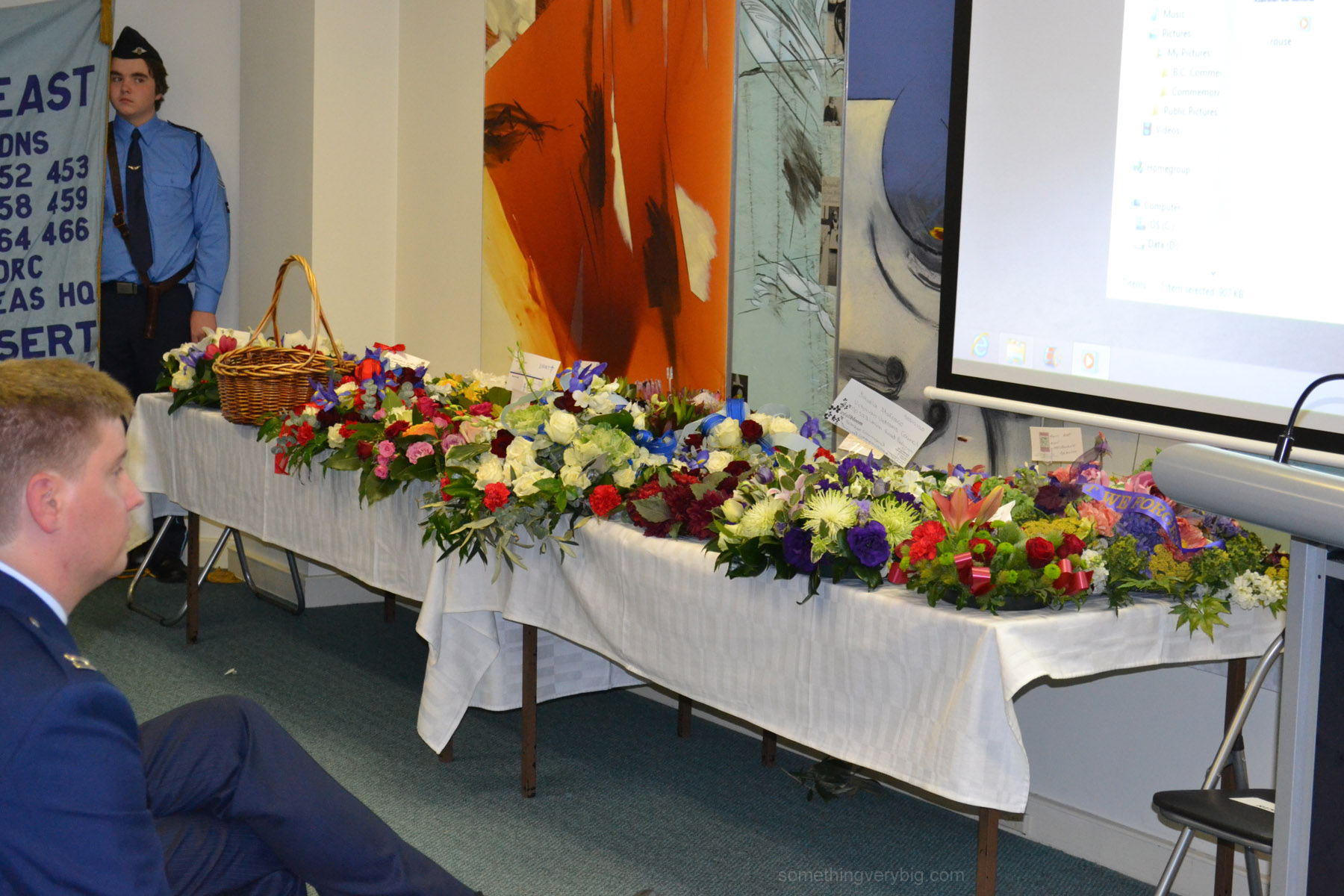
Wreathes at the Bomber Command Commemoration in Melbourne. Photo: Ron Ledingham
The service was opened and managed by Ron Ledingham . He explained why we were holding the service at the NMC in lieu of the Shrine and also pointed out that it was for this year only due to the extension works current being done at the Shrine.
There were three speakers being Wing Commander Peter Isaacson AM DFC AFC DFM (key speaker), Group Captain Terence Deeth as RAAF PAF Representative and the Hon Ted Baillieu, Chairman, Victorian ANZAC Centenary. All were very well received. Peter in particular was actively sought out by many after the service for signatures and conversations and delivered a very moving talk.
Peter Isaacson giving the Keynote Address Photo: Ron Ledingham
Group Captain Terence Deeth, RAAF. Photo: Ron Ledingham
The following people carried out official roles during the ceremony:
Key Guest Speaker Wing Commander P.S.Isaacson AM DFC AFC DFM
Chaplain John Brownbill RFD KSJ
Jan Charlwood Daughter of Don Charlwood
Laurie Williams Ode
Jan Dimmick Bomber Command Poem
Brian Smith MC
Following the service light refreshments with hot finger food were provided. This was also very well received and created a very interactive and friendly opportunity for people to mingle and catch up. A group photo was taken of all veterans present and many, many photos were taken.
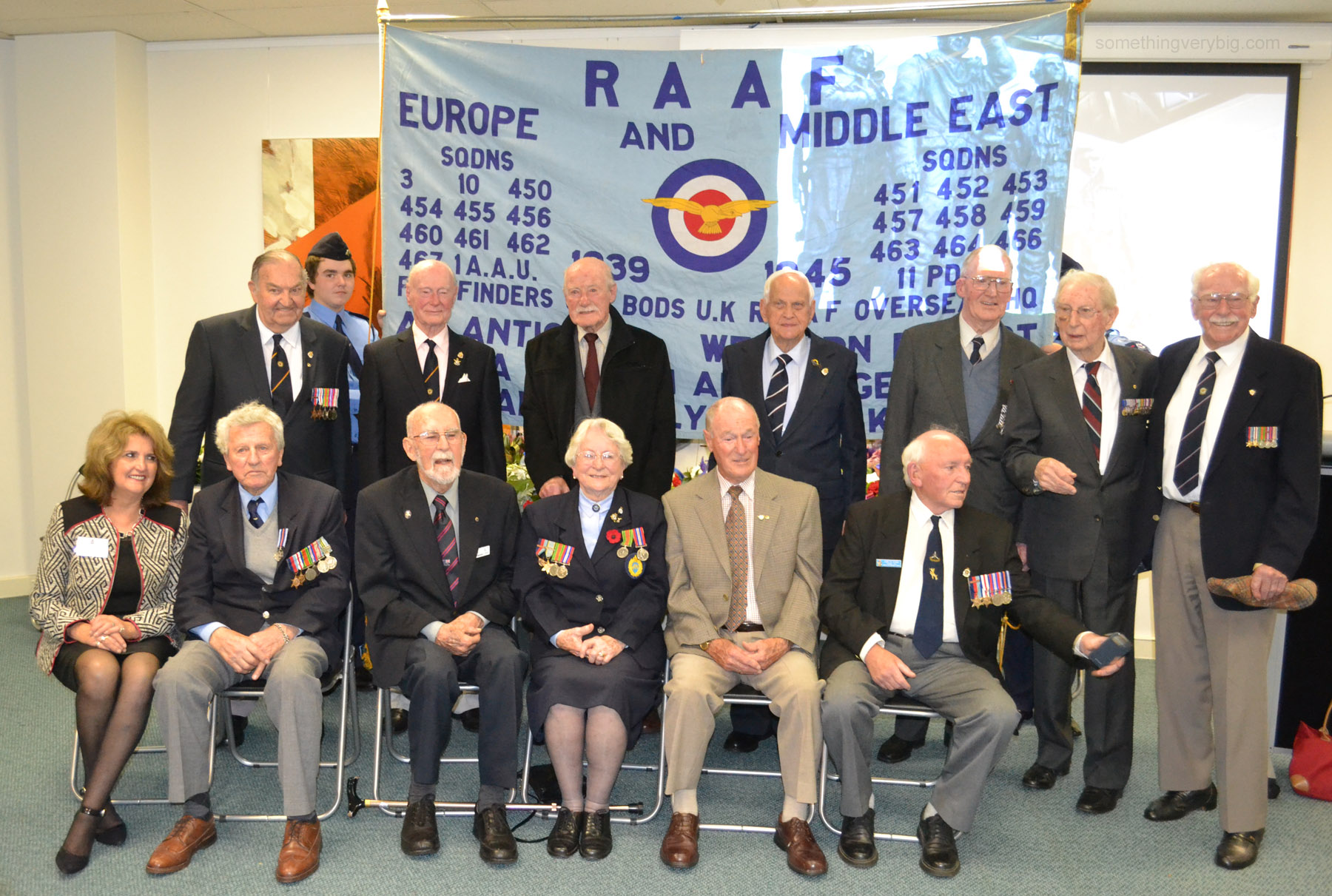
Bomber Command veterans in Melbourne, June 2014. Robyn Bell, Committee convenor, front left. Photo: Ron Ledingham
The after service get-together proved to be just as important as the service itself and was considered by all to whom I spoke to be a key component and opportunity to care and share. I was personally approached by a number of people who really appreciated the service and efforts taken to pull it together as well as other questions and offers relating to the Shrine and memorabilia.
Overall it was a very moving and very well attended and received service function. The numbers were up by about 50% on last year even though it was held off site.
In 2015 the annual memorial service will return to the Melbourne Shrine of Remembrance.
As I headed north up the Hume Highway from Melbourne early on Saturday morning, thin mist was still settled in low valleys and smoke rose directly upwards from the chimneys of roadside homesteads. It was an atmospheric start to my journey to Canberra for the annual Bomber Command Commemoration weekend.
This was the seventh time that the first weekend in June saw Bomber Command veterans, families, researchers, authors and assorted hangers-on converge on the national capital for a weekend of remembrance and reminiscing.
My base for the weekend is no longer called the Rydges Lakeside. It’s been turned into a slick, shiny and slightly pricier hotel called “QT Canberra”, full of odd political references and surprise images of photographers in the lifts. But I digress. On arrival at the hotel I quickly found my first veteran for the weekend, a man named Kevin Dennis. He was wearing, amongst the more usual service medals, an unfamiliar decoration hanging from a light blue ribbon – a Conspicuous Gallantry Medal. More about him later.
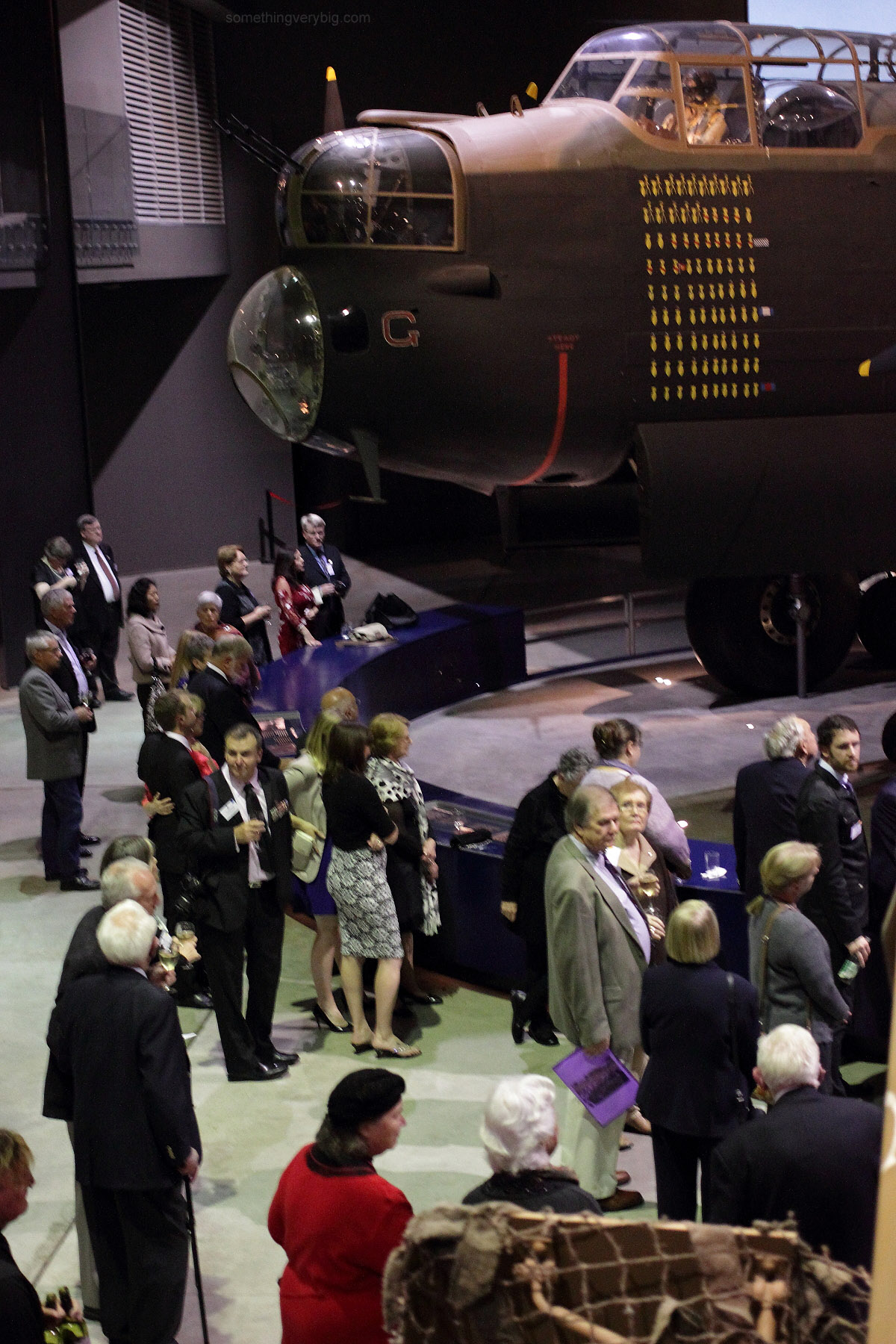
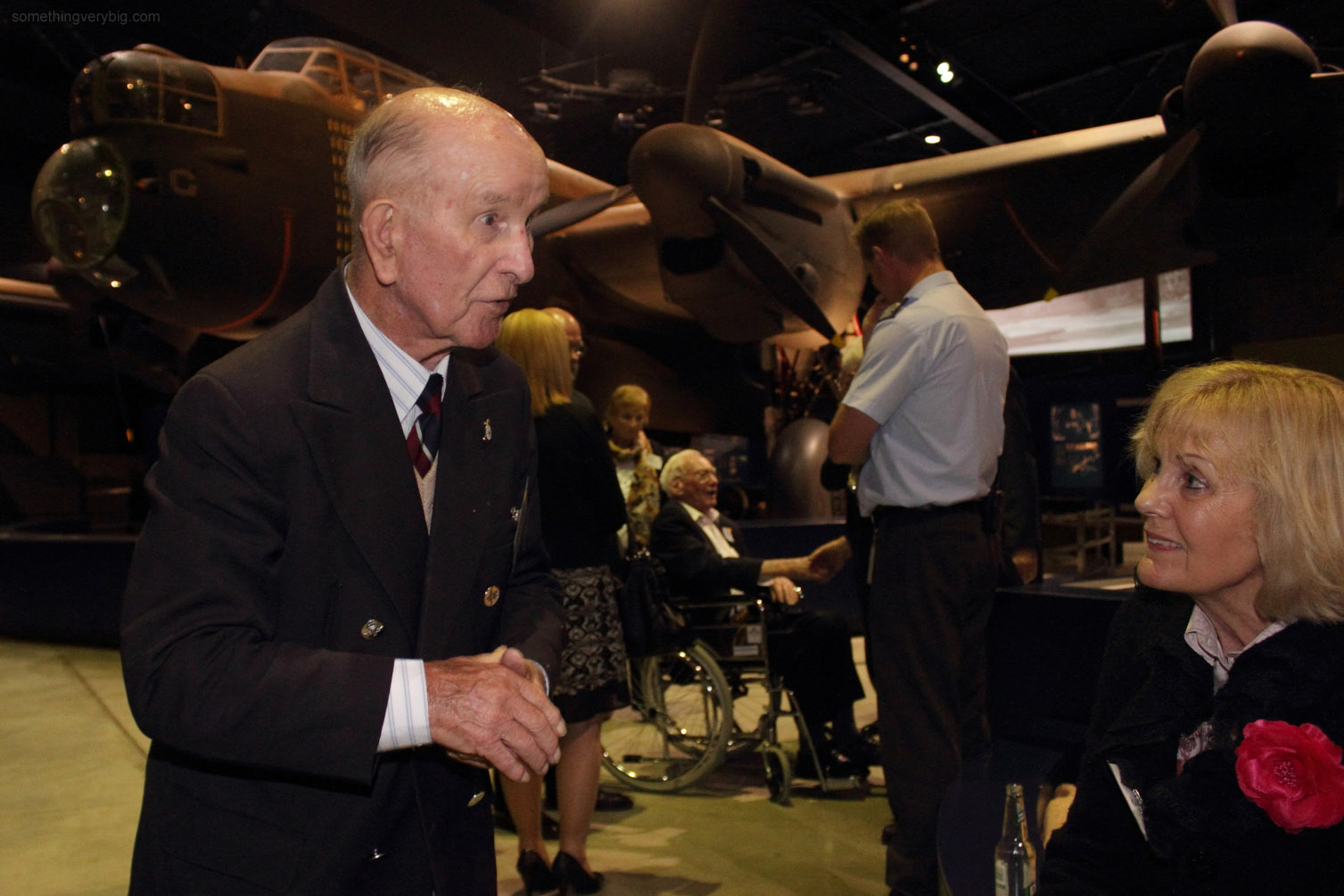
Off to the weekend’s first organised event, then: the Meet & Greet function in the shadows of Lancaster G for George at the Australian War Memorial.
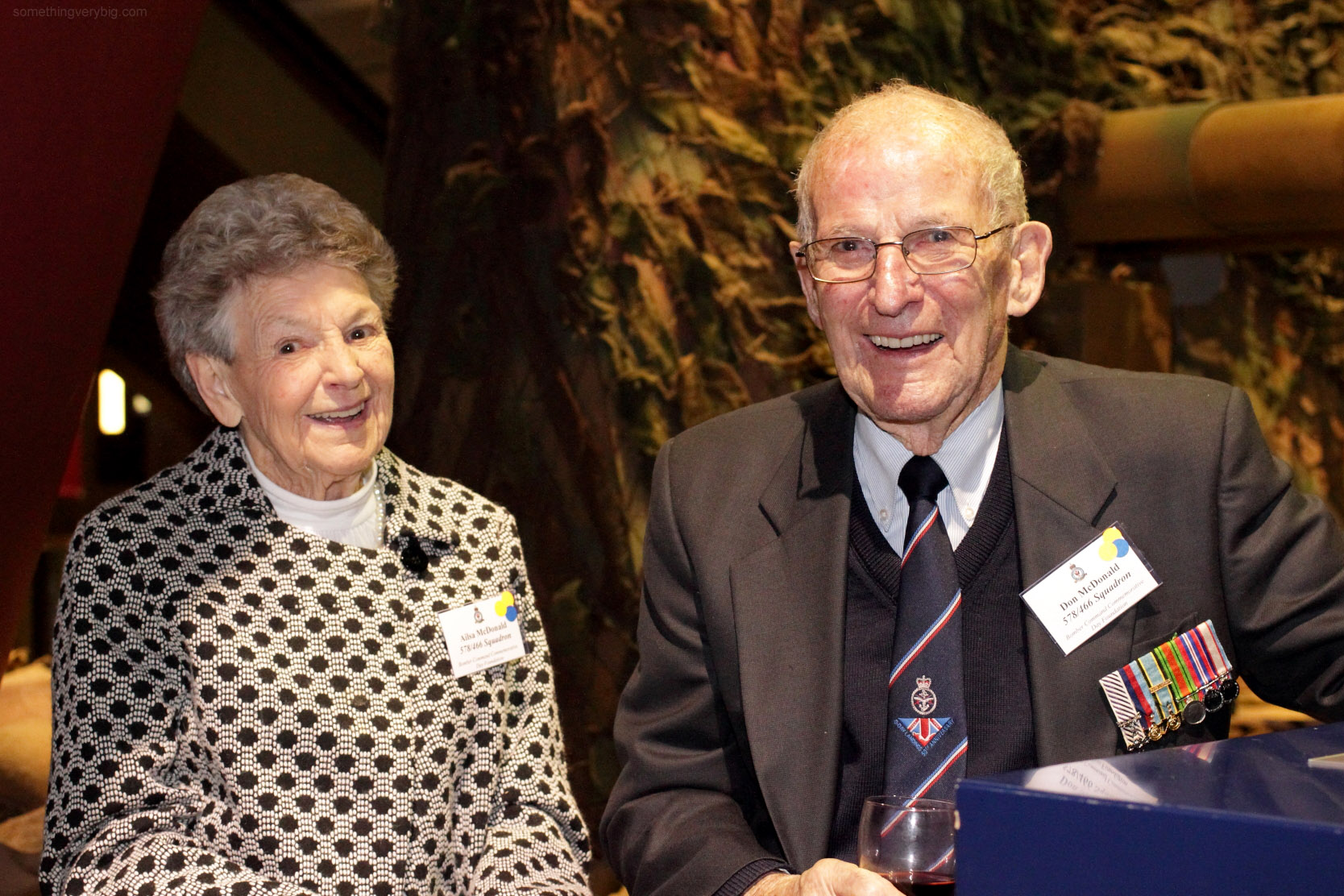
The crowd under G for GeorgeAilsa and Don McDonaldThe two Toms KnoxTommy Knox
It was an excellent function. There was a good-sized crowd present, the speeches were (like a good skirt) short enough to be interesting but long enough to cover everything, the food was good and there were some very interesting people to talk to. At one point, down near George’s tail I was talking to Tom Hopkinson, a 463 Squadron veteran mid-upper gunner. Two ladies approached: Lorna Archer and her daughter Rowena. Lorna’s husband Ken was a 460 Squadron bomb aimer. He is still alive but, at 90, is now too frail to travel and stayed at home in Melbourne this weekend. Lorna wanted to know, if Ken was in a Lancaster and it was hit and he had to bail out, how would he do it?
A fair question. I had a pretty good idea of the answer, but, well, we were standing under a Lancaster and we were talking to a man who used to fly in the things and so… well… why not? I asked Tom if he would like to do the honours. So we weaved our way through the crowd to the nose of the great big black bomber. Tom pointed up. And there, under the nose was the big square escape hatch through which the bomb aimer would have, if the circumstances dictated, been the first out. Which answered the question in a most satisfying manner.
Tom Hopkinson explaining how a bomb aimer would evacuate a Lancaster
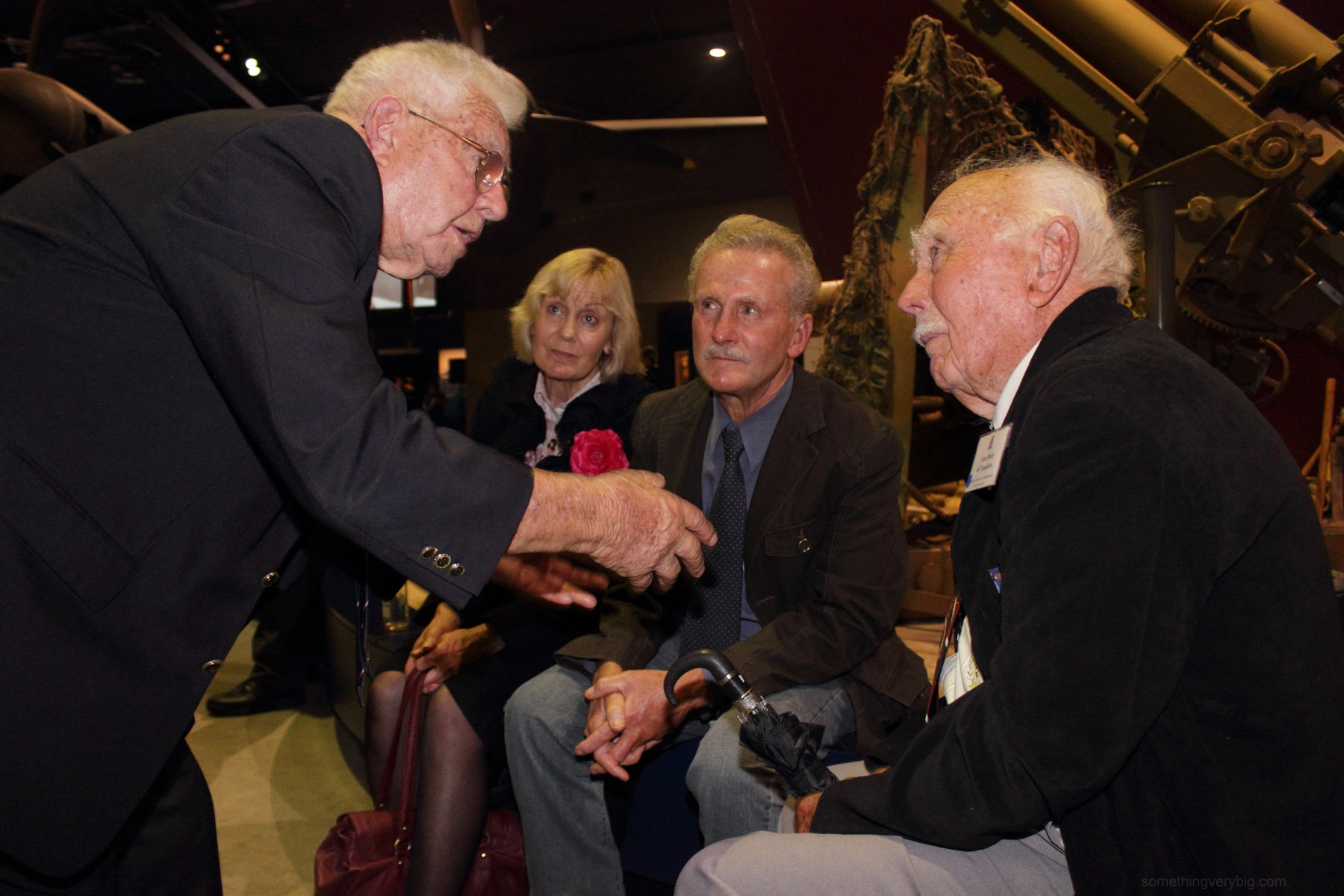
Towards the end of the event, I spied an old man sitting down surrounded by family under (of all things) the German 88mm flak gun that’s on display next to George. His name badge said Alan Finch, 467 Squadron. Good enough for me, I thought. So I sat down and introduced myself. When Alan said he had done his first operation in August 1943 and had remained with the squadron throughout 1944 his name suddenly sounded strangely familiar.
I love modern technology. I pulled out my phone and searched for his name on this website. And there it was: I’d used two of his interrogation reports in my 467 Postblog series. I asked Alan, “Where were you on 24 February 1944?” He responded, “In the air!” Correct! Specifically, Schweinfurt. “Oh yes”, he said, “that was a bad one.”
Alan Finch, 467 Squadron pilot
No kidding. As I wrote here, his aircraft was coned over the target by some 24 searchlights. “Target more formidable than briefed,” he reported nonchalantly on return to Waddington.
This is why I come to these events. I’ve become quite familiar over the last few months with the names of the aircrew who were operating at 463 and 467 Squadrons between January and May 1944. I never suspected that I might run into one of them, sitting under the wing of a Lancaster at the War Memorial.
Laurie Woods talking to Alan Finch
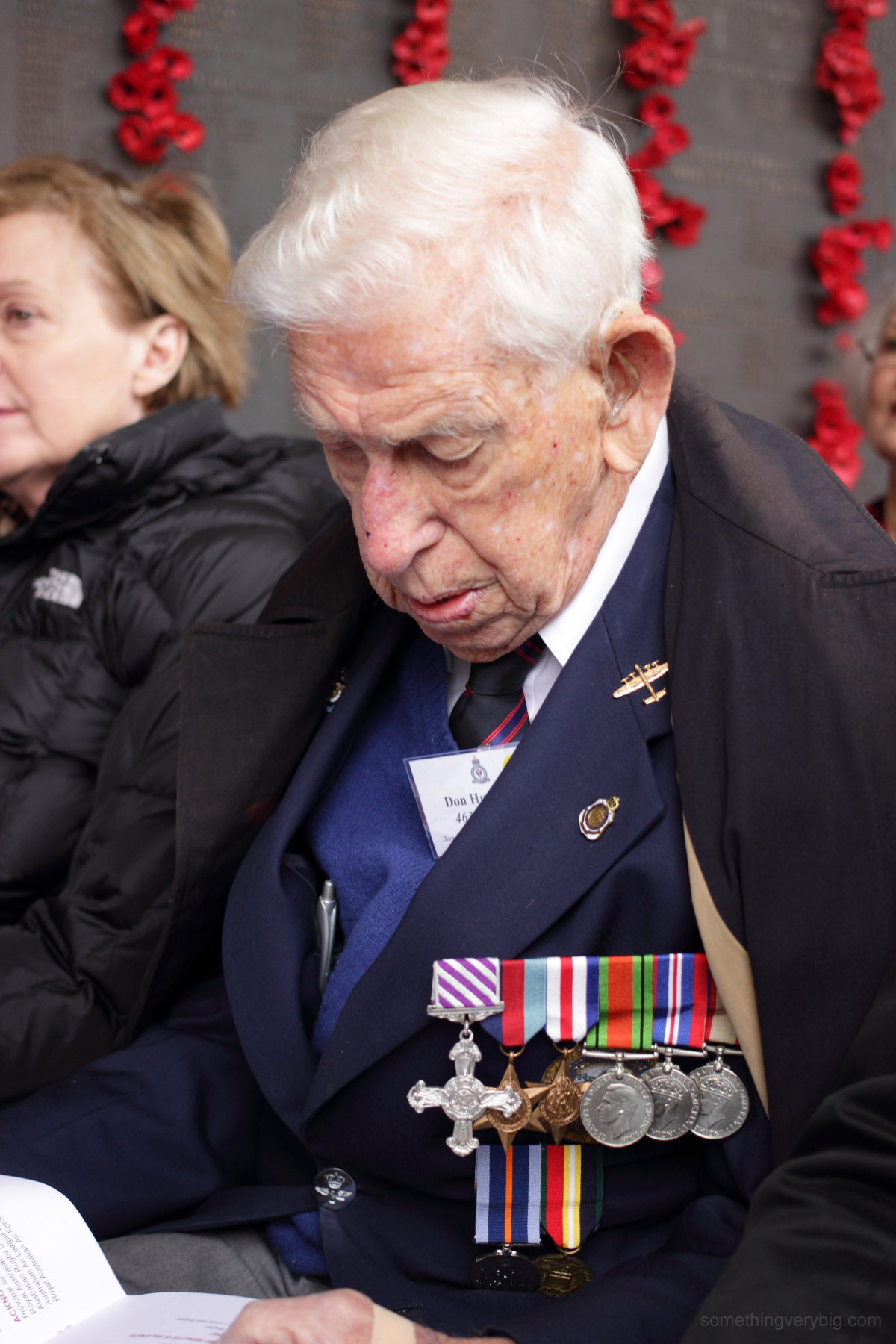
Following the function, a fair sized group of those who were staying at the QT met in the hotel bar for a wee nightcap. What followed was one of the better sessions I can remember in some time. Holding court in the corner near the fire was, yes, Don Huxtable. Gathered around him, most of the younger crowd (that is, those under about 60…). Over beers, scotch and sodas the night passed quickly with many, many line shoots.
Don Huxtable, Nikki Harris and Don SouthwellHux and Nikki
Numbers dropped off as the night got later but, still there as the bar staff called last drinks, were an old pilot and his entranced audience.
Dawn broke in Canberra the next day with cloud, mist and rain. Telecom Tower was disappearing into the grey skies.
Where’s Black Mountain Tower going?!??
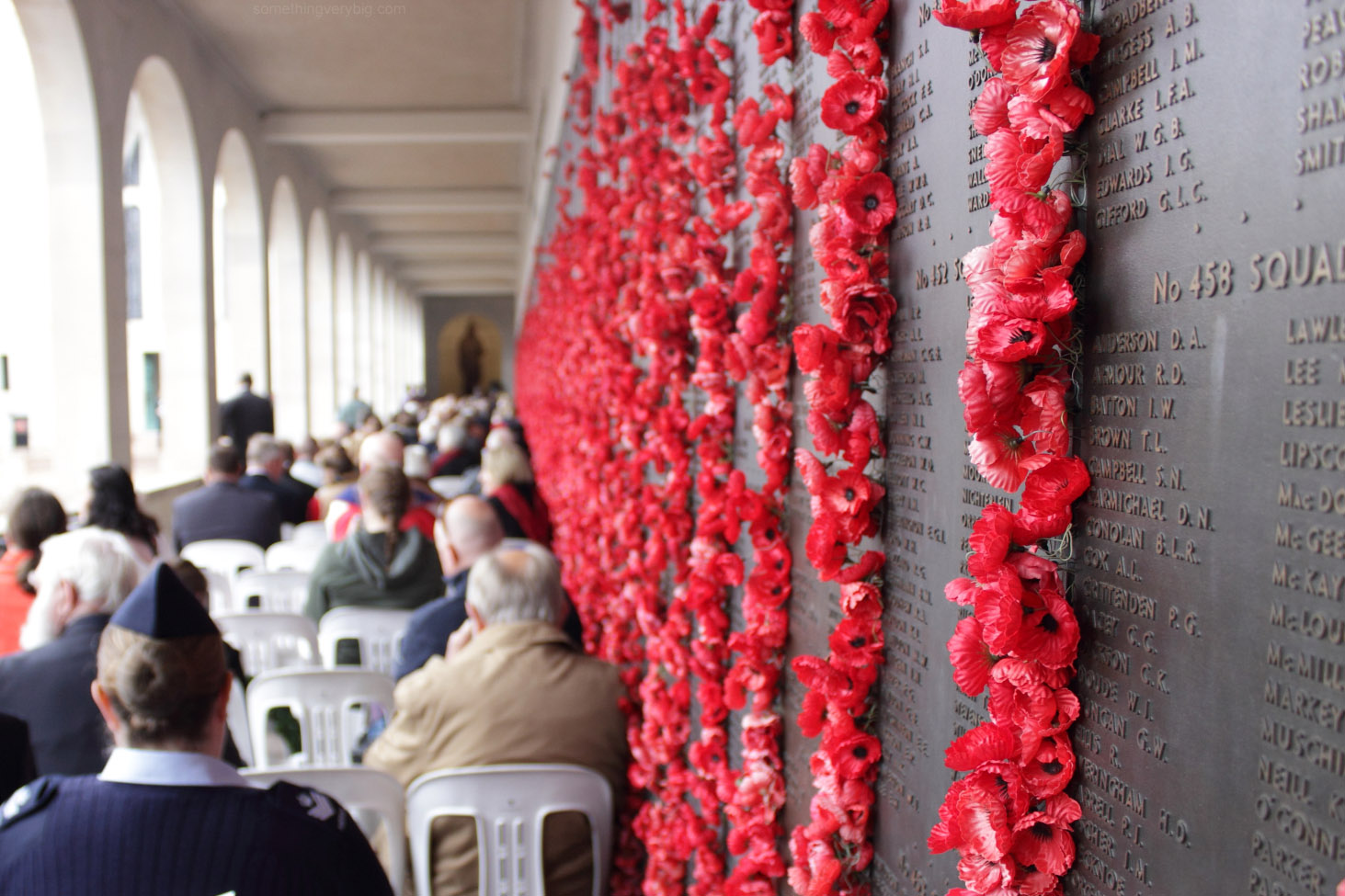
This did not bode well for the morning’s ceremony, planned for the lawn in front of the Bomber Command sculpture at the War Memorial. The decision was made early to move the ceremony to the Commemorative Area, with rows of chairs placed in the cloisters under the names on the Roll of Honour.
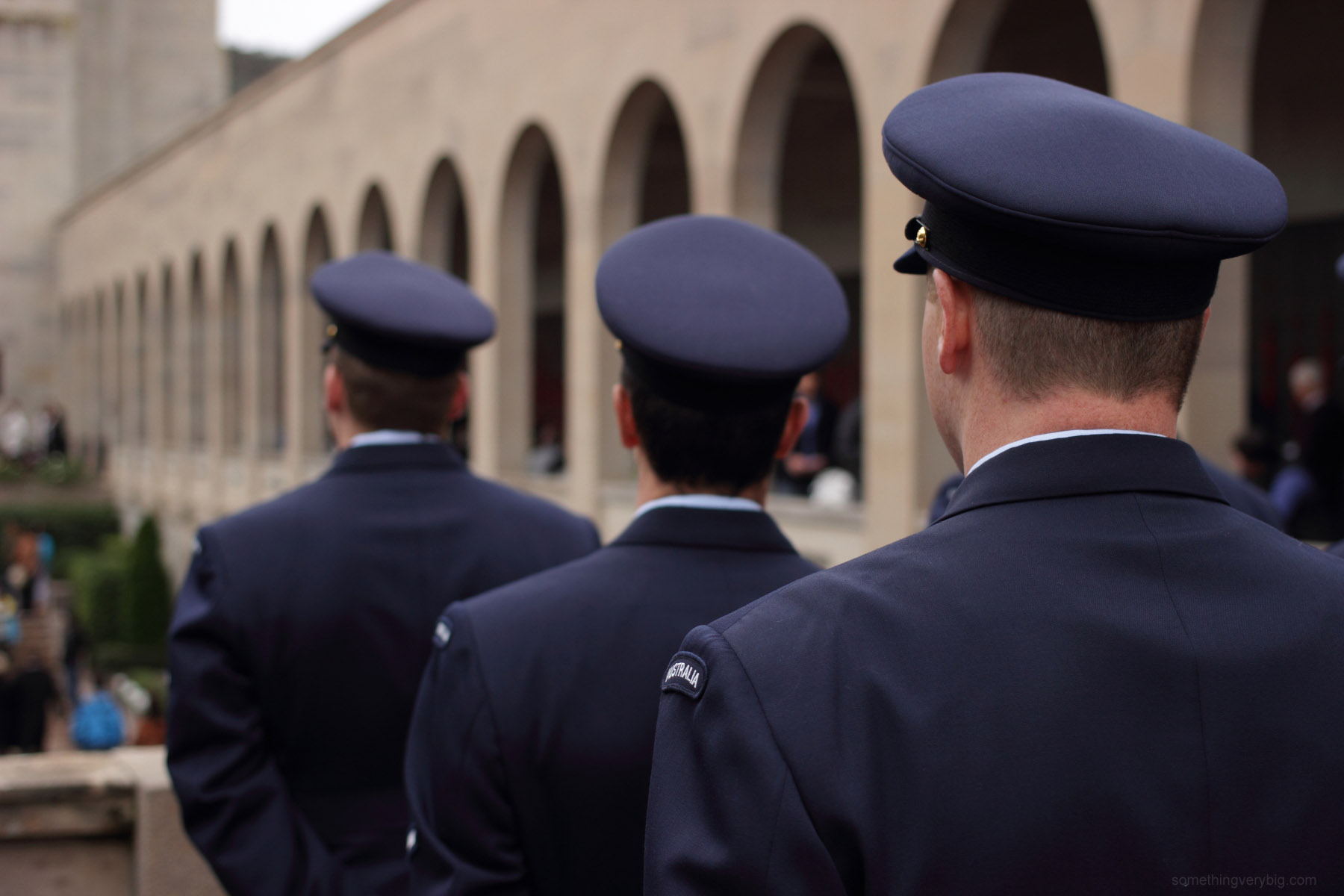
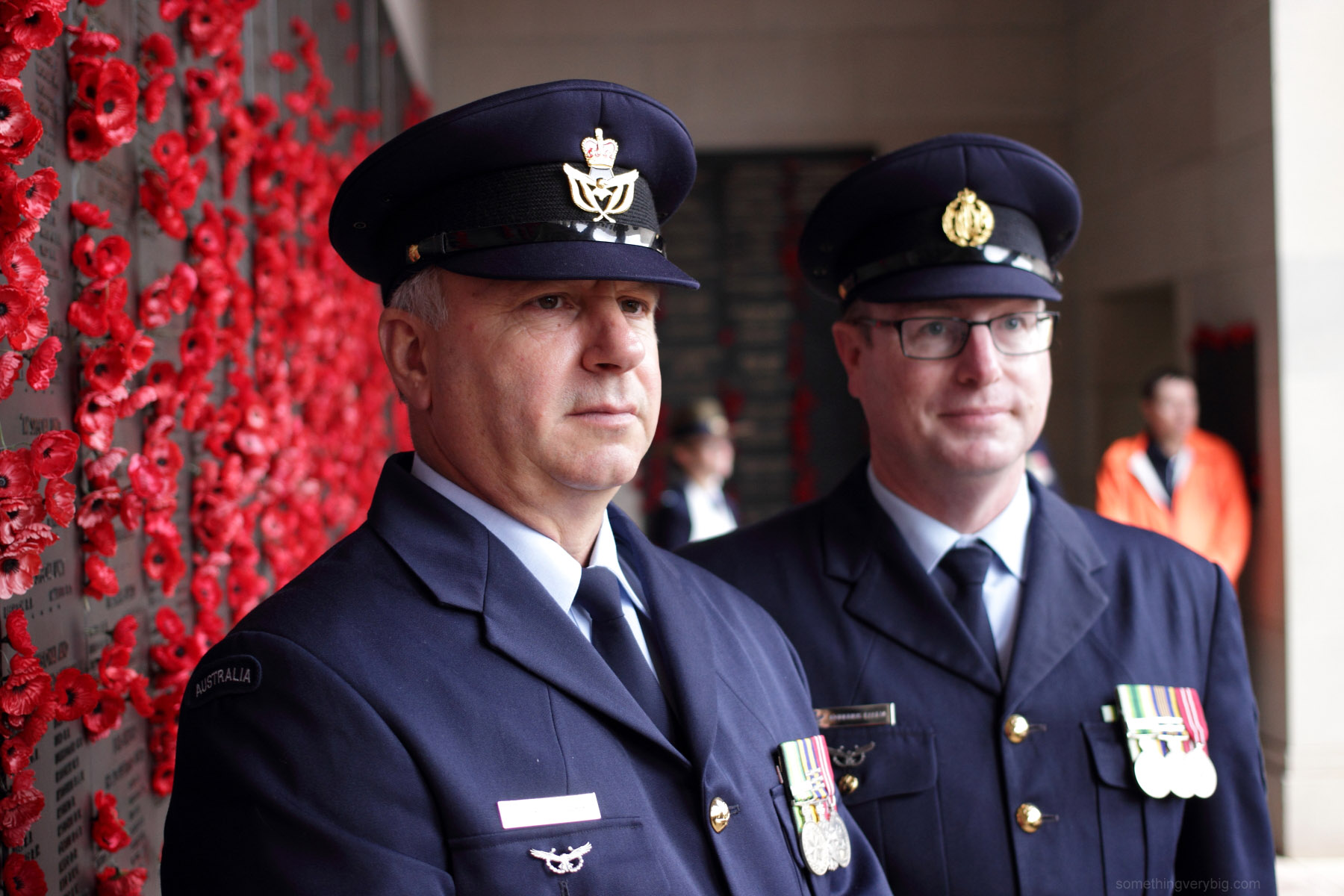
At the back of the crowd, personnel of the current iteration of 460 Squadron, Royal Australian Air Force, lined up under the leaden skies.
The Director of the Australian War Memorial, Dr Brendan Nelson, opened the service, delivering a moving tribute to the aircrew of Bomber Command. Speaking without notes, he quoted a letter written by Colin Flockhart, a 619 Squadron pilot, for delivery in the event of his death:
I love you all very dearly. Please don’t think I’m pessimistic but I do realise what the odds are and I have seen too many of my friends pass on without leaving any words of hope or encouragement behind. Cheerio and keep smiling though your hearts are breaking.
Flockhart was killed on the way home from Munich on 7 January 1945.[1]
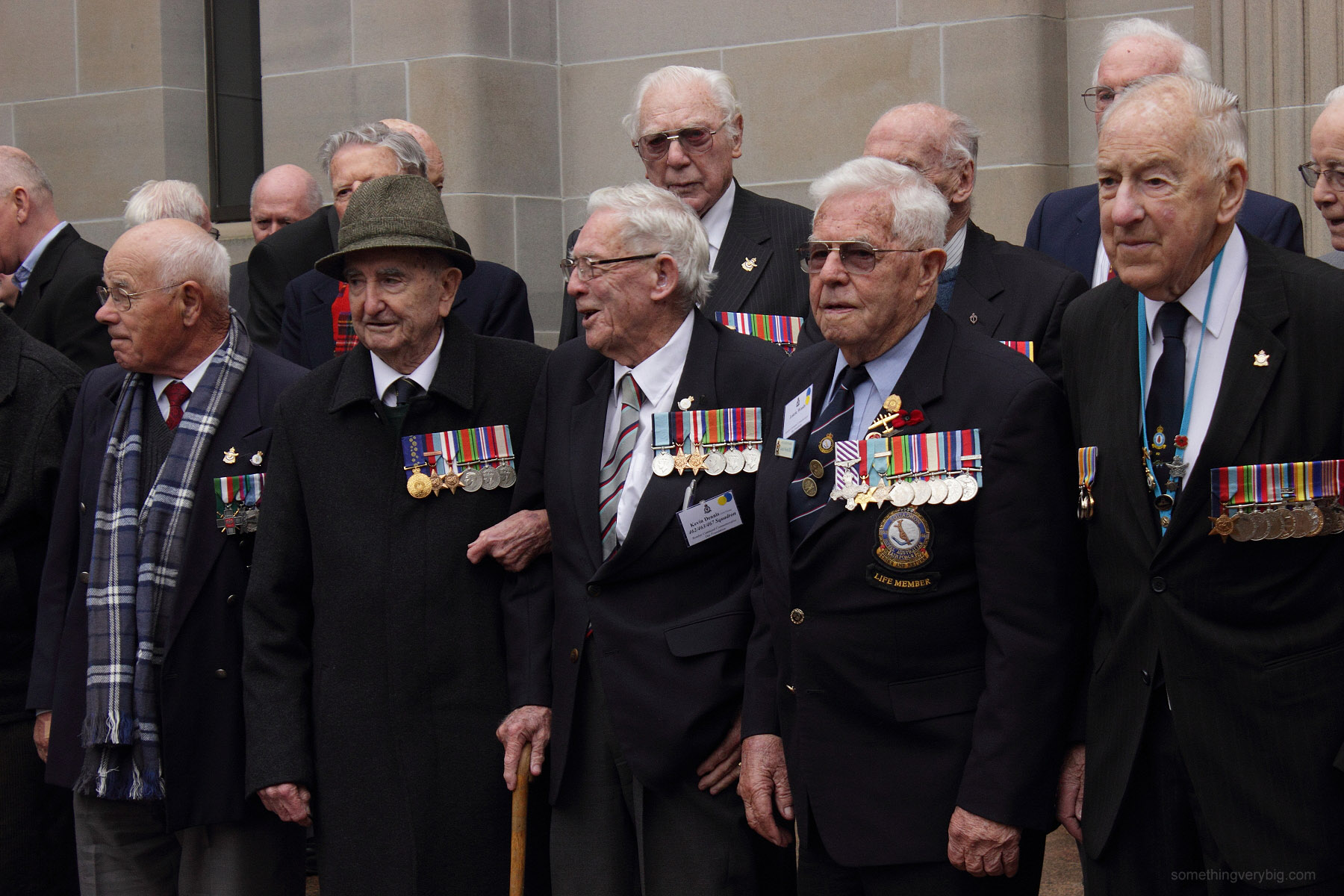
Attending the ceremony was His Excellency General the Honourable Sir Peter Cosgrove AK, MC (Ret’d), Governor-General of the Commonwealth of Australia, who spoke about how Australians in particular traveled so far from home to fly in Bomber Command. The veterans present were invited to move to the inside of the Hall of Memory to view the wreathlaying at the Tomb of the Unknown Soldier. Ross Pearson delivered the Reflections address, paying tribute to those unsung support staff who also served: the armourers, the WAAFs, the parachute packers, the cooks (who worked miracles to make Spam palatable), the briefing officers. He also spoke eloquently on the unique “spirit of aircrew,” reading the citation for the award of the Conspicuous Gallantry Medal to Kevin Dennis, the veteran I had met at the hotel the previous evening. Kevin was a wireless operator who, badly injured by flak during an operation in March 1945, refused to leave his post until the damaged aircraft landed safely. In considerable pain with one foot almost severed from the explosion he had continued to carry out his duties, receiving the critical weather message which resulted in a successful diversion to an emergency airfield. For this, in the process saving his entire crew, he was awarded the CGM, one small step below a Victoria Cross.
This led to the most moving, unplanned, part of the service. After the notes of the bugler’s Rouse echoed off the stone cloisters, Brendan Nelson made his move. It was a breach in protocol, he said, “but we’re Australian and we can breach protocol occasionally.” He invited Kevin to come to the front while he explained why. Kevin is one of just ten RAAF personnel to be awarded the decoration during WWII. But because he required an extended hospital stay to recover, he missed the investiture and instead received his medal in the post. It had never been properly presented to him. Since we had the Governor-General present, Dr Nelson reasoned, it offered a good opportunity to fix that. Kevin came forward, shook Sir Peter’s hand and occupied a position of honour amongst the official party for the remainder of the ceremony.
This was one of those things which have become typical of Dr Nelson’s time at the helm of the War Memorial. I may not have agreed with him while he was in politics but it’s clear he has a sense of history and a sense of occasion and is a good fit in his current role. This was an inspired moment and it was fantastic to see Kevin being honoured in this very special way.
Kevin Dennis in the media scrum post-ceremony
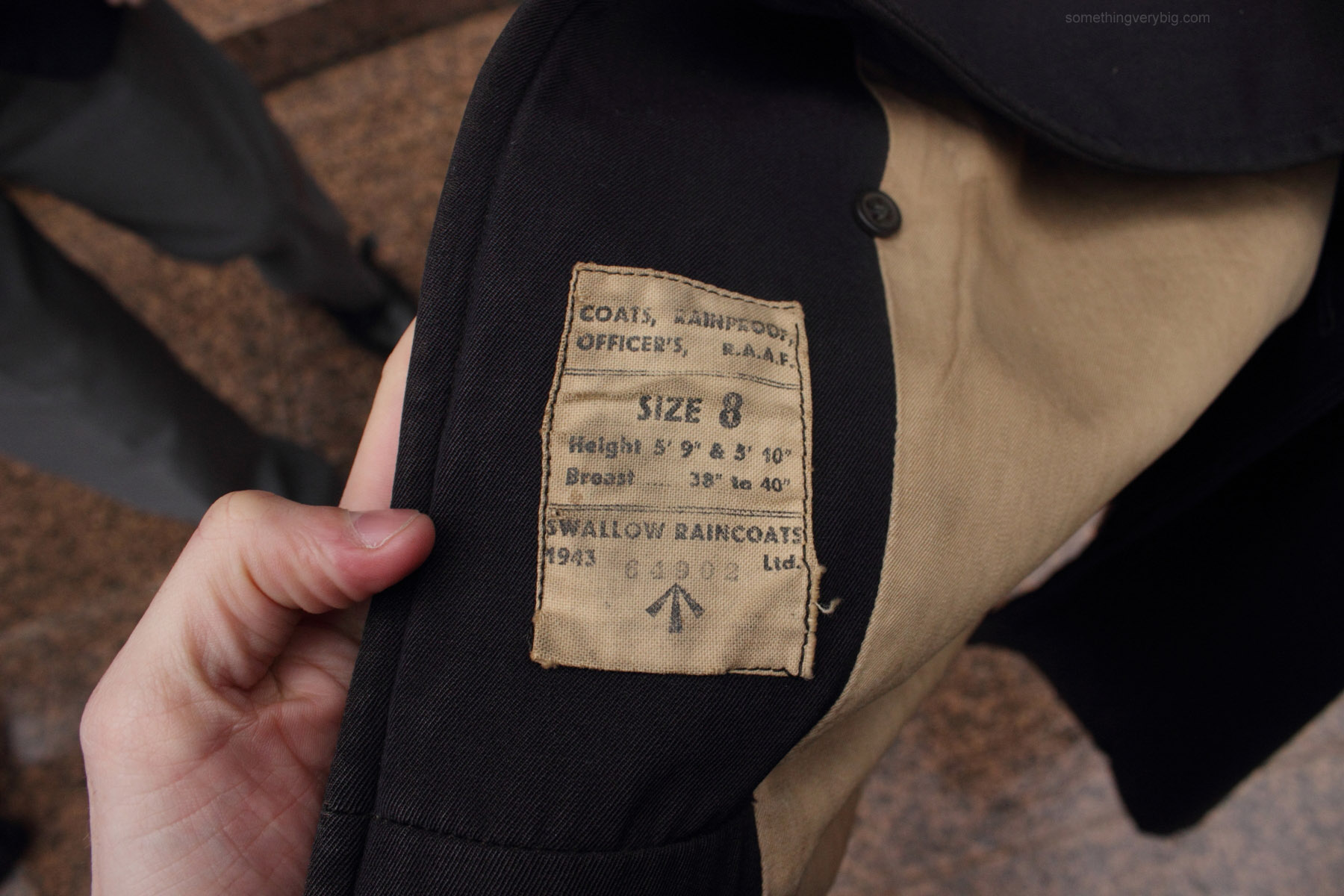
ABC Canberra had sent a camera crew and, following the ceremony, they interviewed a number of veterans, including Don Huxtable. Given the weather, Hux was wearing a long blue greatcoat.
Believe it or not, it’s part of his original RAAF-issue uniform.
Further photos from the ceremony:
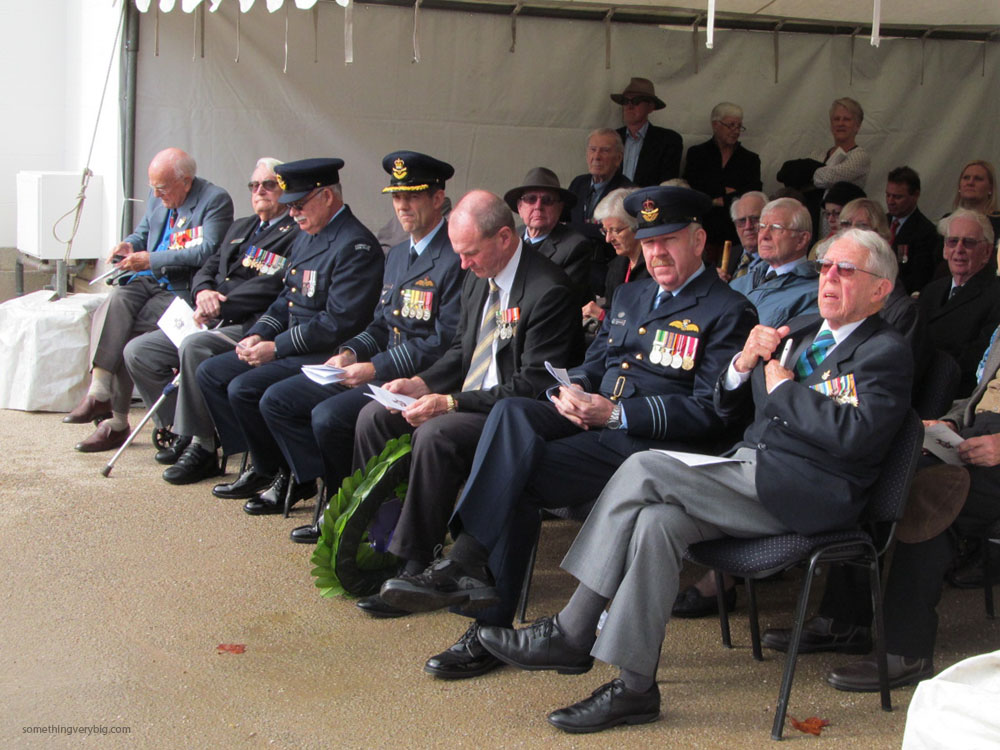
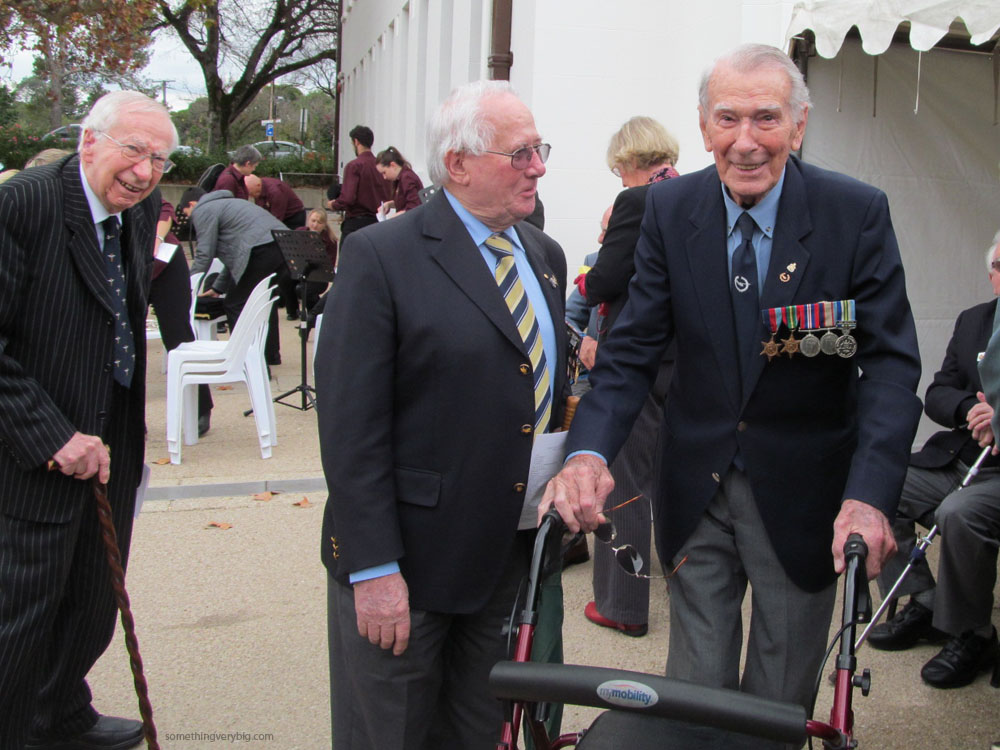
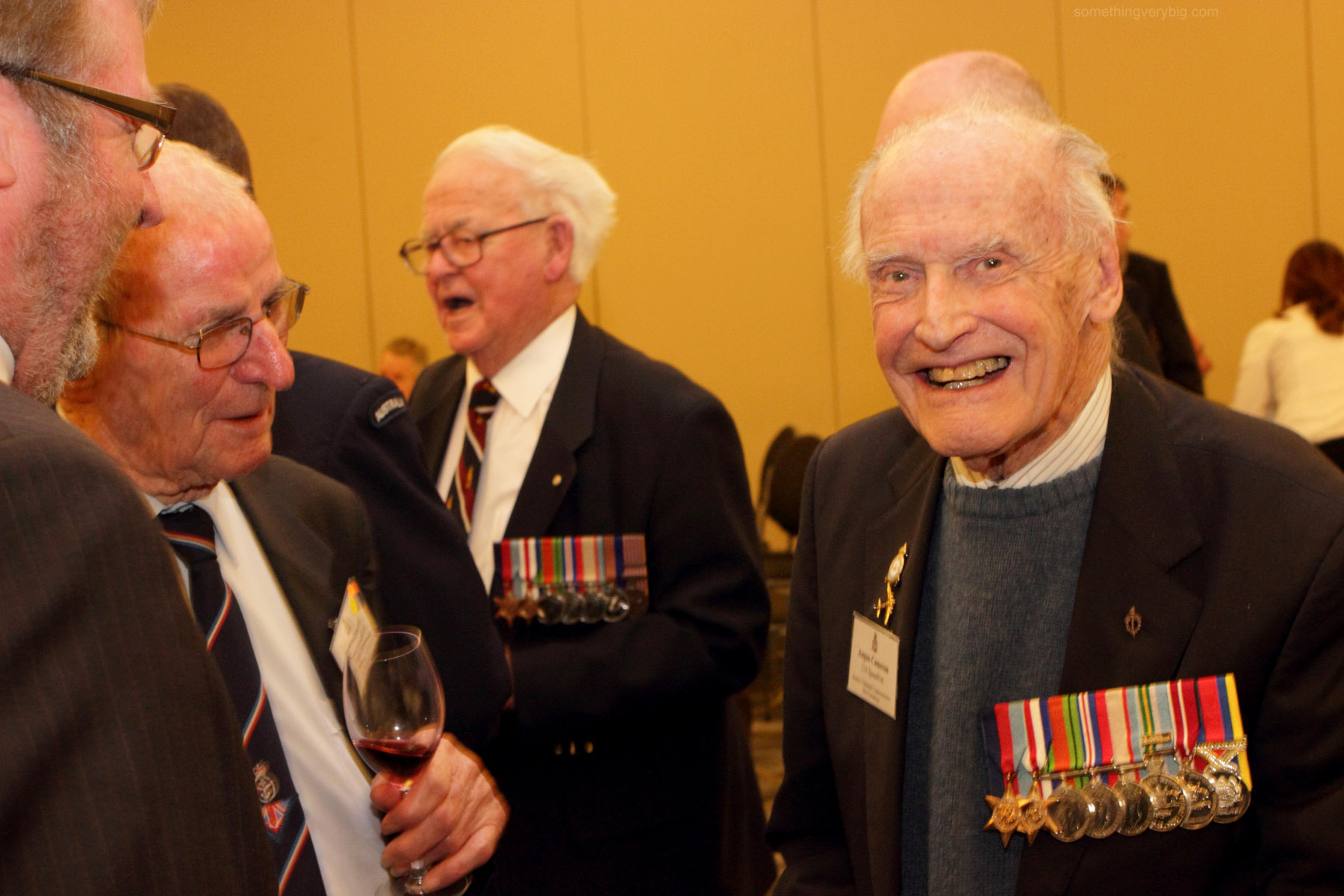
Tom Hopkinson and Angus CameronDon HuxtableAngus Cameron (214 Sqn wireless operator)The Group Photograph with the Governor-GeneralKevin Dennis amongst the groupDr Brendan Nelson speaking with Don Southwell
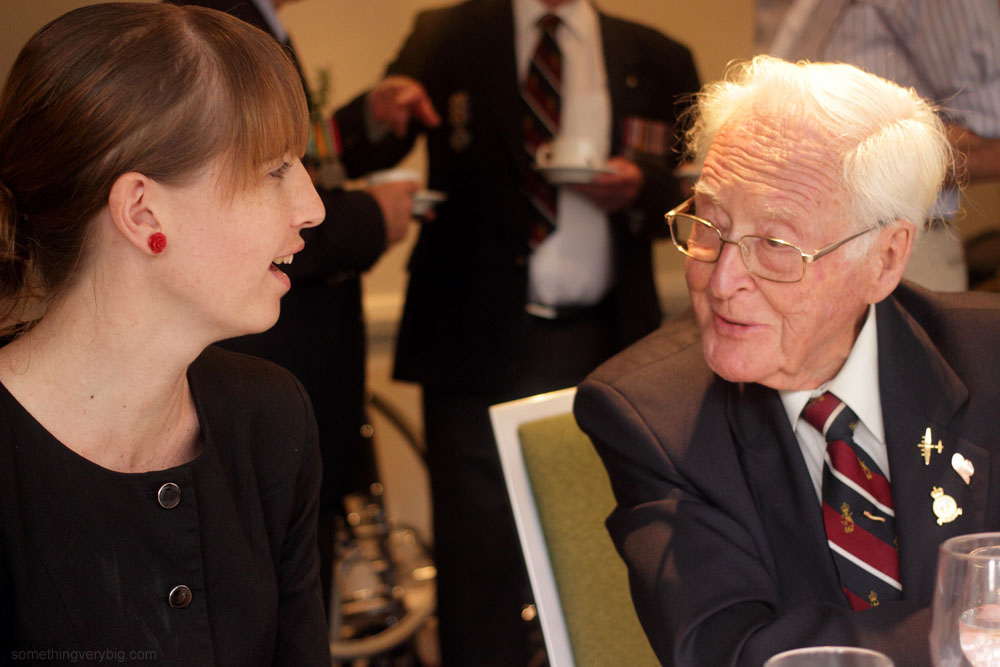
Back to the hotel, afterwards, for the lunch. As well as catching up with some of the usual suspects (the McDonalds, the Toms Knox, Knox and Hopkinson, and various assorted Dons) I met a few new people. Stories were shared with Richard Munro, who is the man to contact for 460 Squadron queries. I had a good chat with Wing Commander Tony Bull, the outgoing air attache at the British High Commission in Canberra. And I met Tony Buckland, who was the son of a camera operator with the 463 Squadron film crew, and was carrying his father’s logbook and a spectacular album containing a collection of still photographs from operations.
Bob Buckland operated with 463 Squadron from June 1944. Among the pilot’s names listed I recognised that of Freddy Merrill, who was another one of the skippers I mentioned in my Postblog. Tony had seen on the guest list that a Merrill was present at the lunch, and wondered if it was the same person.
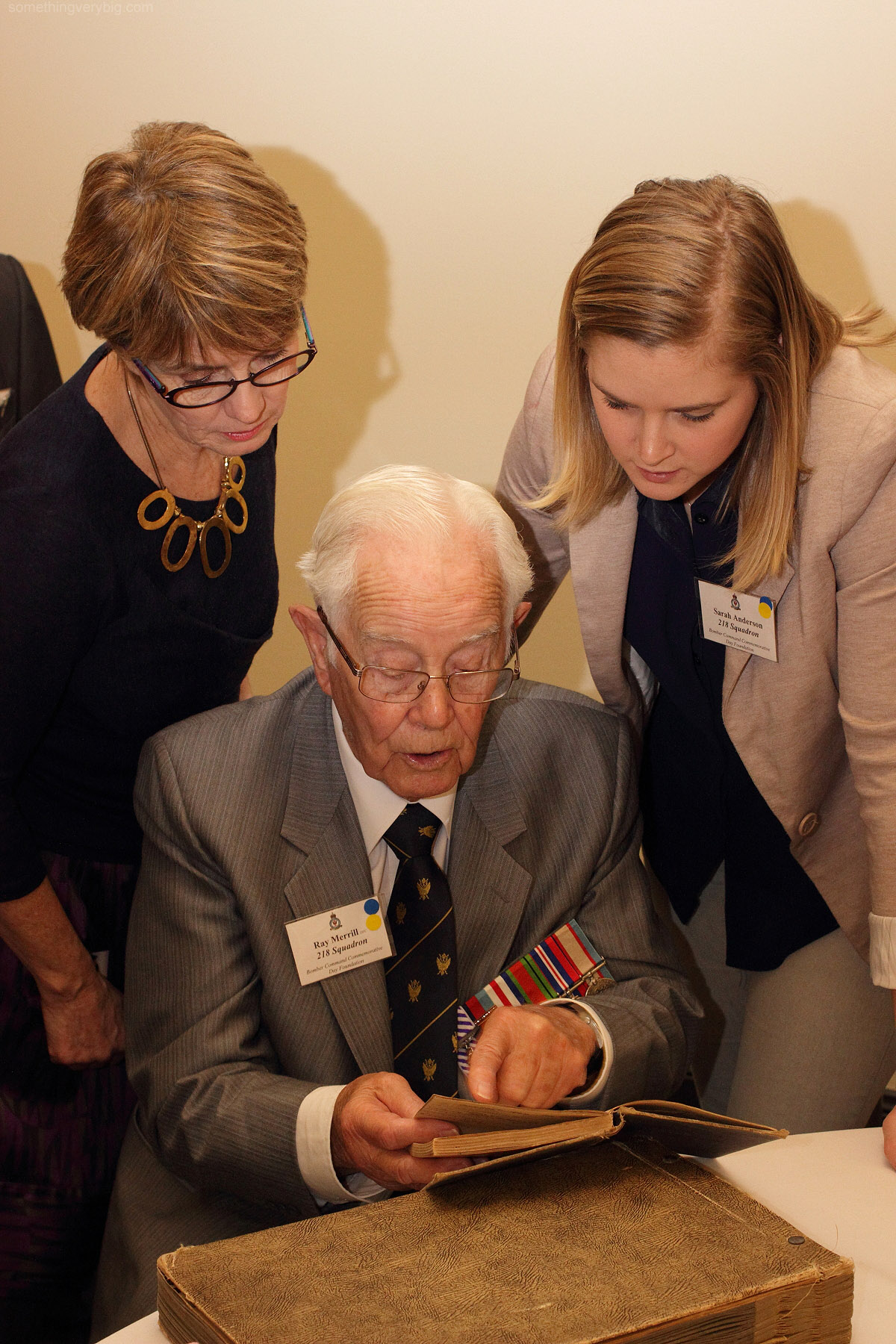
I thought it probably wouldn’t be. I’d earlier been speaking to Ray Merrill, who is on the right here:
Ray was a 218 Squadron rear gunner and he is pictured here with Jim Clayton, a wireless operator from the same unit.
As he was not on 463 Squadron at any stage, Ray would not be the Pilot Officer Merrill in Bob’s logbook. But, amazingly, he was connected.
It turned out that Freddy was Ray’s brother. Here’s a photo of Ray pointing his brother’s name in the logbook:
Ray Merrill pointing out his brother’s name
A good lunch, then – good food, good conversation and good conversation. It was an enjoyable finish to a fantastic weekend. There were many highlights over the two days. Catching up with many good friends. Meeting new contacts. Drinking with Hux late into Saturday night. Kevin Dennis’ CGM. The Merrill coincidence.
Ross Pearson, Wing Commander Tony Bull, Don Southwell and Pete RyanDon McDonald, Don Southwell (background) and Angus Cameron
But the main purpose of the weekend, of course, was commemoration and remembrance for and of the men of Bomber Command. In this it was most successful. One of the more poignant moments happened at the Meet & Greet on Saturday evening.
After the speeches the lights dimmed and the sound and light show centred around G for George began. I was talking to Don Huxtable at the time. At the end of the presentation Hux was suddenly quiet for a moment.
“I don’t know how the hell I flew straight and level through all that,” he whispered.
It started at a different spot than over the previous seven decades.
At a much earlier time.
And the trains weren’t running (or so we thought).
And it was raining.
And there were (of course) road closures in the CBD.
But we eventually made it to the start of the 2014 ANZAC Day march in Sydney last Friday.
(And it was still raining).
We found, in a large group of veterans and other hangers-on sheltering under one of Sydney’s tall office buildings, four familiar faces in front of the 463-467 Squadrons Association banner.
Clearly we’d found the right place.
Left to right: Don Southwell (463 Squadron navigator), Don Browning (463 Squadron wireless operator), Don Huxtable (463 Squadron skipper) and Hugh McLeod (49 Squadron rear gunner)
The rain abated for a moment and, with a little bit of encouragement from the RSL marshals, the various banners of numerous Air Force associations formed up on Pitt Street. Bryan Cook (the young bloke on the right of the photo above) and I (on the left side of the banner) shuffled the banner sideways through the crowds, passing an Army LandRover in the back of which we found two more veterans we knew, wireless operator Harry Brown (106 and 467 Squadrons) and bomb aimer Keith Campbell (466 Squadron). We were marshalled into position as the rain started and the umbrellas came out once more. Don Southwell took the LandRover option, leaving us with three veterans for the march, with three people representing various other squadron members acting as carers. It was still raining.
As the rain dried up the march proceeded. Unfortunately we were in the middle between two different bands, each playing a different beat, and so marching in step was a challenge. We made it past the Cenotaph at Martin Place and half way down George St when one of our veterans – Don Browning -started wobbling a little and made the decision to retire. A carer detached from the column to assist. No great harm done however, and in the end Don made it to lunch before the rest of us, having procured a lift from somewhere.
Having completed the march, we carried the banner to the Pullman Hotel, across the road from Hyde Park, for what turned into a great lunch. In all fifty people attended, and as well as the six veterans who participated in the march we were joined by four more: David Skinner, Alan Buxton, Albert Wallace and George Douglass.
This is the third year that the Association has used the Pullman and they put on their usual fine show. The food was excellent and the service top-notch, but of course once again it was the conversation which really made the afternoon. Here’s Bryan talking to George Douglass:
…and Hugh McLeod:
….and here’s my partner Rachel (who came along because she “wanted to meet all those old blokes you keep talking about”!) asking Alan Buxton about the significance of his little gold caterpillar badge:
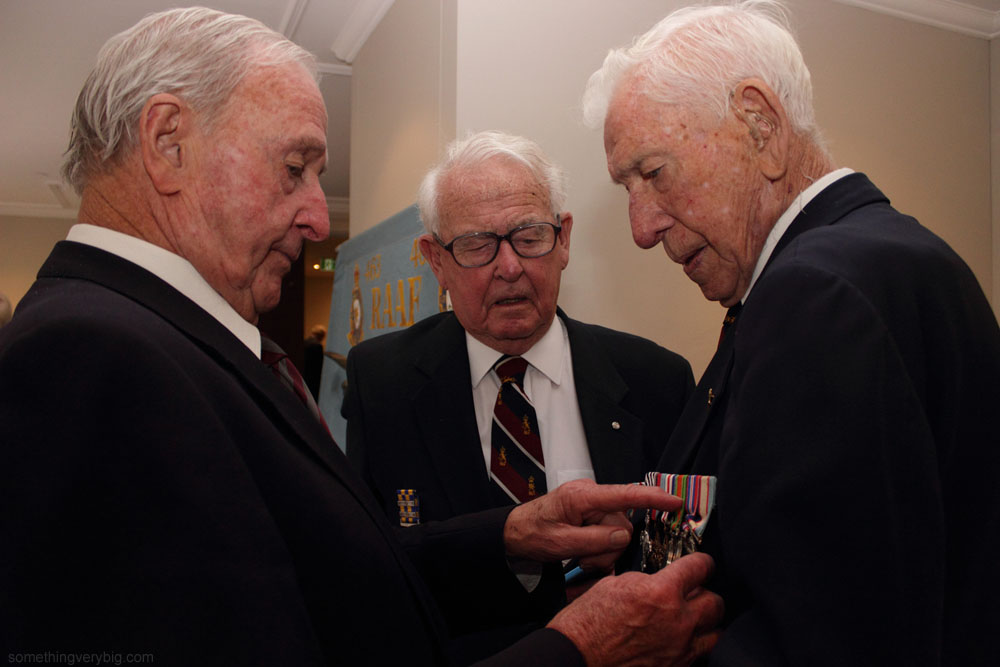
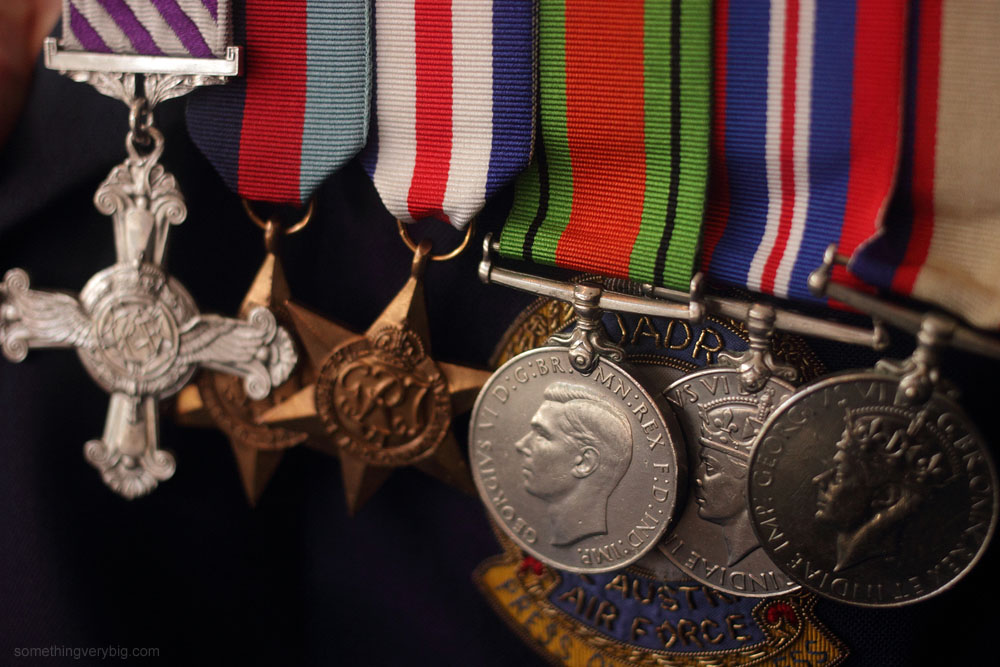
And even the veterans themselves, who know each other well, found things to talk about. Here, Hugh McLeod and Don Southwell examine Don Huxtable’s medals:
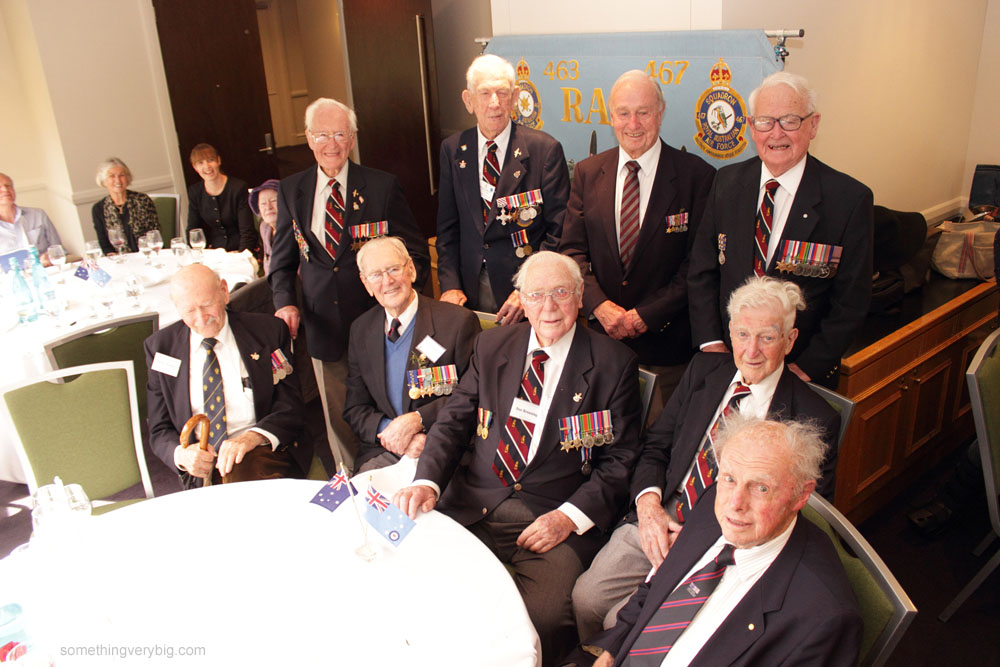
We gathered the veterans for a group photo (though one managed to evade detection in this photo):
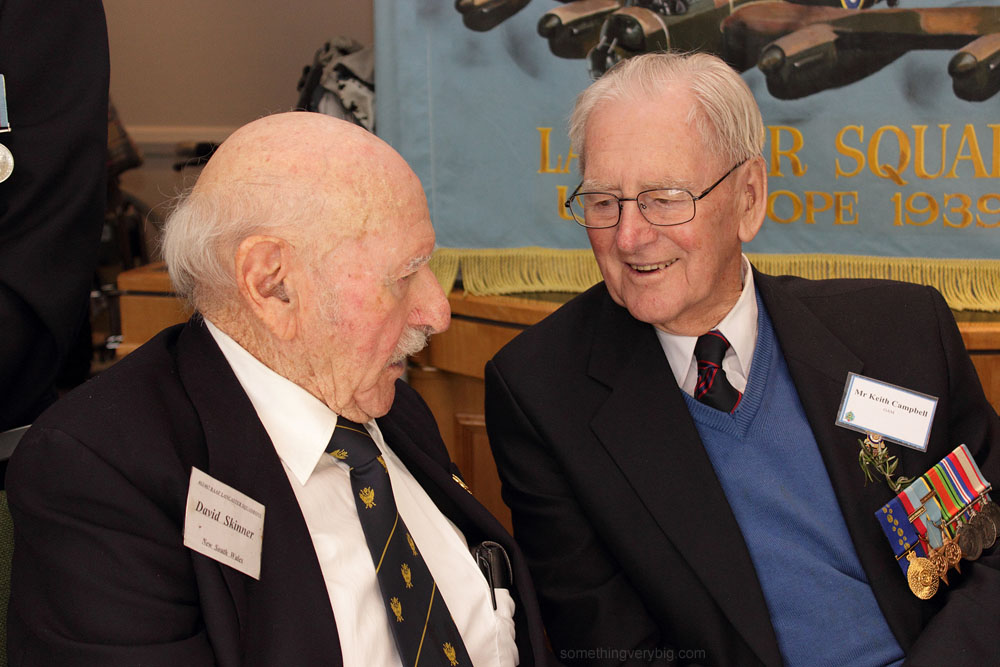
Back row: Alan Buxton, Don Huxtable, Hugh McLeod, Don Southwell. Front row: David Skinner, Keith Campbell, Don Browning, Harry Brown, Albert Wallace. Missing: George Douglass
Outside, the rain continued to pour down. But as the desserts were being served, the day cleared up into one of those magnificent, mostly blue-sky autumn days for which Sydney is so well-known. The most disappointing thing about the timing of that was that 463 Squadron stalwart Bill Purdy was unable to lead the planned Tiger Moth flypast, open cockpits and rain not being particularly good bedfellows.
Age is now, undeniably, wearying the veterans of Bomber Command. This was clear in the lower numbers of veterans taking part in the march, and indeed this is the key motivation behind the RSL’s move to change the format of the march in Sydney. Very few veterans are now under 90. It won’t be too much longer before, like the veterans of the Great War before them, there are no longer any originals left to march. But the number of people present at the lunch last Friday is encouraging. The interest from family and friends remains high and, while that continues, so too will the memories of these two Squadrons. And while we still have Bomber Command aircrew with us, occasions like these offer the chance to talk to and celebrate some of the most remarkable people I’ve ever met.
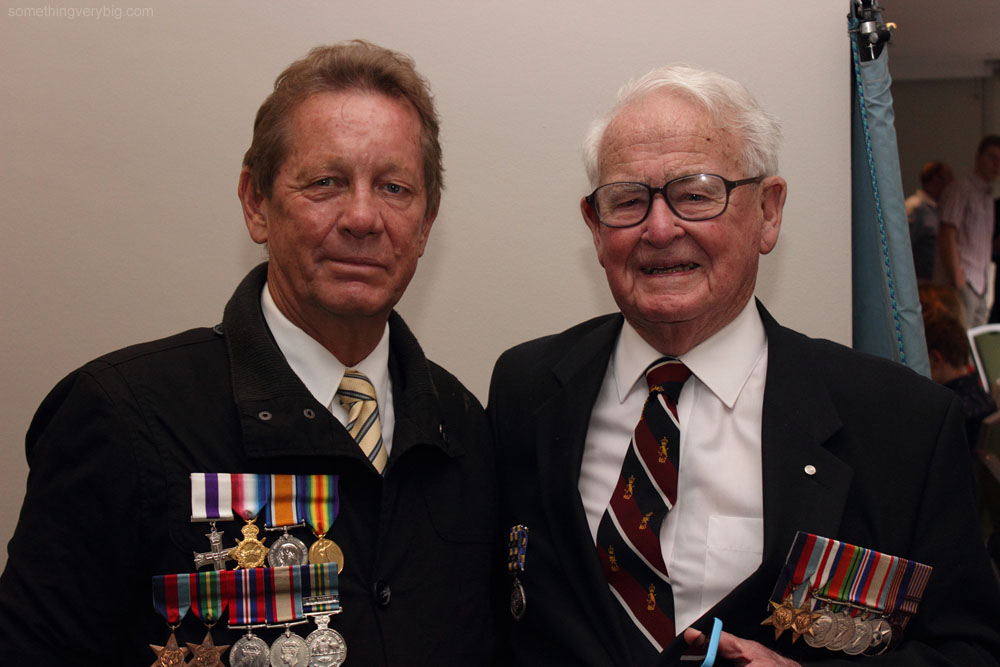
The LunchDavid Skinner talking to Keith CampbellGeoff Nottage and Don SouthwellRachel McIntosh and Adam PurcellDon Huxtable’s medals
Photographic portraits of all ten veterans who attended the lunch are on a separate post, here. Text and photos (c) 2014 Adam Purcell.
Following are details for the Bomber Command Commemoration Day events to be held in Canberra on the weekend 31 May – 01 June 2014. There are three key parts to the weekend:
Meet & Greet
Ceremony
Luncheon
The Meet & Greet:
ANZAC Hall, Australian War Memorial
Saturday 31 May 2014
6.00pm to 8.00pm
$50 Canapés, hot & cold with beer, wine, soft drink and juice.































 Something Very Big