Bicester

Scattered across the fields of England are the remains of hundreds of former military aerodromes. Some have disappeared entirely, the runways excavated for hard fill and the buildings demolished. Some have been turned into business parks, showgrounds, residential estates and even prisons. Some have reverted back to agricultural land, with pig or chicken sheds where once were runways. A scant few are still operational airfields, civilian light aeroplanes replacing the bombers. And many more have simply been mothballed – still owned by the Ministry of Defence but all but abandoned, externally intact but uncared for, quietly decaying away to dust. One such airfield is RAF Bicester, and a group called Bomber Command Heritage  is determined to save it.

Bicester, at least according to English Heritage, “retains – better than any other aviation site in Britain – the layout and built fabric relating to both the first expansion period of the RAF and subsequent developments up to 1940”. While not an operational front-line Bomber Command station, Bicester was home to 13 Operational Training Unit, part of the great training pipeline which kept those front-line squadrons supplied with aircrew. The all-grass flying field is still used by gliders of the  Windrushers Gliding Club. Bomber Command Heritage sees an opportunity to preserve the site by turning the disused Technical Site into a significant museum.

On the face of it, it’s a fantastic idea. But it’s a large site (348 acres). Just purchasing the site from the MOD is expected to cost upwards of £2 million. There are also a large number of buildings on the site, some of which, the hangars in particular, are quite large. Many are in an advanced state of disrepair. Restoring the buildings is estimated to cost about £35 million, a lot of money for a volunteer organisation to come up with. And once they are restored, the costs involved in maintaining an active aerodrome and keeping the buildings in good repair are also not inconsiderable. It’s likely that gate takings alone from what would be, let’s face it, a niche market of Bomber Command enthusiasts would be insufficient to keep the museum open for long. There is always the possibility of lottery grants and other government support, but to rely on these as long-term funding appears less than sustainable.

So how could a site like Bicester be saved –with space for a significant museum on site – but still be a going concern in its own right? There needs to be something else other than just the museum to make the site commercially viable. ‘Developers’ have become a dirty word in today’s society with their ‘knock down and rebuild it bigger better and newer’ disregard for history. But development doesn’t have to be incompatible with heritage.

On the northern head at the entrance to Sydney Harbour lies the old Quarantine Station. It’s a magnificent site with many extremely significant buildings, used between 1832 and 1984 to quarantine passengers from arriving ships affected by infectious diseases. After its closure as an active facility the site passed into the management of the NSW Parks and Wildlife Service. NPWS did considerable work to the site to care for it (and conducted fantastic ghost tours, one of which I well remember going on in the mid 1990s) but they never had the funding required to ensure that the site was preserved properly. Things came to a head in 2002 when the 180-year-old hospital building burnt down, a fire thought to have been caused by an electrical fault. Shortly afterwards it was decided that government funding by itself was not enough to properly care for the site, and that private development was a possible solution. Unsurprisingly there was considerable public protest towards the idea, but – now that the site has indeed been leased to a private operator and has been reopened as a boutique accommodation, function and conference venue with a museum and guided tours – it’s actually turned out quite well. The commercial activities generate an income which supports the upkeep of the site, while being sympathetic to the heritage of the old station. The buildings are restored to their former glory. Even the old hospital that burnt down has been completely rebuilt, from scratch and using period methods, into a faithful and quite spectacular reproduction of the old building. Government funds alone would never have been sufficient to cover the work at the extraordinarily high standard required. Most importantly, the site retains the ‘feel’ of the old Quarantine Station – the work carried out has remained sympathetic to the original buildings and the activities that now take place there are compatible uses for them – and the public still has access to the site to be able to enjoy, appreciate and learn from it. The site is still alive.

I use the Quarantine Station simply as an example of what I think is a well-thought-out, sympathetic and viable use for a historical site. I’m not advocating that RAF Bicester is turned into a ‘boutique accommodation, function and conference centre’. But despite having all the best intentions, sentiment alone will not provide the cold hard cash that’s needed to acquire and restore a large site like a historic airfield. There needs to be some sort of income generating activities in place if the site is to remain viable, beyond just a museum. Imaginative and creative – and commercially viable – uses for significant historical sites are not necessarily incompatible with the idea of preserving the heritage value of them.

There need to be carefully thought-out controls in place to ensure that any development remains true to the heritage of the site. But developers are not necessarily the enemy, if they have the funding that will make the difference between the site falling further into disrepair, or it remaining in the long-term as an example of a Bomber Command airfield.

© 2012 Adam Purcell    
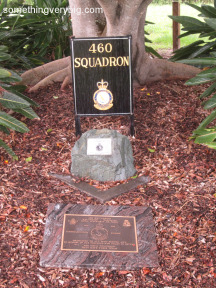
460 Squadron in Brisbane

I was in Brisbane for a work trip for the last week or so of January. It didn’t stop raining all week.

I had a short chance to stop by the Sir Charles Kingsford-Smith Memorial that is on the road leading to Brisbane Airport. Under a large curved roof, preserved in a glass ‘hangar’, is Smithy’s original Fokker Fokker F.VII/3m three-engined aircraft, the Southern Cross. It’s a very important part of Australia’s aviation heritage and it is fantastic to see the old aeroplane is being well looked after.

But what does this have to do with Bomber Command, I hear you ask? Well, if I’m honest, very little. But a short distance from the Southern Cross is a tree. Under the tree are three plaques dedicated to 460 Squadron, arguably one of the most famous of the Australian bomber units.

12apr-firstquarter2012-200 copy

Beneath one of the plaques is a representation of a boomerang, symbolising the motto of the Squadron: ‘Strike and Return’. Sadly, many of the airmen of 460 Squadron struck… but did not return. In fact, the Squadron suffered by far the highest casualty rate of any Australian unit in WWII: out of around 2700 airmen who served in the Squadron, more than 1000 were killed in action – 589 of those being Australians. 181 aircraft were lost on operations in the four years of the Squadron’s existence.

One of 460 Squadron’s aeroplanes survives. It is, of course, W4783 G for George, today forming the centrepiece of the Australian War Memorial’s Striking by Night sound and light exhibit. It is an extremely impressive memorial. And in Queensland, under a tree near Brisbane Airport, those three plaques also help ensure that the deeds of this Squadron are not forgotten.

© 2012 Adam Purcell
Bomber Command in Canberra 2012

The 2012 Bomber Command Commemoration Weekend has just wrapped up in Canberra. There were slightly fewer people present, to my eye, than on previous years but I think it was still a fair turnout. Perhaps the forecast rain kept some away – it certainly was a wet welcome to Canberra when my Virgin E-Jet broke clear of the thick cloud that we’d been descending through just before landing.

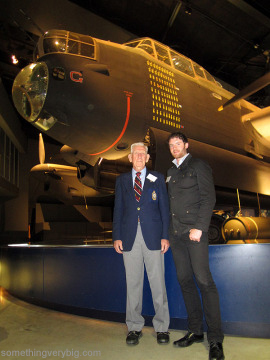
This was the fifth such commemoration to be held in the nation’s capital and the event has settled down into a familiar but effective pattern. G for George provided the setting for the now traditional ‘Meet & Greet’ function. There were indeed many people to meet and greet. Tommy Knox and Pat Kerrins, who I’d met here last year, were both there again. Don Browning and Ross Pearson traded their usual good-natured banter about which between the Halifax and the Lancaster was the ‘proper’ aircraft to have flown in (at least we all thought it was good-natured…). And I met a few new people too.

12-jun-bomber-command-in-canberra-007 copy

Early in the evening as I was wandering around to see who else I recognised, out of the shadows of the Lancaster’s nose came a man named Don McDonald, a 466 Sqn Halifax skipper from Melbourne, a veteran I had not yet met. He was a lovely bloke and we chatted about all sorts of things for a good while – and upon learning that I now also live in the southern capital he and his wife Ailsa promptly invited me to visit them for dinner sometime. You never do know who you will meet at these events! I also spoke with the former Commanding Officer of the reformed 462 Squadron, which was previously a Halifax squadron of Bomber Command and is now an electronic intelligence unit based at RAAF Edinburgh in Adelaide. The superb Striking by Night sound and light show was again played at the end of the event. The final moments of the production feature a WAAF speaking about the Australian airmen she worked with. “They were young… handsome…” she says, “…and full of life.” At which point Don Huxtable was heard to mutter “well two out of three ain’t bad…”12-jun-bomber-command-in-canberra-012 copy

Many of us repaired to the hotel bar at the Rydges after returning from the AWM. It was a memorable night, sharing beers with the two Toms Knox sitting on one side and Hux on the other as a great variety of stories, of both tall and short varieties, were told.

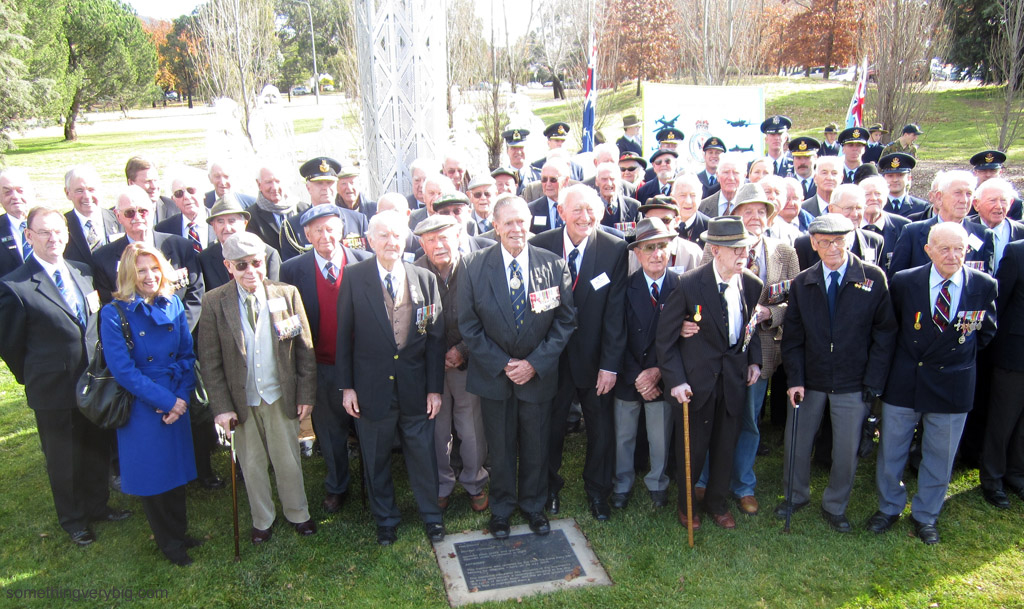
Canberra received almost an inch of rain on Saturday and it looked very much like it had set in for a week. But upon peering out of my hotel room window in the morning I saw a scene that was wet, but not actually raining. The clouds gradually cleared as the morning went on and in fact it turned out into a delightfully mild Canberra morning. The Commemorative Address was given by Air Marshal Mark Binskin, Deputy Chief of  Defence Force (and a former Chief of Air Force), who spoke about the legacy of teamwork from the men of Bomber Command, and how the Air Force has reformed two Bomber Command squadrons as a tribute. Fittingly a large group of 460 Squadron personnel were present standing in three neat rows at the back of the crowd. There was an attempt to get an official photo of all the veterans who were present but it was not as organised as last year’s effort:

12-jun-bomber-command-in-canberra-032 copy

Back to the Rydges, then, for the luncheon, always for me the highlight of the weekend. Despite the slightly lower numbers present this year, it is still one of the largest gatherings of Bomber Command veterans, families and other interested people in this country. Once again there were many extremely interesting people to talk to. I finally met Diane Strub of the Queensland Branch of the 463-467 Squadrons Association, and Fred Murray-Walker, whose father was killed in the crash of 463 Squadron Lancaster JO-G on the Scottish hillside in 1944. Peter Rees, a Canberra-based author who is currently finalising a book focusing on Australians in Bomber Command, was also there, and brought with him a magnificent folio of target photographs cheekily entitled “The Collected Works of 463 Squadron, as told to the Third Reich, September 1944 to May 1945”.

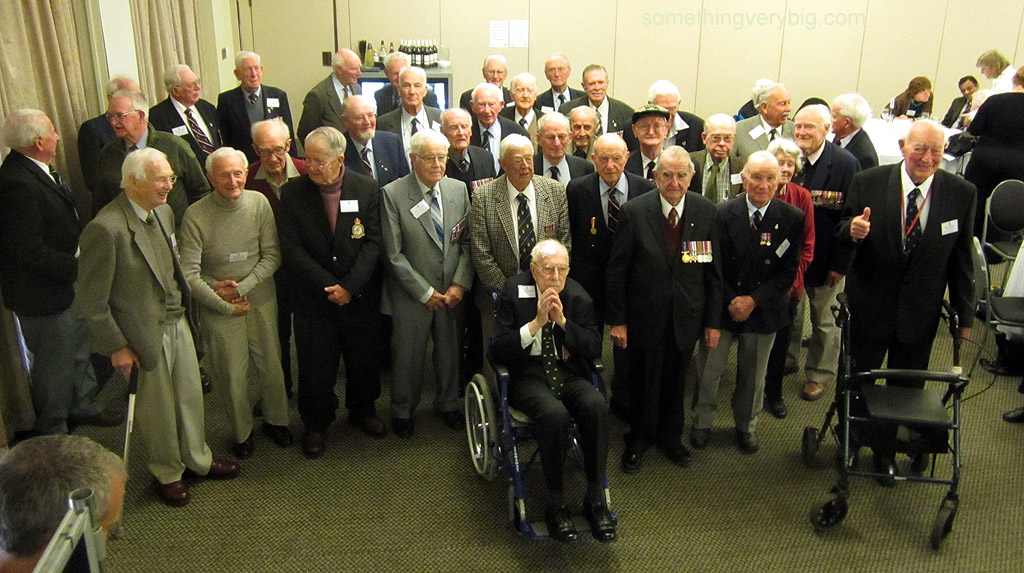
Perhaps the most remarkable person I met was sitting at a table at the back of the function room with her son and daughter in law. An Englishwoman, her name was Maude and, as it turned out, she had been on the staff at Bomber Command Headquarters – she was Deputy Commander in Chief Sir Robert Saundby’s secretary from 1943 until the end of the war. I asked her what the atmosphere was like at Bomber Command HQ. She said it was always busy – she was at work whenever her boss was and might – might – get the occasional half-day off on a Sunday if she was lucky. It was only a short conversation but it was an absolute pleasure to meet and talk to a unique lady. I even managed to convince her to get up for the group photo of all present who had served in Bomber Command (she is front right here, wearing red, behind Tommy Knox):

12-jun-bomber-command-in-canberra-066 copy

Some more photographs from the weekend:

Some of the crowd at the Meet & Greet function in the shadow of Lancaster G for George:

12-jun-bomber-command-in-canberra-010 copy

The Ceremony, in front of the AWM’s Bomber Command memorial:

12-jun-bomber-command-in-canberra-015 copy

The Three Dons: Don Southwell reading a copy of a ‘Tribute to Mr Don Huxtable’ as tabled in NSW State Parliament recently, while Don Browning and Don Huxtable himself look on:

12-jun-bomber-command-in-canberra-041 copy

Bryan Cook, Don Huxtable, Don Browning and Adam Purcell in Canberra, 03JUN12:

12-jun-bomber-command-in-canberra-048 copy

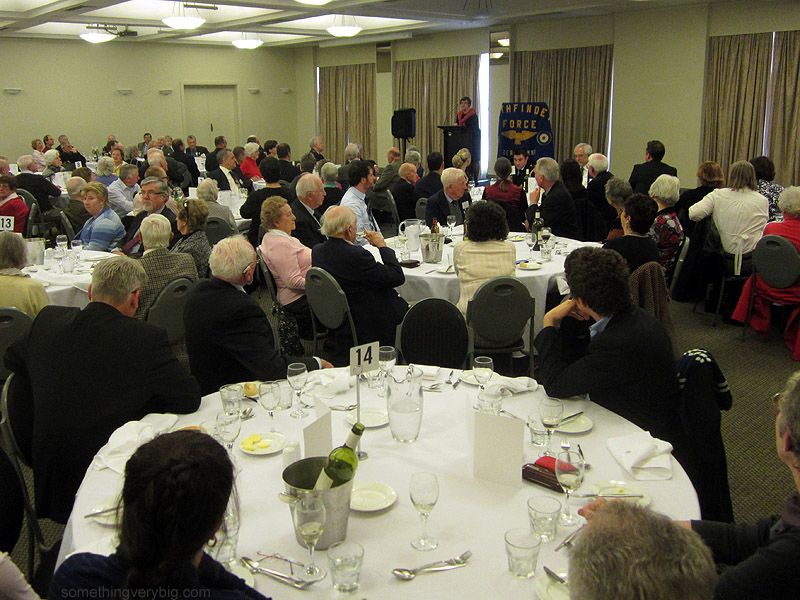
Part of the 220-strong crowd at the Lunch that followed the Ceremony on Sunday:

12-jun-bomber-command-in-canberra-052 copy

In all, then, another fine weekend of commemoration and friendship. Another pile of things to follow up on. Another piece of proof that, even after almost seventy decades, the deeds of Bomber Command live on. I’ll leave the closing words to Don Southwell, who delivered the Reflections address during the Ceremony on Sunday.

“I will always be proud”, he said, “that I flew with Bomber Command”.

Text and images (c) 2012 Adam Purcell

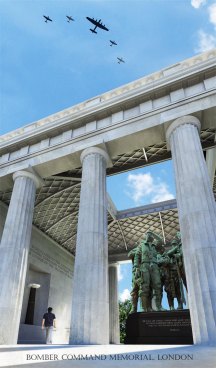
Bomber Command Memorial London

On 28 June 2012, the Bomber Command Memorial will be officially dedicated and opened in London by the Queen. The Memorial will be a lasting tribute to more than 125,000 Commonwealth aircrew who served with Bomber Command during World War II.

The bomber offensive was perhaps the longest, most sustained single campaign of the war – crews were in action from almost the first day of the conflict and the final sorties were flown at the very end of hostilities in Europe. Their contribution to the final victory was immense – as, sadly, was the cost. Out of those 125,000 airmen, more than 55,000 were killed in action. As an overall group, only the German U-Boat crews suffered a higher casualty rate.

Some 10,000 Australians served with Bomber Command. Almost three and a half thousand of them died while on active service. Bomber Command represented some 2% of total Australian enlistments in WWII but suffered 20% of Australian casualties. One Australian unit, 460 Squadron, lost more than 1,000 men over the course of the conflict – the equivalent of being completely wiped out five times.

Yet despite their terrible sacrifice, despite their enormous contribution to the war effort, the men of Bomber Command have never received the recognition that they deserve. A campaign medal was never awarded. And it has taken until now – nearly seven decades after the cessation of hostilities – for an official Memorial to be built. It’s been estimated that some 150 Bomber Command veterans remain alive in Australia. The youngest of these are fast approaching their 90th birthdays. Naturally our surviving veterans are very keen to travel to London to take part in the dedication ceremony. Due to the ravages of age not all 150 are well enough to attend, but at least 80 have registered interest with the Bomber Command Association of Australia.

The Australian Government initially announced a Commemorative Mission of five veterans would be fully sponsored and supported to go to the Ceremony. No family members or carers were included. A further forty grants of up to $3,000 each were to be available to assist other veterans in defraying their travel costs. In contrast, the New Zealand Government announced in a media release (through Veteran’s Affairs New Zealand) that they will be sending an RNZAF Boeing 757 to London with any veterans who are willing and able to make the trip, plus carers. Veterans’ Affairs New Zealand will cover all accommodation, transport, travel and medical expenses. This is a superb effort and shows how much the New Zealand Government respects and appreciates the efforts of their veterans.

So the Bomber Command Commemorative Day Foundation started a campaign for proper recognition of our veterans. And it was successful, sort of. The Government announced on May 12 that they will now be taking 30 veterans, with $5,000 grants available to those who miss out on being part of the official delegation. This is a good improvement, but more is still needed. There are practical difficulties associated with travelling at such an advanced age and having a family member or carer travelling alongside is almost a necessity. The Australian Government was quite happy to send these brave men all-expenses-paid to England seventy years ago. The least they deserve is help so that they have the chance to see that their efforts – and the memories of the 3,486 Australian airmen who never came home – are properly recognised in London.

I’ve written letters supporting this cause to my local Member of Parliament, the Minister for Veterans Affairs, the Prime Minister and the Opposition Leader. So far (a week and a half later) the only response has come from the Office of the Opposition Leader, in a phone call this afternoon. The staffer who rang me suggested I also contact the Shadow Minister for Veterans Affairs, so a new letter will be on the way shortly. I’ll be very interested to hear the responses of the others and will post here with any updates.

In the meantime, for those who wish to give practical support, please see details for making donations to the Bomber Command Commemorative Day Foundation’s London Visit Appeal here.


Edit 03JUN12:

An article in the Hornsby Advocate featuring a great photo of two of our 463-467 Sqn veterans.

I’ve also received a reply from Warren Snowdon’s office advising that the official mission is now 32 men – 44 applications were received and all those assessed as medically fit to join the mission were accepted.  The number of $5,000 grants is uncapped. This, to me, appears a reasonable response – it is certainly an improvement over the initial proposal. I’m still awaiting a response from my local member.

Picture: http://www.hydro.com/pagefiles/846261563/BCM-Poster_800x1365.jpg

Text (c) 2012 Adam Purcell 

ANZAC Day 2012

ANZAC Day dawned cold and wet in Melbourne. The conditions didn’t stop 35,000 people attending the Dawn Service at the Shrine of Remembrance. I wasn’t one of them, though – instead, I got on board a Virgin jet and headed towards the north.

Descending into Sydney, the city looked an absolute picture. It was one of those sparkling autumn days that I don’t think you really get anywhere else in the world. Only the whitecaps on the rolling seas hinted at the presence of some wind.

I caught the train into the city. Emerging from the pedestrian tunnels out of St James station, I smelt rosemary and heard marching drums somewhere in the depths of the city. Yes, the March was well and truly underway.

The Air Force veterans traditionally hit the circuit around 11am so I had a bit of time to spare. A marching band moved past, its mighty horns echoing off the skyscrapers. Walking out of the tunnels I spied a familiar figure. It was Tommy Knox, a Stirling flight engineer from 149 Squadron who I had met in Canberra last year. He was clutching a free cup of tea that he’d been given by Legacy volunteers at the train station. I’d received a letter from Tommy just a couple of days before. We had a quick chat before he hurried off to find the rest of the ‘Odd Bods’, the group he marches with.

Returning to Elizabeth Street, I patrolled up and down the assembling throng, looking for people I knew. The first veteran I recognised was Hugh McLeod, a 49 Sqn rear gunner who, at “eighty seven and a half” says he is one of the youngest in the group. Hugh was adopted by the 463-467 Sqn Association some years ago and now joins them for the march and lunch each year. Once the banner arrived, safe in the care of Bryan Cook whose grandfather was a 463 Sqn mid upper gunner, it became the focal point and more familiar faces detached themselves from the growing crowd. In recent years it has become something of a tradition for Bryan and I to carry the banner for the Squadrons and we were again honoured to do so this year.

Only six veterans actually marched this year. Even the indefatigable Don Southwell was absent, having pulled a hamstring recently. He rode in an RSL-provided Land Rover instead. The rest of the bunch was made up by numerous families and friends of veterans, numbering perhaps a couple of dozen in all.

Some photos of the march:

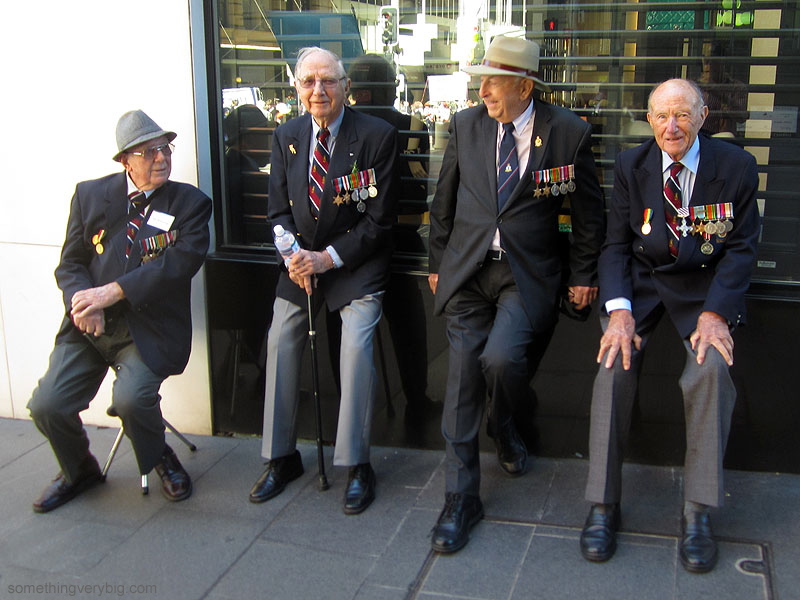
After setting off up Elizabeth Street, we turned down Market Street– where, as has become normal each year, we halted for perhaps half an hour to avoid congestion further down the route. President of the Association Don Browning came prepared, wielding one of those walking sticks with a built-in stool. The other three in this photo took advantage of a handy window sill:

12apr-anzac-day-009 copy

Meanwhile the wind had picked up. While we were waiting to continue Bryan and I had a good chat with Hugh, our 49 Sqn rear gunner, while he clung gamely to one of the banner’s guy ropes to keep it under control in the breeze:

12apr-anzac-day-010 copy

Following the march, lunch was at the Sydney Marriott hotel, on the other side of Hyde Park. Once again it was a superb meal. 48 people were present, including the same ten veterans who we had last year. Again a group photograph was organised (ignore the two young blokes holding the banner up in the background!):

12apr-anzac-day-008 copy

Left to right, they are Don Southwell, David Skinner, Bill Purdy, Alan Buxton, Hugh McLeod, George Douglass, Don Huxtable, Don Browning, Albert Wallace and Harry Brown.

Five of these distinguished gentlemen will be travelling to London in late June for the dedication of the new Bomber Command Memorial in Hyde Park.

During lunch I sat next to Alan Buxton, a navigator. Alan never flew operationally with 467 Sqn – he actually flew his tour with 617 Sqn, the famed Dambusters. In late 1944 he baled out of his crippled Lancaster over Norwich after a harrowing return trip across the Channel with all four engines ablaze, a story hinted at by the tiny golden caterpillar badge with ruby red eyes that he was wearing on his tie. He proudly showed me his Caterpillar Club membership card, which he still carries in his wallet. After VE Day Alan was posted to 467 Sqn at Metheringham, in preparation for the planned Tiger Force operations against Japan. Thankfully the war ended before they were required to fight in that theatre. Alan appears in this photo on the left:

12apr-anzac-day-017 copy

And so another ANZAC Day passes. It is always wonderful to see these blokes each year, and long may it continue. President Don Browning made a toast to absent friends during the lunch – but added that, as long as there was someone to carry the banner, there would be someone to march with it, and so the spirit of the two Squadrons will live on.

© 2012 Adam Purcell

Vale Cliff Leach

I’m very sad to report that Clifford Leach, a 150 Squadron Pilot/Flight Engineer, died last week after a short illness. Cliff, perhaps unusually for his generation, plunged right in to the world of computers and forums in his later years, posting on a number of forums about his wartime experiences as ‘cliffnemo’. His magnum opus, however, was a thread that he started on PPRuNe in June 2008 called ‘Gaining an RAF Pilot’s Brevet in WWII’. Cliff posted about his experiences while in training, backed up with original notes and drawings. This drew a number of other contributors into the open, among them the much-missed Reg Levy, a 51 Sqn Halifax skipper who later  (among other things in a very long and varied career) flew Boeing 707s with Sabena. Four years and close to 2,500 posts later, that thread is still more than going strong, with a former Vultee Vengeance pilot named Danny now holding court.

On another forum, one of Cliff’s first posts was typical of the modesty of his generation:

I didn’t do much only three opps

Well, you might not have thought so, Cliff, but what a legacy you leave behind. The PPRuNe thread likely would not have come into existence without Cliff’s input. And it’s the interactive nature of those kinds of threads that makes them so valuable – being able to read experiences written first-hand, then asking questions either about those stories or on anything else even remotely related to the topic at hand. That little post in June 2008 brought into the open many fascinating stories and the thread now contains a goldmine of information for researchers like me – adding colour to the dry facts and figures.

His son Bill has posted on the thread following the death of his father, saying how proud Cliff was of the thread and how he had arranged for a printed copy of it to be left for his grandson. He also related the story of Cliff’s final flight, just a week before he died. A friend arranged for a local flying school to take him up, and he was, says Bill, “astounded that he was ordered straight into the pilots seat and took the controls for the whole flight. He was told that if it wasn’t for a strong cross wind he would have been allowed to land the plane.”

I never had the chance to meet Cliff, though we corresponded through the thread and through email over the last few years. His input assisted greatly in my earlier post on Flight Engineer training, and his recollections about the Lancaster contributed to th final look of the painting of B for Baker that I commissioned a couple of years ago. “On final check before switching off engines [the] engineers final check included raise flaps”, he wrote. “I think that if we had arrived at ‘dispersal’ and found the flaps down, we would have informed ‘Chiefy’.” And that settled it, so I asked Steve to depict B for Baker with her flaps up!

Another remarkable man has, in the words of the late Neptunus Lex, ‘stepped into the clearing at the end of the path’. Blue skies and tailwinds, Cliff. Blue skies and tailwinds.

Edit 25APR12: Link to a story in the local newspaper of Cliff’s final flight, published only a few days before he died.

(c) 2012 Adam Purcell
Event: Bomber Command Commemorative Day, Canberra, 2-3 June 2012

The Bomber Command Commemorative Day Foundation, with the support of the Australian War Memorial, will hold their 5th annual Commemorative Day in Canberra on the weekend of 2-3 June 2012. Three events are planned: a ‘Meet and Greet’ function on the Saturday night, then a Memorial Service and Luncheon on Sunday.

The Meet and Greet function takes place in the shadow of G for George, the AWM’s Lancaster, in the ANZAC Hall from 6 to 8pm on Saturday 2 June. Cost is $50, hot and cold canapes will be served with beer, wine, soft drink and juice also provided.

The Luncheon takes place at the Rydges Lakeside, Canberra, 12.30 for 1pm to 4pm. $55 covers a sit-down two-course meal with tea and coffee, with a cash bar operating.

To attend the Lunch and/or the Meet and Greet, contact Keith Campbell by 18 May: 142 Coonanbarra Road Wahroonga NSW 2076. Cheques to be made out to Bomber Command Commemoration Day Foundation.

The focus of the weekend, however, is the Memorial Service. This is held outdoors in the Sculpture Garden of the Australian War Memorial, by the Bomber Command Memorial. To allow the organisers to anticipate numbers, please RSVP to the AWM by 11 May: rsvp@awm.gov.au or 02 6243 4363.

In the group photo taken at this event last year, I counted 50 veterans. This is one of the largest gatherings of Bomber Command aircrew (and at least one WAAF) in Australia and for that reason alone it is well worth attending. Talking to so many veterans in the one place at the one time is an opportunity that doesn’t come around too often. I’ve been to three of the last four of these events (though at this stage it is looking unlikely that I’ll be able to make it to this one) and they never fail to impress. More information can be found at http://commemorativedayfoundation.com/.

Update 21APR12: I’ve managed to organise the weekend off so I’ve booked my flights to Canberra for this event. There are also events on in other parts of Australia, for those who can’t make it to Canberra:

VICTORIA: Hastings RSL, 11am Sunday 3rd June

QUEENSLAND: Memorial Gardens at RAAF Amberley, 11am Sunday 3rd June

I think there are also plans for NSW and SA, but I haven’t got details yet.

Shrine

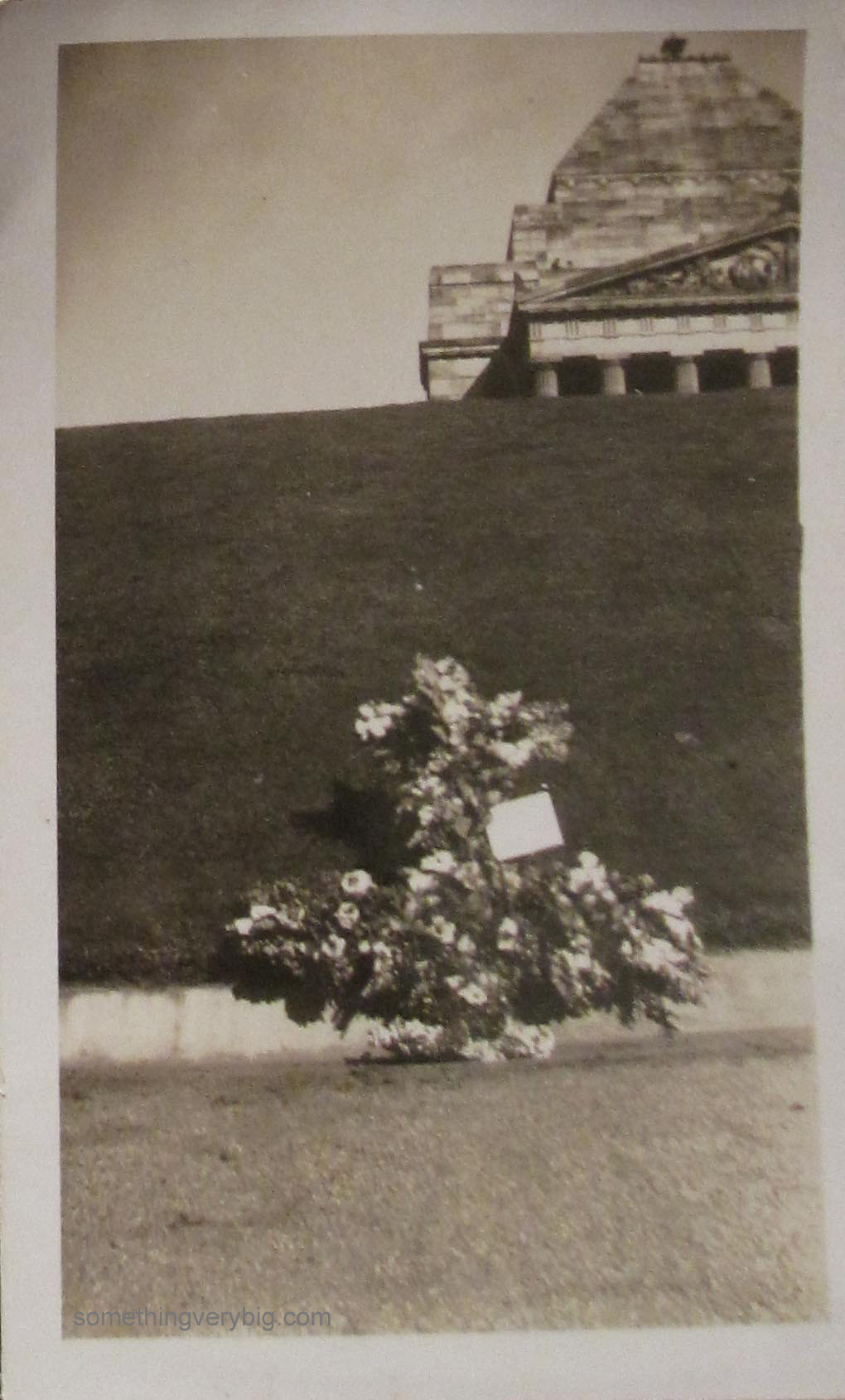
On the south side of the Yarra River in Melbourne, a mile or so from Flinders Street Station, is a large and rather imposing stone building. The Shrine of Remembrance sits on slightly elevated ground, with large Doric columns on all sides and a truncated pyramid soaring into the sky.

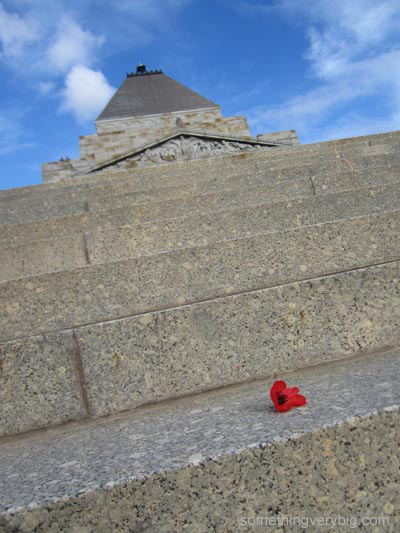
I went for a ride on my bicycle last month, down the Moonee Ponds Creek trail, over the Yarra at Docklands, and along St Kilda Road. I could see the Shrine in the distance. I cycled across and stopped for a visit.

Underneath the Shrine is the Crypt – a quiet space with bronze panels on the walls, regimental flags hanging from the ceiling and a sculpture in the middle. Climbing some stairs through the middle of the stone walls of the Shrine, I emerged in the Sanctuary, which is the heart of the memorial. Perhaps it may have felt more sanctuary-like had a busload of tourists not also shown up at that exact moment. It is a space reminiscent of the Hall of Memory at the Australian War Memorial in Canberra, perhaps not surprising given the particular functions of both spaces. In the middle, sunk below floor level, is a slab of marble upon which is the Biblical inscription, ‘GREATER LOVE HATH NO MAN’. On Remembrance Day, November 11, each year, at precisely 1100, a beam of sunlight comes in through a special hole in the roof and falls onto the stone.

Marvelling at the effort and calculations that would have been needed to make that little party trick work, I climbed some more stairs up to the Balcony level. It’s not a particularly tall building when compared with the skyscrapers across the river, but it’s still a nice outlook from the top. The view to the east reminded me a little of Greenwich in England. And to the west, a couple of miles away, I could see Albert Park and, beyond it, the bay.

A couple of years after the war ended, Fannie Johnston left her “little rose + honeysuckle covered cottage” (A01-114-001) in Dayboro, Queensland, and moved to Melbourne. In September 1949 she made the short journey from her new home in Barrett St, Albert Park, to the Shrine of Remembrance. There, she left a large floral arrangement, “in precious memory of Dale and his pals” (A05-184-004). She sent some photographs of the flowers on the steps of the memorial to the families of some of Dale’s crew mates. Copies survive in the collections of Freda Hamer, Gil Thew and Steve Butson.

a05-184-005-small copy

Carefully wrapped up alongside the photos in Gil’s box is a small sprig of pressed rosemary.

a05-138-004-small copy

As I walked back towards my bicycle, I turned and looked back at the Shrine. In my mind’s eye I could see Fannie Johnston placing her large bunch of flowers on the steps.

All I had was a small red poppy.


11aug-shrine-013 copy

Photos: Freda Hamer, Gil Thew and author

© 2011 Adam Purcell

Bomber Command in Canberra

There was an old man sitting patiently in the departure lounge in Melbourne when I boarded a QantasLink Dash 8 to fly to Canberra last weekend. Sat next to him was his middle-aged son. When we boarded the aircraft they sat across the aisle and a few rows in front of me. I overheard a snippet of half a conversation that the younger man was having on his phone: “meeting in Canberra… taking him to… you know, Air Force stuff…” I watched his father as we powered down Runway 34 and took off. He was gazing out of the window, and his thoughts looked like they were miles away: across the seas, and across the decades.

They were going to Canberra for the same reason I was: the fourth annual Bomber Command Commemorative Day. I next saw Ian and his son Phillip underneath the nose of Lancaster G for George at the Meet & Greet cocktail party later that evening and went across and said g’day. Ian had been a 460 Squadron pilot so it was fitting that G for George, a 460 Squadron machine, was the centerpiece of the function.

11jun-bombercommandcanberra-007s copy

It was an outstanding evening. There were perhaps 150 people present, a fair proportion of those being veterans. Talking about flying Lancasters with people like Don Huxtable, a 463 Sqn skipper, was a unique experience as he casually threw a thumb over his shoulder at the old bomber to emphasize a point. The function ended with the magnificent ‘Striking by Night’ sound and light show recreating a bombing raid around the Lancaster. We retired to the hotel bar for a nightcap, ensconced in a warm corner while Don Southwell held court.

It was a cold and misty Canberra winter’s morning when we awoke. But the sky soon cleared and the sun was nicely warming as we took our seats for the ceremony at the Australian War Memorial.

As is customary the AWM Ceremonies division put on a good show. It ran smoothly and Don Browning’s ‘Reflections’ presentation was particularly good. As the first notes of The Last Post rang out into a brilliant blue sky the line of young RAAF officers in the row in front of us snapped into a salute. It was a moving moment.

After the ceremony all the veterans moved up towards the War Memorial buildings for an extraordinary group photo. I counted 50 veterans, surely one of the largest gatherings of Bomber Command airmen (and at least one WAAF) anywhere in the world these days.

11jun-bombercommandcanberra-045s copy

The final part of the weekend was the luncheon. This was, I reckon, the highlight of an already highlight-heavy weekend. Some 200 people showed up, with at least one veteran at each table.

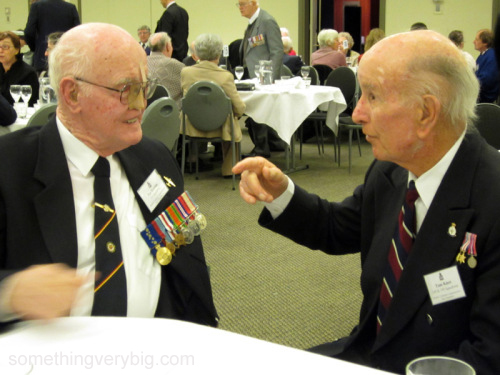
The best part of this event is the ability to float around between tables talking to all sorts of interesting people. Until today, I’d never met a real live Bomber Command flight engineer. Tom Knox, a Glaswegian flight engineer from 149 and 199 Squadrons, is on the right here:

11jun-bombercommandcanberra-067s copyThe other man is Pat Kerrins, a pilot from 115 Squadron. They were in animated conversation regarding a mutual friend and just being a fly on the wall while they chatted away was fascinating. A copy of this photo will be winging its way to each of these men shortly. I also met Jean Smith, who served in the WAAF at 27 OTU, RAF Lichfield, and a couple of likely suspects involved with the 463-467 Squadron Association in Melbourne. All very interesting people to know.

This has become an extremely significant event in the Bomber Command calendar in Australia. The Bomber Command Commemoration Day Foundation was set up to organise events like these to ensure that the men and women of Bomber Command get some long-deserved recognition. Behind ANZAC Day and Remembrance Day, this is now the third largest single event held by the Australian War Memorial each year.

Given the level of interest in this year’s event, the men and women of Bomber Command can rest assured that it will continue into perpetuity.

11jun-bombercommandcanberra-004-copys copy

(c) 2011 Adam Purcell