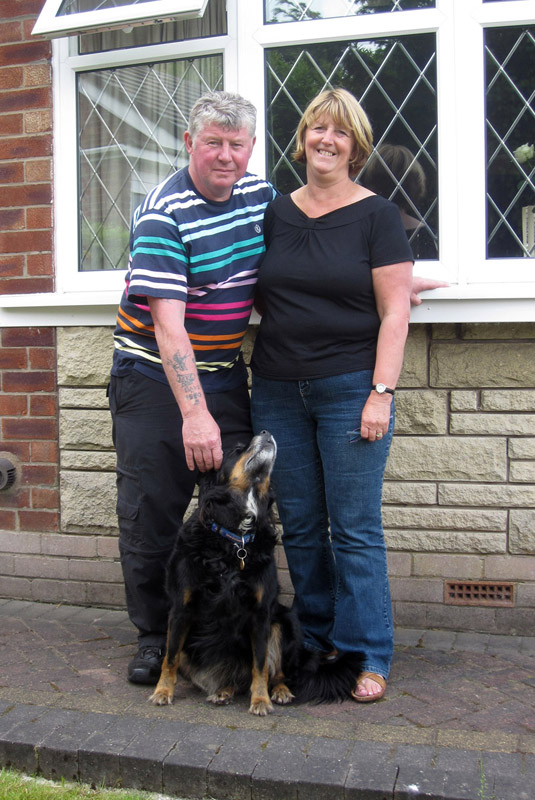
Stationmaster

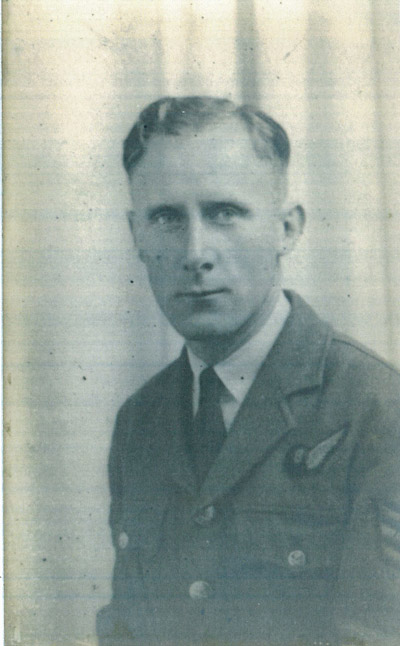
An intriguing email popped into my inbox the other day. I had written to Janet Hurst, of the Goring and Streatley Local History Society in England, seeking assistance in the search for living relatives of Eric Hill, the mid-upper gunner on B for Baker. She replied with these details on E R Hill, from a book published a decade or so ago on the war casualties of that area:

Eric Rowland Hill

Rank: Leading Aircraftsman (LAC)

Service No: 1295905

Unit: Royal Air Force Volunteer Reserve, served as clerk, special duties, 250 Wing, Middle East Command

Died: 21 September 1942 of enteric fever (typhoid)

Memorial: Ismailia War Memorial, Egypt 7C9

Next of kin: Mr & Mrs F. Hill (parents) of Goring

Home address: Station House,Wallingford Road, Goring

Educated: Goring School, 1928-1935

Personal details: He was employed in the office of Smallbones, builders. His father was stationmaster at Goring 1917 1947 and assistant organist at Goring Parish Church

Comparing this with my information raises a few conflictions. Most notably, the ER Hill buried in Lezennes – and therefore not in Egypt – was named Eric Reginald Hill, not Rowland. The service numbers and ranks do not match. Either do the dates of death (1942 vs 1944).

But his parents’ names and address do support what I have for Sgt Hill. I had a suspicion that the local historian who researched the book in Goring might have muddled up his details with another entry in the Commonwealth War Graves database. But how could I be sure?

The first thing was to establish beyond reasonable doubt that the man I was looking for was indeed Eric Reginald Hill. This might seem a reasonably obvious fact, but I decided to go back to primary sources to be sure. I have a copy of a ‘Circumstantial Report’ from 467 Sqn to the Air Ministry in London, dated 11 May 1944, that confirms “1352851 Sgt Hill ER, MU/AG” as a member of the crew posted missing the previous night. This service number matches that on the Commonwealth War Graves Commission database in the record for Eric Reginald Hill. It (unsurprisingly) also matches the service number on the gravestone in Lezennes. Phil Smith’s logbook has many entries including a “Sgt Hill”, and of course these entries are dated 1944, well after LAC Hill died in Egypt. This is to me fairly solid evidence that we have the right man – barring an extremely serious error by CWGC.

Next, I needed to find some sort of connection between Eric Reginald and his parents. CWGC records his next of kin as “Frederick and Fanny Rebecca Hill, of North Weald, Essex”. The names match Janet’s information, but the address does not. Wanting to discount the possibility of an error on the part of CWGC, I went back to some primary sources.

I found a letter written by Gilbert Pate’s father Sydney to Don Smith, the father of the pilot of B for Baker, dated 12NOV44:

“Your mention of Mr F Hill of Goring (Berks) completes the “tally” of 7 names, and we are obliged for this.”

Also in my files was a letter from W/Cdr Bill Brill, CO of 467 Sqn, dated 01SEP44 and again written to Don Smith:

“The addresses of the English members are:-

Mr F Hill (Father)

Station House

Goring

Reading

Berks.”

Janet then sent confirmation of an entry in the Goring Parish registers showing the baptism of Eric Reginald Hill at Goring on 26 June 1921. Critically, she says, he is recorded there as the son of “Frederick and Fanny Rebecca Hill, stationmaster of Goring”.

So I now had a name and address match for Eric Reginald Hill’s parents. But it still did not tally exactly with what is on the CWGC database. There was the remote possibility of another Fred Hill existing, one who also had a son named Eric R Hill. I needed a link between Goring and North Weald. And as it happened, I found something that, while not absolutely incontrovertible, is fairly strong evidence. It is a note on a scrap of paper found amongst Gilbert Pate’s box of letters. Scrawled on it, in an unknown hand, is this:

“Mr Fred Hill, 18 Bassett Gardens, North Weald,Essex. Father of Eric Hill”

This appears to match what is in the CWGC database. But can I explain the reason for the two addresses?

I can’t, at least not from what primary sources I have found to date. But I do have a possible scenario. I do not know when the unknown note was written, but perhaps the Hills initially lived in Goring and after the war moved to North Weald. According to Janet’s email Fred Hill was stationmaster until 1947 so a move around then is certainly within the bounds of possibility. Certainly it is plausible that, as it took CWGC some years to sort out all of their casualties following the war, their records were updated with a new address. The note may have been a record of that new address for the family of Gilbert Pate.

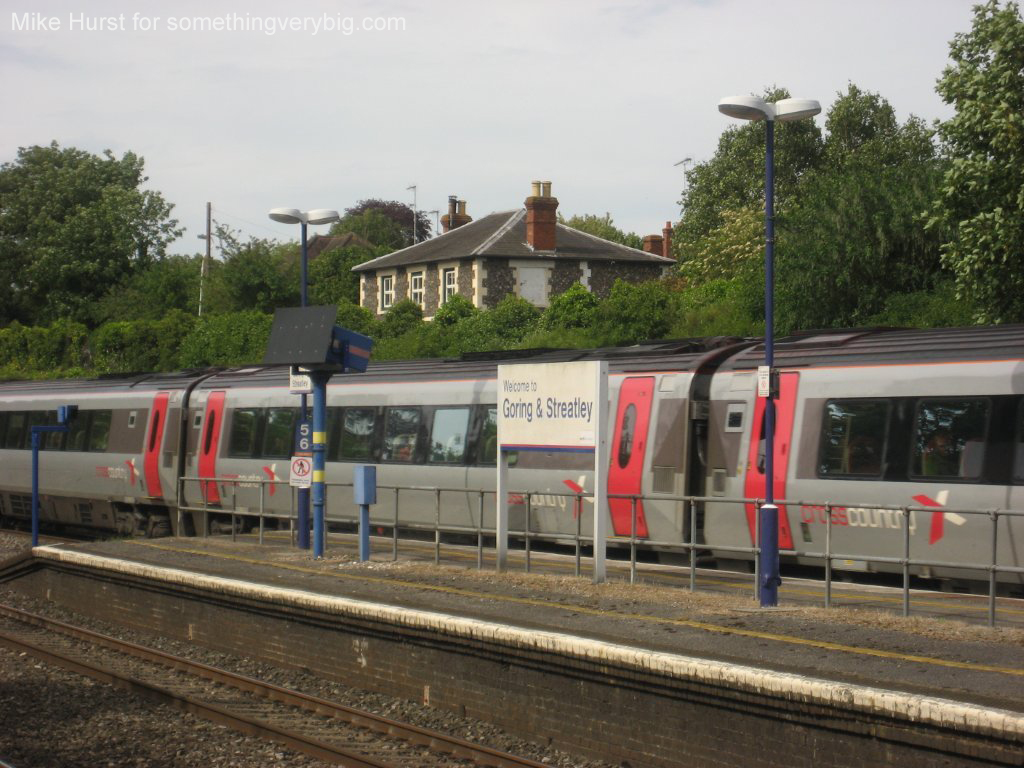
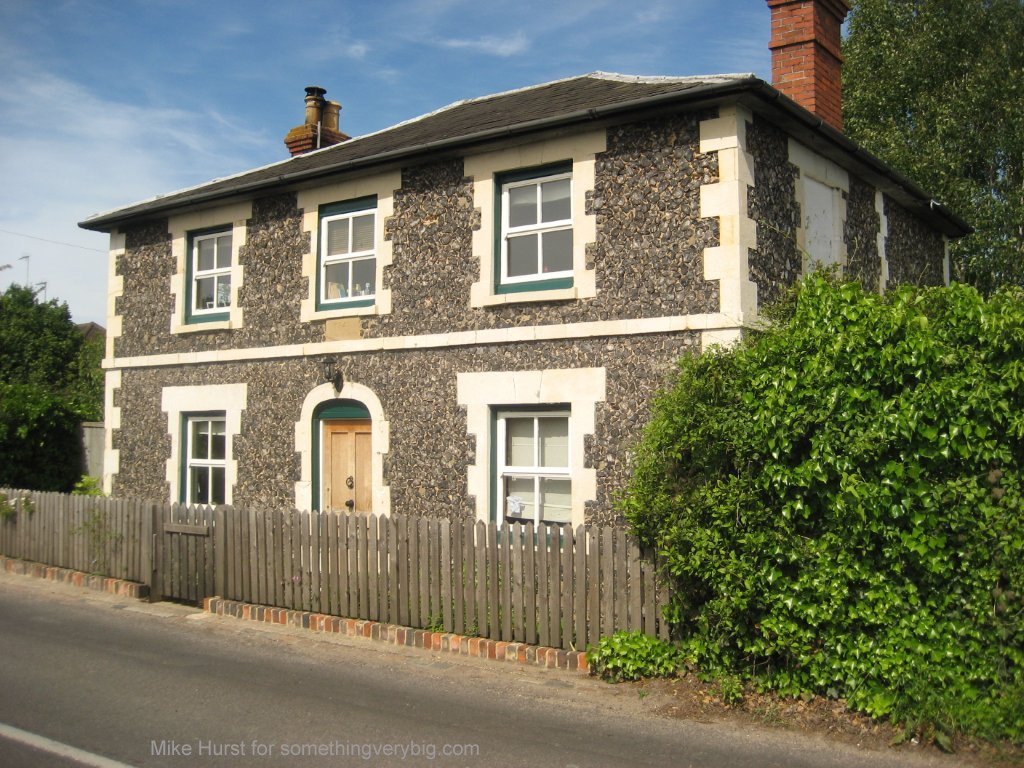
Having established, in any case, that Eric Hill’s father Frederick was the stationmaster at Goring, Janet sent me some photos of a rather pretty stone house in Goring Village.

It is called the Station House – and it is where Eric Hill once lived.
c05-215-003 copy

c05-215-004 copy

Janet tells me she will ask around the village in the next little while to see if anyone remembers or knows what happened to the Hills. She also suspects that the family tree on Ancestry.com that gave some information on Eric’s siblings may not be entirely accurate, so will have a dig through some primary sources for me.

The search goes on.

Image credit: Mike Hurst

Other sources: Janet Hurst, Mollie Smith, Gil and Peggy Thew

© 2011 Adam Purcell

The Lost Diggers

“It’s like looking back into time, looking into the eyes of men who’ve just been in battle.”

-Australian War Memorial historian Peter Burness, quoted in the Sydney Morning Herald: http://www.smh.com.au/world/diggers-at-play-frozen-in-time-20110226-1b97y.html

In 1916 a French couple by the name of Thuillier began taking photographs of allied troops as they passed through their village of Vignacourt, just behind the lines on the Western Front. They began it as a means of making a little money – but what they created has become a priceless collection of immense historical value.

The collection was almost lost to history. A French amateur historian first tried to alert Australian and British authorities to its existence some 20 years ago, but nothing came of it. It was only recently that they were uncovered, in three dusty chests in the attic of the old Thuillier family farmhouse. The Sydney Morning Herald article reports that the farmhouse was about to be sold – which could have been the end of the three dusty chests, until Burness and his team intervened.

As Gil Thew told me, his uncle’s effects hadn’t been touched for over thirty years. I don’t have any comparable material concerning my great uncle Jack. The family story is that his letters disappeared sometime in the 1960s. Perhaps they were seen as merely dusty old papers, of no interest to anyone.

But like this story shows, what one person might consider old junk could be a goldmine. I’ve been lucky enough to study closely the archives of ‘dusty old papers’ belonging to two of the crew of B for Baker. Reading this story made me wonder what else might still be out there, largely forgotten – but waiting to be found.

(c) 2011 Adam Purcell

Have the Brits changed their tune?

I’ve been thankful that the crew I am researching has four Australians in it. This is good because it means that it was very easy to access copies of their service records. The National Archives of Australia provide records to anyone who requests them, for a small fee – and once the records have been requested they are digitally scanned and placed onto their website where anyone can access them free of charge.

But getting British service records has always been much, much harder. They are still under the care of the Royal Air Force and previously you needed to write to their office at RAF Cranwell. You could access an extract of your record for free if you were a veteran, but anyone else was up for a GBP30.00 fee, payable by cheque only (rather difficult to organise from Australia!). On top of that, due to ‘privacy laws’ you required the written permission of the next of kin to access any records at all. If you didn’t have that permission (perhaps you were still searching for them… sound familiar?!??), you couldn’t access anything at all.

I managed to find Freda Hamer, daughter of Jerry Parker’s widow, and got a letter from her which I used to get his service record – which was two single pages of A4, with information limited to his promotions and postings. Useful, but at GBP30.00, rather steep – and a little unreasonable considering for AUD15.00, or about a quarter of the cost, you got a colour scan of an entire service record for an Australian airman – which could run to seventy or so pages! And I needed to trace Jerry’s family before the RAF even considered giving me that much.

But have things changed? Phil Bonner alerted me to this web page a few months ago. It would appear that an otherwise unannounced change has occurred:

 Under the scheme, and in recognition of the duty of care owed to the family of the deceased subject, for a period of 25 years following the date of death of the subject and without the consent of the Next of Kin, MOD will disclose only:  surname; forename; rank; service number; regiment/corps; place of birth; age; date of birth; date of death where this occurred in service; the date an individual joined the service; the date of leaving; good conduct medals (i.e. Long Service and Good Conduct Medal (LS&GCM)), any orders of chivalry and gallantry medals (decorations of valour) awarded, some of which may have been announced in the London Gazette.

After this period, and if it is held, in addition MOD will disclose without the requirement for Next of Kin consent: the units in which he/she served; the dates of this service and the locations of those units; the ranks in which the service was carried out and details of WWII campaign medals.

Note no further requirement for NoK consent.

So it looks as though I’ll now be able to get parts of the service records for Ken Tabor and for Eric Hill.

Still need to organise some cheques in GBP though.


One Friday Afternoon’s Work

Gilbert Pate’s first flight – ever – was in a Tiger Moth from Mascot, Sydney in August 1939. His father, Sydney, wrote about it in a letter to Don Smith in July 1944, after the crew had gone missing (A01-346-003). Gilbert had gone flying with a good friend, Andrew MacArthur-Onslow. They even flew over the Pate family home in nearby Kogarah (“2-storey”, wrote Sydney Pate, “and in the nature of a local land-mark”).

Sydney also wrote that Andrew was “now alas deceased”. I decided to try and find out what happened to him.

It seemed likely that Andrew’s was a war-related death, so the Commonwealth War Graves Commission’s database was my first port of call. I found a match:

Name: MacARTHUR-ONSLOW, ANDREW WILLIAM
Initials: A W
Nationality: Australian
Rank: Flight Lieutenant
Regiment/Service: Royal Australian Air Force
Age: 25
Date of Death: 18/01/1943
Service No: 261535
Additional information: Son of Francis Arthur and Sylvia Seton Raymond MacArthur-Onslow, of Campbelltown.
Casualty Type: Commonwealth War Dead
Grave/Memorial Reference: Row A. Grave 6.
Cemetery: TAMWORTH WAR CEMETERY

Note that he died a Flight Lieutenant and is buried at Tamworth, NSW, the site of an Elementary Flying Training School. This suggested he was an instructor.

I next searched the National Archives of Australia for a service record – which exists, but is not digitised so I can’t access it from here. I did find a record of his enlistment in the Australian Army Militia pre-war. I also looked through some Tiger Moth accident reports but found no matches.

Perhaps Tamworth cemetery records would yield something. I found this page, which had the bloke I was looking for. It also had a record for another man killed on the same day – a Thomas Myles DAWSON of Queensland. Figuring two men was the normal crew complement at an EFTS, there was a good chance that both of these men were killed in the same accident.

Dawson proved the breakthrough. A search for his service number at the National Archives pulled up a service record (digitised) – and, more importantly, an entry in an accident file (also digitised). It was a simple matter to access the accident file, which answered the question of what happened to F/L AW MacArthur-Onslow.

Gilbert Pate’s great mate, who had held a pilot’s licence before the war and who took Gilbert for his first flight, possibly sparking Gil’s interest in flying, was killed in a flying accident while serving with the Central Flying School.  On 18JAN43  MacArthur-Onslow was flying with a Sgt TM Dawson in Wirraway A20-45, on an authorised practice low-level sortie 16 miles south-east of Tamworth. They crashed during the low-level segment of the flight and both were killed. The aircraft was written off. (A04-087-001, NAA: A9845, 102).

The most pleasing thing for me in this saga is that it all happened one Friday afternoon. I was reading through all of Sydney Pate’s letters in preparation for an article I’m working on about Gil when I read the July 1944 correspondence to Don Smith. That sparked the curiosity to find out what happened to Andrew MacArthur-Onslow – and over the course of a couple of hours I found what I was looking for. Another loose thread tied off, another facet of Gilbert Pate’s life uncovered.

© 2011 Adam Purcell

Finding Phil Smith

It was a very significant letter.

A single page of A4, written in a steady but flowing hand, it was this correspondence of November 1996 which turned a passing interest in Uncle Jack’s story into something much bigger. The letter was from Doug Wheeler, himself a former Bomber Command navigator and, at the time, the secretary of the NSW branch of the 463-467 RAAF Lancaster Squadrons Association. Doug lived a couple of towns from where I grew up. I’d done quite well earlier in the year in a national history competition with an entry based around what I knew then about Jack. Doug saw an article about my entry in the local paper and contacted me through my school.

It was, in fact, this letter which led us directly to the sole surviving member of the crew of Lancaster LM475.

“Squadron Leader D.P. Smith survived and evaded capture […] I have been in touch with him a couple of times in recent years. I am sure that if you wished to contact him at any point he would be happy to help.”

Happy to help, he was. We made contact and, early in 1997, visited the old pilot and his wife Mollie in Sydney:

Donald Philip Smeed Smith – better known as Phil – was an industrial chemist working in the sugar industry when he joined the RAAF in 1940. By November of that year he had made his first solo in a Tiger Moth at Tamworth. He arrived in the UK in July 1941 and flew the first operation of his tour in October of that year with 103 Squadron, Elsham Wolds. That tour was completed in June 1942 and Phil became an instructor pilot for a spell. In late 1943 he returned to operations via 1668 Conversion Unit at Syerston – which is where, as a Squadron Leader, he was joined by the rest of the crew that he would lead to 467 Squadron.

The Lille raid was Phil’s 51st operational flight. Not even he could remember exactly what brought the aeroplane down. He simply found himself being ejected from the aircraft, by whatever means, and descended by parachute. After a short-lived attempt to walk to neutral territory in Spain, Phil was sheltered by a French family until the invasion forces caught up in September 1944.

Phil returned to Australia shortly thereafter. He was hospitalised in early 1945 with peritonitis. Mollie tells me that he was saved by a massive dose of penicillin. Phil wasn’t demobbed until late 1945, spending the remaining time of his five years in the Air Force as Commanding Officer of 88 Operational Base Unit, Bundaberg. He met and married Mollie after the war, had a family and returned to the sugar industry.

Phil Smith died in 2003. I remain in touch with Mollie who still lives in Sydney.

Receiving the letter from Doug Wheeler in 1996 and making contact with Phil Smith turned out to be a substantial factor in turning my interest in my great uncle into, well, Something Very Big. Here was someone who had actually known my great uncle Jack. Here was a living connection to the Man in the Photograph. In more recent years Mollie has allowed me to borrow and study Phil’s archive of letters and photographs, which has added immeasurably to my understanding of his experiences. I think this archive inspired me to start looking to see if there was anything else like it still out there, waiting to be found.

There have indeed been other collections like it that I have found. The search goes on for more.

C05-043-002med(c) 2010 Adam Purcell

This will be the last entry on SomethingVeryBig for 2010. The out-of-hours workload in the new job is significant, and I’ve discovered that I don’t at this stage have sufficient time to devote to properly researching and writing new posts. I’ve therefore decided to take a break from it for a month or so. 

I should be back by mid January.  

Adam 

Into the Silence

“Every day I wonder + cogitate about what really happened to the Lancaster on May 10/11. It’s such a peculiar happening – into the silence” (A01-113-001)

Writing to Don Smith in August 1944, Sydney Pate put into words what so many at the time and since have wondered. Just what was it that caused the loss of Lancaster LM475 over Lille?

When Phil Smith returned to England from occupied Europe a month or so after those words were written, Mr Pate could be forgiven for expecting that the only survivor of the crew might be able to shed some light on what really happened that May evening. But it was not to be. Phil’s first letter to his parents, written just five days after returning to England, reveals very little of the mystery (A01-033-002):

“All I can say about the accident is that I was extremely lucky to get away with it”

If anything, this brief account only served to further muddy the waters for Sydney Pate. He wrote to Don Smith in October 1944 (A01-094-001):

“I am struck by [Philip’s] use of the word ‘accident’, its precise application is still not clear to me… was it from enemy attack? Was it from internal misadventure? Was it from its own bomb load?”

Mr Pate put into words what is still puzzling, even today. When we first met Phil Smith in 1996 we asked him what he remembered. His answer?

Very little. Everything, he said, went hot, dry and red – and suddenly there was no aeroplane around him anymore. So he pulled his ripcord and parachuted to the ground.

Even the only man who survived the destruction of LM475 never knew for sure what caused his aircraft to crash. So what hope have we, 65 years later, of finding a definitive answer?

I’ll happily concede that, without wreckage to examine and without any known eyewitnesses, it is highly unlikely, if not impossible, that I will ever be able to nail down a probable cause with any degree of certainty. But there is some written evidence that I can use to look at a number of theories. At this stage in my research I have not actually studied these closely. I am simply putting the theories out there so I can start thinking about them in more detail in the future.

The most obvious possible causes concern enemy action:

  • Shot down by flak
  • Attacked by a nightfighter

Other causes might be seen by today’s air crash investigators as ‘accidents’:

  • Collision with another aircraft
  • System failure eg engines
  • Structural failure through manufacturing or maintenance defect
  • Airframe icing in poor weather
  • Pilot or other crew error
  • Overstressing of airframe, causing structural failure
  • Controlled flight into terrain
  • Running out of fuel causing a crash

There could also be some other, more ‘out there’ scenarios:

  •             Hit by a bomb dropped from above
  •             Own bombs collided with each other after leaving aircraft and exploded

This is by no means intended to be a comprehensive list of all possible causes for the loss of LM475. I may even edit this post to add more if I think of any plausible ideas in the near future. Though there remains no physical evidence in existence – only a single propeller blade is left of the wreck of the actual aircraft – there is written evidence that lends support to some of these theories. I don’t think that enough evidence exists to be definitive, but I think it would be an interesting exercise to at least try and produce a plausible, probable cause.

(c) 2010 Adam Purcell

The Search for Eric Hill

In late November 1944, Gilbert Pate’s mother Kathleen received a telegram from the Royal Australian Air Force Casualties Department:

“FURTHER INFORMATION RECEIVED ADVISES THAT ONE AUSTRALIAN MEMBER OF YOUR SONS CREW WARRENT OFFICER R W PURCELL AND ONE ROYAL AIR FORCE MEMBER SERGEANT HILL ALSO LOST THEIR LIVES STOP THESE MEMBERS HAVE BEEN RECLASSIFIED MISSING BELIEVED KILLED” (A01-428-001)

It appears from this message that Jack Purcell and Eric Hill had both been identified and more or less confirmed dead at around the same time. But apart from the mention of his name on this and other similar telegrams, the Pates were told very little else about Sgt Hill.

When I first started this research, I also knew very little about the crew’s mid-upper gunner. Like Ken Tabor, Hill appears in the crew photograph:

a05-019-001-large copy

His record at the Commonwealth War Graves tells us that his parents were Frederick and Fannie Rebecca Hill, and that they came from North Weald in Essex. A simple handwritten note in Gil Thew’s archive (A01-373-001) gave an address for Fred Hill, at 18 Bassett Gardens, North Weald. In September 1944 his address was Station House, Goring, Reading, Berkshire (A01-074-001). When I visited the British Library in July 2010 I was hoping to use this information to search for an electoral record and perhaps find names of further members of the family living at the same address.

Sadly this was one of the records that the Library was in the process of moving to another location when I visited, so a new angle was required. Enter Dave Franks with his Ancestry.com membership.

Dave is a family friend who lives in Nottingham and who is working on his own family history. I stayed with him and his family briefly on my last trip and we were able to spend a great night bouncing ideas off each other and searching through ancestry.com. We found a family tree which included Eric Hill, submitted by a man named Harry White. While only very distantly related to Eric, Harry when we contacted him was able to throw some light on the man and his family.

Eric Reginald Hill was, he told us, born in Goring on Thames, Oxfordshire on 7 June 1921. His parents were Frederick Hill, a GWR stationmaster – hence living in Station House – and Fannie Rebecca Noakes, both born in Reading in 1882. They married in the same town in 1904. Harry knew of five children:

  • Winifred Margaret born about 1905 in Reading
  • Marjorie Kathleen born about 1910 in Didcot
  • Rita Ellen Francis born 1911 in the Wellingford Registration District
  • George C born 1913 in Reading
  • Eric Reginald born 1921 in Goring

There is another address on Gil Thew’s piece of paper (A01-073-001). It appears to read as follows:

 “C.J. Duncan, 6 Ulster Rd Gainsborough, Lincs England. Married daughter of Mr Hill”

None of the names from Harry White match those initials. This raises the possibility of either another daughter or, perhaps, I’ve misread a document somewhere.

At the time of writing this was all I had in the search for Eric Hill’s family. Possible avenues for further research from here could involve tracing any further children belonging to Eric’s siblings, chasing up the C J Duncan lead or even searching for a possible archive or other records belonging to the GWR.

(c) 2010 Adam Purcell

I’m now in the middle of moving and so internet access may be a little intermittant for the next little while. Please bear with me, and hopefully normal service can resume shortly!

Searching for Ken Tabor

1850279 SERGEANT

K.H. TABOR

FLIGHT ENGINEER

ROYAL AIR FORCE

10TH MAY 1944

So reads the inscription on one of the nine Commonwealth War Graves in the Lezennes Communal Cemetery, near Lille in France. It commemorates the flight engineer of LM475, one Kenneth Harold Tabor.

This was quite literally all the information that I had when I began this search. The only known photo showing the entire crew includes Tabor:a05-019-001-med copy

Ken is third from the left:

a05-019-001-large copy

But it was Mollie Smith’s superb archive of letters which revealed the first clue. Wing Commander Bill Brill – the 467 Sqn Commanding Officer at the time of the Lille operation – wrote to Don Smith in September 1944 to advise contact details for the next-of-kin of the rest of Phil’s crew. A Mr J Tabor lived at 104 Castle Rd, Winton, Bournemouth, Brill wrote (A01-074-001).

My first step, then, was suggested by my good friend Max Williams . He provided the addresses of four Tabors listed in the Oxford/Bournemouth phone book. I wrote letters to each… but of the four, one was no relation and the other three were all related to each other, but not to the Tabors I was searching. Call that a dead end.

Steve on the Lancaster Archive Forum suggested doing a search on the FreeBMD website. This turned up a K H Tabor, born in 1924 in Christchurch, Bournemouth. His mother’s maiden name, the record said, was Lanham. This would have made Ken 20 at the time of his death – young, but certainly plausible. The trick, though, would be to try and match that record to the ‘right’ K H Tabor. I needed to go overseas to find the next clue.

I had a few days at the end of my UK travels in June 2010 to spend at the British Library, intending to try and find what I could on the two remaining members of the crew. Sadly most of their electoral records were ‘in transit’ to another storage location when I visited so only selected records were available on microfilm. Luckily for me, this included parts of the Bournemouth rolls. I spent perhaps half an hour grappling with the microfilm machine before I came across what I was looking for. There, at 104 Castle Rd, Winton, were listed John Albert and Dorothy Violet Tabor.

Ancestry.com was my next stop – which revealed a marriage record for a John A Tabor to a Dorothy Violet Lanham-Smith in 1919 in Christchurch.

I had a match.

Further searching revealed more tidbits. John Tabor was born in 1894 in Poole, Dorset. He died in 1956 in Bournemouth. Dorothy was born in 1899, and died in 1978 in Poole, Dorset. A letter from Sydney Pate to Don Smith in November 1944 suggests that they also had a daughter.

At the time of writing I have not yet managed to find the final link to living next of kin. The next step I think will be to obtain copies of the death certificates for Ken’s parents from the Bournemouth record office – which I’m hoping will allow me to find a newspaper death notice. My hope is that I can use that to find names for surviving next-of-kin… and the process then starts again.

In 2004, Freda Hamer visited the cemetery in Lezennes. In front of Ken’s headstone when Freda arrived was a small bouquet of flowers. This is encouraging. To me, it seems certain that someone, somewhere, still remembers Ken Tabor.

All I need to do is find that someone.

© 2010 Adam Purcell

Finding Dale Johnston

Alastair Dale Johnston – known as Dale – was the wireless operator on LM475. A tall redheaded Queenslander, Dale was 24 when killed over Lille.

As he was a member of the Royal Australian Air Force, Dale’s service record was easily obtained from the National Archives of Australia. In fact I had a copy of this document as far back as 2003. So I knew from an early stage Dale’s path to 467 Squadron, via 14 OTU Cottesmore, 1661 HCU Winthorpe (where he would have met Jack Purcell and Jerry Parker) and 9 Sqn at Bardney. There is a photo believed to show Dale with Jerry Parker and two as-yet unidentified airmen that was probably taken at either Winthorpe or Bardney. When their pilot was lost over Berlin on a ‘second dickey’ trip, Dale and his mates ended up at 1668 CU, Syerston – which is where they joined with Phil Smith and Gil Pate before their posting to 467 Squadron, Waddington, 30 December 1943.

The search for Dale’s family took me down a couple of dead-end streets but in the end success came unexpectedly easily. I felt I knew the family before I found them because I had read many letters from them. Dale’s mother Fannie was, like many of her time, a prolific writer. Many letters from her survive in Mollie Smith’s superb archive. Sadly, her handwriting – not fantastically clear to begin with – noticeably deteriorates as time goes on. There were also a couple of letters from a mysterious ‘Mollie Webster’, which appeared to be from someone in this family as well.

The key lead in this search came from a letter written by Edward Purcell – my great grandfather – to Don Smith, Phil’s father:

“My chief grief at the moment is for my… now old and very valued… friend, Mrs Johnston. She has, as you already know, lost one boy on the Sydney, and, as her other son, Dales twin, is now on active service” (A01-086-001)

The relative openness of Australian authorities (when compared to their British counterparts – perhaps a subject for a future blog post) meant that it was straightforward to find the names of Dale’s two brothers.  The HMAS Sydney connection was particularly valuable, given publicity in the last couple of years surrounding the discovery of the wreck of that particularly unfortunate ship. A search on the Commonwealth War Graves Commission’s website for Johnstons killed on the date the Sydney was sunk yielded a couple of possibilities – but I knew Dale’s father’s name was Charles Erskine so there was a very good chance that one Donald Erskine Johnston was the man I was after. CWGC confirmed Donald’s parents matched those of Dale – so one brother was uncovered.

I could then plug Dale’s date of birth into the Department of Veteran’s Affairs WWII Nominal Roll to search for Brother # 2. Two options came to light – Aubrey Thomas or Ian Rennie. Aubrey was according to the Nominal Roll in the Merchant Navy but Ian was in the Air Force, which seemed to me to be more likely to match the ‘active service’ description from Edward Purcell.

I tried tracing Ian on the Ryerson Index which had proven so useful in the search for Gil Pate. This revealed an entry for a local Queensland newspaper from 1992 but without a copy of the actual death notice following this one up was going to be tough.

Don Johnston seemed to be the best way forward. I searched for an HMAS Sydney crew list, and found the HMAS Sydney II Virtual Memorial. Some crew on the list have short histories attached that have been submitted by families. Crucially, Ian’s history was available in a scanned PDF document – which included this:

“Donald Erskine Johnston the youngest son of Charles Erskine and Francis Emma Johnston, was born on the 17th January 1921 in Oaklands (Southern Riverina) NSW. He had a sister, Mary Rothney, who is still alive today at age 92, and twin brothers Alastair Dale and Ian Rennie. The twins joined the RAAF during WWII. Alastair was a member of 467 Sqn when he was shot down and killed over Lille in France on the 10th or 11th May 1944. Ian survived the war, and died in 1992.” (C06-049-006)

In one paragraph it confirmed I’d found the right Johnston, showed that someone, somewhere remembered the boys – and raised the intriguing possibility that their sister was still around.

I contacted the Naval Association who runs the Virtual Memorial website. Their President, Les Dwyer, did the rest. He passed my request to the people who had submitted the history – and a few days later, Don Webster contacted me. He was Mary’s son. Sadly he told me that she had died a couple of years ago – but he did clear up that she was known as Mollie (which, of course, explained the letters from Mollie Webster).

Finding Don Webster completed the tally of four Australian crew members. With Freda Hamer the first of the British group to be traced, this leaves two more – the families of Ken Tabor, flight engineer, and Eric Hill, mid-upper gunner. I’m still working on these ones…

(c) 2010 Adam Purcell

BUMP – My site stats shows that someone today (15APR11)  found this blog through a search engine, searching for Charles Erskine Johnston. As you can read above, Dale’s father was a man of the same name. If this looks like being the same bloke, please drop me a message through the comments box below.

Read and post comments | Send to a friend

Jerry Parker

At 30, bomb aimer Jerry Parker was the oldest member of the crew of Lancaster LM475. He and his wife Ethel lived in Leyland in Lancashire – of Leyland trucks fame – where Jerry worked at the local General Post Office. They had a small daughter named Ann, making Jerry the only known father on the crew. Before the war Jerry was the Choirmaster and organist at the (then) Leyland Congregational Church.

Jerry originally joined the Royal Army Service Corps as a driver but it appears that in September 1940 he transferred to the Royal Air Force – according to his family because he could earn more as aircrew. Interestingly most of Jerry’s training took place during an eight-month stay in South Africa before he returned to the UK in November 1942. Via a series of further training units, and a short-lived stint with 9 Squadron at Bardney, Jerry made it to RAF Waddington with Phil Smith, Jack Purcell and the rest in late December 1943.


Jerry Parker was the first of the RAF members of the crew whose family I located when I first started doing this research. I knew that he had been married – and that he had a child – only by virtue of what is carved into his grave stone in Lezennes:

“A dear husband and father of Ethel and Ann”

Two letters in Mollie Smith’s archive provided the most important clues. One had been written by Dale Johnston’s mother Fannie to Phil Smith’s mother Edith in February 1945:

“Mrs Parker is sending a photo of her husband + daughter Ann, on Jan 20th at the Church where Jerry was organist + Choirmaster. Little Ann was to unveil a model organ with a brass plate to his memory” (A01-067-001)

The second revealed which church. It had been written by Rev Harry Townley, of the Leyland Congregational Church, on behalf of Ethel Parker:


“She desires me to add that only a few days before he retuned to duty, her husband [Jerry Parker] had spoken in Very High terms of the skill and courage of his officer, your son.” […] “It may be that you will hear something about Lt. Smith other than through ‘official intimations’. Should you do so will you kindly communicate with me […]” (A01-057-001)

An internet search revealed that the Leyland Congregational Church still existed, albeit now known as a United Reformed Church. I was able to find a contact at the local Historical Society. In June 2009 I made contact with Bill Waring, a member of the Society who had researched the war dead of Leyland extensively in 1995. He had the relevant contacts at the Church and, a few weeks later, I had an email from Freda Hamer. Freda is Ethel Parker’s daughter, but to her second marraige. Jerry’s own daughter Ann died of cancer in 2001 and Ethel herself died in 2003.

In June 2010 I was able to stay with Freda and her husband David in Lancashire for a few days while I was travelling around the UK. It was fantastic to visit them and explore the area where Jerry lived:


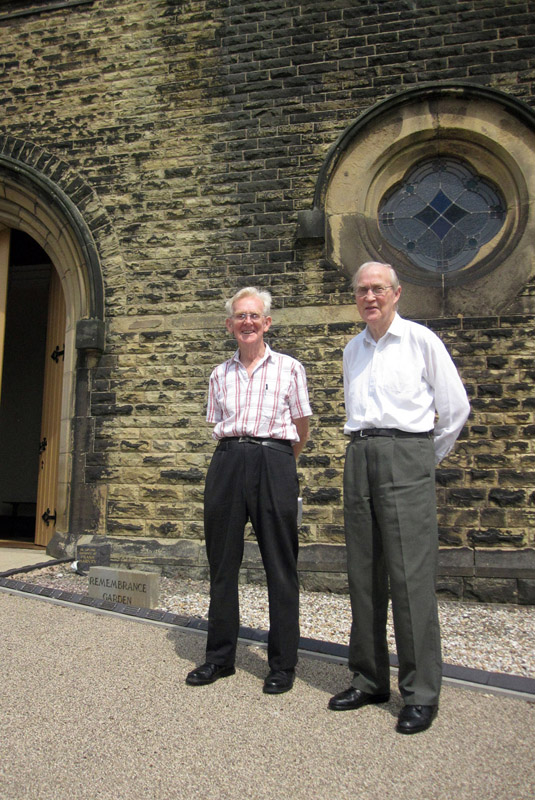
I also caught up with Bill Waring. Here he is on the right, in front of what is now the Leyland United Reformed Church, along with Ernest Wrennal (who led Bill directly to Freda):


Ernest took me upstairs behind the church, through a small wooden door and onto a little balcony which looks over the pews. He opened some sliding doors – and there was the organ which Jerry used to play:


Back at home, Freda and I spent considerable time talking about the lads and what I had managed to find out about them. I copied her mother’s collection of letters and photos about Jerry – including one very special fragment of a poem which Jerry had written for her. But what I found most poignant was a simple bookshelf which sits in Freda’s front hall. it’s of simple but strong construction and a bit rough around the edges in places: 


But it had been built by Jerry.


Current task: Cataloguing and editing Freda’s collection of photos and letters

(c) 2010 Adam Purcell


Read and post comments | Send to a friend