
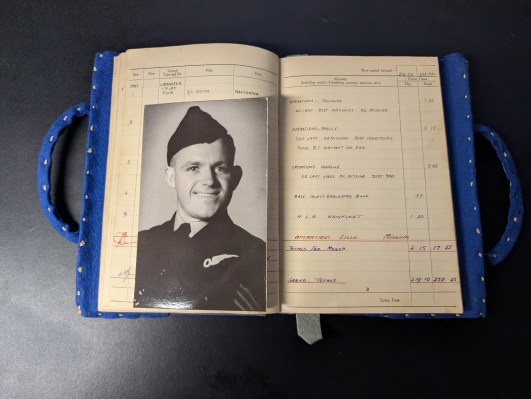
There was a family story I remembered hearing from someone that suggested that Uncle Jack wasn’t supposed to be able to become aircrew. As a young bloke, he had been involved in an accident of some sort that injured a leg. You could volunteer for aircrew from the age of eighteen, but until you turned 21 you still required a signature on your enlistment papers from your parents. Jack’s mother only signed the papers, the story went, in the belief that his leg injury would preclude him from active service.
The only evidence I found that could, maybe, support this story was a line on Jack’s service record describing some scars on his knee and legs. In any case, his mother’s belief was mistaken, and at his medical examination Jack was passed “Category A1B – fit full flying duties”. In October 1940 he was enrolled into the Royal Australian Air Force Reserve and, nearly nine months later, entered No. 2 Initial Training School at Bradfield Park, in what is now the Sydney suburb of West Lindfield.
I decided to find someone who could tell me about Bradfield Park and what life was like in Sydney during the war.
Before the war, Don Southwell lived in Burwood, and he enlisted as soon as he was allowed to, in 1942. Like so many, Bradfield Park was his first posting.
I knew Don through the 463-467 Squadrons Association in Sydney. He’d been part of the group for many many years, organising events and lunches and generally keeping in touch with everyone. Because he was always so involved in organising things, and because he knew everyone, he was always in high demand at the annual Anzac Day lunches. He could be hard to pin down for a proper chat.
If I was to hear about Don’s experiences at Bradfield Park, I’d have to plan ahead. So for Anzac Day one year I travelled to Sydney a day early, so I could visit Don and we could sit down somewhere comfortable, without distractions, for a few hours, just a voice recorder between us, to hear about his war.
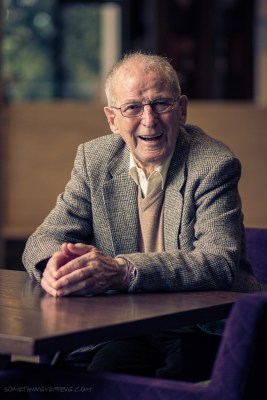
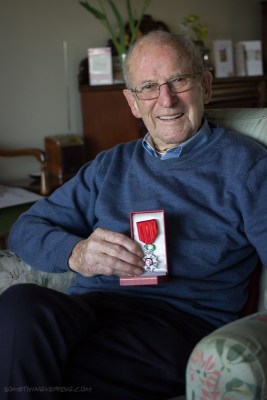
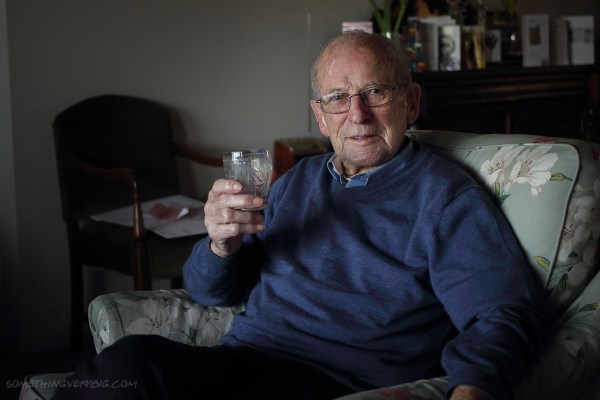
It worked. The ‘somewhere comfortable’ turned out to be Don’s loungeroom, the front room in his house in a northern Sydney suburb that was usually described as ‘leafy’. He was 94 and pretty sprightly when I interviewed him, with white hair, glasses and a ready smile.
He also knew how to talk.
Cups of tea in hand, we settled into well-loved lounge chairs and I turned on the microphones.
I always started interviews with the same question: “Can you tell me something of your early life, growing up and what you were doing before the war?”
It was a pretty standard opener for an oral history interview. Everyone had an early life, right? And if there was one thing that everyone could talk about, it’s themselves. If it worked, I wouldn’t have to say another word for a while. I could just sit there listening as my subject grabbed the proverbial bit between their teeth and ran with it.
Don needed no such warming up. I asked my normal opening question, and he was off. In the transcript[1], there were almost three and a half thousand words before I asked question number two, and by then Don is just arriving in England.
Yep, this man could talk.
Don told me that he was already a member of the Air Training Corps when war came. He remembered wearing an Air Raid Precautions armband and riding his bicycle around the nearby suburb of Ashfield to make sure people were complying with the blackout laws, and spending nights sitting on top of the Ashfield Town Hall watching for Japanese planes.
“We didn’t get any Japanese planes,” he said with a grin.
He volunteered for aircrew but in the meantime he turned 18, and as happened at that age, was drafted into the army. Air Force bureaucracy caught up with him three weeks into an infantry training camp in central New South Wales, so he was put on a train back to Sydney where the army discharged him and he was immediately taken on strength by the air force. After passing all the medical tests he spent several months guarding various wharves in Sydney until he was finally sent to Bradfield Park.
[1] I interviewed Don as part of the International Bomber Command Centre’s Digital Archive. The transcript is available at https://ibccdigitalarchive.lincoln.ac.uk/omeka/collections/document/3491
This post is part of a series, publishing writing originally completed as part of my now-discontinued book project. Find an explanation of the series here, and an evolving list of contents here. (c) 2026 Adam Purcell








 Something Very Big