Ladies’ Day with 463-467 Squadrons Association, Sydney

The 463-467 Squadrons Association (NSW) holds a luncheon every November, on the Sunday after Remembrance Day. For as long as anyone can remember it’s taken place in the rather classy surroundings of the Killara Golf Club in Sydney’s North Shore, and this year was no different. I was able to wrangle the day off work so I flew up from Melbourne last Sunday to attend.

I was staying at my sister’s place in Marrickville so I travelled to Killara by train, walking to the station in teeming rain. One of the stops along the way was Town Hall and here I noticed a tall, slim older gent and a middle-aged woman among the passengers getting on the train. I caught a fleeting glimpse of his tie and it looked rather familiar. They sat across the aisle from me in an otherwise nearly empty top deck compartment and continued the conversation they had been engaged in when they boarded the train. First I overheard the word ‘Killara’, then, a little later, ‘Southwell.’

Clearly, I decided, we were going to the same place. So I moved across the seat and introduced myself. The older gent was Tom Hopkinson, a 463 Squadron mid-upper gunner. He was up from Canberra for the function, staying with his second cousin Pamela who was travelling on the train with him. We had a great little chat on the way and while sheltering from the rain waiting for our lift to arrive at the station to take us to the golf club. It’s not very far away and last year, I thought to myself, I got sunburnt as I walked it…

A nice little crowd had gathered in the atrium area when we arrived. Most of the usual suspects were around, though there had been one or two cancellations as a result of the weather (it was still bucketing down outside).

The next couple of hours saw some good conversation amongst forty-odd guests with twelve veterans in total present. I found myself seated between Ron Houghton, a 102 Squadron Halifax skipper, and my frequent neighbour at these sorts of events, 49 Squadron rear gunner Hugh McLeod. The Golf Club put on a good meal again and, as is traditional, Don Browning proposed a toast to the ladies, present and elsewhere, for their support of their veteran husbands, fathers and grandfathers, which is the reason that this function is known as Ladies’ Day.

A remarkable photograph followed. By my count we had three pilots, a navigator, a bomb aimer, three wireless operators, two mid-upper gunners and two rear gunners in the group. Between them they covered almost every position in a typical heavy bomber crew. Unfortunately there were very few Australian flight engineers, and none were present here or I would have suggested we find ourselves a Lancaster and go flying.
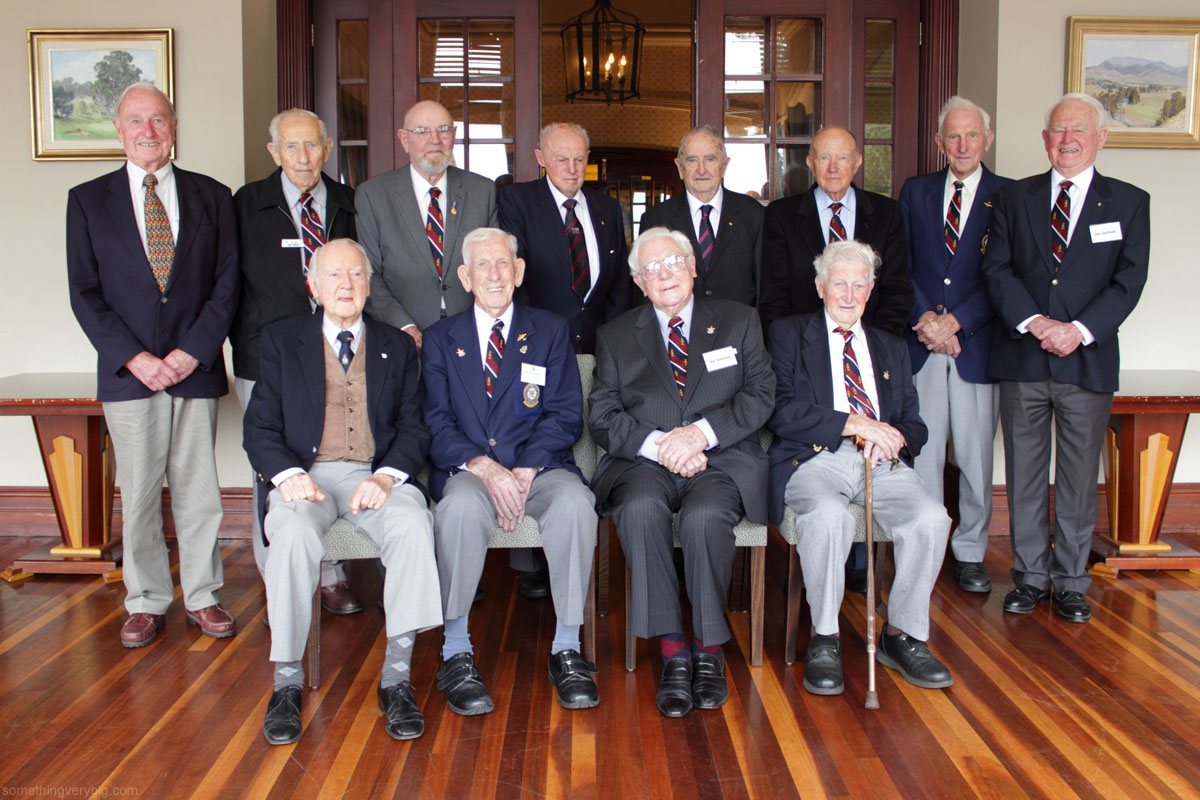
Bomber Command veterans in Killara, November 2013

Seated, left to right: Ron Houghton (102 Squadron Halifax pilot), Don Huxtable (463 Squadron pilot), Don Browning (463 Squadron wireless operator), Harry Brown (467 Squadron wireless operator)

Standing, left to right: Hugh McLeod (49 Squadron rear gunner), Roy Pegler (467 Squadron bomb aimer), Max Barry (463 Squadron rear gunner), Albert Wallace (467 Squadron mid-upper gunner), Ross Pearson (102 Squadron wireless operator/air gunner), Bill Purdy (463 Squadron pilot), Tom Hopkinson (463 Squadron mid-upper gunner), Don Southwell (463 Squadron navigator)

I also made sure that I got a photo with Albert Wallace. In June last year I received a comment on somethingverybig.com from a veteran called Albert Wallace. Unbelievably, it was a different Albert Wallace, who lives in Canada. At the opening of the Bomber Command memorial in London earlier that year he (Canadian Albert) was amazed to meet an Australian veteran of the same name who had also been a mid-upper gunner. I helped both Alberts get in touch with each other, though unfortunately they did not get a photo with both of them together!

Bomber Command veterans at Killara, November 2013

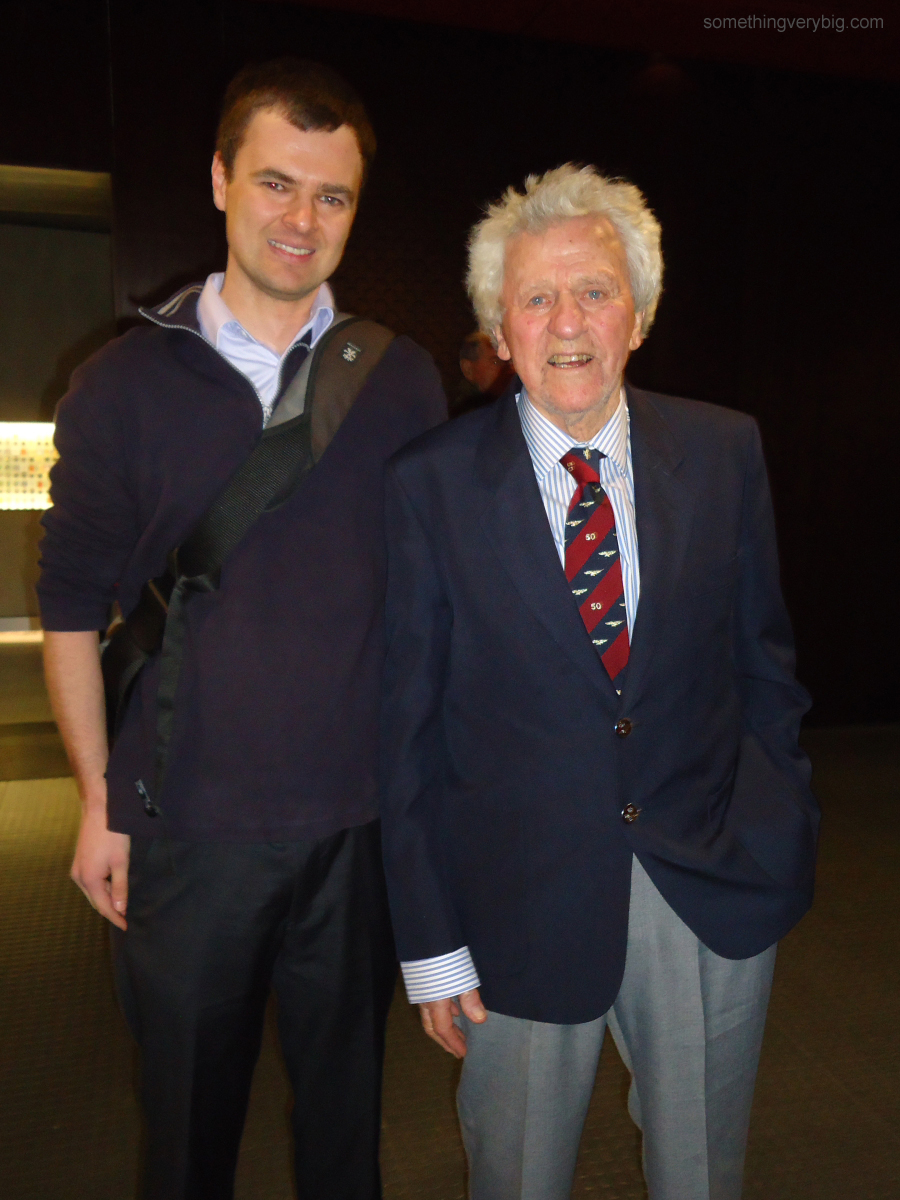
Left to right, in this photo we have Ron Houghton, Hugh McLeod, Albert Wallace and myself.

A couple of photos to finish off, then. Bryan Cook and Don Huxtable:
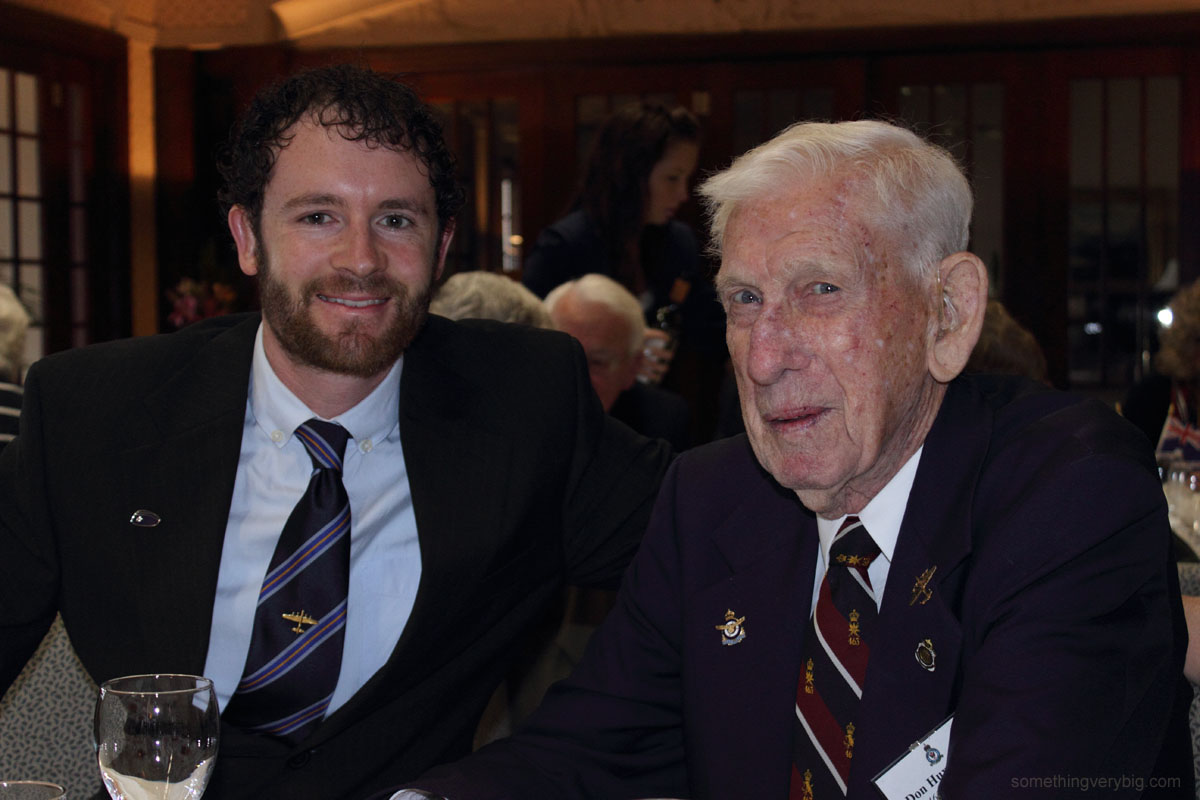
Bryan Cook and Don Huxtable

Hux had a minor heart attack a few months ago but though he looks a little more frail than I have seen him in recent years it clearly has not affected his mischievous nature. Here he is clowning about before the group photo:
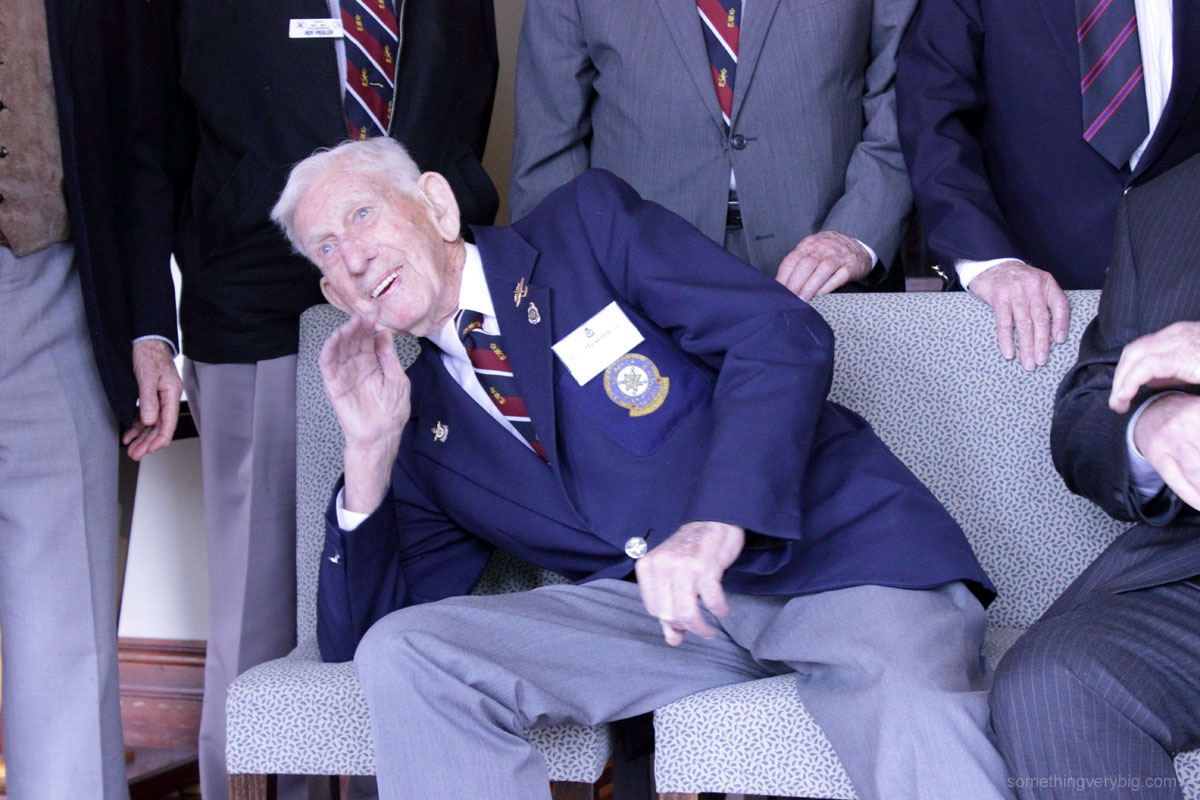
Don Huxtable

Again, a great little function and well worth making the trip up from Melbourne. I’ll be back next year.

© 2013 Adam Purcell

Confusing the Nightfighters

Imagine you are a German nightfighter controller, sitting in a bunker during the Second World War. Listening posts have picked up radio transmissions from navigation beams, warning messages to British shipping, and signals from H2S or Fishpond radar devices as aircrew warmed up their equipment in England. You know the British are planning a big raid tonight and the nightfighter units have been warned. Now the first reports are coming in from observers and radar stations around the continent – large concentrations of raiders are approaching across Belgium and Northern France, heading south-east. But there’s another big force heading towards Denmark. Could they be after Berlin again?

The decisions you make next will play a significant role in the success or otherwise of the nightfighters defending the Reich. Is the force over Belgium a distraction? That’s been their tactic over the last couple of months. Or will the northern group just drop mines along the coast of Germany and scarper again? If you decide the northern threat is ‘just’ a minor mining operation you can send all your fighters to intercept the other force, which could be bound for anywhere in Germany. But then you run the risk of leaving Berlin undefended. So you might decide that the northern force is the real threat, and move your fighters to cover Hamburg from where they can quickly get stuck into any bombers crossing the top of the country. But that leaves the southern force free to attack any part of southern or central Germany untouched by fighters, should it turn out to be the ‘real’ bomber stream. Perhaps you should split your forces and send half to the north and half to the south?

This was the situation facing the German nightfighter controllers on 18 March 1944. As it happened the northern force was indeed a diversion, sent to drop mines in the Heligoland area off north-west Germany. The distraction kept many fighters to the north while the ‘real’ bomber stream slipped through almost unmolested, reaching their target – Frankfurt – having lost only four known victims to the fighters. In all the fighters accounted for just eight out of a total of twenty two casualties that night, a low loss rate probably influenced by the confusion brought about in the nightfighter control system by multiple apparent bomber streams.

A few days later two big forces of aircraft again appeared on German radar screens heading north east over the North Sea: a mining force headed for Kiel and the main bomber stream, which turned sharply south east halfway across the water. This time they flew a route that appeared to threaten cities like Hanover or even Berlin, reinforced by Mosquitos making diversion raids on both of those cities. The tactics successfully disguised the true objective of the bombers, which once again was Frankfurt (indeed, the running commentary that directed the nightfighters did not mention Frankfurt until seventeen minutes after the first target indicators went down there). Nineteen bombers out of a total of 33 that failed to return were seen to fall to nightfighters on this raid. This time the mining force did not distract the fighters unduly but the convoluted and somewhat novel route used still caused some confusion about the actual target and so the loss rate was relatively low for a city-busting raid like this one.

The Frankfurt raids demonstrate two facets of the tactics used extensively by Bomber Command in the spring of 1944 in an attempt to confuse the German nightfighter control system. Most raids carried out in this period were accompanied by aircraft on diversions, harassing raids or mining operations, and used elaborate routes designed to conceal the identity of the real target for as long as possible. On these two occasions the tactics appeared to have been successful, but there were many raids where despite the best planning and intentions, things simply didn’t turn out for the bombers as they were hoping.

One example came a few days after the Frankfurt raids, on 24 March 1944, when the Main Force bombed Berlin. They took a conventional route to the north via Denmark and were supported by Mosquitos attacking Kiel, Münster and Duisburg and a large force of aircraft from Training Groups making a diversionary sweep near to Paris without dropping any bombs. The controllers completely ignored the Paris sweep and nightfighters got stuck into the bomber stream from the island of Sylt all the way to the target and back out again. They accounted for sixteen victims – but worse was to happen to the bombers. A northerly wind that was far stronger than expected blew many crews off track and over the heavily defended areas that the route had been planned to avoid. Many, as a result, fell to flak and a total of 72 aircraft failed to return. The best-laid plans were brought unstuck by nature.

Perhaps the most infamous case, however, was the disastrous raid on Nuremberg a week later, on 30 March 1944. The bombers were routed from England down towards Charleroi in Belgium. There they would turn east for a long leg of some 250 miles, which was planned to thread the bombers safely between the heavy defences in the Ruhr and those of Koblenz to the south. The main force was to be supported by a group of Halifaxes simulating a large force possibly threatening Berlin that would actually drop mines in the Heligoland Bight before returning home, and small forces of Mosquitos to bomb Aachen, Cologne and Kassel as diversions from the main raid. The Germans decided, correctly, that the diversionary raids were just that and concentrated their fighters at two radio beacons between Cologne and Frankfurt. Unhappily for the bombers, their route passed smack between both beacons. Updated winds broadcast to the bombers were incorrect and many were off-track as a result, scattering the stream. In clear conditions over a very thin layer of low cloud, lit by a bright half-moon, and trailing spectacular white contrails caused by an unfortunate atmospheric quirk, their progress simply could not be missed. The bombers fought a running battle all the way to the target and more than sixty of the 94 that failed to return fell to fighters.

This operation had all of the usual tactics applied to it with the diversions and indirect route, but it still resulted in the highest losses of the entire war for Bomber Command. Undoubtedly the moonlight contributed, and the unexpected contrails drew attention to the bomber stream, but luck also played a part. The German controllers guessed that the northern force was a diversion and sent their fighters to the south – and just happened to pick the two fighter beacons that straddled the planned route of the bomber stream. It was a lucky guess that brought so many fighters to the area transited by the bombers, and unlucky chance that conditions were just about perfect for nightfighting when they got there.

The choice about where to deploy their forces was one that the German nightfighter control system faced night after night. Sometimes they got it wrong, and the bombers slipped through unthreatened. But frequently they got it right, and the bombers suffered severely as a consequence. The tactical cat and mouse continued throughout the war and remains a fascinating part of the story of the bomber offensive.

© 2013 Adam Purcell

———

Sources:

Details of German early-warning system from Isby, David C (Ed.), Fighting the Bombers: The Luftwaffe’s struggle against the Allied Bomber Offensive

Details of Nuremburg raid mainly taken from Martin Middlebrook (1973), The Nuremburg Raid

Frankfurt and Berlin raid details and additional information on Nuremberg from Bomber Command Night Raid Reports Nos. 556, 560 and 567.

Temora

About 330km west of Sydney, in country New South Wales, lies a small town called Temora. It’s perhaps most famous these days for the superb aviation museum which has taken up considerable real estate at the local airport since its formation in 1999. Home to a significant collection of airworthy warbirds, most owned by Museum President and Founder David Lowy, the Museum is by far the best in Australia in terms of its airworthy fleet, and is perhaps the closest that we come to something like the Shuttleworth Collection at Old Warden in the UK. It puts on flying days every six weeks or so to display the aeroplanes in the element in which they belong – the air.

It was to one of these flying weekends that I went in September 2009, in the back seat of a Piper Cherokee flown by a friend of mine.

09sep-temora-039 copy

It was a great flight over in beautiful conditions, and I distinctly remember the chaos as we arrived in the circuit at Temora before the flying display started, just one of many light aeroplanes doing the same thing. There was so much traffic that we had to go around twice before we managed to land and at one stage we were on final for the runway and there were no fewer than four other aircraft in front of us. But once on the ground, the flying display was exciting and punctual and the organisation was superb.

But as I was wandering around the airfield I noticed a familiar sight. The hangar that now hosts the Temora Aero Club looked remarkably similar to many of the old hangars at Camden, which was the airfield from which I was doing my own flying at the time. Could Temora have a similar wartime heritage?

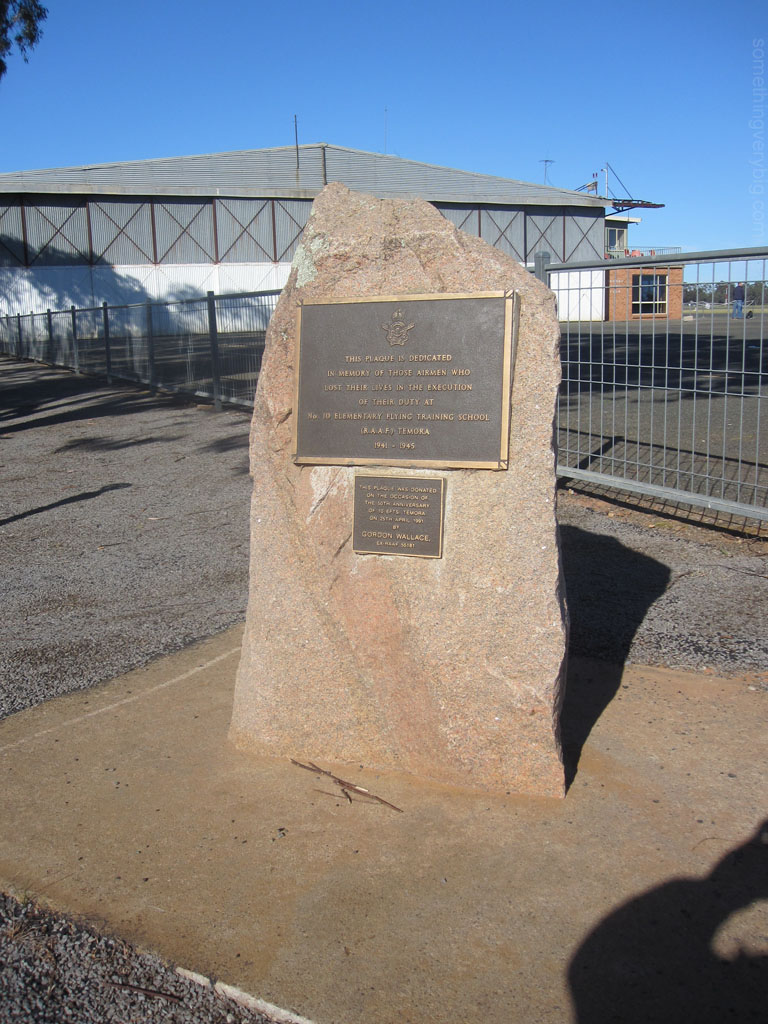
It could indeed. Temora was the site of 10 EFTS, the longest-running Elementary Flying Training School in the Royal Australian Air Force. Close by the Aero Club (which, yes, is in a Bellman Hangar, the sole remaining example out of six which were originally there) is this simple memorial:

09sep-temora-103 copy

A sign near the entrance to the airfield records that upwards of 10,000 personnel passed through 10 EFTS during the war years, and that at its peak it had some 97 Tiger Moths on strength for pilot training. Four satellite fields scattered around the countryside were used when the congestion at the main airfield became too much. Tom Moore, who would eventually fly with 458 Squadron, said  that the satellite fields were just that – fields – requisitioned off farmers with no buildings or facilities other than a bench from which the instructors could watch their students flying around.

Like any EFTS, however, there were accidents during training at Temora. Sometimes they were almost comical – like one chap who “landed 20 feet off the ground and the plane just come down like that and the wings folded down around him,” as remembered by a 61 Squadron pilot named John Boland – but sadly, sometimes they were fatal. There are 13 of the simple white headstones denoting Commonwealth War Graves in Temora General Cemetery.

One of my favourite stories about Temora, however, comes from Lionel Rackley, eventually a 630 Squadron pilot, and doesn’t concern flying at all. He describes it at the Australians at War Film Archive:

Air crew trainees went into a place and they were there for a month, six weeks, and went out again. But the ground staff people were there, so the town belonged to them, really. In those days, we used to wear a forage cap, and air crew trainees wore a little white flash on the front of the forage cap, that denoted us as air crew trainees. And these ground staff, they had set word around Temora that out at the aerodrome there, there’s a venereal hospital. And all those fellows around town with white flashes on their caps, they’re the patients…

It’s not too far from the airfield into Temora itself, and after the flying display finished that September afternoon in 2009 my mate and I meandered in (without a white flash in our caps) to find a pub for dinner. We stumbled the two miles or so back to the airfield a few hours later, much as I imagined countless trainee aircrew had done, almost seventy years before.

© 2013 Adam Purcell

Bomber Command at the Shrine of Remembrance

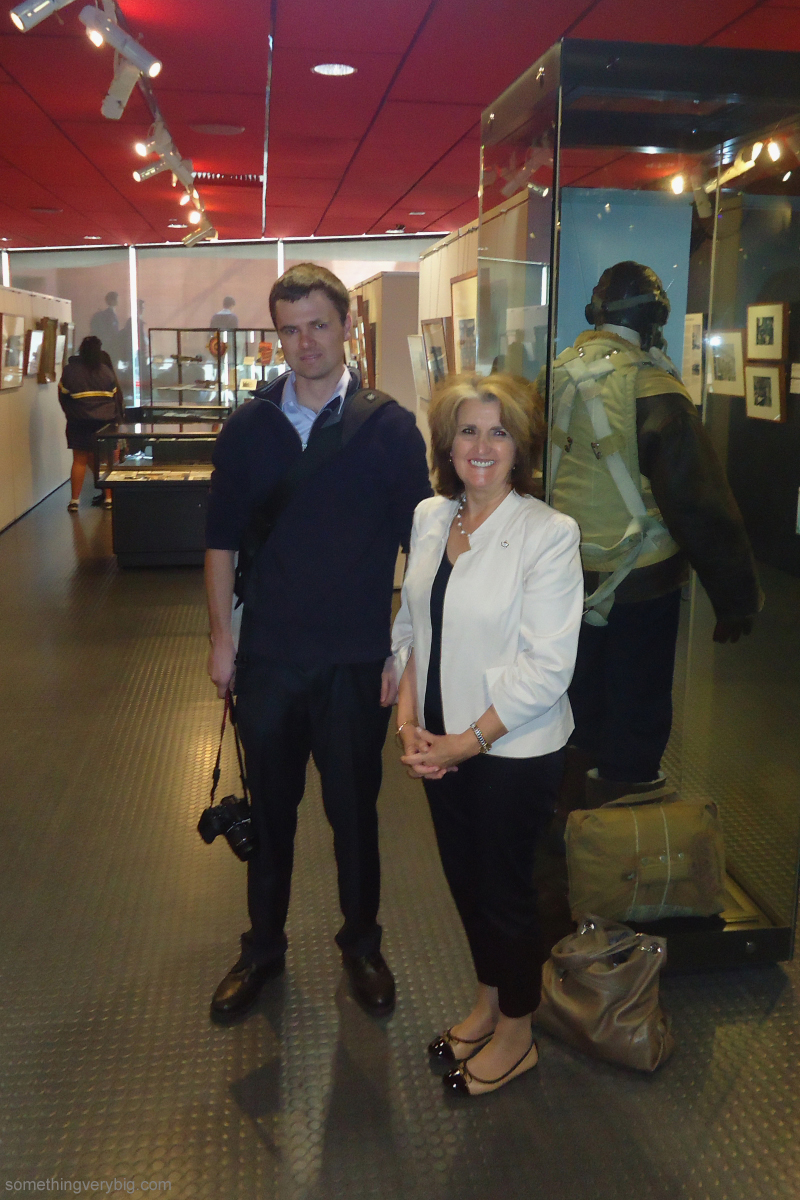
The Shrine of Remembrance in Melbourne has gone all Bomber Command on us. As I’ve posted previously, there are a number of events happening there over the next couple of months. All tie in with a major temporary exhibition which opened earlier this month in the Shrine Visitor Centre. Bomber Command: Australians in the air war over Europe 1939-45 is open until 1 May next year. It’s only a fairly small exhibition but it covers much ground concerning the Australian experience of Bomber Command, from enlistment, through training to operations and afterwards, including a significant section on prisoners of war. There are photos, artwork and memorabilia that have all been put together in a professional manner, and it is already beginning to draw visitors from all across Victoria and other parts of Australia. I visited last week with Robyn Bell, one of my Bomber Command contacts in Melbourne.

13oct-robyn-bells-pics-393 copy

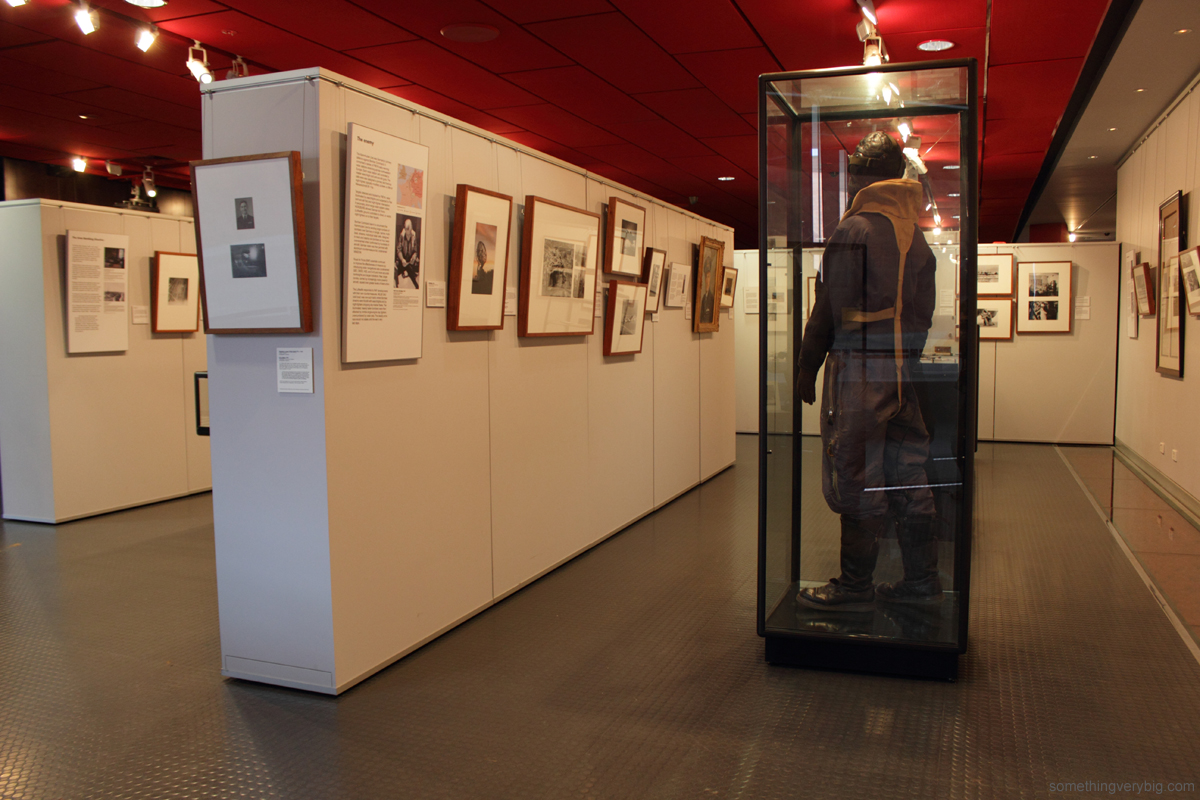
I suspect that if you hang around this exhibition for long enough you’ll see a fair number of Bomber Command veterans coming through for a look. And, happily, so it was when we visited. There was an older gent wearing a blazer and an Air Force tie looking at the mannequin in the photo above, talking to a middle-aged man about parachutes. Robyn recognised him as Gordon Laidlaw, a 50 Squadron pilot who she has been in touch with before, and talking to his mate later I discovered that they had come up from Mornington, an hour or so south of Melbourne, especially to have a look at the exhibition. It was great to chat briefly with Gordon. He was also talking to another pair of visitors who were in Melbourne on holidays from Perth who had come to the Shrine to see the exhibition:

13oct-robyn-bells-pics-381 copy

Rosemary Grigg (on the left) was overwhelmed to meet a real-life Bomber Command veteran – Gordon – because her father had been an airman too. Allan Joseph Grigg was killed on 22 July 1944 in a Wellington accident near Lossiemouth in Scotland, where he had been serving with No. 20 Operational Training Unit. She is keen to find out more about her father’s service so I’ve given her a few pointers on where to begin. As always, the fact he was Australian makes life much easier.

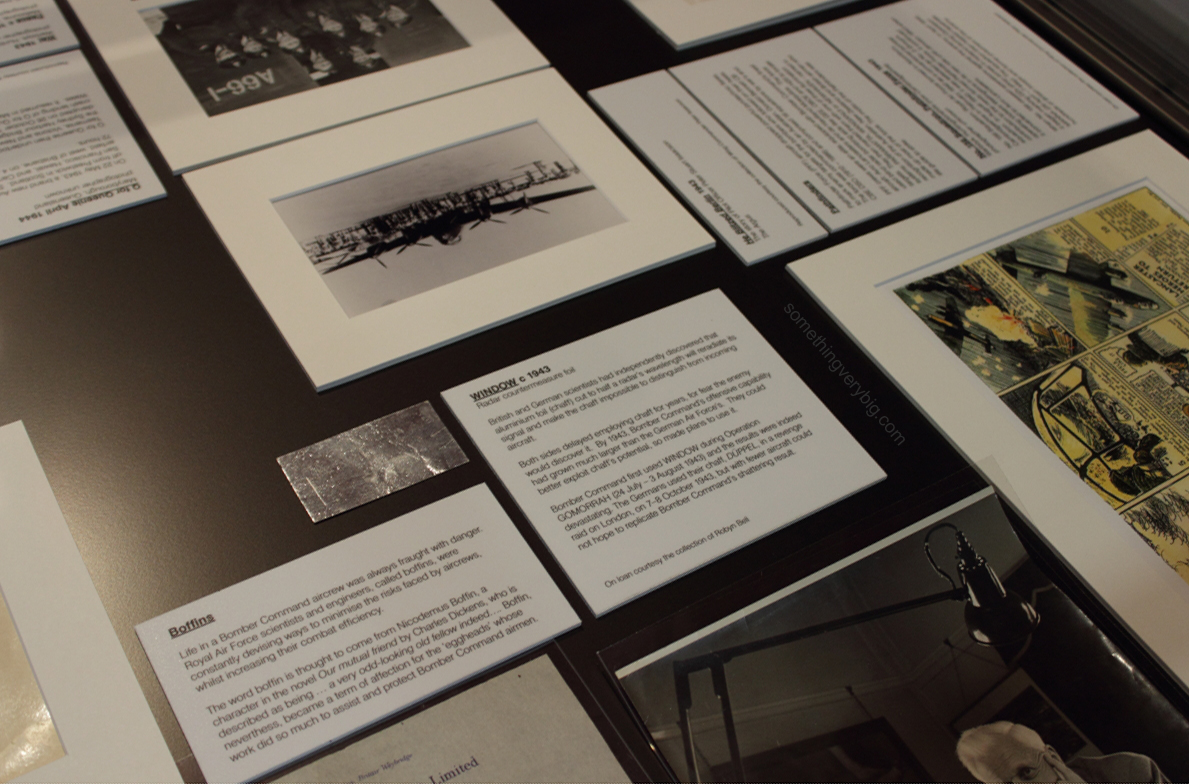
Moving around the exhibition, Robyn found her small contribution. She has been liaising with Neil Sharkey from the Shrine who was responsible for setting up the exhibition, and he was looking for some Window, the foil ‘chaff’ used to confuse German radar. As it happened Robyn had a small piece and was happy to allow it to go on display:

13oct-adamimport-183 copy

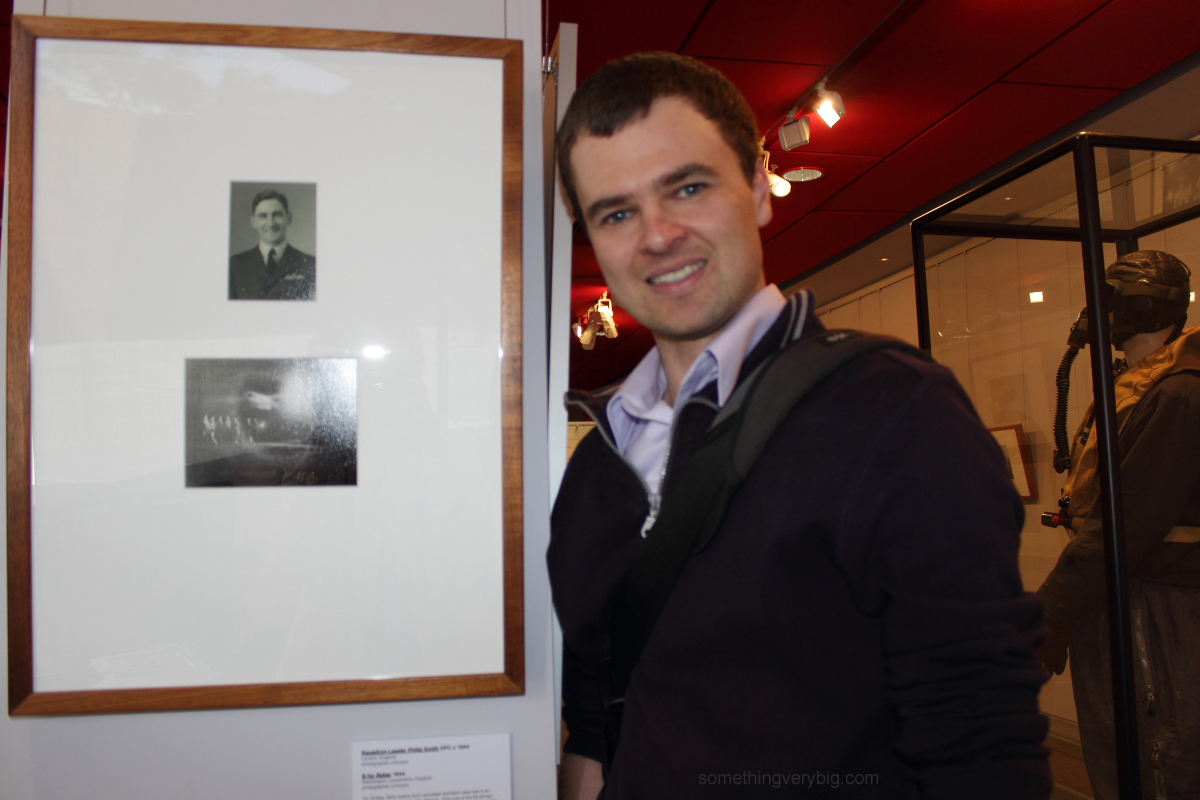
What was most unexpected for me, though, was in a frame hanging at the end of one of the exhibition partitions. We had almost finished our walk around when I found it:

13oct-adamimport-186 copy

Regular readers of SomethingVeryBig (those, at least, with very good eyesight) will recognise the lower photograph, the only known photo of the entire crew of B for Baker. And the one above it? It’s a portrait of a ridiculously young-looking Phil Smith, taken in London during the war. It was in fact sourced for the exhibition from this website, and has been credited to Mollie Smith at my request:

13Oct-MEL and Shrine 022

It’s clear that, in the last two or three years in particular, Bomber Command is finally receiving the recognition it deserves. An official memorial was opened last year in London. A Bomber Command clasp is now in the process of being awarded to surviving veterans, before being extended to the next-of-kin of those killed during service or who have died since. And the Canberra weekend is now the third largest annual event held at the Australian War Memorial (behind ANZAC Day and Remembrance Day). There’s no doubt that interest in Bomber Command, and respect and recognition for those who were involved, is growing. It’s great to see some of that interest manifesting itself in this exhibition. More people will visit and learn about Bomber Command and the men who were part of it. The stories will live on.

And that’s the most important thing.

13oct-adamimport-1841 copy

13Oct-MEL and Shrine 025


13oct-robyn-bells-pics-379 copy

© 2013 Adam Purcell

Look what I found!

13Oct-MEL and Shrine 026

So I’m visiting the Bomber Command exhibition at the Shrine of Remembrance in Melbourne with Robyn Bell. Full report to come when I get home, but look what I found around a corner!
It is, of course, a portrait of a very young Phil Smith with the only known photo of the whole crew of B for Baker. Nice to see some recognition of them in a major Shrine initiative.

EVENT: Bomber Command Panel Discussion, Shrine, Melbourne, 03DEC13

In perhaps the most significant event to be held at the Shrine of Remembrance in Melbourne alongside the current Bomber Command special exhibition, a group of veterans including Wing Commander Peter Isaacson will take part in a panel discussion about the experiences of Australians in Bomber Command. Chaired by Shrine of Remembrance Chairman Air Vice-Marshal Chris Spence AO (Retd). This promises to be a very interesting discussion. Details below:

Date: Tuesday 03 December 2013

Time: 12.30pm start, running for approx. 90 minutes

Cost: Free, but a gold coin donation appreciated.

Bookings are essential and can be made through this link on the Shrine’s website.

I’m normally in Sydney with the 463-467 Squadrons Association on ANZAC Day so, despite having lived down here for almost three years now, I still haven’t managed to meet many of the Melbourne-based Bomber Command crowd. This event should offer a good chance to redress that!


EVENT: Lancaster Men – a talk by author Peter Rees at the Shrine, Melbourne, 28 November 2013

I reviewed Peter Rees’ book Lancaster Men: The Aussie Heroes of Bomber Command on SomethingVeryBig back in May, and I reckon it’s one of the better Australian books about Bomber Command to come out in the last few years. As part of a number of Bomber Command-focused events scheduled at the Shrine of Remembrance in Melbourne over the last few months of 2013, Rees will deliver a talk about his book at the end of November:

Date: Thursday 28 November 2013

Time: 17:30 for 18:00

Cost: Free, but a gold coin donation is welcome.

Bookings are essential and can be made online via this page.


EVENT: Flak – a talk by author Michael Veitch at the Shrine, Melbourne, 23 October 2013

Australian author, comedian and journalist Michael Veitch’s life-long obsession with the aeroplanes of WWII and the men who flew them manifested itself a few years back in a fantastic couple of books. Flak, published in 2006, and Fly, from two years later, are remarkable collections of short stories based on interviews that Veitch carried out with about a range of airmen who flew in many and varied parts of the Royal Australian Air Force (among them Pat Kerrins) – and even includes a couple of former Luftwaffe pilots who moved to Australia after the war.

The Shrine of Remembrance in Melbourne will host a talk by Michael Veitch about his books and some of the airmen he interviewed later this month:

Date: 23 October 2013

Time: 5:30pm for a 6.00pm start

Cost: Free, but a gold coin donation appreciated.

For bookings, or for more information, follow this link.

Unfortunately I’m unable to attend this talk, but if anyone does, please leave a message here afterwards to let us know how it went.

The Unsung Heroes Project

The Temora Aviation Museum has begun a project they call Unsung Heroes.

“How many Heroes go unnoticed?” reads the blurb on their website. “How many stories go untold? How many memories are forever lost?”

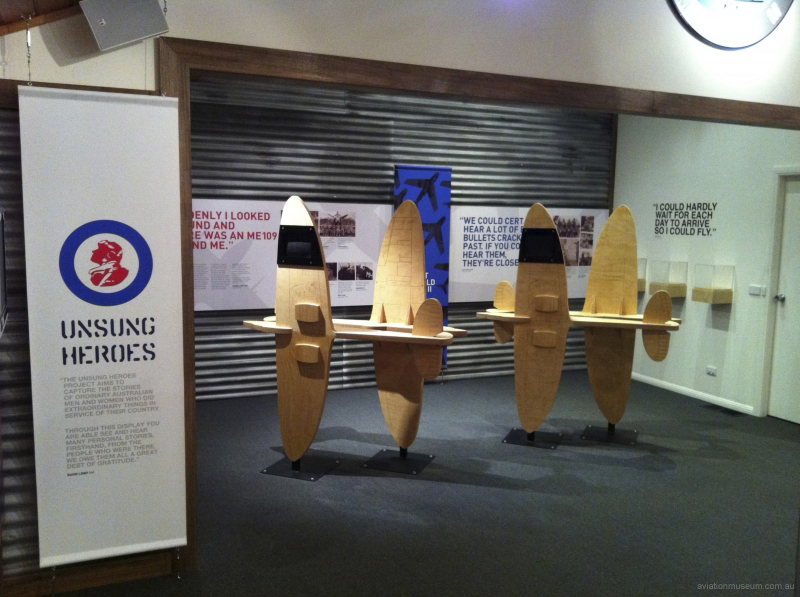
To try and stem the tide of lost memories, the Museum is collecting stories of people who were involved, in one way or another, in Australia’s military aviation heritage. As the project gets underway the collection of stories on the website is so far not a large one, but there are some interesting people profiled in the entries currently there. At $85 a pop, though, the privilege is not cheap, and I’m not sure how I feel about compelling such a significant donation in order to submit content to the database. But at least the Museum is making an effort to recognise the creators of the heritage they preserve in the form of their flying warbirds.

135387-l-1348483478 copy

An offshoot of Unsung Heroes is a video database aimed at a similar group of people. According to the latest email from the Museum, the database “includes men and women who, although not given recognition in the history books, have been vital to the pioneering spirit of Australia’s military aviation heritage.” There’s thankfully no mention in the email of any fee for taking part in this part of the database, and it looks like the Museum is looking for veterans to interview. Selected interviews are it appears available to view via iPads installed in a permanent exhibit in the Museum’s galleries (see image above – from the website of the designer, Bob Shea).

And here is the reason for this post. The biggest event in the calendar of the Temora Aviation Museum is Warbirds Downunder, an airshow featuring all of the Temora Aviation Museum’s collection of aircraft and a whole host of other significant flying warbirds. This year it’s scheduled for Saturday 2 November, and the Museum’s videographer will be there, covering the airshow but also interviewing veterans for the database.

With limited resources it appears unlikely that the Temora database will ever even begin to approach the scale and sophistication of the excellent and extremely far-ranging Australians at War Film Archive (which had the backing of the Australian Government), but it’s perhaps an opportunity for veterans to take part in a less-formal interview situation. Temora is a long way away from any of the state capitals and getting there is a bit of a mission (unless you fly out there in a private aircraft, as I’ll relate in a future post), but if anyone is interested in taking part, contact the Museum by email or by phone on 02 6977 1088.

© Adam Purcell 2013

Hat-tip to Kevin Jacobs for the heads-up.