Bomber Command Commemorative Day 1 June 2014 – Events Around Australia

Sunday 1 June 2014 will see the annual Bomber Command Commemorative Day take place in locations around Australia. The headline event, as usual, is a weekend of activities and ceremonies in Canberra but there will be ceremonies taking place right across the country:

  • Canberra:
    • Sunday June 1 2014, 10.50am for 11.00, at the Bomber Command Memorial, Sculpture Garden, Australian War Memorial
    • Canberra will also host a Meet & Greet function at the War Memorial on Saturday night and a Luncheon following the ceremony on Sunday. Further details to come.
  • Brisbane:
    • Sunday 1 June 2014, 10.15am for 11.00 at Memorial Gardens, front gates of RAAF Amberley. Contact: Ted Vowles, 0418 758 072 or 07 3396 3004
  • Adelaide:
    • Sunday 1 June 2014, 11.00am at Air Force Memorial, Torrens Parade Ground, Victoria Drive, Adelaide. Contact: Dave Helman dave.helman@internode.on.net
  • Perth:
    • Sunday 25 May 2014, 10.00am at RAAFA (WA) Headquarters, 2 Bull Creek Dr, Bull Creek. Contact: Grahame Bland, RAAFA (WA) State President, 08 9311 4445
  • Melbourne:
    • Sunday 1 June, 2014, 2.00pm at Nurses Memorial Centre, 431 St Kilda Rd [entrance off Slater Rd]. Tram Stop No. 23. Contact Robyn Bell, 03 9890 3107.
    • Note the change of venue, a temporary measure for this year only due to ongoing renovations at the Shrine of Remembrance
  • Sydney:
    • Details TBA


Bomber Command at the Shrine of Remembrance

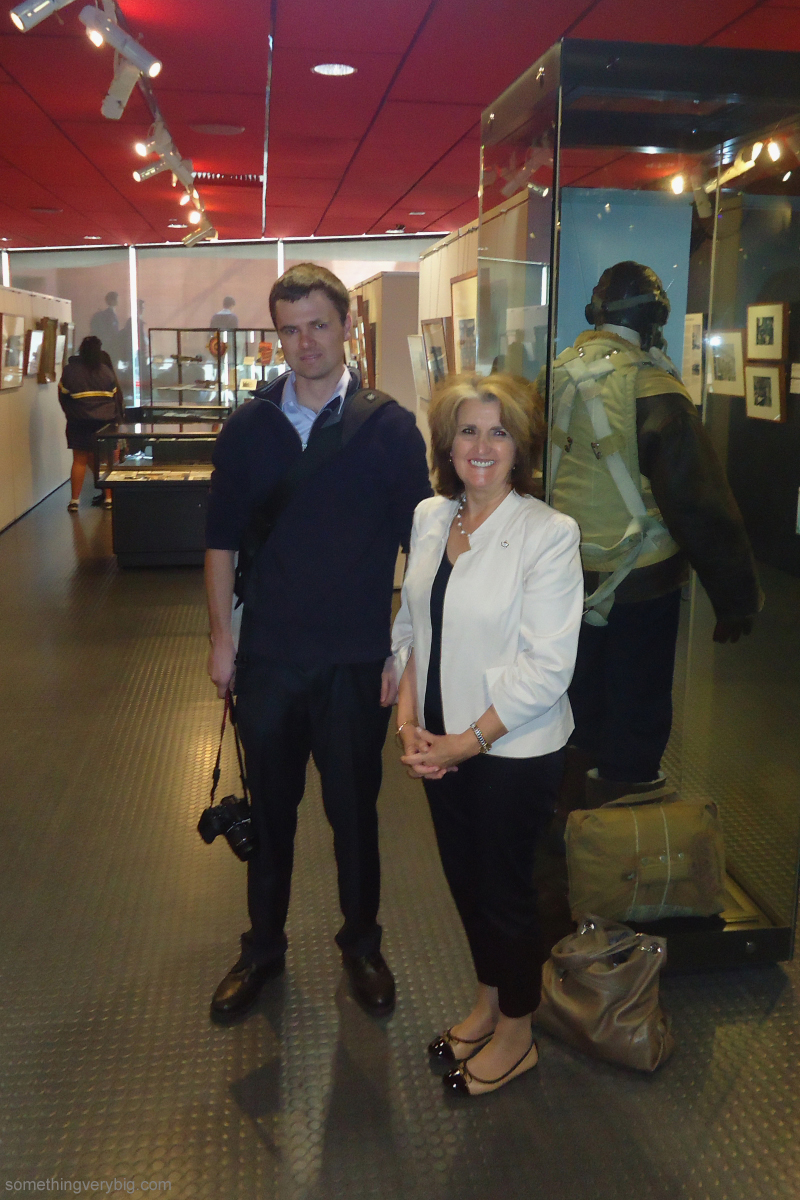
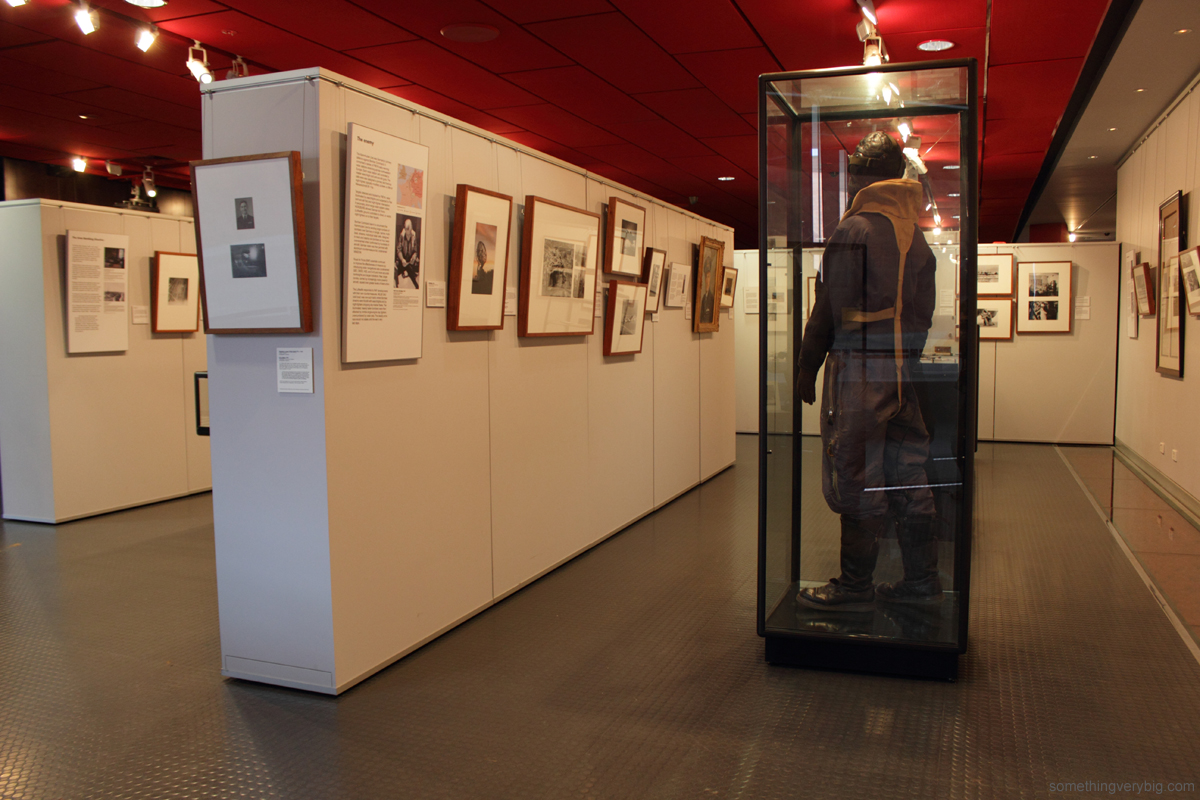
The Shrine of Remembrance in Melbourne has gone all Bomber Command on us. As I’ve posted previously, there are a number of events happening there over the next couple of months. All tie in with a major temporary exhibition which opened earlier this month in the Shrine Visitor Centre. Bomber Command: Australians in the air war over Europe 1939-45 is open until 1 May next year. It’s only a fairly small exhibition but it covers much ground concerning the Australian experience of Bomber Command, from enlistment, through training to operations and afterwards, including a significant section on prisoners of war. There are photos, artwork and memorabilia that have all been put together in a professional manner, and it is already beginning to draw visitors from all across Victoria and other parts of Australia. I visited last week with Robyn Bell, one of my Bomber Command contacts in Melbourne.

13oct-robyn-bells-pics-393 copy

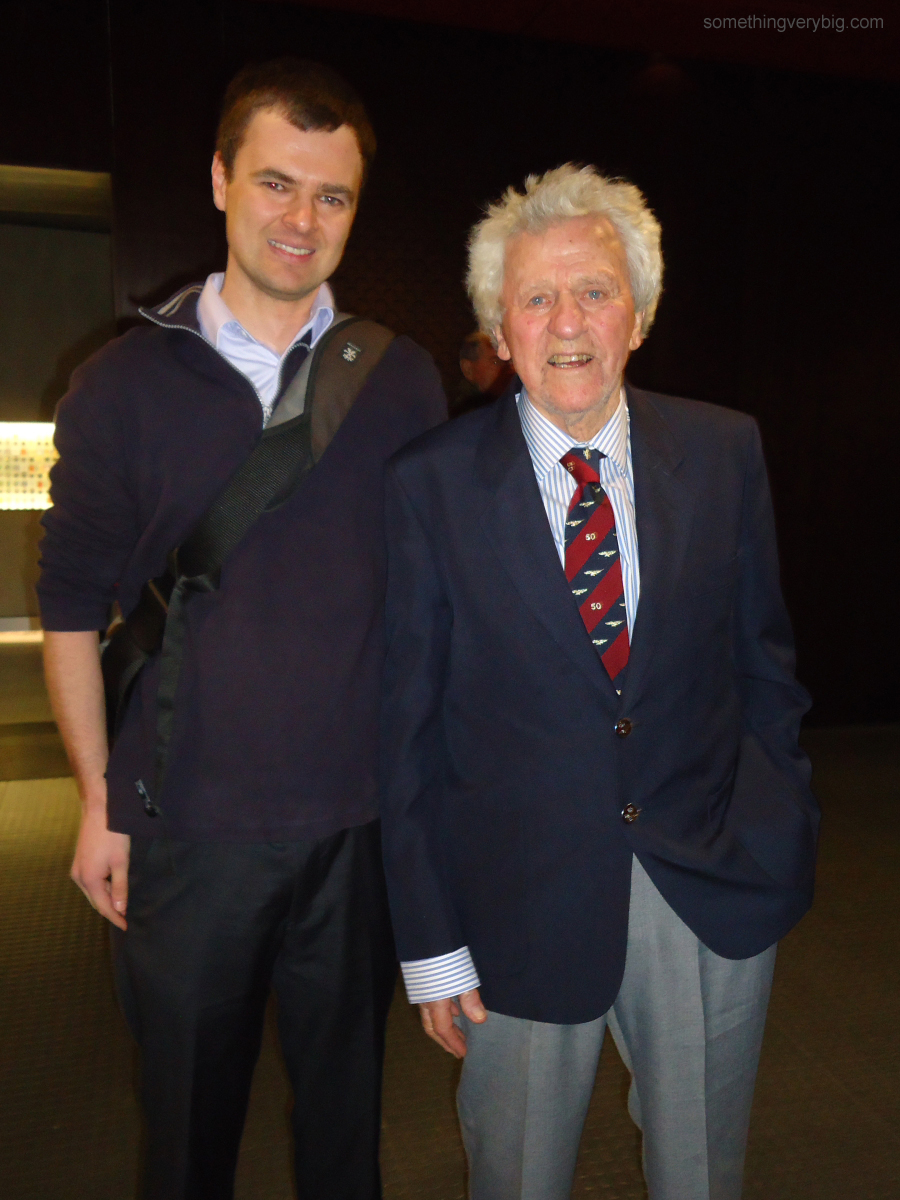
I suspect that if you hang around this exhibition for long enough you’ll see a fair number of Bomber Command veterans coming through for a look. And, happily, so it was when we visited. There was an older gent wearing a blazer and an Air Force tie looking at the mannequin in the photo above, talking to a middle-aged man about parachutes. Robyn recognised him as Gordon Laidlaw, a 50 Squadron pilot who she has been in touch with before, and talking to his mate later I discovered that they had come up from Mornington, an hour or so south of Melbourne, especially to have a look at the exhibition. It was great to chat briefly with Gordon. He was also talking to another pair of visitors who were in Melbourne on holidays from Perth who had come to the Shrine to see the exhibition:

13oct-robyn-bells-pics-381 copy

Rosemary Grigg (on the left) was overwhelmed to meet a real-life Bomber Command veteran – Gordon – because her father had been an airman too. Allan Joseph Grigg was killed on 22 July 1944 in a Wellington accident near Lossiemouth in Scotland, where he had been serving with No. 20 Operational Training Unit. She is keen to find out more about her father’s service so I’ve given her a few pointers on where to begin. As always, the fact he was Australian makes life much easier.

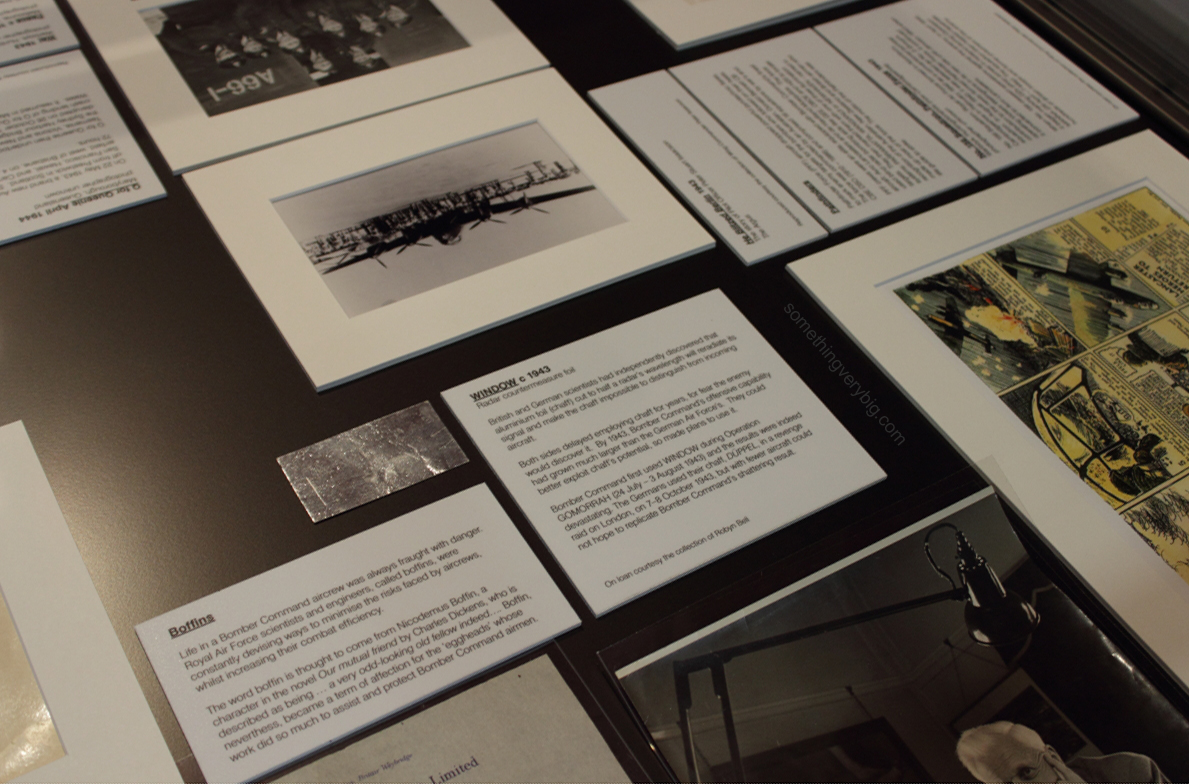
Moving around the exhibition, Robyn found her small contribution. She has been liaising with Neil Sharkey from the Shrine who was responsible for setting up the exhibition, and he was looking for some Window, the foil ‘chaff’ used to confuse German radar. As it happened Robyn had a small piece and was happy to allow it to go on display:

13oct-adamimport-183 copy

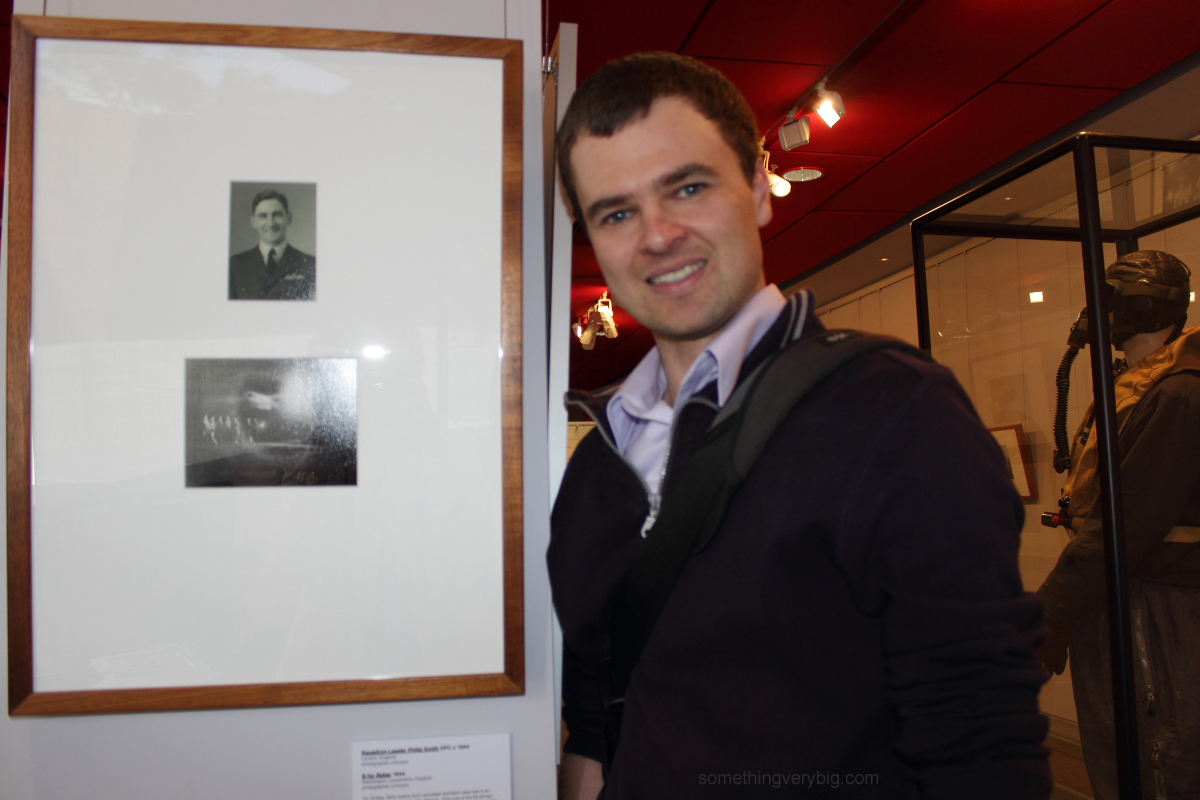
What was most unexpected for me, though, was in a frame hanging at the end of one of the exhibition partitions. We had almost finished our walk around when I found it:

13oct-adamimport-186 copy

Regular readers of SomethingVeryBig (those, at least, with very good eyesight) will recognise the lower photograph, the only known photo of the entire crew of B for Baker. And the one above it? It’s a portrait of a ridiculously young-looking Phil Smith, taken in London during the war. It was in fact sourced for the exhibition from this website, and has been credited to Mollie Smith at my request:

13Oct-MEL and Shrine 022

It’s clear that, in the last two or three years in particular, Bomber Command is finally receiving the recognition it deserves. An official memorial was opened last year in London. A Bomber Command clasp is now in the process of being awarded to surviving veterans, before being extended to the next-of-kin of those killed during service or who have died since. And the Canberra weekend is now the third largest annual event held at the Australian War Memorial (behind ANZAC Day and Remembrance Day). There’s no doubt that interest in Bomber Command, and respect and recognition for those who were involved, is growing. It’s great to see some of that interest manifesting itself in this exhibition. More people will visit and learn about Bomber Command and the men who were part of it. The stories will live on.

And that’s the most important thing.

13oct-adamimport-1841 copy

13Oct-MEL and Shrine 025


13oct-robyn-bells-pics-379 copy

© 2013 Adam Purcell

Look what I found!

13Oct-MEL and Shrine 026

So I’m visiting the Bomber Command exhibition at the Shrine of Remembrance in Melbourne with Robyn Bell. Full report to come when I get home, but look what I found around a corner!
It is, of course, a portrait of a very young Phil Smith with the only known photo of the whole crew of B for Baker. Nice to see some recognition of them in a major Shrine initiative.

The Unsung Heroes Project

The Temora Aviation Museum has begun a project they call Unsung Heroes.

“How many Heroes go unnoticed?” reads the blurb on their website. “How many stories go untold? How many memories are forever lost?”

To try and stem the tide of lost memories, the Museum is collecting stories of people who were involved, in one way or another, in Australia’s military aviation heritage. As the project gets underway the collection of stories on the website is so far not a large one, but there are some interesting people profiled in the entries currently there. At $85 a pop, though, the privilege is not cheap, and I’m not sure how I feel about compelling such a significant donation in order to submit content to the database. But at least the Museum is making an effort to recognise the creators of the heritage they preserve in the form of their flying warbirds.

135387-l-1348483478 copy

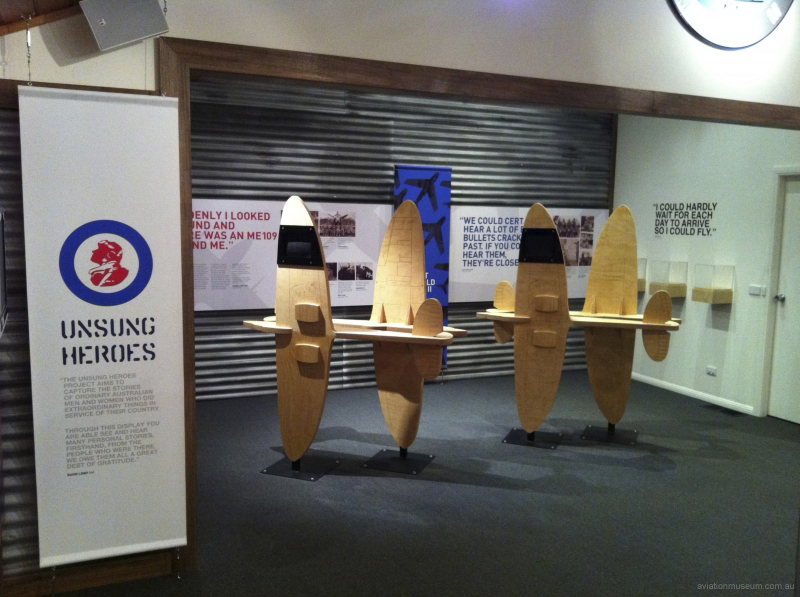
An offshoot of Unsung Heroes is a video database aimed at a similar group of people. According to the latest email from the Museum, the database “includes men and women who, although not given recognition in the history books, have been vital to the pioneering spirit of Australia’s military aviation heritage.” There’s thankfully no mention in the email of any fee for taking part in this part of the database, and it looks like the Museum is looking for veterans to interview. Selected interviews are it appears available to view via iPads installed in a permanent exhibit in the Museum’s galleries (see image above – from the website of the designer, Bob Shea).

And here is the reason for this post. The biggest event in the calendar of the Temora Aviation Museum is Warbirds Downunder, an airshow featuring all of the Temora Aviation Museum’s collection of aircraft and a whole host of other significant flying warbirds. This year it’s scheduled for Saturday 2 November, and the Museum’s videographer will be there, covering the airshow but also interviewing veterans for the database.

With limited resources it appears unlikely that the Temora database will ever even begin to approach the scale and sophistication of the excellent and extremely far-ranging Australians at War Film Archive (which had the backing of the Australian Government), but it’s perhaps an opportunity for veterans to take part in a less-formal interview situation. Temora is a long way away from any of the state capitals and getting there is a bit of a mission (unless you fly out there in a private aircraft, as I’ll relate in a future post), but if anyone is interested in taking part, contact the Museum by email or by phone on 02 6977 1088.

© Adam Purcell 2013

Hat-tip to Kevin Jacobs for the heads-up.

Point Cook and the RAAF Museum

A little over twenty kilometres south west of Melbourne city, on the shores of Port Philip Bay, lies the birthplace of military aviation in Australia. RAAF Williams Base Point Cook is where land was purchased in 1912 for the newly-formed Australian Flying Corps, and where nine years later that fledgling organisation became the Royal Australian Air Force. In fact, until Richmond and Laverton were built in 1925 Point Cook remained the only military air base in Australia. Point Cook played an important role in training of pilots and officers and many other Air Force trades and disciplines over the next seventy or so years, and while military flight training ceased in 1992 the airfield remains operational with the Royal Melbourne Institute of Technology operating a flying school from it (though little military traffic uses it these days and the control tower has been empty for many years).
It is, therefore, a fitting location for the RAAF Museum. Housed in four Bellman hangars, the museum follows the story of Australia’s military aviation history – from the very first days of the Australian Flying Corps right through to current operations in the Middle East. There is a large collection of significant aircraft and artefacts and some intensive restoration work underway, including of a Mosquito which is the only known surviving airframe of that type with a WWII combat record.
Three times a week, on Tuesdays, Thursdays and Sundays at 1pm, one of the collection of airworthy aircraft will be parked in front of a purpose-built grandstand. An MC delivers a short introduction, then the pilot adds a few words and climbs in, fires up whatever old machine it is and takes off for a short 10-15 minute flying display. During the flight the radio calls from the aircraft are patched over the PA system. After landing, with the aircraft once again shut down in front of the grandstand, the floor is opened up for questions. The whole thing is carried out without fuss in about half an hour. It’s a great opportunity to see some flying action at close range and then have a chat with those responsible for flying and maintaining the aircraft. When I visited in May, the star of the show was a Harvard:

12-anzac-day-will-pt-cook-051 copy

Other days it might be a Tiger Moth, or a CT-4, or perhaps a Mustang. And it’s all done free of charge. The Museum reckons it’s the only place in the world where these sorts of aircraft are displayed regularly like this.
Point Cook was the site of No. 1 Service Flying Training School during the Second World War. As such an entire hangar is dedicated to training – with displays of some of the aircraft and devices used for training a very wide variety of Air Force personnel throughout the 20th Century and beyond. Most relevant to my interests (apart from a brief look at air traffic control) was a Tiger Moth, in the ubiquitous bright yellow colours typical of Elementary Flying Training Schools:

12-anzac-day-will-pt-cook-054 copy

There was also an intriguing item on exhibition in the WWII Heritage Gallery:

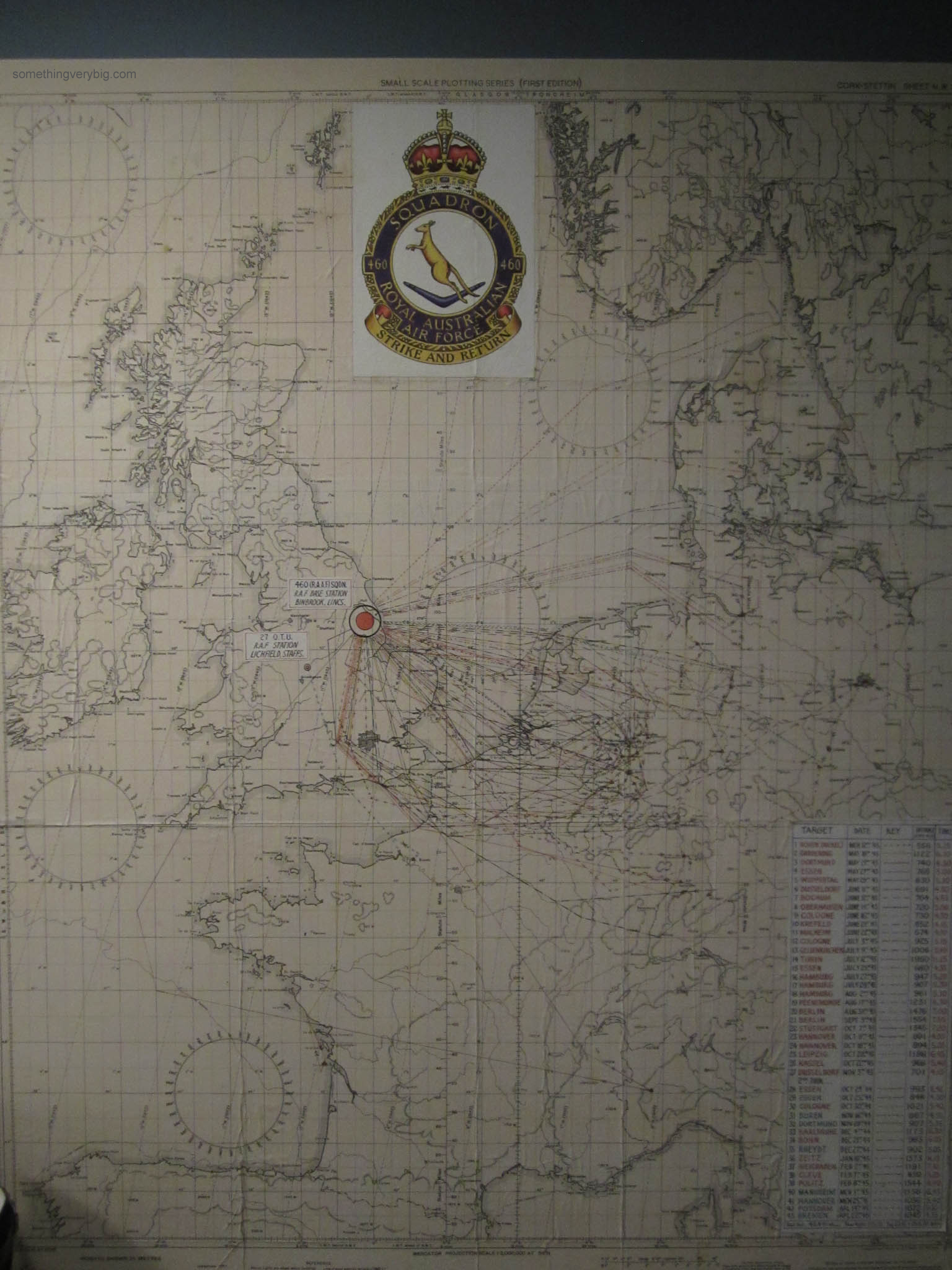
12-anzac-day-will-pt-cook-045 copy

It’s a map of Europe, with the operations carried out by a 460 Squadron crew member marked on it. I couldn’t find a name to go along with it but in the bottom right corner is a list of all 43 operations along with dates. They span two tours, the first between 12 March – 03 November 1943 and the second from 24 October 1944 – 22 April 1945. Whoever the unknown crew member was, he was extraordinarily lucky. The particularly deadly Battle of Berlin period fell in the time that he was (presumably) instructing between his tours of operations.

Point Cook is steeped in history. Suburbia is fast encroaching (its sister base, just up the road at Laverton, has already been sold off for housing) but for the moment it is still an active airfield. The Government has announced a planned redevelopment with an “ongoing commitment to maintain the base” as an operating military airfield and continuing to “recognise the significant heritage of the site” which is very encouraging. Much work appears to have been carried out already – there is an excellent (but very large – around 75mb) presentation of ‘before and after’ photos from the end of 2012 available here on the Defence website – but I found many buildings that still look unloved as I wandered around the Museum precinct.
The difficulty is the trade-off between maintaining the base as an active RAAF station and retaining the heritage fabric of the physical environment. Remaining an active military base gives Point Cook an economic reason for continued existence and makes it more likely that future governments will continue to consider it a useful part of the Air Force’s infrastructure. But with that comes the security and access restrictions that the modern military demands, which seriously reduces easy access for the public. Opening the base to the public as a heritage site will necessarily reduce its utility as a pure military facility, and Defence will naturally be reluctant to take the required funding from its already stretched budget.
At the very least, though, the recent work will see the most significant physical parts of Point Cook’s heritage survive for some decades to come.

© 2013 Adam Purcell

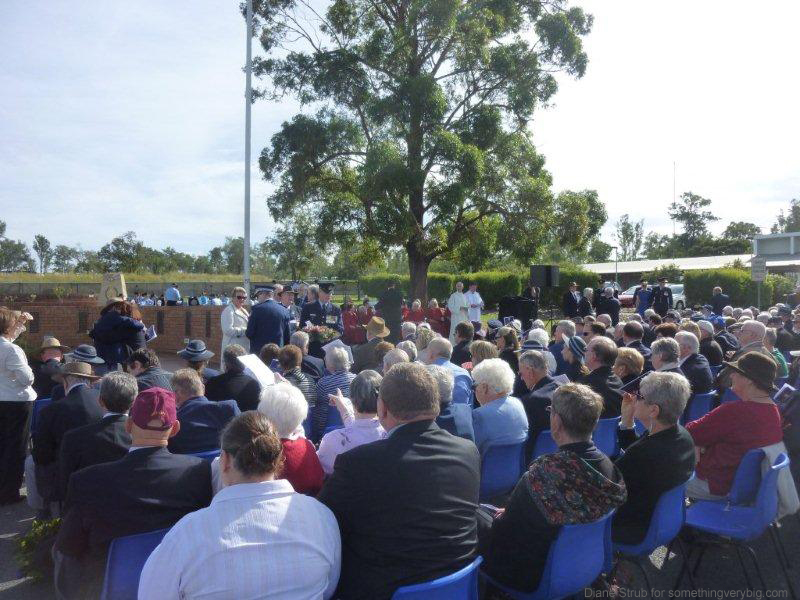
Bonus Photo Post: Bomber Command Commemorative day, Amberley, Queensland

While many of us were in Canberra last weekend for the annual Commemorative Day Weekend, simultaneous events were also being held elsewhere around the country. Groups of veterans, families and interested others gathered to remember the men and the deeds of Bomber Command at ceremonies held in Sydney, Adelaide, Melbourne and Brisbane.

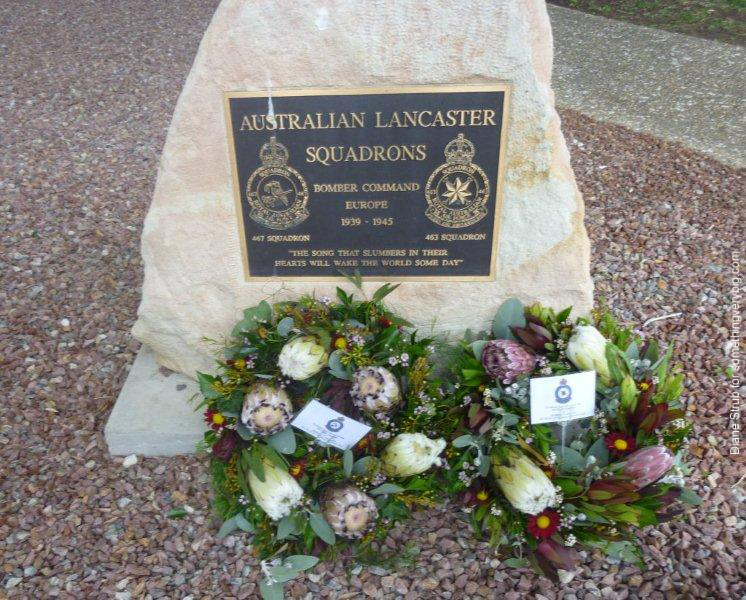
I had a ‘spy’ at the Brisbane event, held at RAAF Amberley (itself the site of the wartime No 3 Service Flying Training School, to which Phil Smith was posted in 1941). Diane Strub, the Honorary Secretary of the 467-463 Squadrons Association in Queensland, was there and sent me these photos:

 bcm-day-467-463-wreaths-bcm-day-amberley-2013 copy

bomber-command-veterans-bcm-day-amberley-2013 copy

the-crown-amberley-bcm-day-2013 copy

It looks like a fair-sized crowd was there, with a good number of veterans present (I counted 23 in the above photo). Everyone looks a little warmer than we were in Canberra!

Good show, Brisbane. And thanks to Diane for the photos.

Bomber Command in Canberra 2013

It was a very wet weekend in south-eastern Australia.

It rained so much in Adelaide on Friday that the automatic rain gauge at the airport gave up. 70mm fell in Melbourne on the same day. It was still raining when I walked to the train station in Sydney on my way to the airport on Sunday morning and, as we were taxying out, the heavy jets weren’t so much ‘landing’ as ‘splashing down’. We were in cloud all the way to Canberra.

Things were not looking good for the sixth annual Bomber Command Commemorative Day.

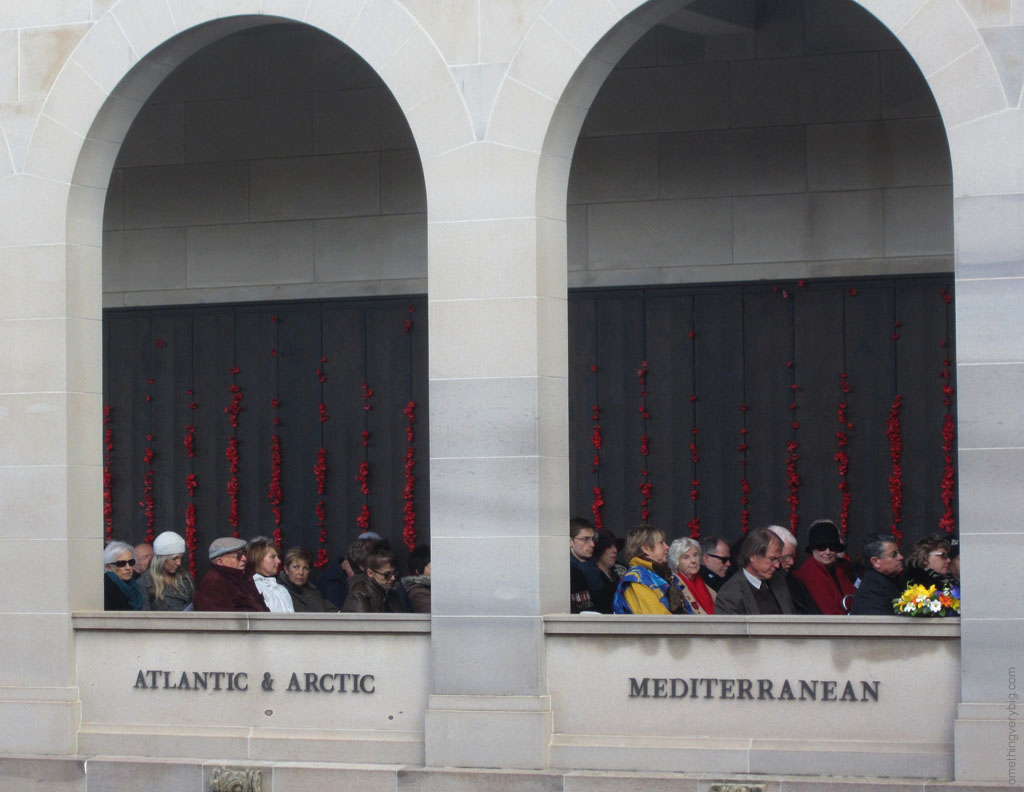
Though the tarmac was noticeably wet on arrival, the sky showed signs of clearing as I took a taxi to the Australian War Memorial. On arrival I discovered that, because the grass near the Bomber Command sculpture was still rather squelchy underfoot, the ceremony had been moved to the Commemorative Area within the War Memorial itself. As the clouds gradually moved off parts of the crowd were soon sitting in that glorious autumn sunshine for which Canberra is famous.

The Commemorative Area was a spectacular location for the ceremony.
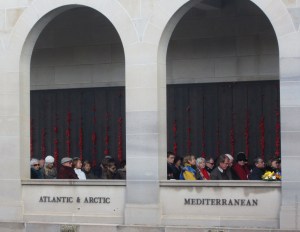
13jun-weedingcanberra-092 copy

13jun-weedingcanberra-091 copy

The crowd was sitting underneath the thousands of names on the Roll of Honour. A statue of an airman, on the eastern side, in turn cast his bronze gaze down onto the gathered crowd. To the rear, immaculately dressed members of the current iterations of 460 and 462 Squadrons, Royal Australian Air Force, were lined up in parade order. Those veterans who could were invited into the Hall of Memory to watch and take part in the wreath-laying, at the Tomb of the Unknown Australian Soldier. As the bugler sounded the Last Post, the notes echoed off the cloisters and faded away to silence. The singing of the Australian National Anthem, with the support of the Australian Rugby Choir, was spine-tingling stuff. The ceremony was enhanced by the atmosphere of the place it was in.
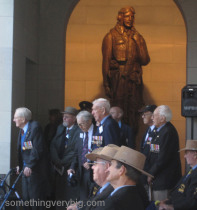
13jun-weedingcanberra-099 copy
The speakers, too were excellent: in particular, former Defence Minister and Leader of the Opposition Dr Brendan Nelson who is now the Director of the Australian War Memorial. His opening address, delivered mostly without notes, was impressive. He quoted the words of Charles Bean which are scribed on the wall in the Welcome Gallery of the War Memorial:

Here is their spirit, in the heart of the land they loved; and here we guard the record which they themselves made.

Some of those who made that record, of course, were the veterans of Bomber Command.

Following the ceremony itself came an organised photo opportunity in the shadow of G for George, with almost all the veterans present. My count is 32 (including one who is not in this photo):
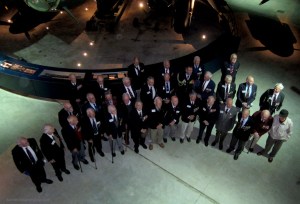
13jun-weedingcanberra-119 copy

And then to lunch. Once again, the networking and reunion opportunities offered at this function for someone like me in this country are second to none. Among others, I met a Mosquito navigator named Alan Beavis, and his good mate Alan Pugh, who was training at 1661 Heavy Conversion Unit (Winthorpe – Jack Purcell was there in 1943) at the end of the war. And of course I also caught up with many of the usual suspects again – Don and Ailsa McDonald, the three other Dons Southwell, Huxtable and Browning, Keith Campbell, Harry Brown and Tommy Knox (the latter commenting to me, ‘you can really see it this year… age is certainly catching up with them!’). There was some good discussion on a few potential projects for the next couple of years, much reminiscing and many stories.

The Southwells dropped me off at the airport again, and I flew home to Melbourne with a notebook full of ideas and addresses to follow up on.

Bomber Command, over the last few years, is finally beginning to see some recognition for its deeds during the Second World War, and acknowledgement of the legacy it left. This was a common theme among many of the speakers at the weekend this year. Peter Rees (who recently published Lancaster Men and is rumoured to be planning a follow-up for the next couple of years) spoke briefly at the lunch and cited this as one of his key motivations. Air Marshal Geoff Brown, current Chief of Air Force, also gave a good talk at the lunch about what today’s Air Force can learn from the bomber offensive. His main points were that a coalition of nations in a common cause is far more powerful than trying to do it alone, a reminder of the importance of close links with technological and research organisations, how vital it is to gain and maintain control of the air in a combat scenario, the continued value of electronic countermeasures and the critical importance of teamwork and people all united by a common purpose and common aims. He effectively demonstrated that, while the airmen of Bomber Command fought their battles so long ago, and while they fought a battle so unique in scale and circumstance, what they did has continued relevance in current operations – and that in that very practical way their legacy will live on.

13jun-weedingcanberra-108-copy copy

Remembering the history – the raids, the stories, the men – is of course vital. But learning from that history and applying the lessons in practical ways in modern times can also form part of the legacy of Bomber Command. It is far too late for most of those who served, but I hope that some of the veterans who were in Canberra over the weekend can take some comfort in the knowledge that this legacy is living on and will continue to do so.

© 2013 Adam Purcell

A photoset by the Australian War Memorial’s official photographer is available to view here.

It’s all a bit much, really.

Anyone interested in Bomber Command is probably aware that last night marked the seventieth anniversary of what, in popular culture, is probably the most famous air raid of all time. The ‘Dambusters’ raid of 16/17 May 1943 – more properly known as Operation Chastise – was the daring, novel, unique, dangerous, costly and mostly effective operation by the RAF’s 617 Squadron that used the so-called ‘bouncing bombs’ to destroy two of Germany’s great dams and severely damage a third. The morale boost to Britain, in the middle of 1943 during a dark patch in the war, was arguably greater than the material effect on Germany, but the raid entered the popular consciousness and made the leader of 617 Squadron, Guy Gibson, into one of, if not the, most famous airman in Bomber Command.

So naturally there have been many activities and events to commemorate exactly seven decades since this auspicious event. The Battle of Britain Memorial Flight Lancaster has made a fly-over of the Derwent Dam in Derbyshire, England, where the squadron practiced before the raid. There’s been black and white footage of bouncing bombs on the television news in Australia (though Sky News showed the later ‘Highball’ devices which were never used operationally and were more or less spherical in shape, rather than ‘Upkeep’s cylindrical bomb, and dropped by Mosquitos rather than Lancasters, but I’ll let that slide for the moment). There have been commemorative services at Woodhall Spa (the later home of 617 Squadron), Lincoln Cathedral, RAF Scampton and in Germany. The Royal Air Force has even been live-tweeting wireless messages and key events from the raid, seventy years to the minute since they occurred.

It’s all a bit much really.

It’s an awful lot of fuss over just one operation, just one night of a very very long war. Taking absolutely nothing away from the 53 aircrew who were killed on the raid – out of 133 men, all of whom were already highly experienced – but there has indisputably been a very strong focus on this raid in the years since, perhaps at the expense of the rest of Bomber Command. So much so, in fact, that in much the same way as ‘Battle of Britain’ means ‘Spitfire’ to the average Englishman or Australian, to the detriment of the Hurricane and all the other parts of Britain’s defensive effort that summer of 1940, ‘Lancaster’ has come to mean ‘Dambuster’. And don’t worry about all the rest of Bomber Command, thanks very much.

Much of this is probably due to the Dambusters film of 1955, based on Paul Brickhill’s 1951 book. So much so, in fact, that one newspaper in the UK chose to mark the 70th anniversary with a collection of photographs… from behind the scenes in the making of the movie. Which, all rather interesting, but really??? It’s a sign that the anniversary has become all about the legend, and much less about the blokes who did the job that night – and indeed, the blokes who did the job every night.I mean no slur on 617 Squadron, either to the original members or anyone else involved with it. I mean no slur against Barnes Wallis, the engineer who came up with the concept. I mean no slur against the makers or the actors in the movie (which is probably still one of the greatest war movies ever made). But it would be really nice to see some of the interest, scholarship and mythology associated with the Dambusters carry over into the rest of Bomber Command.

I’ll close with a quote on the Professional Pilot Rumour Network forum by a member calling himself ‘Chugalug2,’ who in this case says it far more eloquently than I can:

The pride that the Royal Air Force has rightly expressed since WW2 over the subject exploits of this thread was not similarly expressed over those of Main Force, when almost every night was one of Maximum Effort.

The Dambusters played an incredible part in the Second World War bomber offensive. But there were many others, just like them, who played an equally important role and who have not been nearly so recognised. Think about them on May 16 each year, too.

(c) 2013 Adam Purcell

Sixty Nine Years

a05-019-001-med copy

10th May, 1944.

Lest we forget.

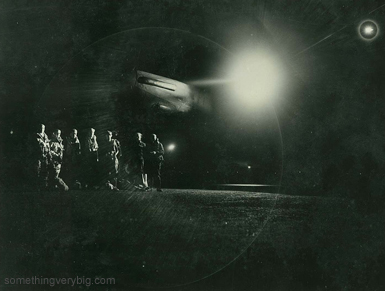
This post was published at 21.57 on 10 May 2013. At the same time on the same day in 1944, the crew of B for Baker took off from Waddington, bound for Lille in northern France.

They did not come back.