EVENT: Lancaster Men – a talk by author Peter Rees at the Shrine, Melbourne, 28 November 2013

I reviewed Peter Rees’ book Lancaster Men: The Aussie Heroes of Bomber Command on SomethingVeryBig back in May, and I reckon it’s one of the better Australian books about Bomber Command to come out in the last few years. As part of a number of Bomber Command-focused events scheduled at the Shrine of Remembrance in Melbourne over the last few months of 2013, Rees will deliver a talk about his book at the end of November:

Date: Thursday 28 November 2013

Time: 17:30 for 18:00

Cost: Free, but a gold coin donation is welcome.

Bookings are essential and can be made online via this page.


EVENT: Flak – a talk by author Michael Veitch at the Shrine, Melbourne, 23 October 2013

Australian author, comedian and journalist Michael Veitch’s life-long obsession with the aeroplanes of WWII and the men who flew them manifested itself a few years back in a fantastic couple of books. Flak, published in 2006, and Fly, from two years later, are remarkable collections of short stories based on interviews that Veitch carried out with about a range of airmen who flew in many and varied parts of the Royal Australian Air Force (among them Pat Kerrins) – and even includes a couple of former Luftwaffe pilots who moved to Australia after the war.

The Shrine of Remembrance in Melbourne will host a talk by Michael Veitch about his books and some of the airmen he interviewed later this month:

Date: 23 October 2013

Time: 5:30pm for a 6.00pm start

Cost: Free, but a gold coin donation appreciated.

For bookings, or for more information, follow this link.

Unfortunately I’m unable to attend this talk, but if anyone does, please leave a message here afterwards to let us know how it went.

The Unsung Heroes Project

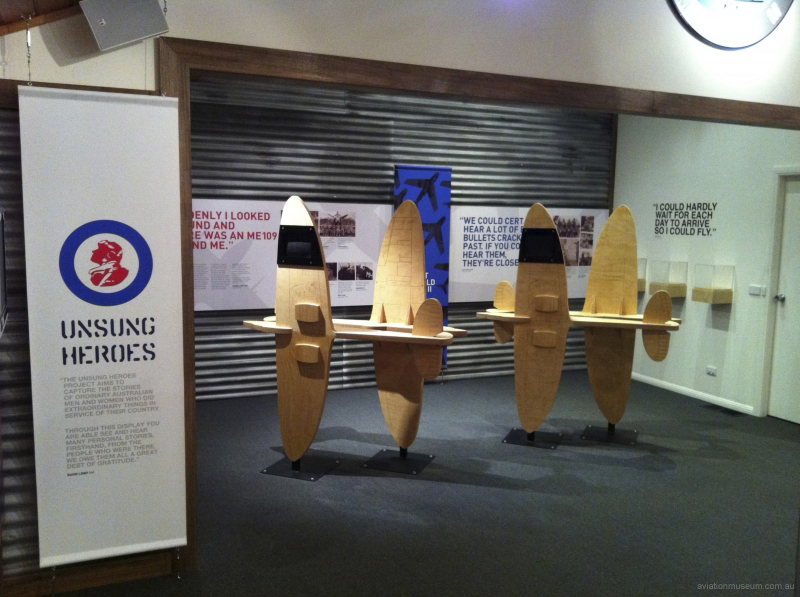
The Temora Aviation Museum has begun a project they call Unsung Heroes.

“How many Heroes go unnoticed?” reads the blurb on their website. “How many stories go untold? How many memories are forever lost?”

To try and stem the tide of lost memories, the Museum is collecting stories of people who were involved, in one way or another, in Australia’s military aviation heritage. As the project gets underway the collection of stories on the website is so far not a large one, but there are some interesting people profiled in the entries currently there. At $85 a pop, though, the privilege is not cheap, and I’m not sure how I feel about compelling such a significant donation in order to submit content to the database. But at least the Museum is making an effort to recognise the creators of the heritage they preserve in the form of their flying warbirds.

135387-l-1348483478 copy

An offshoot of Unsung Heroes is a video database aimed at a similar group of people. According to the latest email from the Museum, the database “includes men and women who, although not given recognition in the history books, have been vital to the pioneering spirit of Australia’s military aviation heritage.” There’s thankfully no mention in the email of any fee for taking part in this part of the database, and it looks like the Museum is looking for veterans to interview. Selected interviews are it appears available to view via iPads installed in a permanent exhibit in the Museum’s galleries (see image above – from the website of the designer, Bob Shea).

And here is the reason for this post. The biggest event in the calendar of the Temora Aviation Museum is Warbirds Downunder, an airshow featuring all of the Temora Aviation Museum’s collection of aircraft and a whole host of other significant flying warbirds. This year it’s scheduled for Saturday 2 November, and the Museum’s videographer will be there, covering the airshow but also interviewing veterans for the database.

With limited resources it appears unlikely that the Temora database will ever even begin to approach the scale and sophistication of the excellent and extremely far-ranging Australians at War Film Archive (which had the backing of the Australian Government), but it’s perhaps an opportunity for veterans to take part in a less-formal interview situation. Temora is a long way away from any of the state capitals and getting there is a bit of a mission (unless you fly out there in a private aircraft, as I’ll relate in a future post), but if anyone is interested in taking part, contact the Museum by email or by phone on 02 6977 1088.

© Adam Purcell 2013

Hat-tip to Kevin Jacobs for the heads-up.

Bonus Photo Post: Bomber Command Commemorative day, Amberley, Queensland

While many of us were in Canberra last weekend for the annual Commemorative Day Weekend, simultaneous events were also being held elsewhere around the country. Groups of veterans, families and interested others gathered to remember the men and the deeds of Bomber Command at ceremonies held in Sydney, Adelaide, Melbourne and Brisbane.

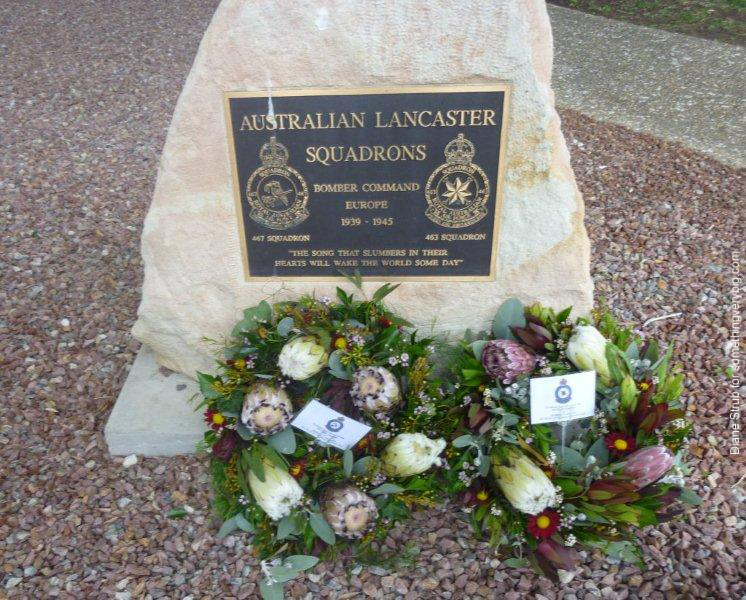
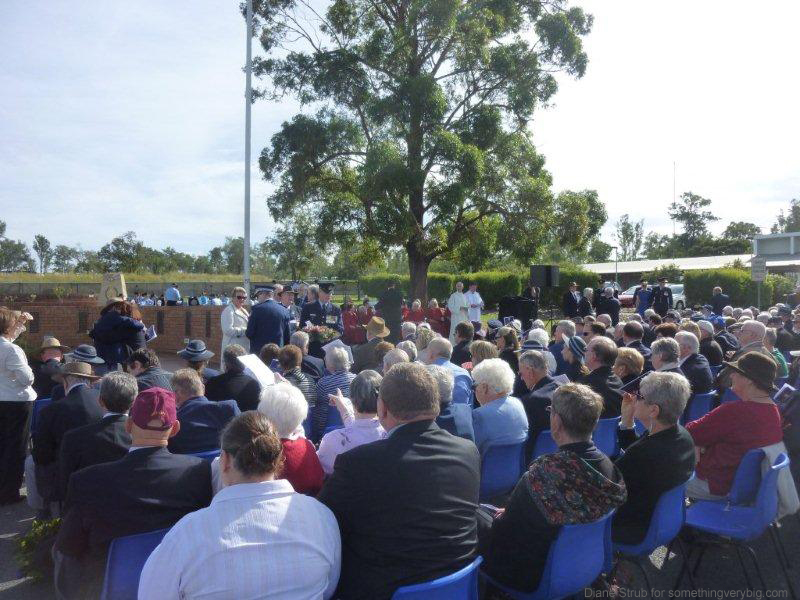
I had a ‘spy’ at the Brisbane event, held at RAAF Amberley (itself the site of the wartime No 3 Service Flying Training School, to which Phil Smith was posted in 1941). Diane Strub, the Honorary Secretary of the 467-463 Squadrons Association in Queensland, was there and sent me these photos:

 bcm-day-467-463-wreaths-bcm-day-amberley-2013 copy

bomber-command-veterans-bcm-day-amberley-2013 copy

the-crown-amberley-bcm-day-2013 copy

It looks like a fair-sized crowd was there, with a good number of veterans present (I counted 23 in the above photo). Everyone looks a little warmer than we were in Canberra!

Good show, Brisbane. And thanks to Diane for the photos.

Bomber Command in Canberra 2013

It was a very wet weekend in south-eastern Australia.

It rained so much in Adelaide on Friday that the automatic rain gauge at the airport gave up. 70mm fell in Melbourne on the same day. It was still raining when I walked to the train station in Sydney on my way to the airport on Sunday morning and, as we were taxying out, the heavy jets weren’t so much ‘landing’ as ‘splashing down’. We were in cloud all the way to Canberra.

Things were not looking good for the sixth annual Bomber Command Commemorative Day.

Though the tarmac was noticeably wet on arrival, the sky showed signs of clearing as I took a taxi to the Australian War Memorial. On arrival I discovered that, because the grass near the Bomber Command sculpture was still rather squelchy underfoot, the ceremony had been moved to the Commemorative Area within the War Memorial itself. As the clouds gradually moved off parts of the crowd were soon sitting in that glorious autumn sunshine for which Canberra is famous.

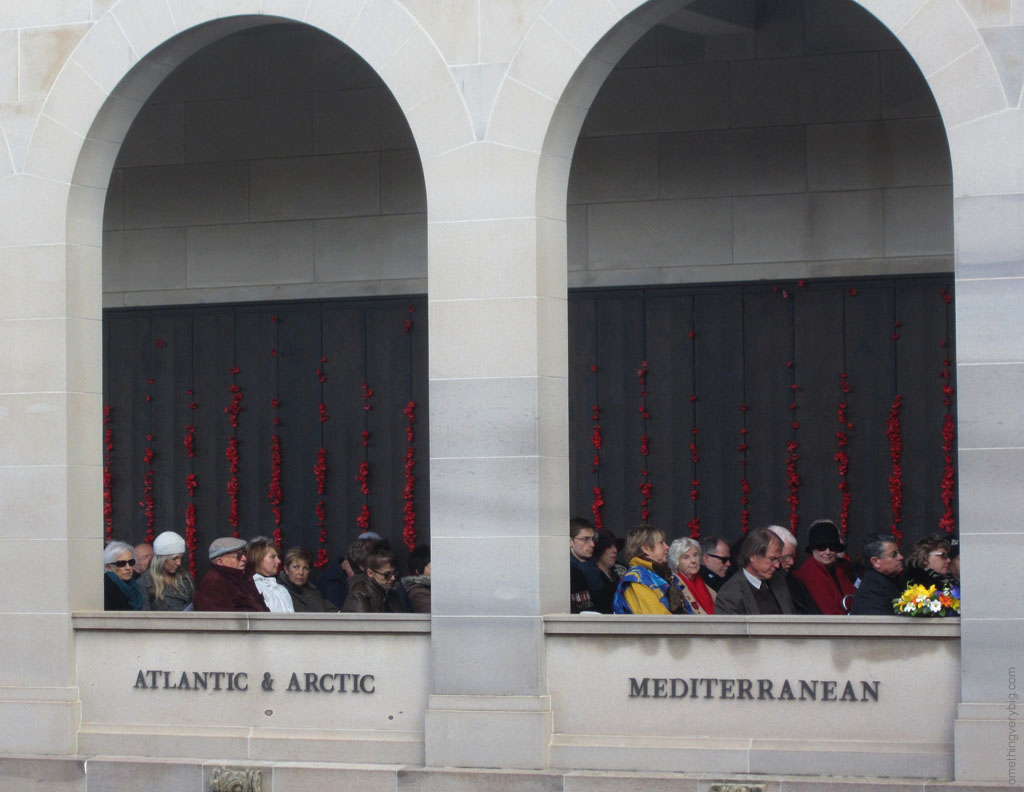
The Commemorative Area was a spectacular location for the ceremony.

13jun-weedingcanberra-092 copy

13jun-weedingcanberra-091 copy

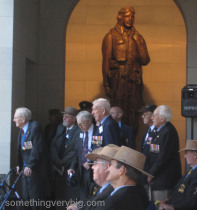
The crowd was sitting underneath the thousands of names on the Roll of Honour. A statue of an airman, on the eastern side, in turn cast his bronze gaze down onto the gathered crowd. To the rear, immaculately dressed members of the current iterations of 460 and 462 Squadrons, Royal Australian Air Force, were lined up in parade order. Those veterans who could were invited into the Hall of Memory to watch and take part in the wreath-laying, at the Tomb of the Unknown Australian Soldier. As the bugler sounded the Last Post, the notes echoed off the cloisters and faded away to silence. The singing of the Australian National Anthem, with the support of the Australian Rugby Choir, was spine-tingling stuff. The ceremony was enhanced by the atmosphere of the place it was in.

13jun-weedingcanberra-099 copy
The speakers, too were excellent: in particular, former Defence Minister and Leader of the Opposition Dr Brendan Nelson who is now the Director of the Australian War Memorial. His opening address, delivered mostly without notes, was impressive. He quoted the words of Charles Bean which are scribed on the wall in the Welcome Gallery of the War Memorial:

Here is their spirit, in the heart of the land they loved; and here we guard the record which they themselves made.

Some of those who made that record, of course, were the veterans of Bomber Command.

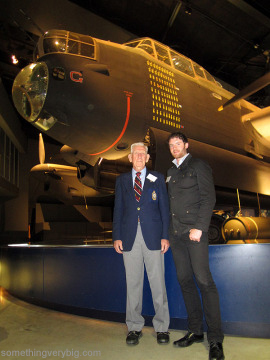
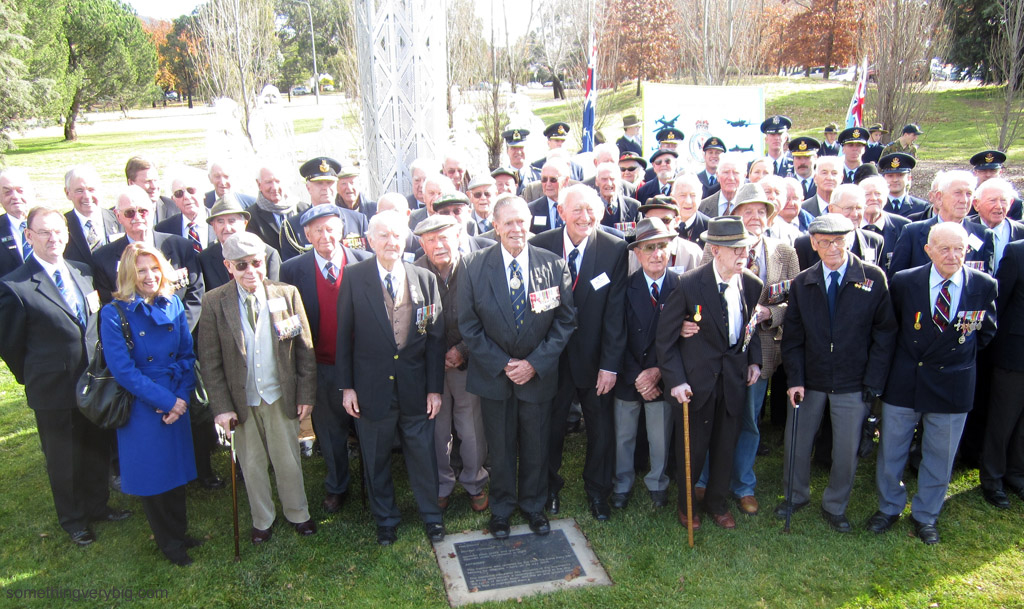
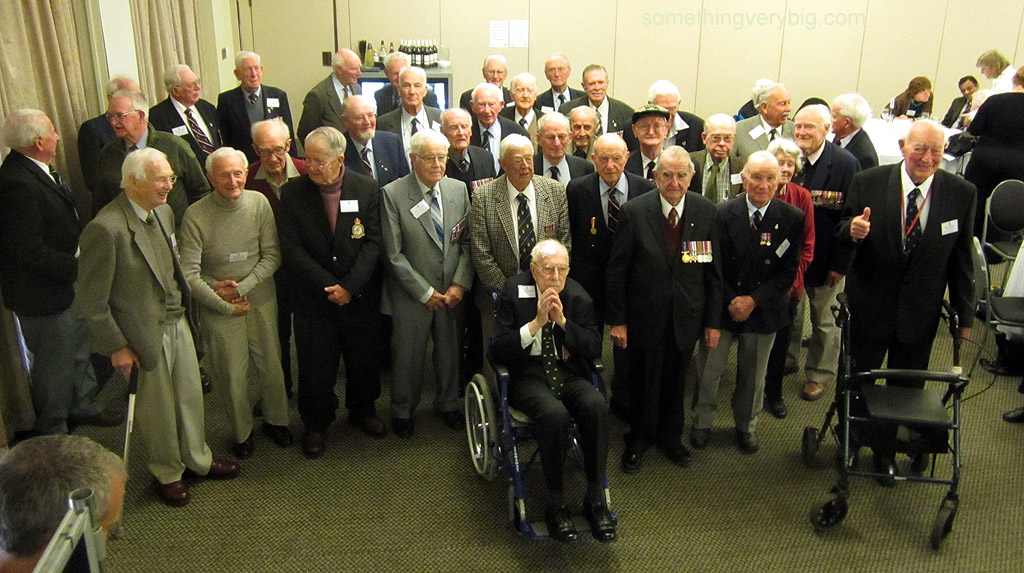
Following the ceremony itself came an organised photo opportunity in the shadow of G for George, with almost all the veterans present. My count is 32 (including one who is not in this photo):

13jun-weedingcanberra-119 copy

And then to lunch. Once again, the networking and reunion opportunities offered at this function for someone like me in this country are second to none. Among others, I met a Mosquito navigator named Alan Beavis, and his good mate Alan Pugh, who was training at 1661 Heavy Conversion Unit (Winthorpe – Jack Purcell was there in 1943) at the end of the war. And of course I also caught up with many of the usual suspects again – Don and Ailsa McDonald, the three other Dons Southwell, Huxtable and Browning, Keith Campbell, Harry Brown and Tommy Knox (the latter commenting to me, ‘you can really see it this year… age is certainly catching up with them!’). There was some good discussion on a few potential projects for the next couple of years, much reminiscing and many stories.

The Southwells dropped me off at the airport again, and I flew home to Melbourne with a notebook full of ideas and addresses to follow up on.

Bomber Command, over the last few years, is finally beginning to see some recognition for its deeds during the Second World War, and acknowledgement of the legacy it left. This was a common theme among many of the speakers at the weekend this year. Peter Rees (who recently published Lancaster Men and is rumoured to be planning a follow-up for the next couple of years) spoke briefly at the lunch and cited this as one of his key motivations. Air Marshal Geoff Brown, current Chief of Air Force, also gave a good talk at the lunch about what today’s Air Force can learn from the bomber offensive. His main points were that a coalition of nations in a common cause is far more powerful than trying to do it alone, a reminder of the importance of close links with technological and research organisations, how vital it is to gain and maintain control of the air in a combat scenario, the continued value of electronic countermeasures and the critical importance of teamwork and people all united by a common purpose and common aims. He effectively demonstrated that, while the airmen of Bomber Command fought their battles so long ago, and while they fought a battle so unique in scale and circumstance, what they did has continued relevance in current operations – and that in that very practical way their legacy will live on.

13jun-weedingcanberra-108-copy copy

Remembering the history – the raids, the stories, the men – is of course vital. But learning from that history and applying the lessons in practical ways in modern times can also form part of the legacy of Bomber Command. It is far too late for most of those who served, but I hope that some of the veterans who were in Canberra over the weekend can take some comfort in the knowledge that this legacy is living on and will continue to do so.

© 2013 Adam Purcell

A photoset by the Australian War Memorial’s official photographer is available to view here.

Event: Bomber Command Commemoration Weekend, Canberra, 1-2 June 2013

Details have just been mailed out for people interested in attending the sixth annual Bomber Command Commemorative Day weekend in Canberra, 1-2 June 2013.

There are three parts to this weekend:

  • The Ceremony

Grass area in front of the Bomber Command Memorial, in the grounds of the Australian War Memorial

Sunday 2 June 2013

Ceremony begins 11am (please be seated by 10.50am).

Attending the Ceremony is free but if you intend to be there please RSVP to Don Southwell, details below, by 27 May.

  • The Meet & Greet Function

ANZAC Hall, Australian War Memorial (under the shadow of G for George)

6-8pm Saturday 1 June 2013

Canapes, beer, wine, soft drink all included, $50 per head.

  • The Luncheon

Rydges Lakeside Hotel, Canberra

12pm for 1pm lunch, until 4pm, Sunday 2 June 2013

Two-course sit-down lunch included – note a cash bar will be in operation on the day. $60 per head.

To book for the Meet and Greet and/or the Luncheon, please contact Don Southwell on (02) 9499 6515 or southwelldonald@gmail.com.

RSVP for the Meet and Greet and/or Luncheon closes 17 May 2013.

RSVP for the Ceremony closes 27 May 2013.

This is by far the largest gathering of Bomber Command veterans, relatives, friends, family and other interested parties in Australia and is always a good event. Highly recommended!

Event: ANZAC Day 2013,with 463-467 Squadrons Association NSW, Sydney

Arrangements for commemorating ANZAC Day on April 25 with the 463-467 Squadrons Association in Sydney remain much the same as usual.
The Association will assemble for the march at the corner of Elizabeth and King Streets in the Sydney CBD. The Banner should be in place from 1015.

Following the march, a lunch will be held in the Parkview Room of the Pullman Hotel, from about 1230 or 1300. Note this is the same venue as last year but the hotel has had a name change – it was formerly the Sydney Marriott, Hyde Park. Cost for the lunch is $55pp.
All are welcome. To book, email Association Secretary David Southwell at davidrfs@icloud.com.

I’m flying up from Melbourne for the day, and will be carrying one end of the Banner during the march. Looking forward to it.

Bomber Command in Canberra 2012

The 2012 Bomber Command Commemoration Weekend has just wrapped up in Canberra. There were slightly fewer people present, to my eye, than on previous years but I think it was still a fair turnout. Perhaps the forecast rain kept some away – it certainly was a wet welcome to Canberra when my Virgin E-Jet broke clear of the thick cloud that we’d been descending through just before landing.

This was the fifth such commemoration to be held in the nation’s capital and the event has settled down into a familiar but effective pattern. G for George provided the setting for the now traditional ‘Meet & Greet’ function. There were indeed many people to meet and greet. Tommy Knox and Pat Kerrins, who I’d met here last year, were both there again. Don Browning and Ross Pearson traded their usual good-natured banter about which between the Halifax and the Lancaster was the ‘proper’ aircraft to have flown in (at least we all thought it was good-natured…). And I met a few new people too.

12-jun-bomber-command-in-canberra-007 copy

Early in the evening as I was wandering around to see who else I recognised, out of the shadows of the Lancaster’s nose came a man named Don McDonald, a 466 Sqn Halifax skipper from Melbourne, a veteran I had not yet met. He was a lovely bloke and we chatted about all sorts of things for a good while – and upon learning that I now also live in the southern capital he and his wife Ailsa promptly invited me to visit them for dinner sometime. You never do know who you will meet at these events! I also spoke with the former Commanding Officer of the reformed 462 Squadron, which was previously a Halifax squadron of Bomber Command and is now an electronic intelligence unit based at RAAF Edinburgh in Adelaide. The superb Striking by Night sound and light show was again played at the end of the event. The final moments of the production feature a WAAF speaking about the Australian airmen she worked with. “They were young… handsome…” she says, “…and full of life.” At which point Don Huxtable was heard to mutter “well two out of three ain’t bad…”12-jun-bomber-command-in-canberra-012 copy
Many of us repaired to the hotel bar at the Rydges after returning from the AWM. It was a memorable night, sharing beers with the two Toms Knox sitting on one side and Hux on the other as a great variety of stories, of both tall and short varieties, were told.

Canberra received almost an inch of rain on Saturday and it looked very much like it had set in for a week. But upon peering out of my hotel room window in the morning I saw a scene that was wet, but not actually raining. The clouds gradually cleared as the morning went on and in fact it turned out into a delightfully mild Canberra morning. The Commemorative Address was given by Air Marshal Mark Binskin, Deputy Chief of  Defence Force (and a former Chief of Air Force), who spoke about the legacy of teamwork from the men of Bomber Command, and how the Air Force has reformed two Bomber Command squadrons as a tribute. Fittingly a large group of 460 Squadron personnel were present standing in three neat rows at the back of the crowd. There was an attempt to get an official photo of all the veterans who were present but it was not as organised as last year’s effort:
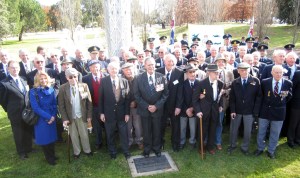
12-jun-bomber-command-in-canberra-032 copy

Back to the Rydges, then, for the luncheon, always for me the highlight of the weekend. Despite the slightly lower numbers present this year, it is still one of the largest gatherings of Bomber Command veterans, families and other interested people in this country. Once again there were many extremely interesting people to talk to. I finally met Diane Strub of the Queensland Branch of the 463-467 Squadrons Association, and Fred Murray-Walker, whose father was killed in the crash of 463 Squadron Lancaster JO-G on the Scottish hillside in 1944. Peter Rees, a Canberra-based author who is currently finalising a book focusing on Australians in Bomber Command, was also there, and brought with him a magnificent folio of target photographs cheekily entitled “The Collected Works of 463 Squadron, as told to the Third Reich, September 1944 to May 1945”.

Perhaps the most remarkable person I met was sitting at a table at the back of the function room with her son and daughter in law. An Englishwoman, her name was Maude and, as it turned out, she had been on the staff at Bomber Command Headquarters – she was Deputy Commander in Chief Sir Robert Saundby’s secretary from 1943 until the end of the war. I asked her what the atmosphere was like at Bomber Command HQ. She said it was always busy – she was at work whenever her boss was and might – might – get the occasional half-day off on a Sunday if she was lucky. It was only a short conversation but it was an absolute pleasure to meet and talk to a unique lady. I even managed to convince her to get up for the group photo of all present who had served in Bomber Command (she is front right here, wearing red, behind Tommy Knox):
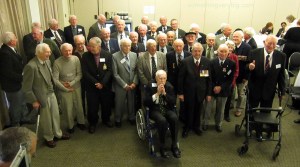
12-jun-bomber-command-in-canberra-066 copy

Some more photographs from the weekend:

Some of the crowd at the Meet & Greet function in the shadow of Lancaster G for George:

12-jun-bomber-command-in-canberra-010 copy

The Ceremony, in front of the AWM’s Bomber Command memorial:
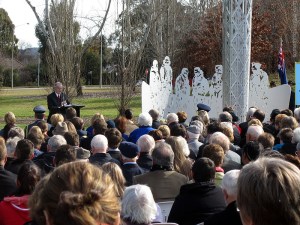
12-jun-bomber-command-in-canberra-015 copy

The Three Dons: Don Southwell reading a copy of a ‘Tribute to Mr Don Huxtable’ as tabled in NSW State Parliament recently, while Don Browning and Don Huxtable himself look on:

12-jun-bomber-command-in-canberra-041 copy

Bryan Cook, Don Huxtable, Don Browning and Adam Purcell in Canberra, 03JUN12:

12-jun-bomber-command-in-canberra-048 copy

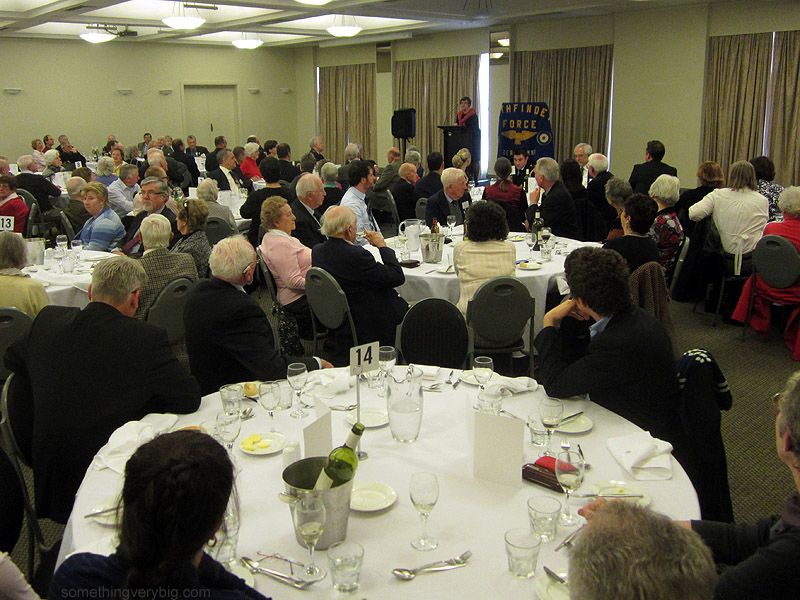
Part of the 220-strong crowd at the Lunch that followed the Ceremony on Sunday:

12-jun-bomber-command-in-canberra-052 copy

In all, then, another fine weekend of commemoration and friendship. Another pile of things to follow up on. Another piece of proof that, even after almost seventy decades, the deeds of Bomber Command live on. I’ll leave the closing words to Don Southwell, who delivered the Reflections address during the Ceremony on Sunday.

“I will always be proud”, he said, “that I flew with Bomber Command”.

Text and images (c) 2012 Adam Purcell

ANZAC Day 2012

ANZAC Day dawned cold and wet in Melbourne. The conditions didn’t stop 35,000 people attending the Dawn Service at the Shrine of Remembrance. I wasn’t one of them, though – instead, I got on board a Virgin jet and headed towards the north.

Descending into Sydney, the city looked an absolute picture. It was one of those sparkling autumn days that I don’t think you really get anywhere else in the world. Only the whitecaps on the rolling seas hinted at the presence of some wind.

I caught the train into the city. Emerging from the pedestrian tunnels out of St James station, I smelt rosemary and heard marching drums somewhere in the depths of the city. Yes, the March was well and truly underway.

The Air Force veterans traditionally hit the circuit around 11am so I had a bit of time to spare. A marching band moved past, its mighty horns echoing off the skyscrapers. Walking out of the tunnels I spied a familiar figure. It was Tommy Knox, a Stirling flight engineer from 149 Squadron who I had met in Canberra last year. He was clutching a free cup of tea that he’d been given by Legacy volunteers at the train station. I’d received a letter from Tommy just a couple of days before. We had a quick chat before he hurried off to find the rest of the ‘Odd Bods’, the group he marches with.

Returning to Elizabeth Street, I patrolled up and down the assembling throng, looking for people I knew. The first veteran I recognised was Hugh McLeod, a 49 Sqn rear gunner who, at “eighty seven and a half” says he is one of the youngest in the group. Hugh was adopted by the 463-467 Sqn Association some years ago and now joins them for the march and lunch each year. Once the banner arrived, safe in the care of Bryan Cook whose grandfather was a 463 Sqn mid upper gunner, it became the focal point and more familiar faces detached themselves from the growing crowd. In recent years it has become something of a tradition for Bryan and I to carry the banner for the Squadrons and we were again honoured to do so this year.

Only six veterans actually marched this year. Even the indefatigable Don Southwell was absent, having pulled a hamstring recently. He rode in an RSL-provided Land Rover instead. The rest of the bunch was made up by numerous families and friends of veterans, numbering perhaps a couple of dozen in all.

Some photos of the march:

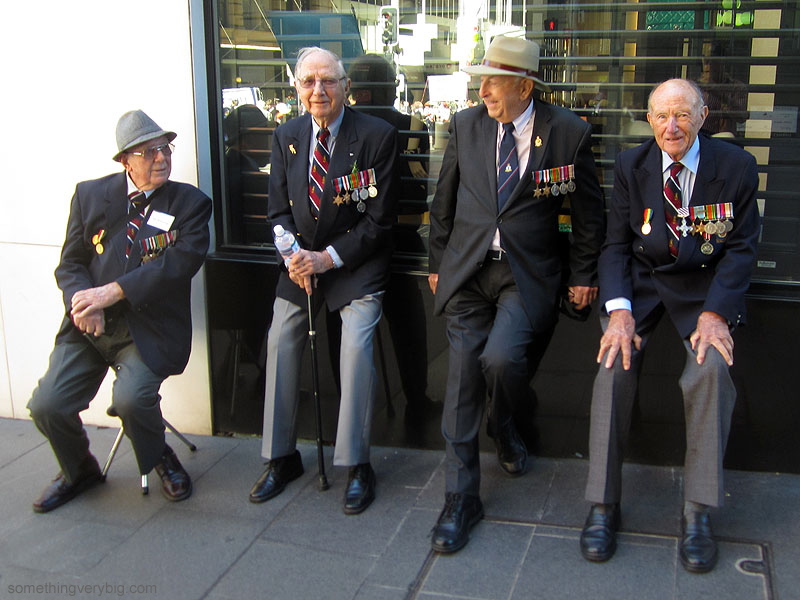
After setting off up Elizabeth Street, we turned down Market Street– where, as has become normal each year, we halted for perhaps half an hour to avoid congestion further down the route. President of the Association Don Browning came prepared, wielding one of those walking sticks with a built-in stool. The other three in this photo took advantage of a handy window sill:

12apr-anzac-day-009 copy

Meanwhile the wind had picked up. While we were waiting to continue Bryan and I had a good chat with Hugh, our 49 Sqn rear gunner, while he clung gamely to one of the banner’s guy ropes to keep it under control in the breeze:

12apr-anzac-day-010 copy

Following the march, lunch was at the Sydney Marriott hotel, on the other side of Hyde Park. Once again it was a superb meal. 48 people were present, including the same ten veterans who we had last year. Again a group photograph was organised (ignore the two young blokes holding the banner up in the background!):

12apr-anzac-day-008 copy

Left to right, they are Don Southwell, David Skinner, Bill Purdy, Alan Buxton, Hugh McLeod, George Douglass, Don Huxtable, Don Browning, Albert Wallace and Harry Brown.

Five of these distinguished gentlemen will be travelling to London in late June for the dedication of the new Bomber Command Memorial in Hyde Park.

During lunch I sat next to Alan Buxton, a navigator. Alan never flew operationally with 467 Sqn – he actually flew his tour with 617 Sqn, the famed Dambusters. In late 1944 he baled out of his crippled Lancaster over Norwich after a harrowing return trip across the Channel with all four engines ablaze, a story hinted at by the tiny golden caterpillar badge with ruby red eyes that he was wearing on his tie. He proudly showed me his Caterpillar Club membership card, which he still carries in his wallet. After VE Day Alan was posted to 467 Sqn at Metheringham, in preparation for the planned Tiger Force operations against Japan. Thankfully the war ended before they were required to fight in that theatre. Alan appears in this photo on the left:

12apr-anzac-day-017 copy

And so another ANZAC Day passes. It is always wonderful to see these blokes each year, and long may it continue. President Don Browning made a toast to absent friends during the lunch – but added that, as long as there was someone to carry the banner, there would be someone to march with it, and so the spirit of the two Squadrons will live on.

© 2012 Adam Purcell