Primary sources

Primary sources are the gold standard when it comes to researching historical events. Sources that were created, in real time, when the events were happening, they are the real deal, the good oil, the oracles of truth.

But what if they’re wrong?

I was contacted recently by Paul Jörg of the village of Denklingen in Germany, regarding a post in my 467 Postblog series from about a decade ago. Paul, who rather delightfully describes himself as his village’s ‘local chronicler,’ had identified a couple of errors that he wished to bring to my attention. In my post covering the Augsburg raid on 25 February 1944, I’d referred to the fate of 467 Squadron Lancaster PO-M LL756, flown by P/O HW Stuchbury. It crashed, I’d written, in a place called Deufringen. Paul wanted me to know that the bomber had in fact crashed in a field a couple of miles from his village – Denklingen, not Deufringen – and his sources showed that it was LL746, not LL756.

Looking at my notes from when I originally wrote the post, I found that I’d taken ‘Deufringen’ from Alan Storr’s otherwise excellent research on 467 Squadron losses. I don’t know what Storr’s source was, but the only primary document I could find was in the A705 casualty file for F/S JW Wood, Stuchbury’s navigator (NAA:A705, 166/44/108), where several pages clearly refer to Denklingen. On the basis of that I changed my post.

Sorting out what was the correct aircraft serial number was less straightforward, however. When I wrote my Postblog piece, I got my information from the 467 Squadron Operational Record Book, which states that Stuchbury and crew failed to return in LL756. And now, in Wood’s A705 file I found a copy of the original casualty signal from Kodak House in London to RAAF HQ in Melbourne. This signal also records the missing aircraft as LL756.

Two independent documents, sourced from different places, agreeing on a basic fact: that seemed pretty definitive. Primary sources over secondary, right?

But something was still unsettling here. The reference to LL746 had to come from somewhere. Was it a simple typo? Or did something more unusual happen?

To get to the bottom of it, the first thing to do was to establish that both serials had actually existed. I checked the lists in the back of my copy of Bruce Robertson’s Lancaster: The Story of a Famous Bomber (1964), and found entries for both aircraft – which revealed something very interesting:

LL746: “467 Sqn 1Jan44, Missing 26Feb44. 87hrs.”

LL756: “101, 467 Sqns. Missing (Augsburg) 25/26Feb44. 261hrs.”

Well look at that. Not only did both aircraft exist, but apparently they both served with 467 Squadron and, almost unbelievably, both went missing within a day of each other.

Hmm.

Back to the 467 Squadron ORB: could I find both serials there? I closely checked the Form 541s for January, February and March 1944. Between 20 January and 15 February, LL746 appears on six operations, including five to Berlin. The 15 February raid (coincidentally Jack Purcell’s first operation)[linky Postblog] was with Arthur Doubleday’s crew. But then LL746 vanishes from the records. On 19 February, Doubleday is recorded flying to Berlin in… you guessed it… LL756, and that second serial then appears on three more operations, including the 25 February Augsburg raid with Stuchbury. Neither serial appears in the ORB after that – and what is more telling, I think, is that the two serials never turn up flying on the same raid.

That, to me, strongly suggests that all those ORB entries refer to the same aircraft. The aircraft that Doubleday took to Berlin on 15 February was the same one that he flew there on the 19th. One of the serials is incorrect – but which one?

The clue was in Robertson’s list. The entry for LL756 carries an innocuous-looking reference to 101 Squadron. It wasn’t totally unknown, but it was highly unusual for a Lancaster to be transferred to a different squadron. If I could find LL756 in the 101 Squadron records, I thought, that would strongly suggest that it never flew with 467 Squadron at all.

The 101 Squadron Operational Record Book is available to download free of charge from The National Archives in the UK. Searching through these documents is a very laborious process –  they’re not often searchable digitally, so you have to go through them manually – but a simple Google search turned up a post on the RAFCommands forum, which referred to LL756 and a runway accident in September 1944. Knowing that, it was then a simple matter to download the documents for the correct date range; I then found LL756 listed on several operations with 101 Squadron.

If LL756 was still flying in September 1944, it clearly could not have been shot down in February. That means that it was not the aeroplane that crashed near Denklingen on 25 February 1944. It’s therefore most likely that the crashed aeroplane was indeed LL746, and both the 467 Squadron Operational Record Book and the RAAF’s casualty notification are incorrect.

How can two independent, contemporary, primary sources both be wrong? I think it’s because they’re not as independent as they might first appear. Operational Record Books were compiled by the staff in the squadron’s Orderly Rooms. And the very first casualty signals – supposed to be sent to Group HQ within an hour of an aircraft becoming overdue – were sent from the same rooms, by the same staff.

This is how I think it happened: at some point between 15-19 February 1944, someone in the 467 Squadron Orderly Room at Waddington mistakenly typed a ‘5’ instead of a ‘4’ when referring to PO-M. That simple error rolled on for the next three operations, too – and then, when the aircraft failed to return from Augsburg, it made its way into the casualty signal to Group HQ, and then into the next signal to RAAF HQ at Kodak House, and then into the signal sent to Melbourne – and from there, into the historical record.  

Primary sources over secondary, any time. Except when they’re wrong.

Thanks to Paul Jörg in Denklingen for the information that started this search.

© 2025 Adam Purcell

What’s your earliest memory?

At one stage I was beginning my oral history interviews with what you might think is a fairly simple question.

“What’s your earliest memory?”

The idea was that this sort of open-ended question might act as a sort of portal to the past; a way to get my subject talking and kick-start their brain into thinking about their life and memories. It didn’t always have the desired effect, though; after a few such openings I discovered a tendency to take my question literally and try to work out which, of a thousand early memories, might be the actual earliest one. The interviewee spent so much brain power trying to choose which story to tell me that we were never able to dig beyond the superficial. We never quite achieved the ‘flow’ that might reveal the thoughts and memories that hid underneath.

In later interviews I ended up changing the wording to a more general ‘tell me about your early life’ sort of question, and that more often than not had the desired effect (I think the record was Arthur Atkins, a Lancaster pilot who started talking and didn’t stop for nearly two hours). But during the time I was asking other people about their earliest memories, I couldn’t help but try to answer the question myself.

So what is my own earliest memory?

Well, it’s very clear in my mind. I’m about four years old, and with my Dad, I’m standing next to some train tracks just outside Bowral in New South Wales. I hear the whistle of a train, and then it bursts out of the tunnel, pulled by not one, but two green steam locomotives: one is the famous Flying Scotsman and the other, the big streamlined NSW passenger engine known as 3801. For a young boy, the smoke, steam, speed and sounds are absolutely thrilling. I’m particularly amazed to see that the wheels of 3801 are taller than I am!  

This story has always been at the heart of who I am. Green remains my favourite colour and I still have a soft spot for 3801. The story gets trotted out every so often and I tell it easily and fluently.

There’s just one problem:

That’s not how it actually happened.

My long-cherished memory is wrong.

I only realised this in the last couple of weeks, when I received a package of old photographs from my parents. In amongst the collection was one particular photo. It shows me, it shows my Dad, and it shows 3801 hauling a train. So far, so good.

But where is Flying Scotsman?

Yes, the British locomotive was out in Australia in 1988, on a tour for Australia’s Bicentenary. Yes, in 1988 I was four years old. But despite the image that is still in my mind, I did not see it go past that day. My memory is incorrect. (Oh, I’d always thought it was just me and my Dad who were there, but the photo clearly shows my two sisters as well, and I imagine the photo was taken by my mother.)

What happened here?

In the photo, 3801 carries a headboard that says ‘Bicentennial Train’. The back of the photo carries a caption in my dad’s handwriting, saying the photo was taken in December 1988. Now knowing something about the Flying Scotsman tour, I suspect that the train was probably on its way to Moss Vale, not far to the south of where the photo was taken, to meet up with Flying Scotsman and then run together, in parallel, back up to Sydney.

I might have been too young to properly comprehend that. But there’s another photo in an old album that might hold an explanation; it was sent to me by my grandfather (a lifelong train enthusiast), who lived in the Blue Mountains. It shows Flying Scotsman, in a double-header with 3801, on tracks close to Grandpa’s house. Yep, both locomotives. I was not there.

I think I’ve simply conflated my own memories of seeing a train going past with that photo from Grandpa, and put Flying Scotsman in my mind somewhere it never was. And once the false memory was seeded, by telling the story I’ve reinforced it. If you tell yourself something is true often enough, eventually you’ll believe it.

But it’s still a foundational memory for me. I remember the thundering noise, the smell of the oil, the sound of the whistle and the shaking of the ground. I remember the excitement as this big, green monster went past, and it inspired a lifelong love of steam trains – especially big green ones. That is all true. The important bits of what was it like remain intact in my memory, even if I don’t have all the details spot-on correct.

Human memory is an unreliable source. Oral histories probably aren’t very useful for exact details of the what and the when. But goodness, can they paint a picture of what it was like to be there.

Just make sure you check the records before relying on the details.

Oh, and those train wheels? Many years later Dad and I went on a heritage trip on 3801.

They’re still taller than me.

© 2024 Adam Purcell

Andrew Mynarski and the crew of B for Baker

In 2014 I first became aware of an intriguing connection between the crew of B for Baker and one of only 13 Bomber Command aircrew to be awarded the Victoria Cross, a Canadian gunner named Andrew Mynarski. As I discovered, before he went to a Canadian squadron, Mynarski spent several months flying with the core group of men who would become the crew of B for Baker.

While the information I managed to gather in 2014 wasn’t enough to be absolutely certain that Mynarski had flown with the crew, it was sufficient to support a strong circumstantial case. I would need to see Mynarski’s logbook to be sure, though.

Well, it’s taken six years, but thanks to the assistance of Lech Lebiedowski, the curator of the Alberta Aviation Museum, and the generosity of Canada’s Aviation Hall of Fame, which holds of the original document, I’ve now seen scans of the relevant pages of Andrew Mynarski’s logbook – and they do indeed confirm what I suspected.

By September 1943, Andrew Mynarski had been at 1661 Conversion Unit, RAF Winthorpe for three months. Within a month it looks like he completed most if not all of the usual HCU training programme, flying with a sergeant pilot named Blackmore. There’s then a big gap in his logbook of more than two months. I don’t know the reason for the long break, but I do know that his next recorded flight, 2:30 hours in a Manchester, with Pilot Officer Hamilton at the controls on 26 September, also appears in Dale Johnston’s logbook. Johnston, of course, would go on to be the wireless operator in the crew of B for Baker.

From then on, the logbooks of the two men follow each other closely, with only minor disagreements about aircraft identification letters or the dates of some flights, all the way through the Heavy Conversion Unit course at Winthorpe, across to 9 Squadron at Bardney, and to another Heavy Conversion Unit at Syerston at the beginning of December 1943. From this information it’s clear that the two men were flying on the same crew.

I’m lucky enough to have copies of the logbooks of two more members of the eventual crew of B for Baker – pilot Phil Smith and navigator Jack Purcell – so I thought I’d cross-reference between all of them to build up a picture of when each man joined or left the crew. Then I added what posting information I had for the remaining three members of the crew.

And because it’s sometimes easier to see connections in a complex story in a visual way, I then ended up pulling out my long-neglected colour pencils and building a literal picture:

Movement Map

In this diagram – which, I’ll grant you, looks a bit like a map of a not-very-useful underground train network – locations are marked down the left-hand side, dates run from left to right across the top and each man’s path is represented by a different coloured line. Looking at the full-size image (click here), it’s reasonably easy to see how the core of the crew – Johnston, Hill, Tabor and Parker – moved through things together, remaining a unit from the first HCU at Winthorpe right through to 467 Squadron at Waddington. Mynarski was at Winthorpe at the same time that Johnston et al. were, but on a different crew until some time just prior to 26 September (when the first common flight appears in the logbooks). Similarly, Jack Purcell was also on a different crew at Winthorpe – see my previous post for details – until his logbook also starts showing the same flights as the other two from 3 November.

Notice the green line running down to join the conglomeration at the very end of November 1943? That one represents Phil Smith, who had been instructing at an Operational Training Unit until he was posted to 1668 HCU at Syerston. He would have arrived there around the same time as the other six, and from here on his logbook reflects the others.

So we’ve established that Andrew Mynarski flew with Jack Purcell and Dale Johnston from September 1943, and that they all flew with Phil Smith at Syerston in December. But when did Mynarski leave the crew?

This is where Mynarski’s logbook threw up something of a surprise. It reveals that he flew with this crew right up to 21 December, just ten days before Smith and co. left Syerston for Waddington and 467 Squadron. Mynarski’s next flight – with a new pilot – isn’t until 5 January.

This is a lot later, and a lot further through the HCU course, than I expected. My theory, prior to receiving this information, was that Mynarski had left the crew immediately upon arriving at Syerston. After all, the man who would replace him as rear gunner, an Australian named Gilbert Pate, had himself already been at Syerston for a couple of weeks when everyone else turned up. Evidently, though, that was not the case.

Why did Mynarski leave the crew? That’s something that the information in his logbook can’t tell me. I know that the Royal Canadian Air Force was gradually rounding up Canadian aircrew for transfer to the specifically Canadian 6 Group from early 1943. Perhaps it had something to do with that initiative, though January 1944, a year after the formation of 6 Group, does seem quite late in the piece to be doing it.

I don’t think that is a question that will ever be answered with 100% confidence. Still, it’s nice to have confirmation that Pilot Andrew Mynarski VC did indeed fly with the crew of B for Baker.

My grateful thanks to Canada’s Aviation Hall of Fame, based in the Reynolds-Alberta Museum in Wetaskiwin, Canada, for providing access to the information in Andrew Mynarski’s logbook, and to Lech Lebiedowski for making it happen.

©2020 Adam Purcell

Just another name in a logbook

I’ve been trying to find more time recently to devote to my Bomber Command research – or, more specifically, to my Bomber Command writing. For several years the focus of that writing was this blog, but as those of you who’ve recently had to fight your way through the cobwebs and tumbleweeds to get here would know, there’s been not much of that over the last little while. I’ve had unrelated projects to work on which have taken much of my spare time in the last year or two in particular, but I’ve also been working on some Bomber Command-related projects too – including that book I’ve been threatening to write for a very, very long time.

One of the things about that is that, despite all that research over a couple of decades, there’s still stuff I don’t know. And as I’ve discovered, the best way for revealing exactly where the gaps are in my research is by trying to write about it. So occasionally, despite setting aside a day for “writing my book,” as I rather grandly call it, I have to hit the archives.

And that is exactly what happened yesterday.

For me, the concept of “the crew” and the surprisingly informal way in which they were formed is still one of the most fascinating things about Bomber Command. Putting equal numbers of each aircrew trade in a big room and telling them to sort themselves out was a remarkably effective strategy, and the generally accepted story is that, thus formed, crews stayed together through thick and thin, becoming as close as brothers.

The problem for me is that the evidence shows this is not what happened in Jack Purcell’s case. The pilot that he crewed up with at 27 Operational Training Unit (Lichfield) in June 1943 is recorded in his logbook as Flight Sergeant Saunders. But Jack had a new pilot by the end of his Heavy Conversion Unit course (F/Sgt J McComb) and, as we know, actually flew operations with yet another (S/Ldr Phil Smith). Somewhere along the way, belying if you like the “traditional” narrative, his crew changed.

Trying to write about this yesterday, I realised that I didn’t know what happened to Saunders. To fix that, I decided to go for a dig through my files. The first thing I needed to find was a full name. The 27 OTU Operational Record Book, fortuitously, lists the members of each course, along with the day they arrived and where they came from. Here I found my first clue. The only Saunders who appears in the lists for the period around when Jack was at Lichfield is AUS8687 Flight Sergeant A J Saunders, a pilot who arrived there on 1 July 1943.

Saunders’ service number is unusual: I would normally expect an Australian number to be six digits starting with a 4. Knowing that original documents are often hard to read or have errors, I checked what I had against the DVA WWII Nominal Roll. This revealed that the ORB was correct. Born in Charters Towers in 1917, Alexander James Saunders enlisted at Laverton in Victoria on 5 February 1940. Enlisting so early probably explains the unusual service number: perhaps the format had not yet been worked out at the time.

All I really wanted to know was where Saunders went after 27 OTU, so the list of postings in his Service Record at the National Archives of Australia would be sufficient for my purposes today. Unfortunately while that record exists, it hasn’t been digitised yet. It hasn’t even been examined for release. I could order the record online, but because there is a fee and a delay associated with that and all I really wanted was that list of postings, I decided to first check if there was any other way to find it.

What the hey, I thought. I’ve been lucky with Google before. I tried a simple search for his name and number… and found one little nugget of information that cracked the whole case open for me.

It’s hidden inside Volume IV of the so-called Official History of the RAAF during WWII[1], an account of an operation to an oil target at Wesseling on 21-22 June 1944:

A third Australian, Flight Lieutenant Saunders, also of 83 Squadron, was attacked six times by fighter aircraft before reaching Wesseling. (p.204)

In itself, this quote doesn’t show me much: there would have been more than one airman named Saunders. How do I know it’s the right one?

Happily for me, the author left a footnote, and that’s what made all the difference. “F-Lt AJ Saunders,” it says, “8687. 467 and 463 Squadrons, 83 Sqn RAF. Accountant, of Townsville, QLD”

There’s that strange service number again, which told me I’d definitely found the right man. And, more usefully, three squadrons are mentioned – two for which I happen to have full operational records.

I went to Nobby Blundell’s ‘Yellow Books’ which revealed that Alec Saunders and his crew had been posted to 467 Squadron on 31 October 1943. From here it was easy. Going to the original Operational Record Books, I discovered that Saunders flew twice as a second dickey before taking his own crew on one trip to Berlin on 23-24 November. A day later, they were all posted to the newly-formed 463 Squadron, with which they flew a further six operations. In early February 1944 they were posted to 83 Squadron, a Pathfinder unit.

Blundell records the names of the rest of Alec Saunders’ 467 Squadron crew:

  • A J Saunders (Pilot)
  • F D Redding (Flight Engineer)
  • J S Falconer (Navigator)
  • D D Govett (Bomb Aimer)
  • T A Sheen (Wireless Operator)
  • K G Tennent (Air Gunner)
  • D M Robinson (Air Gunner)

I cross-checked these against course lists in the 27 OTU Operational Record Book, finding records for four of them (Saunders, Govett, Sheen and Robinson). It makes sense that flight engineer Redding and second gunner Tennent wouldn’t be at the OTU because the aircraft in use at OTUs did not require flight engineers and had no mid-upper turret, so the extra men didn’t join the crew until the Heavy Conversion Unit. But what about Falconer, the navigator?

It took me a moment to make the connection: at OTU, the navigator was Jack Purcell. He is included in the course lists, of course, but he wasn’t on Saunders’ crew by the time they got to the squadron. Where did he go? And where did Falconer come from?

Amazingly enough, in my collection was another little gem of a piece of information which brought it all together. This is a page from Dale Johnston’s logbook, recording the names of his crewmates. Johnston was the wireless operator on the McComb crew – the bones of which became the crew of LM475 B for Baker:

Alastair Dale Johnston Flight Log-13

See the third name? The one that’s been scratched out and replaced?

Sgt J S Falconer.

Falconer was Paddy McComb’s navigator right up to the end of Heavy Conversion Unit. Then he disappears, to be replaced by…

Jack Purcell.

Purcell and Falconer swapped crews.

I don’t know why.

But for whatever reason, at the end of October or the beginning of November 1943, just before their final flights at Heavy Conversion Unit, two crews swapped navigators.

Falconer went off with Alec Saunders and his crew and survived the war.

Jack Purcell went off with Paddy McComb and his crew – and didn’t.

Such, I suppose, are the fortunes of war.

© 2020 Adam Purcell

[1] Herington, John (1963) Australia in the War of 1939-1945. Series 3 – Air. Volume IV, Air Power over Europe 1944-45, Australian War Memorial, Canberra. Available from https://www.awm.gov.au/collection/C1417318

The IBCC’s Digital Archive is now live!

1806 UK Trip-153
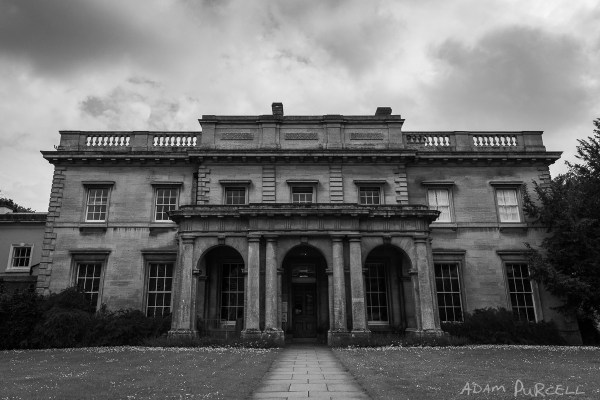
Riseholme Hall, Lincoln University – the home of the IBCC Digital Archive

For every hour of recorded audio, I was told recently, it takes the team of staff and volunteers at the International Bomber Command Centre’s Digital Archive about sixteen hours to prepare it for publication. First it has to be transcribed. Then the transcription is reviewed. Then descriptive metadata is added, and finally the item is ready to be uploaded into the archive itself.

Sixteen hours.

By my rough calculations, I recorded about 40 hours of audio during my 27 IBCC interviews. So that’s about 640 hours of work that I created for the poor volunteers. Twenty-six and a half days, and that’s if they don’t sleep. Or eat. Or go for a run. Or do anything else except sit at their computers listening to my interviews.

(Sorry, folks!)

It’s been a mammoth undertaking. There are now more than one thousand oral history interviews in the collection – consisting of 1,049 hours, 43 minutes and three seconds of audio, to be exact – and over 225,000 individual items, including the interviews as well as scans of photographs, documents and letters. More collections are being added every week.

And the good news is that as of today, the Archive is now, finally, available for public access.

I was lucky enough to get a sneak preview when I visited the Archive offices, in the University of Lincoln’s facilities at Riseholme Hall, an old manor house just outside Lincoln, in June. I’ve also had advance access for the last month or so as a usability tester. I’m really impressed with what I’ve seen.

Only a small subset of the collection is currently available online: a little over 5,000 items or about 3% of the total. I’ve watched that number increase from about 3,500 or so in the time I’ve had access. More material is being added on a daily basis. I’m told the Archive staff have been pulling 12-hour days in the lead-up to the launch to get as much as possible loaded before it officially went live. At the moment this means that a lot of the really awesome tagging and cross-referencing won’t realise their full potential, but once a critical mass of material is reached this is going to be one very useful source of information.

A lot of this usefulness comes from the detail in the metadata that is attached to every item. As well as the interviews, every letter and document will eventually be transcribed. This makes them searchable down to the individual page, which is extraordinary for an archive of this size. The metadata that’s been added allows grouping of related items by (for example) their spatial coverage (where in the world they relate to) or their temporal coverage (ie the time period that’s covered). Where possible, items are geolocated. This includes wartime aerial photography, which, astonishingly, has been overlaid on a modern interactive map. I don’t even want to think about how much effort it took to make that little party trick work, but it paid dividends for me immediately: there’s a bombing photograph, for example, that was taken during the 10 May 1944 Lille raid from which my great uncle Jack failed to return. I’d never seen one before.

And this is the other great strength of this Archive. It is made up, almost entirely, of personal material collected from participants and families of participants. That Lille target photograph comes from the collection of a WAAF who served at RAF Skellingthorpe. In many (most?) cases, this material has never before been seen outside of those families. There are no official records – those can be found in other places. This collection is about the personal, the stories of the individuals involved, that together chart the course of Bomber Command’s war and its aftermath.

Combine that unique material with very powerful search tools and free, worldwide access, and you have something that will be one of the most useful collections of unpublished Bomber Command material anywhere.

The IBCC’s Digital Archive, developed in partnership with the University of Lincoln, can be accessed here. Go have a look!


© Adam Purcell 2018

A Diamond in Emerald

In the central Queensland town of Emerald recently, a lady named Margaret Rawsthorne, a researcher at the Emerald RSL, heard a story about a box of papers belonging to a local man whose grandfather had served at Gallipoli in WWI. Mark Murray, a surveyor, had no idea of what was in the box – and the discovery was so interesting that it led to a small story on ABC’s 7.30 programme in January this year.

Murray’s grandfather, James Nicholas Murray, was a soldier in the infantry when he was sent to Gallipoli in 1915. But when his commanding officer discovered that he was also a licenced surveyor, he was asked to apply his trade to mapping the network of trenches and tunnels at a particularly significant strategic point of the peninsula, a place called Russell’s Top.

The diary entries of the adventures he had while carrying out this work are interesting enough. But along with the diary were notes and maps which have provided the most detailed information yet about exactly what was at Russell’s Top. “The Russell’s Top handover report […] basically says that Russell’s Top is one of the most important lines of defence. It said […] it doesn’t have any second line, and if that line is lost, then ANZAC is lost,” said Rawsthorne.

How often do we hear of this sort of story? A long-forgotten box of papers gathers dust in someone’s shed or attic. Simple curiosity or a chance remark somewhere leads to someone opening the box and discovering a veritable gold mine. Probably the most famous discovery of recent years was the glass plate photographs of Australian and British soldiers discovered in a French attic in 2011. I’d suggest that this discovery in Emerald is of a similar significance. And while not necessarily of national importance, smaller finds can be just as useful for family or researchers interested in a particular time period, unit or even individual. The boxes lie undisturbed until the elderly relatives die and their house is cleared by the family (which is where the McAuliffe Letter came from), or until a chance remark reminds someone of their existence (or a letter arrives from someone like me – as happened to Gil Thew).

Happily, as in each of the cases above, much of the time when boxes like these come to light the discoverer contacts the Australian War Memorial or their local RSL (or even gets straight onto Mr Google if they are interested themselves to find out something about what they’ve found). But sometimes people do not realise what they have found and the documents are thrown out or destroyed. This is likely why we have so little documentation relating to my great uncle Jack Purcell.

This year being the Centenary of ANZAC, I suspect a few more dusty boxes will be coming out of the woodwork before too long. I can only hope that whoever discovers a box of papers like these realises the significance of their find.


(c) 2015 Adam Purcell

Google Earth

The internet is full of tools to make the life of a Bomber Command researcher easier. There are forums to connect like-minded folk from across the globe. There is the National Archives of Australia website to view digital copies of original personnel and casualty files (among many many thousands of others). And there is Google Earth, which has for me proven invaluable in giving some sort of an appreciation of the geographical setting of the events I’m investigating from the other side of the world.

I made heavy use of the program while I was researching and writing my 467 Postblog series over the last couple of years. I pulled the approximate routes flown by the bomber streams on various operations from either logbooks or the Night Raid Reports, then stuck those ubiquitous virtual yellow pins into the map. Then I could plot the locations of casualties, nightfighter attacks or other interesting events in relation to the nominal track flown by the bombers. I could even, in some cases, locate the exact aiming point and trace the unfolding bombing operation in close detail.

As an example, take the Tours raid of 10 April 1944 (on which the crew of B for Baker did not take part). I wanted to find potential reasons for why the second wave of the attack was not as accurate as the first had been. I started with the Night Raid Report[1], which says that “the first red spot fires fell near the roundhouse and the bottleneck between the two yards”.

Off to Google Earth I went, where it was easy to find railway yards at Tours with a bottleneck between them and (though this image is quite low-resolution) a roundhouse visible just under the ’o’ in ‘Approx’. Excellent, I thought, and inserted a fire icon.

tours

What next? “The Master Bomber therefore ordered crews to bomb 500 yards to the E”, continued the Night Raid Report. So I picked an appropriate icon (a bullseye), and placed it some 500 yards east of the spot fire icon. It’s pretty close to the bottleneck – smash that and the entire marshalling yard complex will struggle to function effectively. So things are beginning to make sense.

The bombers approached the target roughly along the line from bottom right to the target pin (which is probably slightly displaced from the actual aiming point because of limits in the resolution of the coordinate system used by the aircrews). This image has been rotated slightly towards the east to fit the text in comfortably so the line of approach should actually be only slightly north of west.

While most crews were carrying high explosives only, the 463 and 467 Squadron Operational Record Books reveal that a number of crews also dropped incendiaries, the fires from which caused a lot of smoke to rise over the target. The ground wind, according to Wing Commander Willie Tait’s report on the 467 Squadron ORB, was coming from the west. One look at the target area on Google Earth reveals that the smoke would have been blown back along the path of the second wave of approaching bombers. It’s easy to see why the second wave had trouble identifying the target and thus, one reason for why their attack was not as accurate as the first had been.

This analysis came from a careful study of the data found in the Night Raid Reports and the 463 and 467 Squadrons Operational Record Books, combined with a Google Earth satellite view of the target area as it was in 2010. Perhaps a map of the area may have afforded a similar conclusion but it’s unlikely that the detail of the bottleneck and the roundhouse, which stick out clearly on the satellite photo, would have been on a map. I used a similar technique throughout the Postblog series, including tracing Phil Smith’s evasion as he walked south through France – I could even pinpoint the farmhouse where he spent a couple of nights in Orchies two days after his aeroplane crashed.

I visited the UK in 2009 on what was essentially a pilgrimage around various sites associated with the crew of B for Baker and with Bomber Command in general. However much they have changed in the intervening decades, there is nothing quite like seeing first-hand places I had, to that point, only read about in logbooks and diaries. But, when trying to trace these events from the other side of the world, if you can’t be there in person Google Earth comes closest for giving an impression of how everything fitted together.


[1] No. 576 – see here for full citation

One Mystery Solved

Operational Record Books are fantastic historical sources. They are extensive chronological records of everything that happened, day by day, to a squadron in an operational sense. They cover information like targets, aircraft and crews, and usually describe details of any operational flying carried out. Very useful, then, if you’re trying to trace the lives and times of a particular Lancaster crew.

But they do not yield all the answers. The documents are seven decades old. They are faded, smudged, illegible and fragile, either on paper or (shudder) a microfiche machine. The information that was once there can sometimes disappear.

And sometimes the information was left out, mistyped or never even there in the first place.

The Monthly Summary (the so-called ‘Form 540’) in the 463 Squadron ORB records that Pilot Officer ‘Dud’ Ward received word on 9 May 1944 that he had been awarded an immediate Distinguished Flying Cross. The summary shows that the decoration was for a “grand effort” during an operation, but the date of that operation is smudged. It could be 6/7 April, or it could be 26/27 April. It’s unlikely that it was the earlier date because on that night nothing happened. The Form 540 entry for 26 April does however relate a story which is a possible candidate for the action that resulted in Ward’s DFC.

After losing two engines on return from a raid on Schweinfurt and ordering his crew to man ditching stations, Dud Ward managed to coax his aircraft across the Channel and land at Tangmere. The problem is, however, that the sortie list (or Form 541) has no record of Ward or his crew having flown that night. So while it appears most likely that it was indeed the Schweinfurt trip on which Ward won his DFC, there is contradictory evidence and thus some doubt remains.

I came across this quandary while I was writing my 467 Postblog series. Being early May at the time, I was pushing the deadline to publish the post so I had no time to find other sources to swing the balance one way or the other. I had to make do with a short description of the problem, and moved on.

And there the not-quite-satisfactorily-resolved issue remained, largely forgotten. Until I recently started to dig into the large pile of stuff that has been accumulating on my desk (and on my hard drive), waiting patiently for me to find time to go through it properly.

A not insignificant part of this pile is made up by one of the better collections of wartime letters I’ve seen. It’s from Arnold Easton, a 467 Squadron navigator who was at Waddington from mid February 1944. His letters, provided by his very proud son Geoff, are in places extremely detailed and I have been finding interesting little nuggets all through them. Including this, from a letter written on 9 May, 1944:

By the way George Jones’ pilot was notified today that he has won the D.F.C. for a very good show he put up on the return trip from Schweinfurt on 26.4.44.

Jones was a good friend of Arnold’s, and his name appears frequently in his letters. Reading this line set off a small bell in my memory. Could George Jones’ pilot have been ‘Dud’ Ward?

He most certainly was. The crew list is in the ORBs (though not for the Schweinfurt raid!). And, sadly, both Jones and Ward are buried at Forest-sur-Marque in France, just a few miles east of Lille, the city they were attacking when they were killed two nights after Easton wrote his letter home. “George Jones – best pal gone”, wrote Arnold in his logbook the next day.

So, satisfyingly, the ambiguity in the ORB was solved by another primary source, one that came from an entirely different place. I still have almost a hundred of Arnold’s letters to read – what else might I find?


© 2014 Adam Purcell


Bomber Command at the Shrine of Remembrance

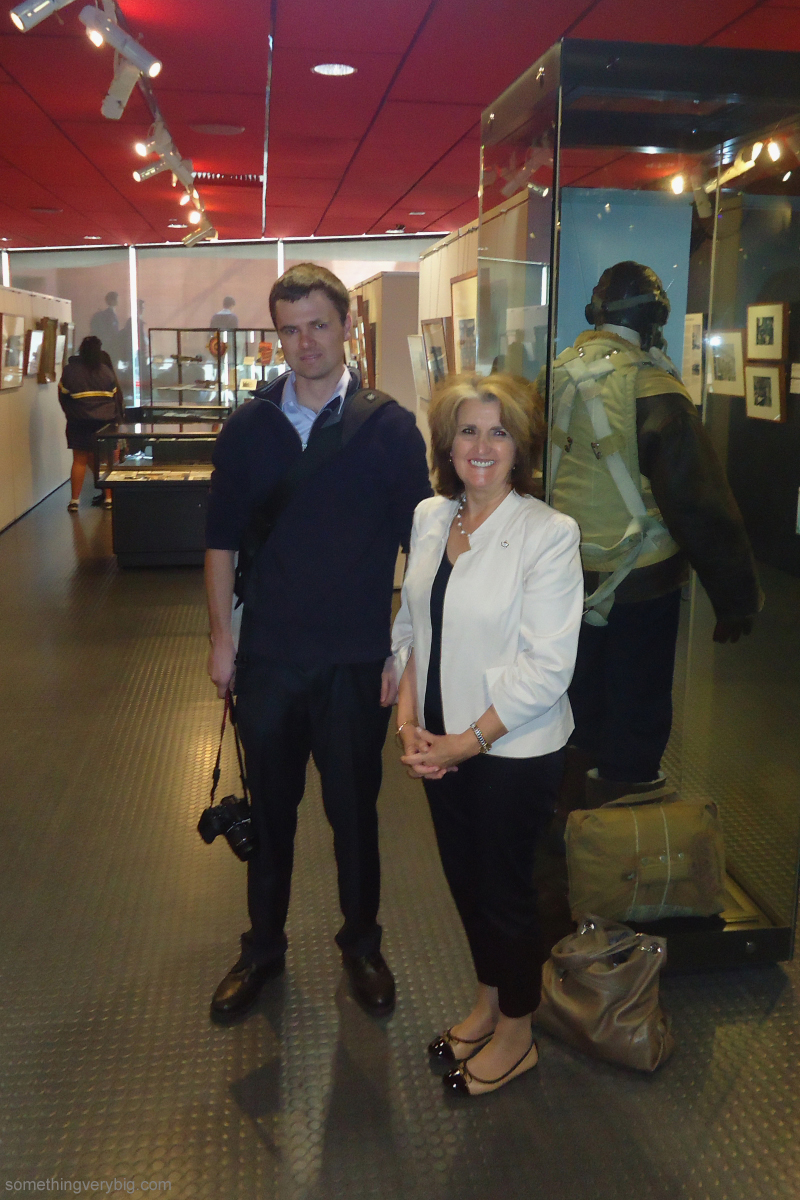
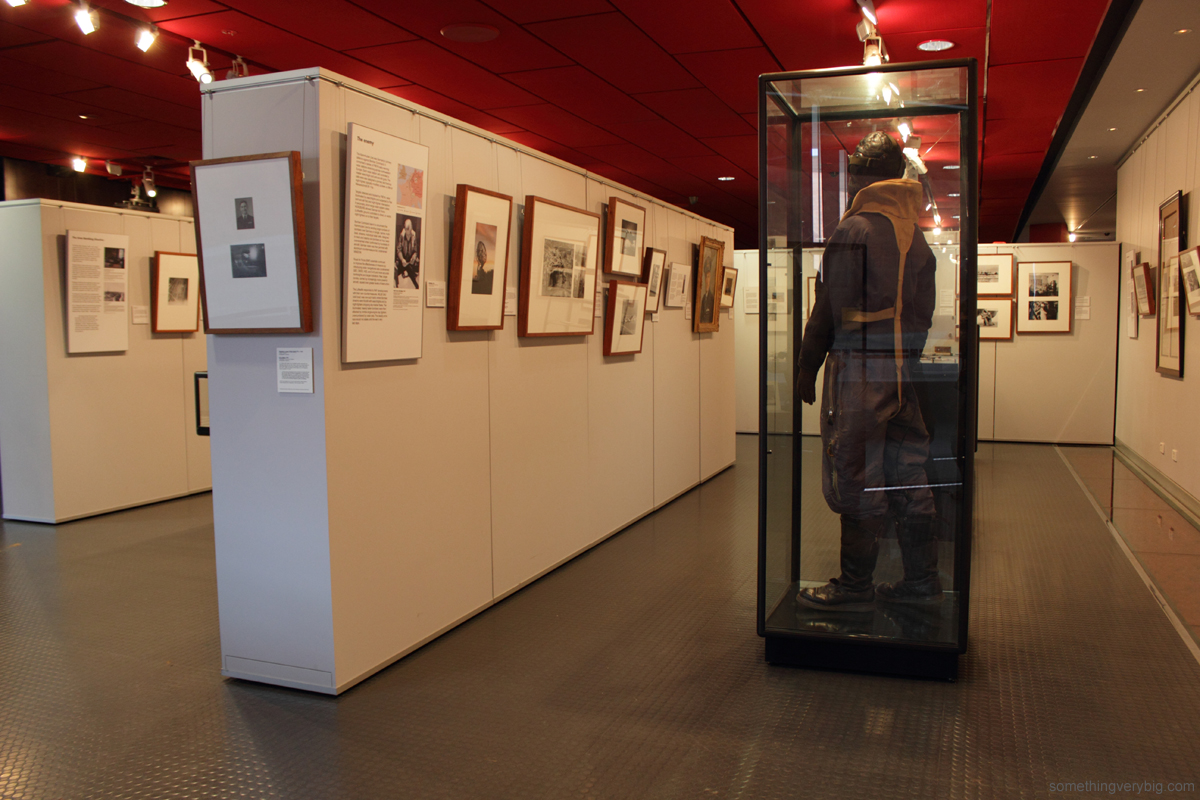
The Shrine of Remembrance in Melbourne has gone all Bomber Command on us. As I’ve posted previously, there are a number of events happening there over the next couple of months. All tie in with a major temporary exhibition which opened earlier this month in the Shrine Visitor Centre. Bomber Command: Australians in the air war over Europe 1939-45 is open until 1 May next year. It’s only a fairly small exhibition but it covers much ground concerning the Australian experience of Bomber Command, from enlistment, through training to operations and afterwards, including a significant section on prisoners of war. There are photos, artwork and memorabilia that have all been put together in a professional manner, and it is already beginning to draw visitors from all across Victoria and other parts of Australia. I visited last week with Robyn Bell, one of my Bomber Command contacts in Melbourne.

13oct-robyn-bells-pics-393 copy

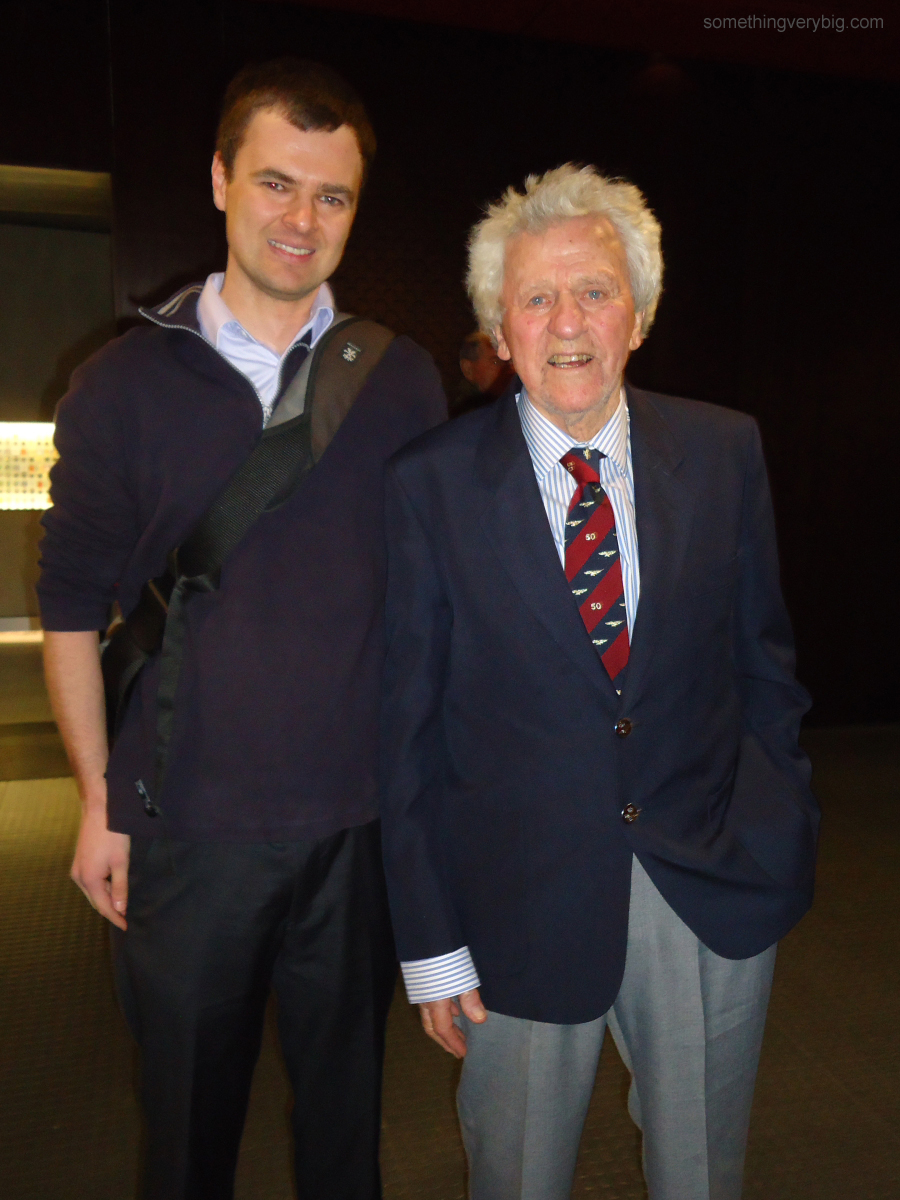
I suspect that if you hang around this exhibition for long enough you’ll see a fair number of Bomber Command veterans coming through for a look. And, happily, so it was when we visited. There was an older gent wearing a blazer and an Air Force tie looking at the mannequin in the photo above, talking to a middle-aged man about parachutes. Robyn recognised him as Gordon Laidlaw, a 50 Squadron pilot who she has been in touch with before, and talking to his mate later I discovered that they had come up from Mornington, an hour or so south of Melbourne, especially to have a look at the exhibition. It was great to chat briefly with Gordon. He was also talking to another pair of visitors who were in Melbourne on holidays from Perth who had come to the Shrine to see the exhibition:

13oct-robyn-bells-pics-381 copy

Rosemary Grigg (on the left) was overwhelmed to meet a real-life Bomber Command veteran – Gordon – because her father had been an airman too. Allan Joseph Grigg was killed on 22 July 1944 in a Wellington accident near Lossiemouth in Scotland, where he had been serving with No. 20 Operational Training Unit. She is keen to find out more about her father’s service so I’ve given her a few pointers on where to begin. As always, the fact he was Australian makes life much easier.

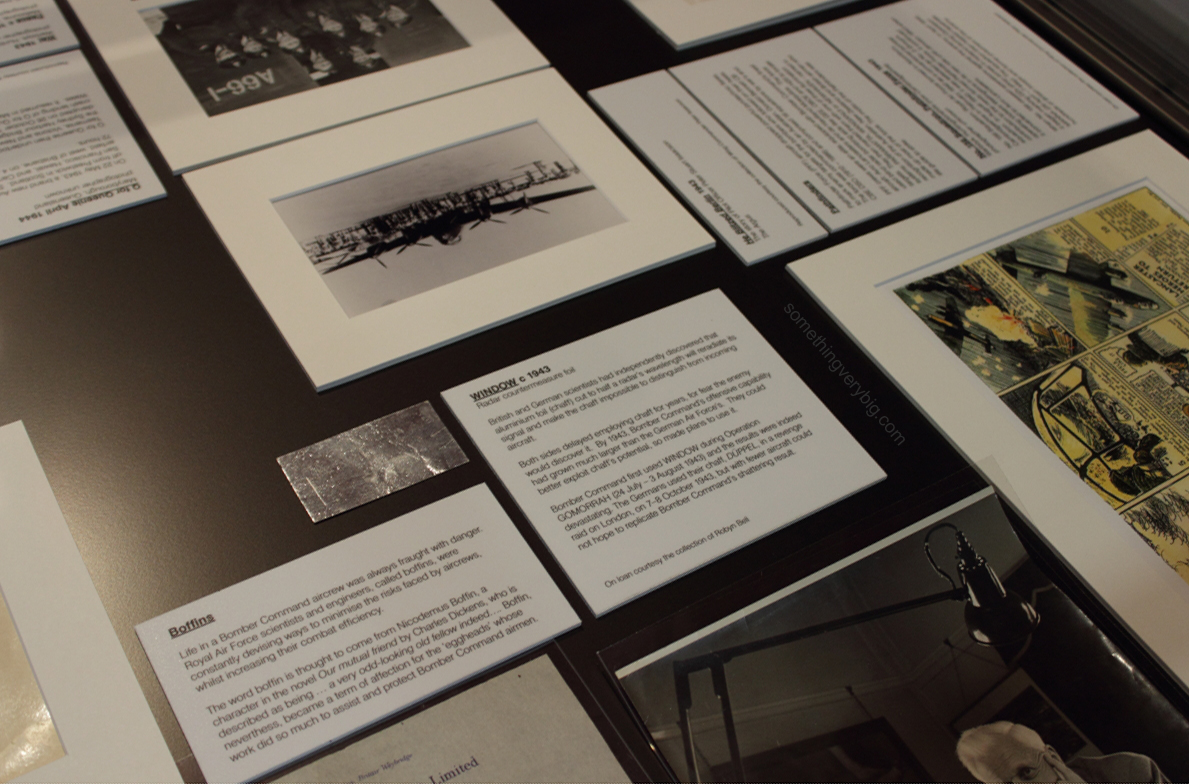
Moving around the exhibition, Robyn found her small contribution. She has been liaising with Neil Sharkey from the Shrine who was responsible for setting up the exhibition, and he was looking for some Window, the foil ‘chaff’ used to confuse German radar. As it happened Robyn had a small piece and was happy to allow it to go on display:

13oct-adamimport-183 copy

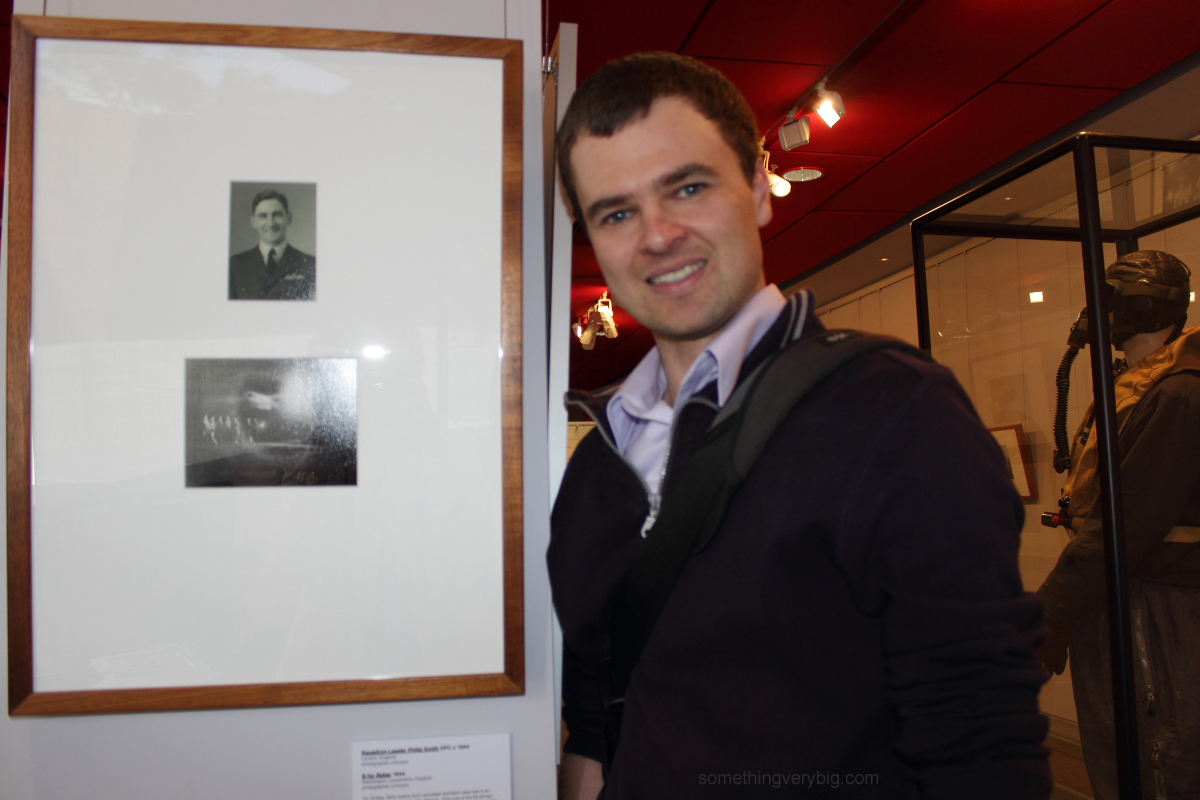
What was most unexpected for me, though, was in a frame hanging at the end of one of the exhibition partitions. We had almost finished our walk around when I found it:

13oct-adamimport-186 copy

Regular readers of SomethingVeryBig (those, at least, with very good eyesight) will recognise the lower photograph, the only known photo of the entire crew of B for Baker. And the one above it? It’s a portrait of a ridiculously young-looking Phil Smith, taken in London during the war. It was in fact sourced for the exhibition from this website, and has been credited to Mollie Smith at my request:

13Oct-MEL and Shrine 022

It’s clear that, in the last two or three years in particular, Bomber Command is finally receiving the recognition it deserves. An official memorial was opened last year in London. A Bomber Command clasp is now in the process of being awarded to surviving veterans, before being extended to the next-of-kin of those killed during service or who have died since. And the Canberra weekend is now the third largest annual event held at the Australian War Memorial (behind ANZAC Day and Remembrance Day). There’s no doubt that interest in Bomber Command, and respect and recognition for those who were involved, is growing. It’s great to see some of that interest manifesting itself in this exhibition. More people will visit and learn about Bomber Command and the men who were part of it. The stories will live on.

And that’s the most important thing.

13oct-adamimport-1841 copy

13Oct-MEL and Shrine 025


13oct-robyn-bells-pics-379 copy

© 2013 Adam Purcell

10 Really Useful Bomber Command Websites

The internet has revolutionised how people research and share information about just about anything you can think of (and, probably, lots more you can’t). The history of Bomber Command, and particularly where the individual story of a relative or friend is included, is certainly no different. Here, then, in no particular order, is a list of ten of what I consider the most useful websites about Bomber Command, all essential bookmarks.

  1. World War Two Nominal Roll – www.ww2roll.gov.au

If the airman you are interested in is Australian, this is always the first place to go. It contains a database of around one million individual records, covering all who served in Australia’s armed forces (and the Merchant Marine) during the Second World War, and a nifty search engine to allow you to extract it. You can search by name, service number or place of birth or enlistment, or even by any honours or awards won. The information returned for each individual is fairly basic but offers a good starting point for further research from other sources. It will show the last unit with which the individual served, which is most useful if they were killed but can be a little misleading if they were discharged at the end of the war.

  1. National Archives of Australia – www.naa.gov.au

The National Archives are the repository for all official Australian Government records. A powerful search engine allows easy access to the collection and many records have been digitised and are available to view on the website for free. If not yet digitised, the website allows you to pay a small fee for the service to be carried out for you – records will then be online for anyone to see. You can also order records for viewing in one of the NAA’s offices. As well as the obvious service records, the NAA  holds Casualty Files for any airman who was posted missing at any stage, and other Air Force records such as Squadron papers, orders and memoranda. There’s so much stuff here that it would take a very long time to sift through everything – but every now and then you find the little golden nuggets that make it all worthwhile.

  1. Commonwealth War Graves Commission – www.cwgc.org

If the airman you are interested in died during service, you will find a record about him at the Commonwealth War Graves. Like the Nominal Roll, the information is limited but it can provide a basis for further research, with details like parents’ names and occasionally addresses usually recorded. The advantage is that it covers any Commonwealth military death, so it will include information on the non-Australian airmen in a crew. You can even search by cemetery which can be a useful first step in deducing who else was in a particular crew, for example.

  1. Australian War Memorial – www.awm.gov.au

The Australian War Memorial, based in Canberra, holds significant material relating to Bomber Command. As well as information about planning a visit to the Memorial, you can find the history of Australia at war, browse the AWM Shop and, most usefully, search the catalogue of their entire collection, which contains much of interest to the Bomber Command researcher. Items held at the AWM are generally of a more personal nature than the official records you will find at the NAA, including diaries, photographs and other memorabilia.

  1. RAF Commands Forum – http://www.rafcommands.com/forum/

This is the go-to forum for those tricky questions about individual airmen or aircraft. It’s home to a large bunch of very good researchers who are usually more than happy to dig through their records on polite request. A large cross-section of RAF interests are covered and, if someone actually on the forum doesn’t have the documents they are looking for, there’s a good chance they know someone who does.

  1. Stirling Aircraft Society Forums – http://sas.raf38group.org/forum/index.php, and the Bomber Command History Forum – http://www.lancasterbombers.net/BomberCommandHistoryForum/index.php

These two forums both moved to fill the space left following the demise of the Lancaster Archive Forum. The Stirling Aircraft Society’s forum expanded its focus to include all of Bomber Command, and the Bomber Command History Forum is a new site run by one of the stalwarts of the original LAF. Both are very similar in scope, and indeed there is a significant overlap in membership between the two. You’ll find general Bomber Command discussion on aircraft, individuals or tactics, aircraft modelling (with a bomber focus) and general chat. While not as ‘scholarly’ as RAF Commands, there are still some quality researchers on both these forums and even a veteran or two.

  1. Gaining an RAF Pilot’s Brevet in WWII – http://www.pprune.org/military-aircrew/329990-gaining-r-f-pilots-brevet-ww11.html

This is a long-running thread started on an aviation forum by a Bomber Command veteran called Cliff Leach in June 2008 to describe his wartime experiences. To an avid audience of military and civilian aircrew, veterans, researchers and sundry others Cliff wrote about his enlistment and training as a Lancaster pilot and also as a flight engineer, which is how he ended up flying operationally. Various other veterans joined in – like pilot Reg Levy who flew Halifaxes in 51 Squadron, took part in the Berlin Airlift, was an air traffic controller for a short while and ended his flying career on Boeing 707s – and, while both Cliff and Reg have sadly since died, now holding court in the ‘virtual crew room’ is a Vultee Vengeance pilot named Danny who continued a long post-war career in the RAF. The best part about the thread remains its interactive nature, as people ask questions and contribute to the discussion. It is a very long thread (up to 215 pages at the time of writing) but a read of the full length will, while time-consuming, give a good idea of ‘what it was like’, as written by those who were there.

  1. The Australians at War Film Archive – http://www.australiansatwarfilmarchive.gov.au/aawfa/

Growing out of a landmark Australian television series in the year 2000 and commissioned by the Australian Government Department of Veterans Affairs, the Australians at War Film Archive website holds transcripts of more than 2,000 interviews with veterans of every conflict that Australia has been involved in from the First World War all the way up to the War on Terror. The veterans were asked about their entire lives – from growing up to their service and afterwards – and as such each interview is of significant length. Documentary makers can request footage for use in their own productions but for our purposes the transcripts are sufficient. There are at least 120 of them relating to Bomber Command and they are all worthwhile reading.

  1. Lancaster Bombers of 49 Squadron – http://lancasterbombers.net/lancasterbombers_v1_004.htm

A website set up by Dom Howard, the title is a little misleading as he has recently expanded to cover more than just 49 Squadron, with which he has a family connection. Dom now maintains a large collection of documents such as aircraft Loss Cards and Night Raid Reports, operational documentation like aircrew manuals and even some newspapers, all available to view online. The Loss Cards and Night Raid Reports are particularly useful for researchers looking at an individual crew and this is a convenient way of accessing them.

  1. An Ordinary Crew – www.ordinarycrew.co.uk

Another personal website, this one is run by Max Williams to showcase his work on the crew of Lancaster ME453, PO-L of 467 Squadron, lost over the Dortmund-Ems Canal in March 1945. As the title suggests, it’s about ‘just another ordinary crew’ and as such provides a very detailed and well-written account of typical experiences of a bomber crew at that time. It’s a moving tribute to the crew and a testament to Max’s efforts in uncovering their story. I’m told a book is in the works.

So, there are my ten essential Bomber Command websites. Leave me suggestions for ones I missed and I’ll add them to my link list.

© 2013 Adam Purcell