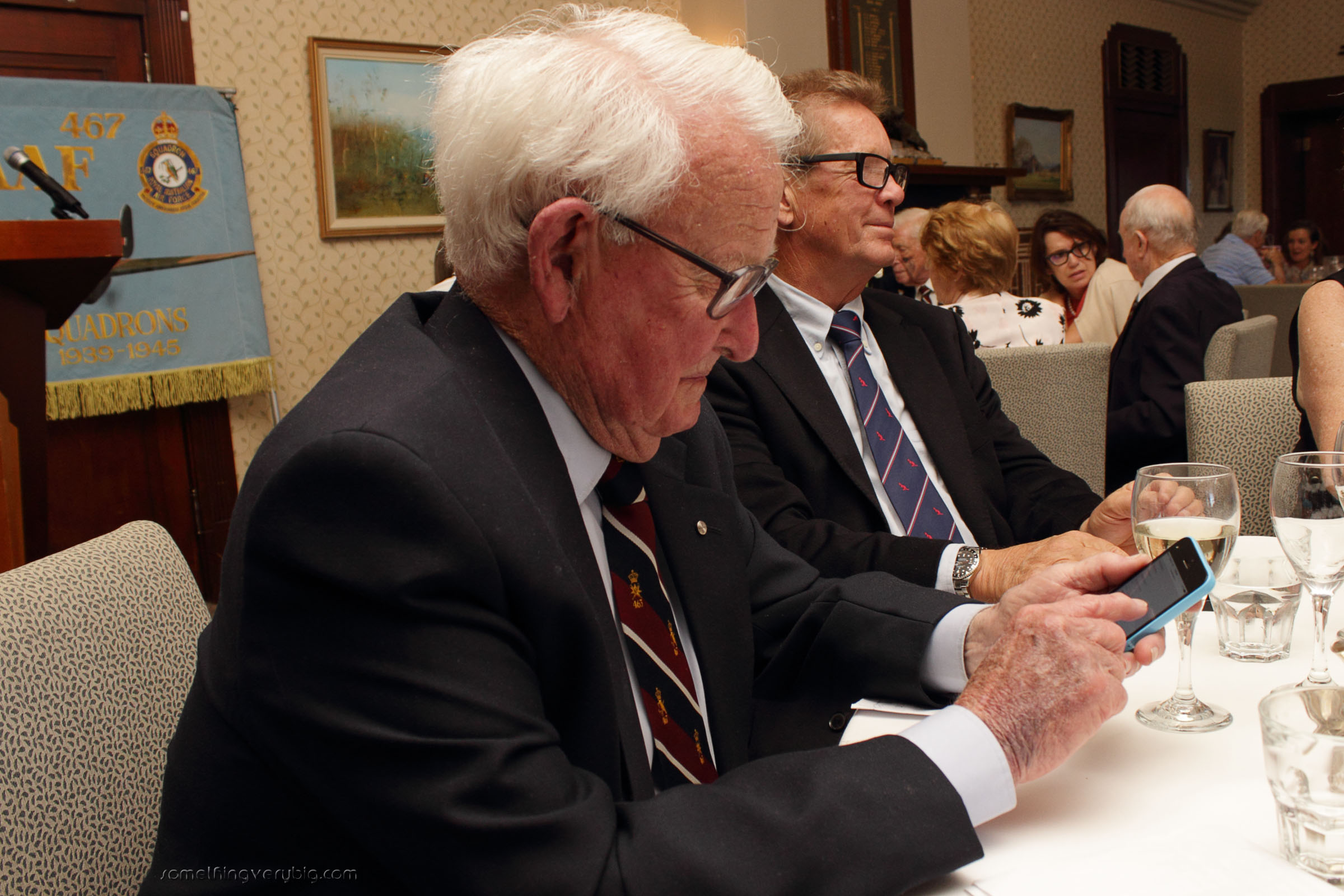
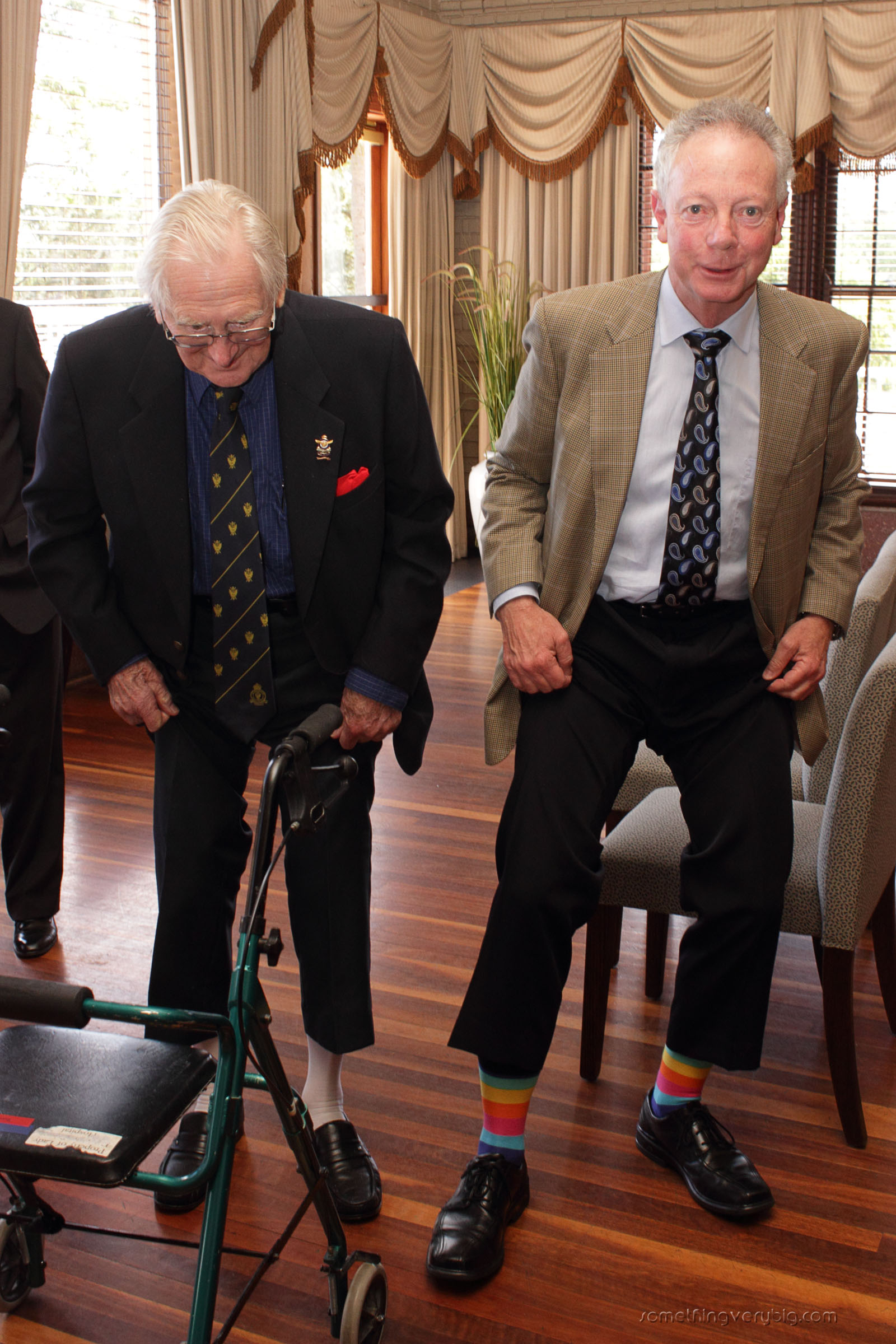
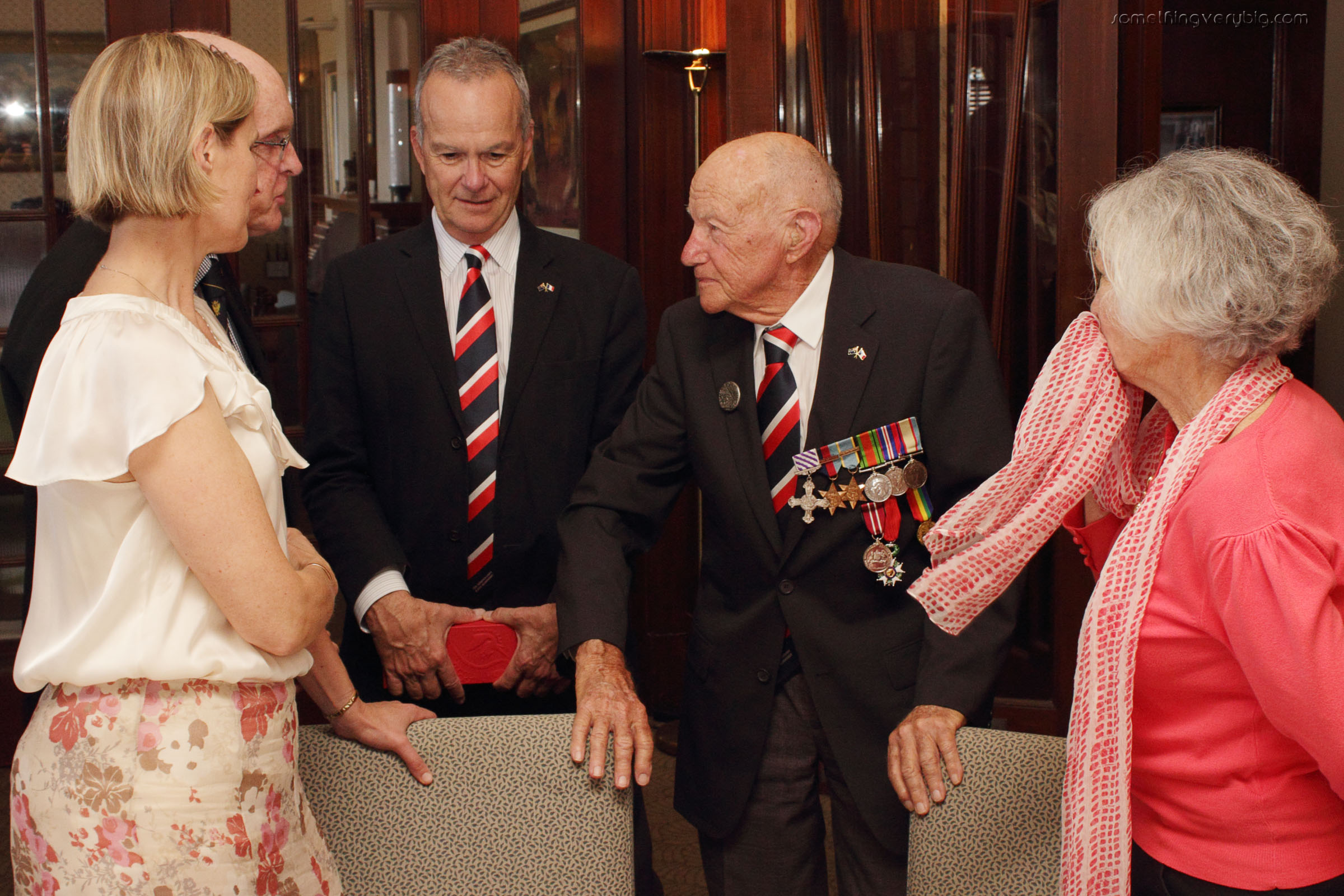
The Empire Air Training Scheme, or How I Got To Have Lunch With 40 Veterans At The Same Time

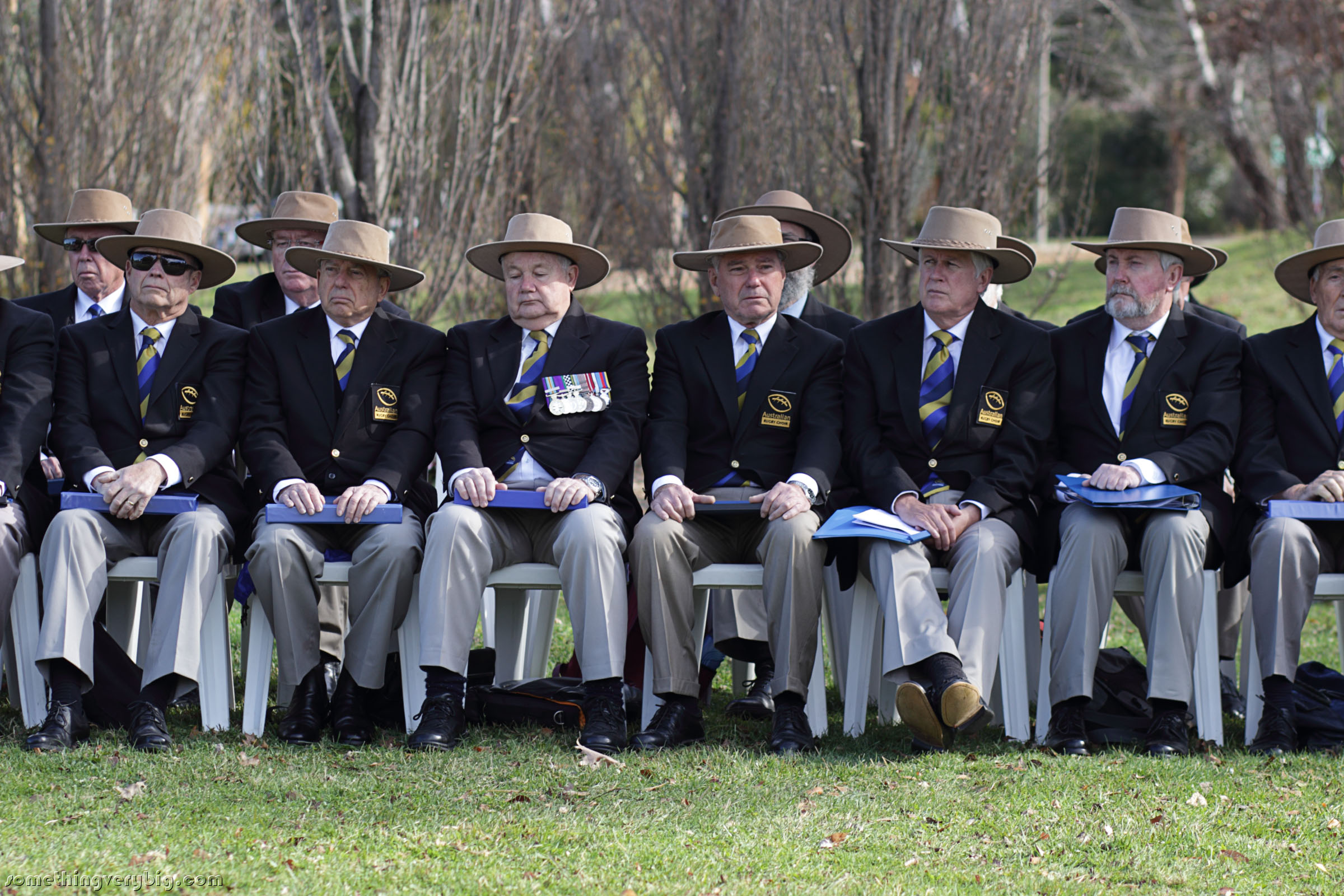
The Empire Air Training Scheme was an agreement between Britain and its Dominion countries that trained ab-initio aircrew and put them into a joint ‘pool’ from which they could be drawn to serve with various RAF units. Some 37,000 Australian aircrew were trained under the agreement, serving in Coastal, Fighter and Bomber Commands. And I recently had lunch with almost 40 of them.

My post written after the Bomber Command Commemorative Day Foundation (Vic)’s Cocktail Party in March started thusly:

“I love collecting veterans.”

It was a throw-away line, really. I was referring to my habit of coming away from Bomber Command-related events with a few new contacts, addresses and things to follow up on. But the line obviously tickled the fancy of Fay McPherson. While we were organising my visit to her husband Gerald a couple of months ago, she mentioned that she and Gerald are involved in running the biannual Empire Air Training Scheme luncheon.

The what?

Fay told me that a lunch is held in Caulfield, Melbourne, every six months for trainees and staff of the Empire Air Training Scheme. In other words, just about any member of Commonwealth aircrew from WWII can attend. Would I like to go along too, she enquired?

Would I what!

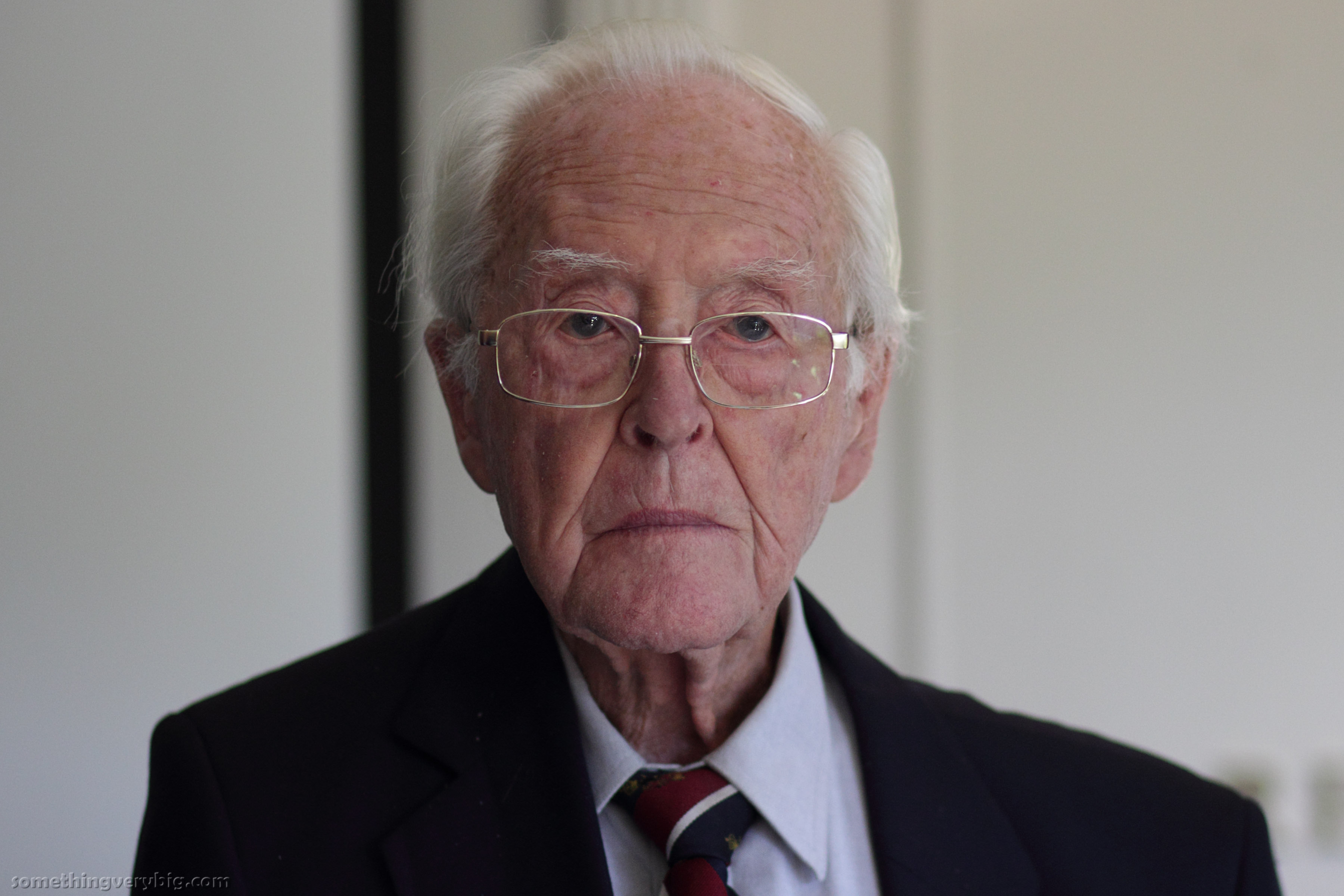
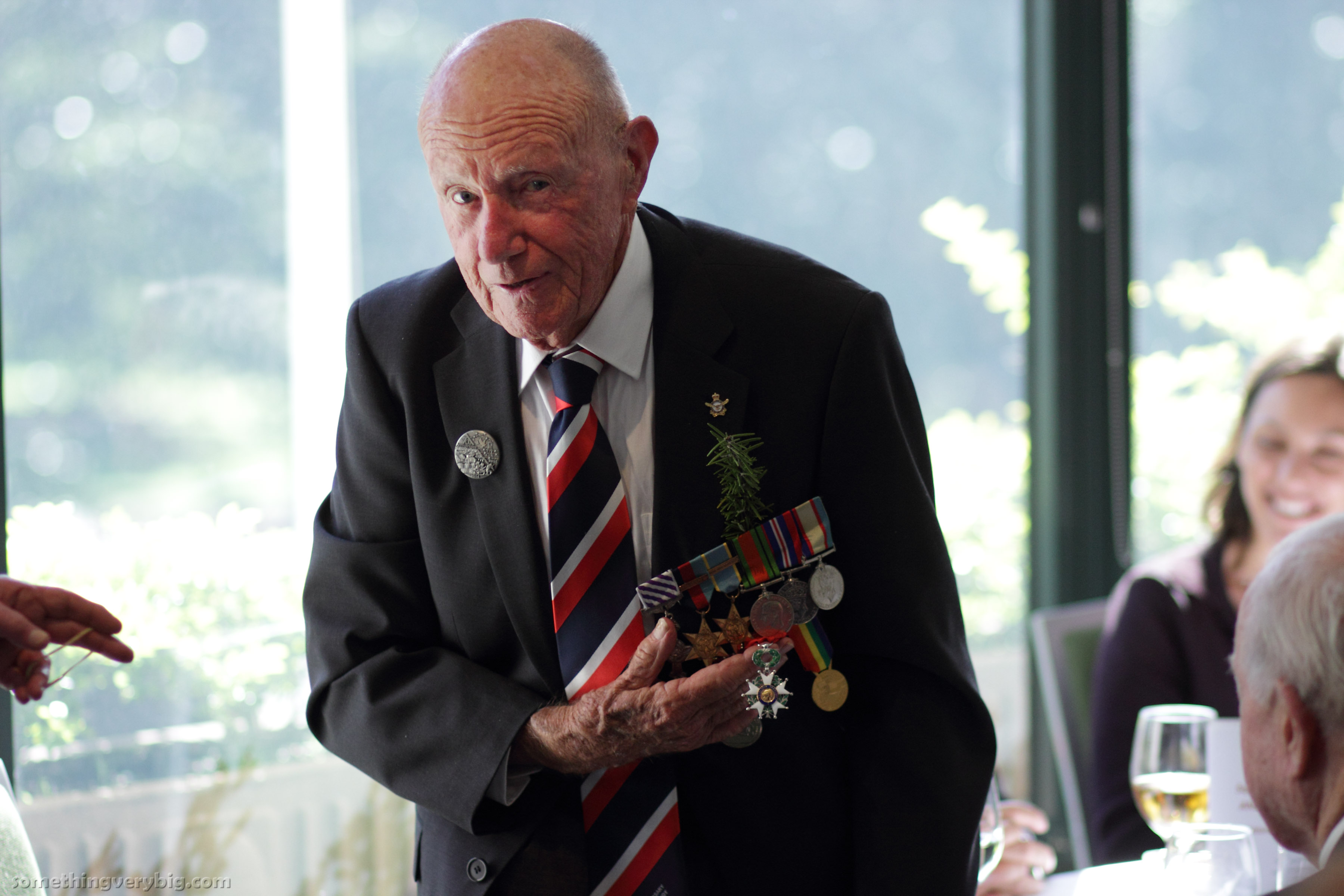
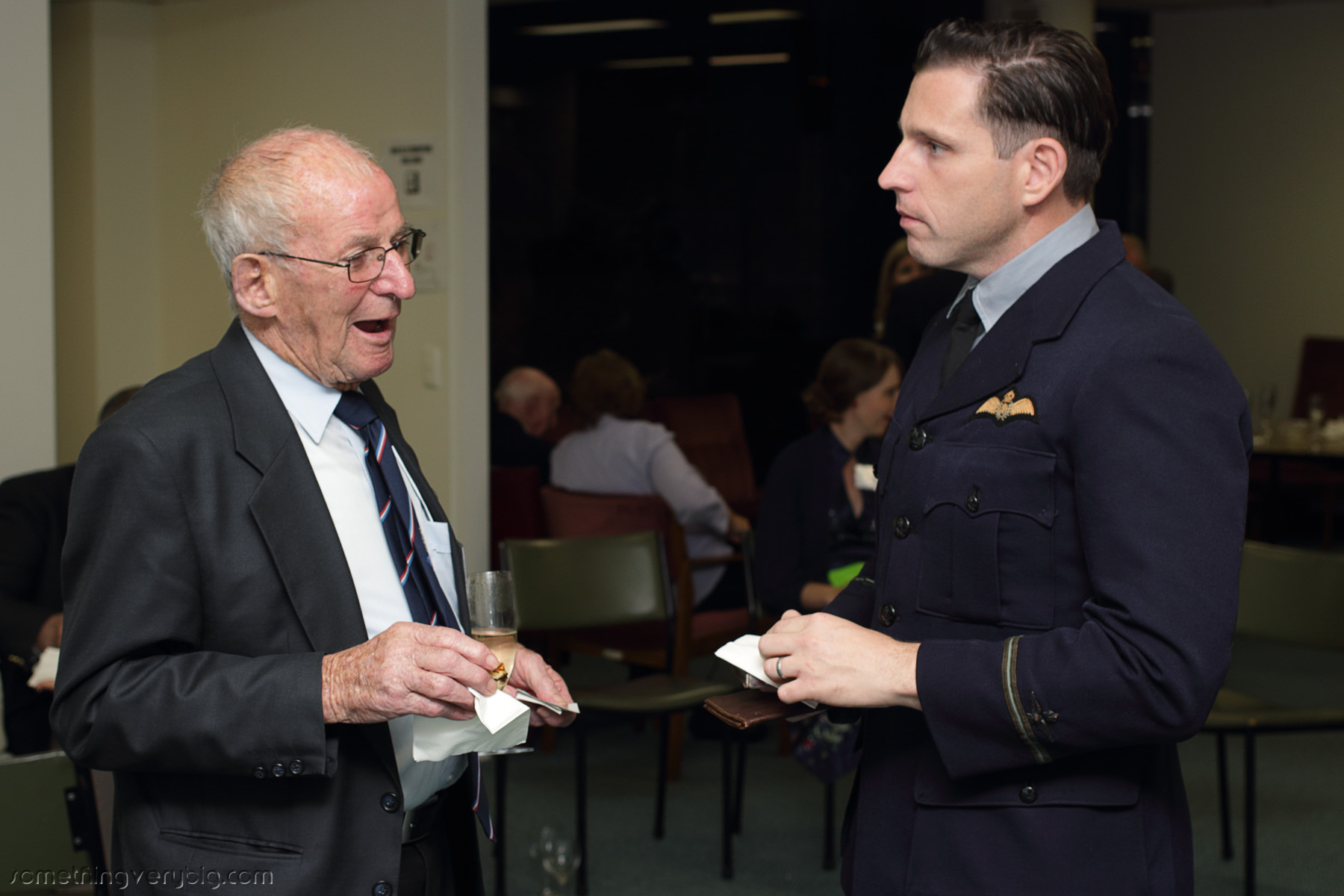
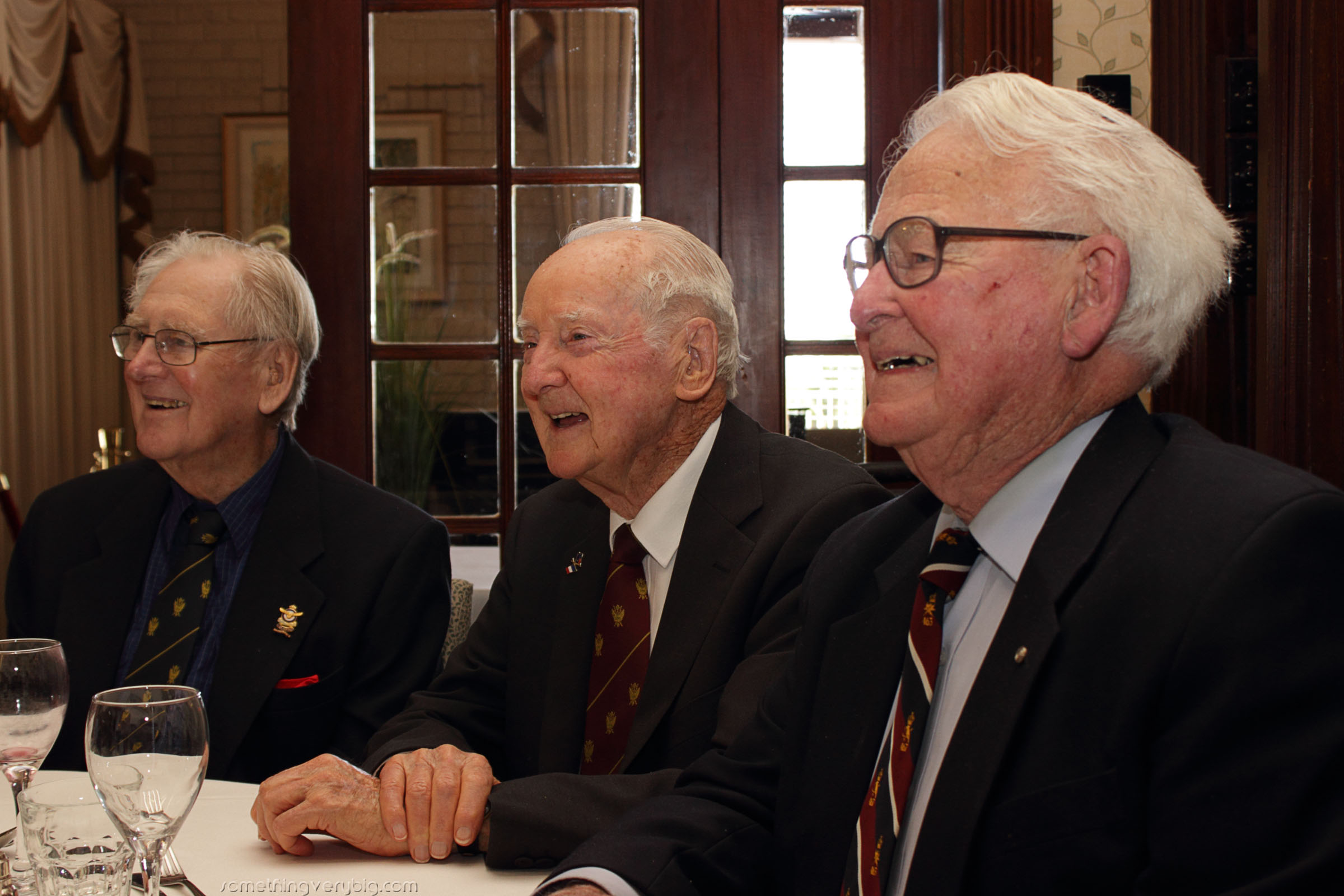
I had no idea that such a group existed. I’ve been pretty happy with groups of ten or so veterans from various lunches and events, and we might reach 40 on a good year for the Bomber Command Commemorative Day in Canberra, but the old blokes are usually well and truly outnumbered by family, friends and assorted hangers-on like, well, me. But I felt quite special to be invited to this one: fully two-thirds of those present had served in the Royal Australian Air Force in some capacity during WWII. Such a concentration of veterans I haven’t seen in a long, long time.

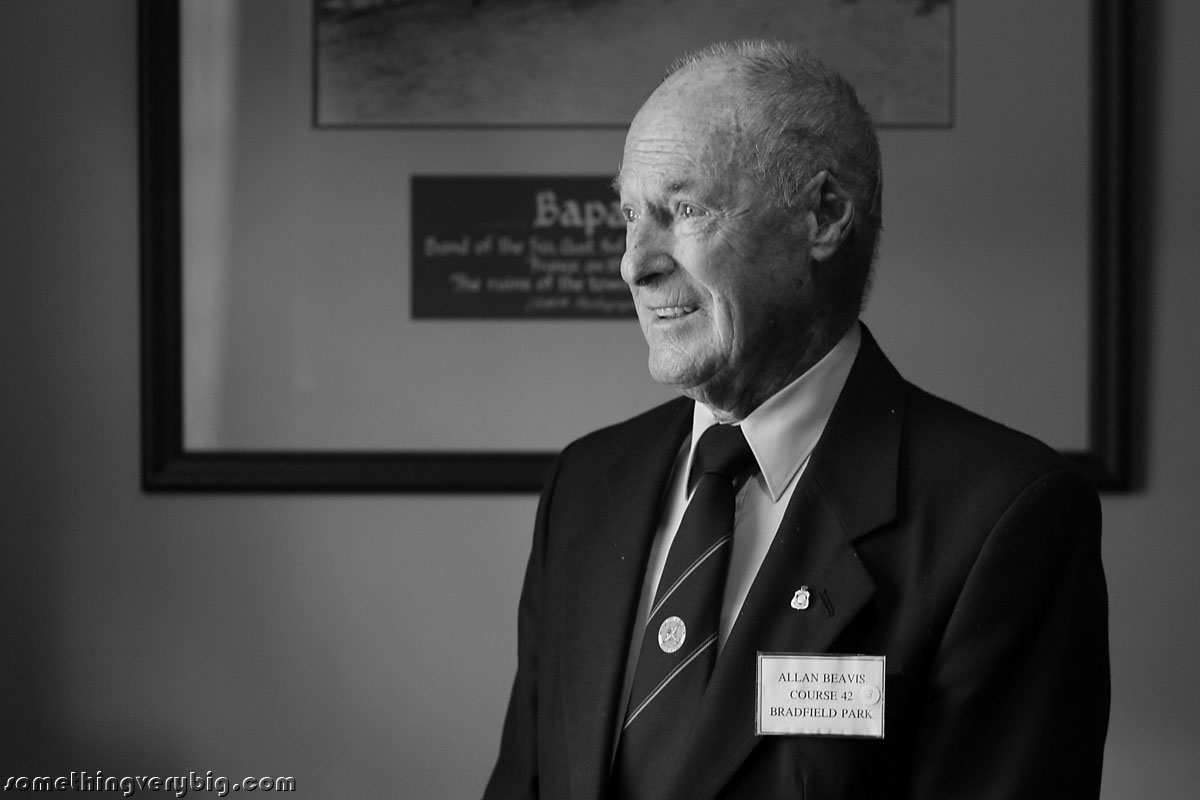
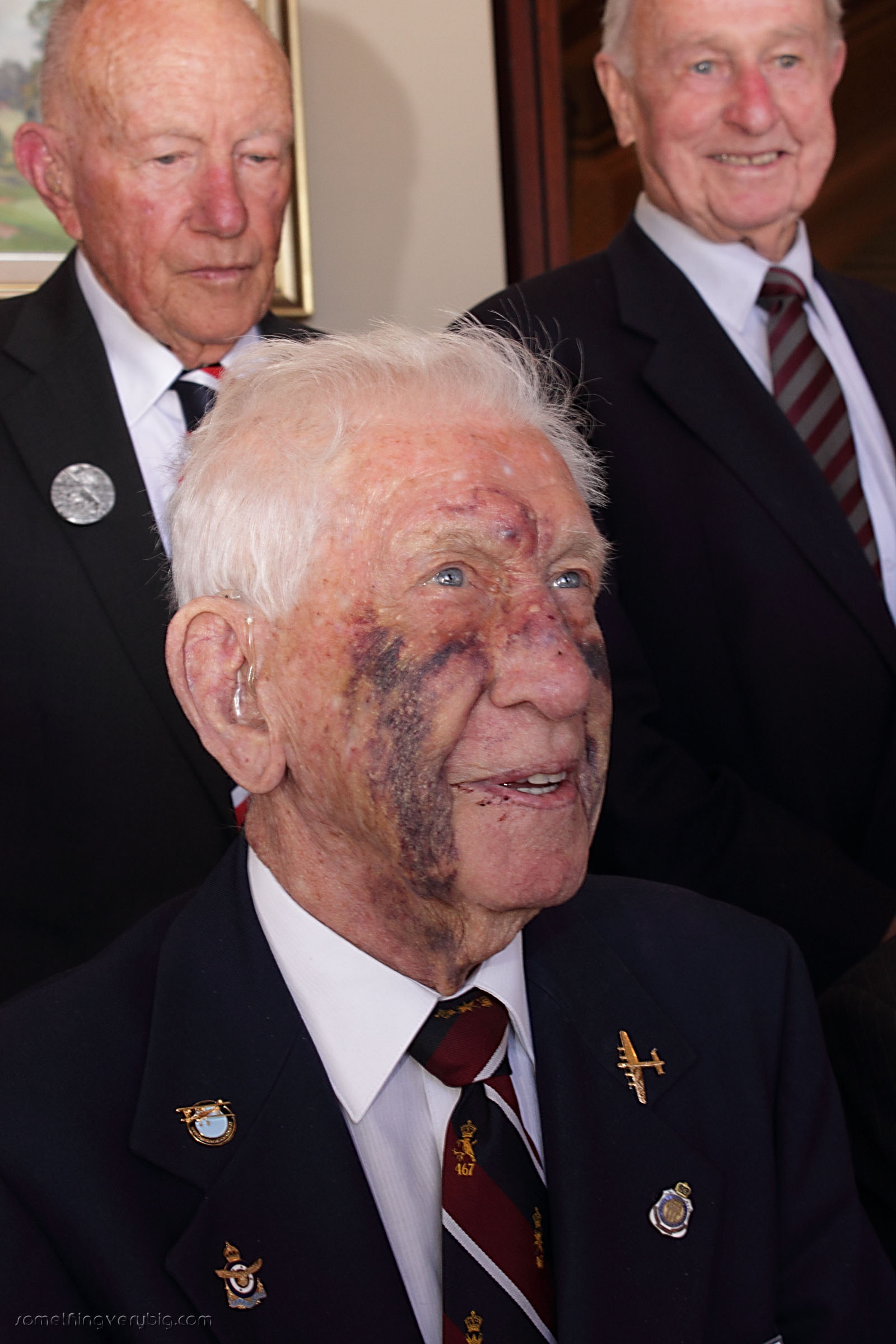
Al Beavis, a 608 Squadron Mosquito navigator

And so it was that, a few weeks ago, almost sixty people descended on the Caulfield RSL. As it turns out the RSL isn’t even in Caulfield. It’s housed in a handsome 90-ish-year-old mock Tudor building in neighbouring Elsternwick, and when I turned up last week people were already starting to gather in the bar, where the staff had set up jugs of beer with glasses for a very civilised serve-it-yourself opener. I recognised one or two people but decided I’d go introduce myself to someone new.

John Missen was his name, a genial man with a big white beard and a hearty laugh. John had been in Course 55 at 1 Initial Training School at Somers in Victoria in late 1944, right before the Empire Air Training Scheme began to wind up (I believe Course 57 was the final one). Just 18 years old, he and a mate reckoned they’d have a better chance of seeing action if they volunteered directly for training as air gunners but as you couldn’t be posted overseas until you were 19 someone talked them out of that. John ended up at Signals School at Point Cook and did eventually see service on the ground as a RAAF signaller in Borneo. The war ended before some others from his course, who had been accepted as gunners, got to an operational squadron. A writer and a painter, John told me he’s written a novel and is wondering if he should try to get it published. “It needs a good editor”, he said, “but the problem is that once you get to my age…”

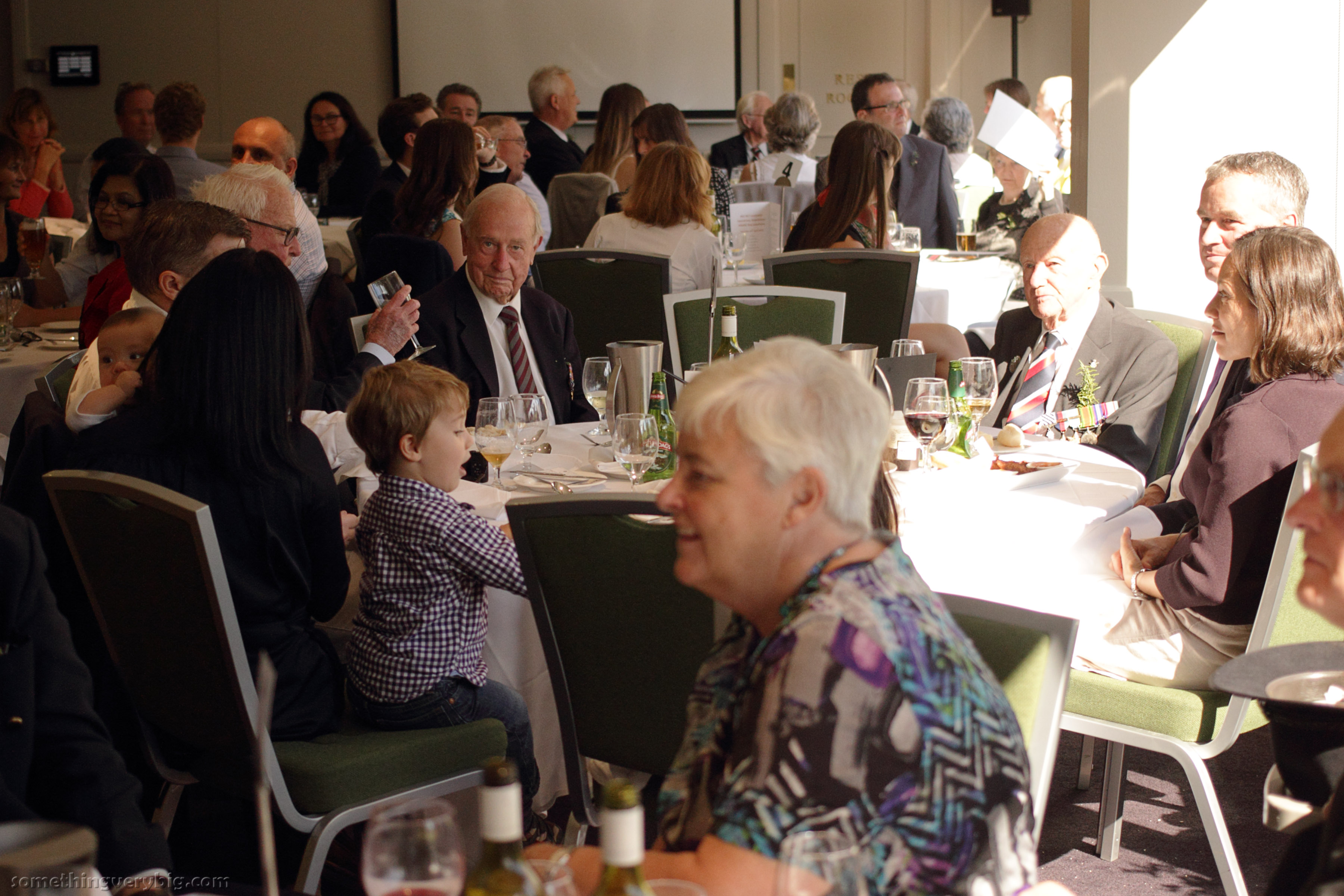
The RSL had decided on this, of all days, to renovate its kitchen, so the meal was a somewhat slap-up affair cooked mostly on a BBQ. But it was hearty enough and the conversation was great. I’d asked to be seated next to “someone interesting”, and Fay more than delivered. At my table were two Halifax skippers (Laurie Larmer of 51 Sqn and Ralph White of 192 Sqn) and a Mosquito navigator (Ken Munro). One of the others at the table was Geoff Clark, who while not a veteran himself was pretty close: he’d completed his National Service in the RAF in the 1950s, working in the Photographic Section with reconnaissance cameras. And the other person was a man named Ian Stevenson, who’d brought along a logbook belonging to his uncle who had been a Spitfire pilot killed over Italy. So we all had plenty to talk about, and even more so when I discovered that Laurie lives just two suburbs over from me.

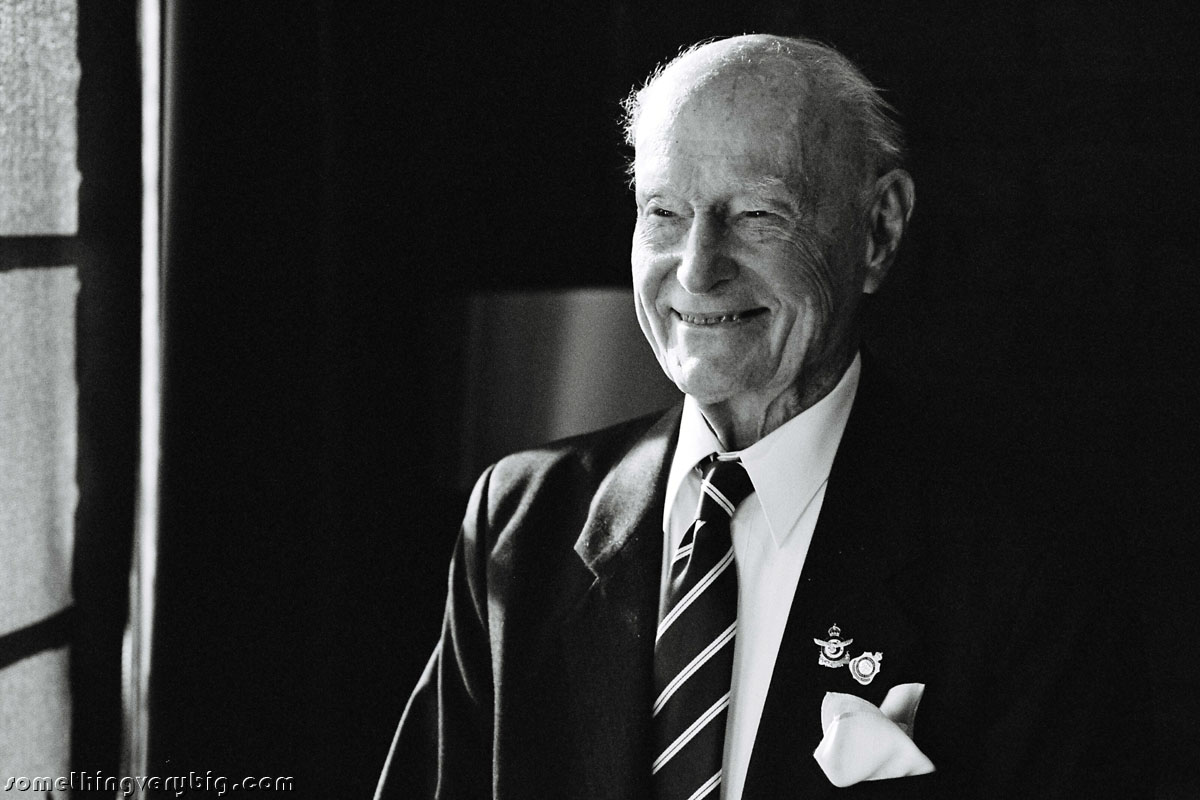
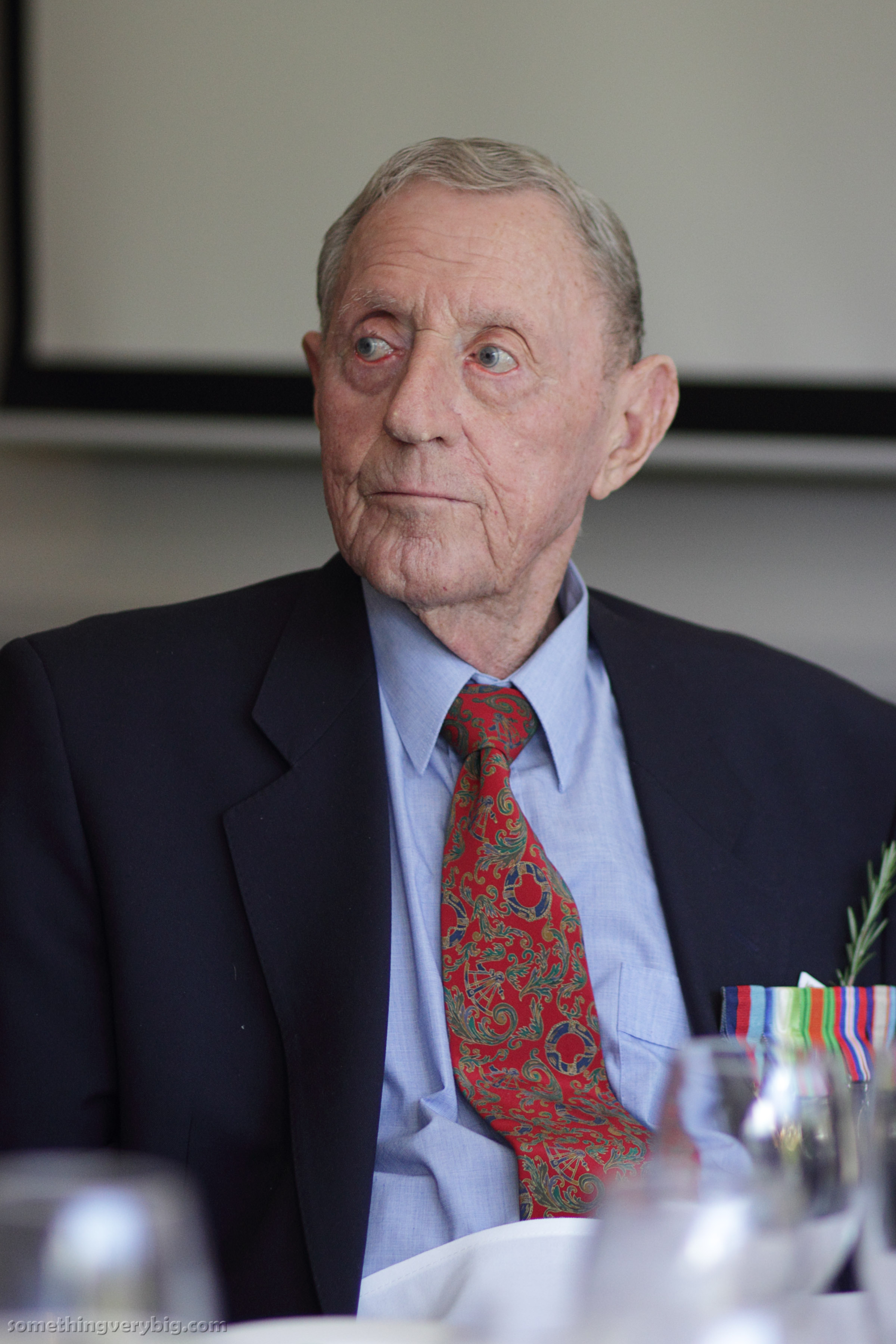
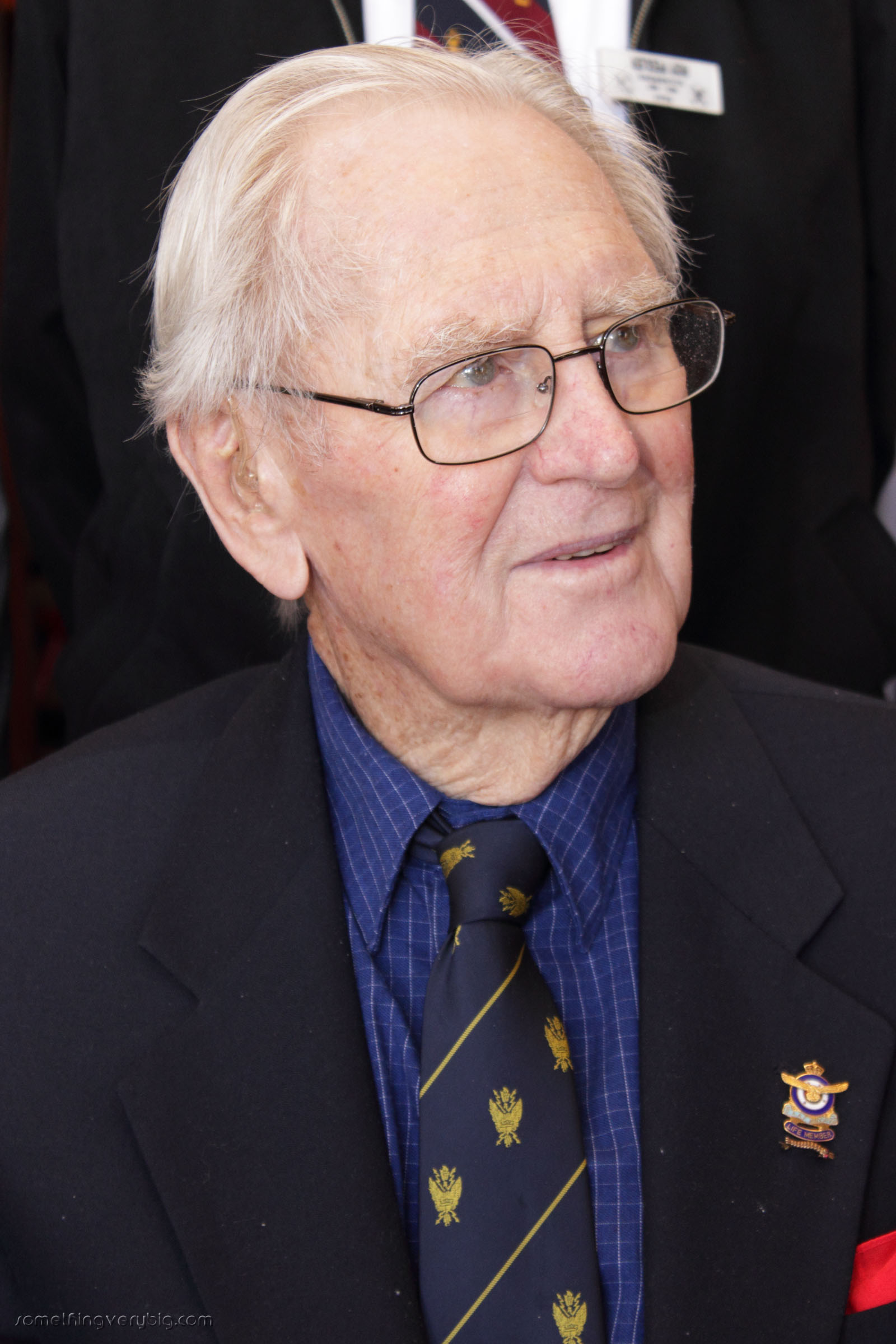
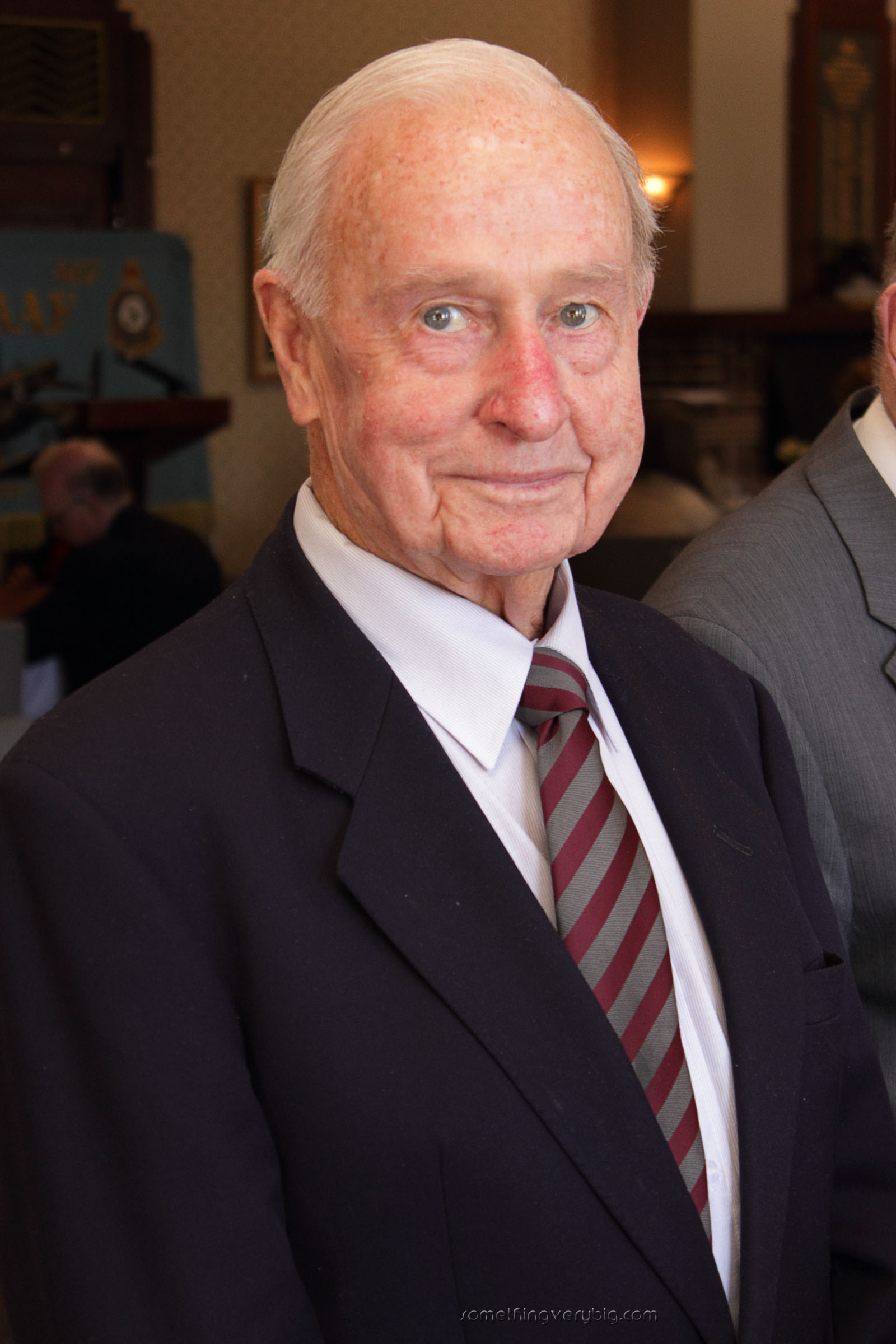
Ralph White, 192 Sqn Halifax pilot

I wandered around to some of the other tables between lunch and dessert. Someone mentioned the primitive conditions when the Initial Training School at Somers first opened. Apparently it was quite cold and the buildings were very draughty. At this point I heard Ken Wilkinson, a 77 Sqn Kittyhawk pilot, snort. “I was there in July…” he said. Ken thought at first that, as my interest is mainly Bomber Command, he wouldn’t be of much use to me, and pointed me to the two 460 Squadron men across the table. But then he said he had also done some air traffic control while in the Air Force… I’ll be seeing Mr Wilkinson again for a deeper chat, methinks!

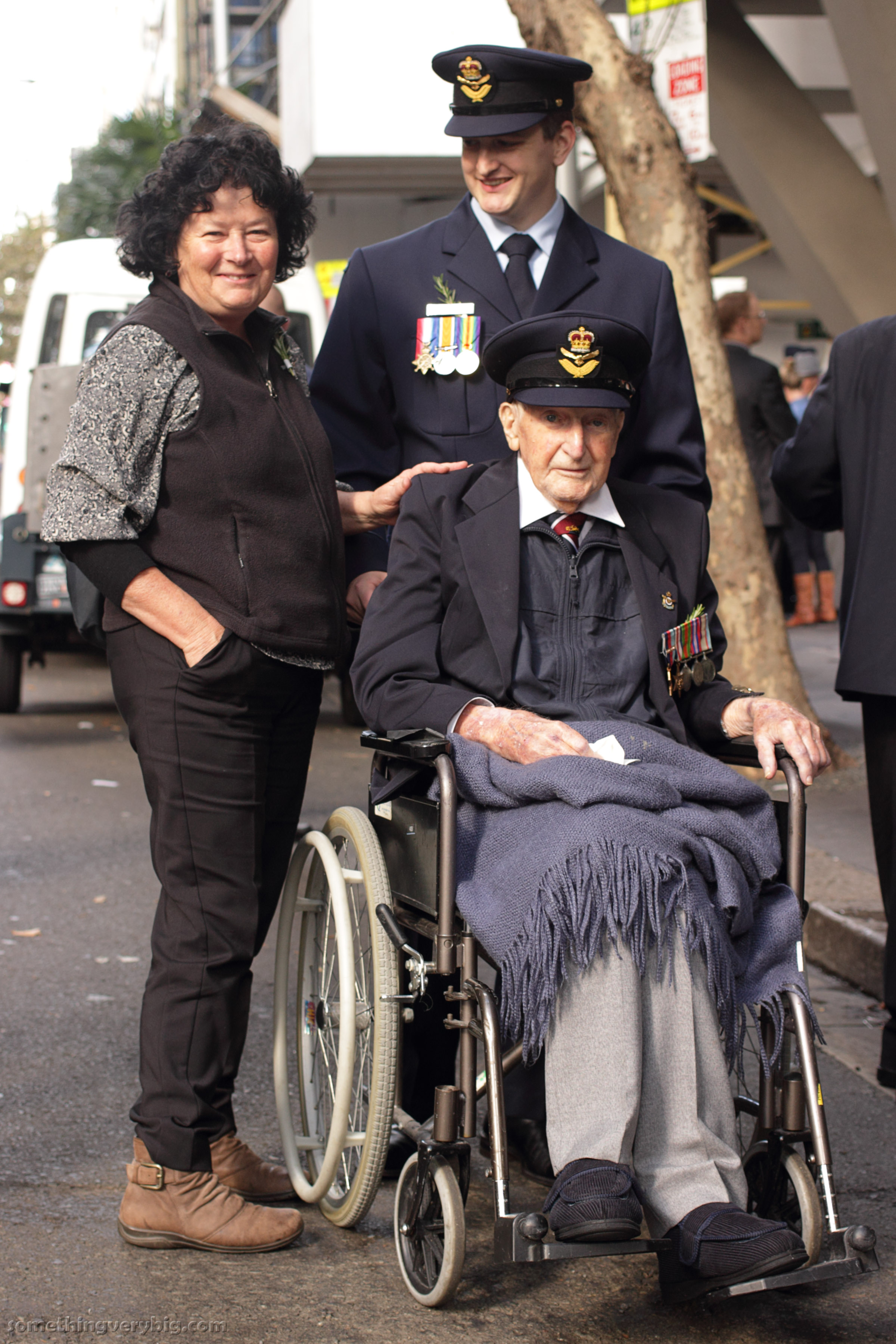
Ken Wilkinson - a 77 Sqn Wirraway pilot - calls a taxi to go home after the lunch.
Ken Wilkinson – a 77 Sqn Wirraway pilot – calls a taxi to go home after the lunch.

I also talked with Jack Bell, who I had heard speak during the Bomber Command Panel Discussion at the Shrine of Remembrance in 2013.I mentioned how happy I was to see so many veterans in the one place, and he concurred. But he had a very interesting point too. “A lot of these blokes haven’t told their stories”, he said. “This isn’t the place for it though – too many distractions. You really need to get them on their own.”

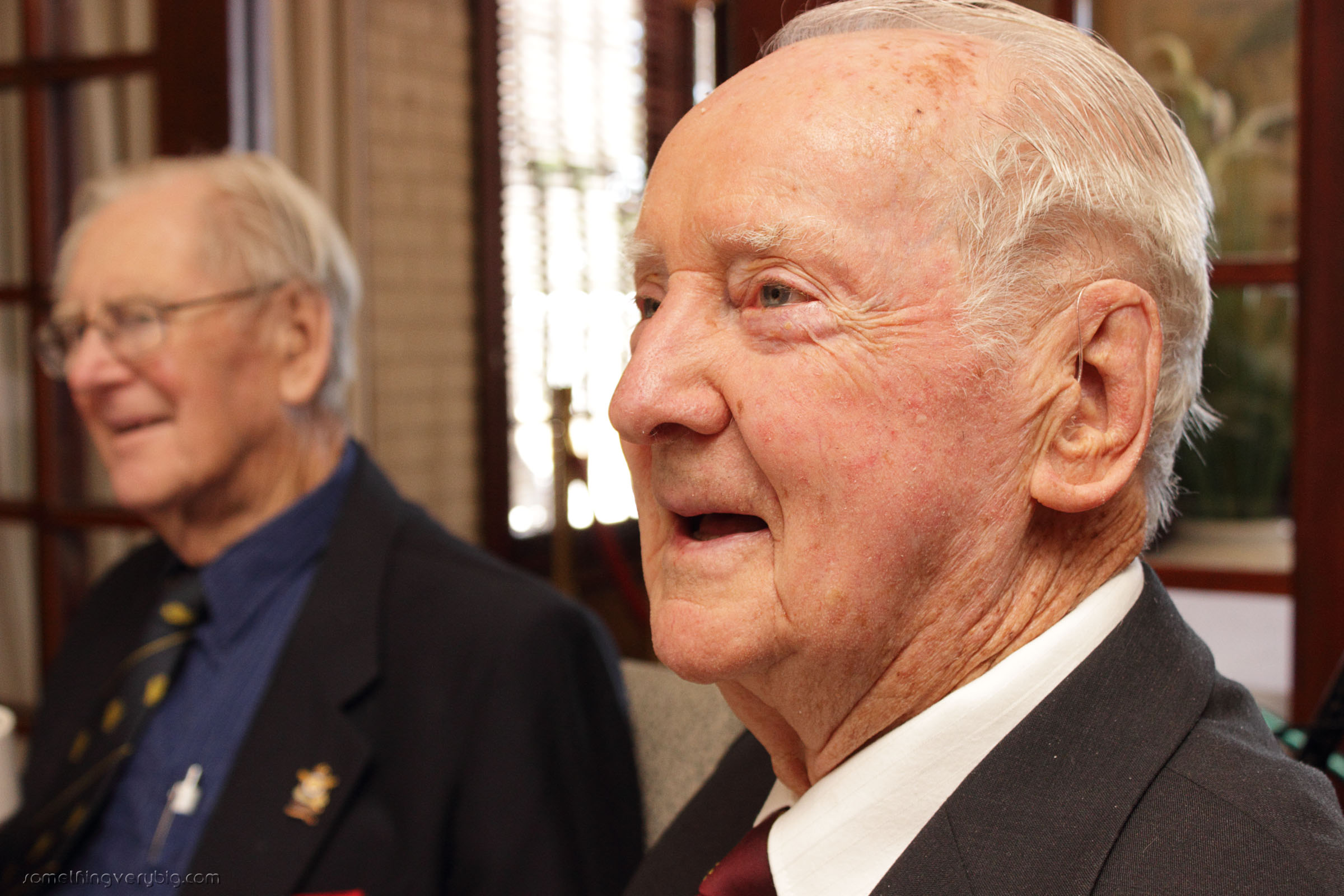
Jack Bell, 216 Squadron Vickers Valencia and Bristol Bombay Wireless Operator/Air Gunner

Which, I thought, is very true. I go to a lot of these sort of functions (indeed I’m madly trying to get this post finished in time before heading to Canberra for a whole weekend of them) and, while they are an excellent way to meet people initially, they are not usually the right sort of environment for a detailed talk. If the old blokes are up for something like that, as Jack said, you really do need to go and visit them.

So six old men will shortly get a letter from me requesting just such a visit. And hopefully I’ll get the chance to go and get some stories from them.

Words and photos (c) 2015 Adam Purcell

Anzac Day 2015 in Sydney

Last week, Sydney got hit by the “storm of this century”. Extremely heavy rain – 255mm over three days, or almost exactly twice the average for the entire month of April – combined with flooding and winds of over 130km/h to cause eight deaths, thousands of fallen trees and untold millions of dollars of damage.

So it was with some relief that the city awoke on Saturday to one of those beautiful gin-clear blue sky autumn days for which it is so known. Patrons at the Grand Hotel, on the corner of Hunter and Pitt Streets, were well and truly into it even as I walked past just before 8.30am to the starting point for the 2015 Anzac Day march.

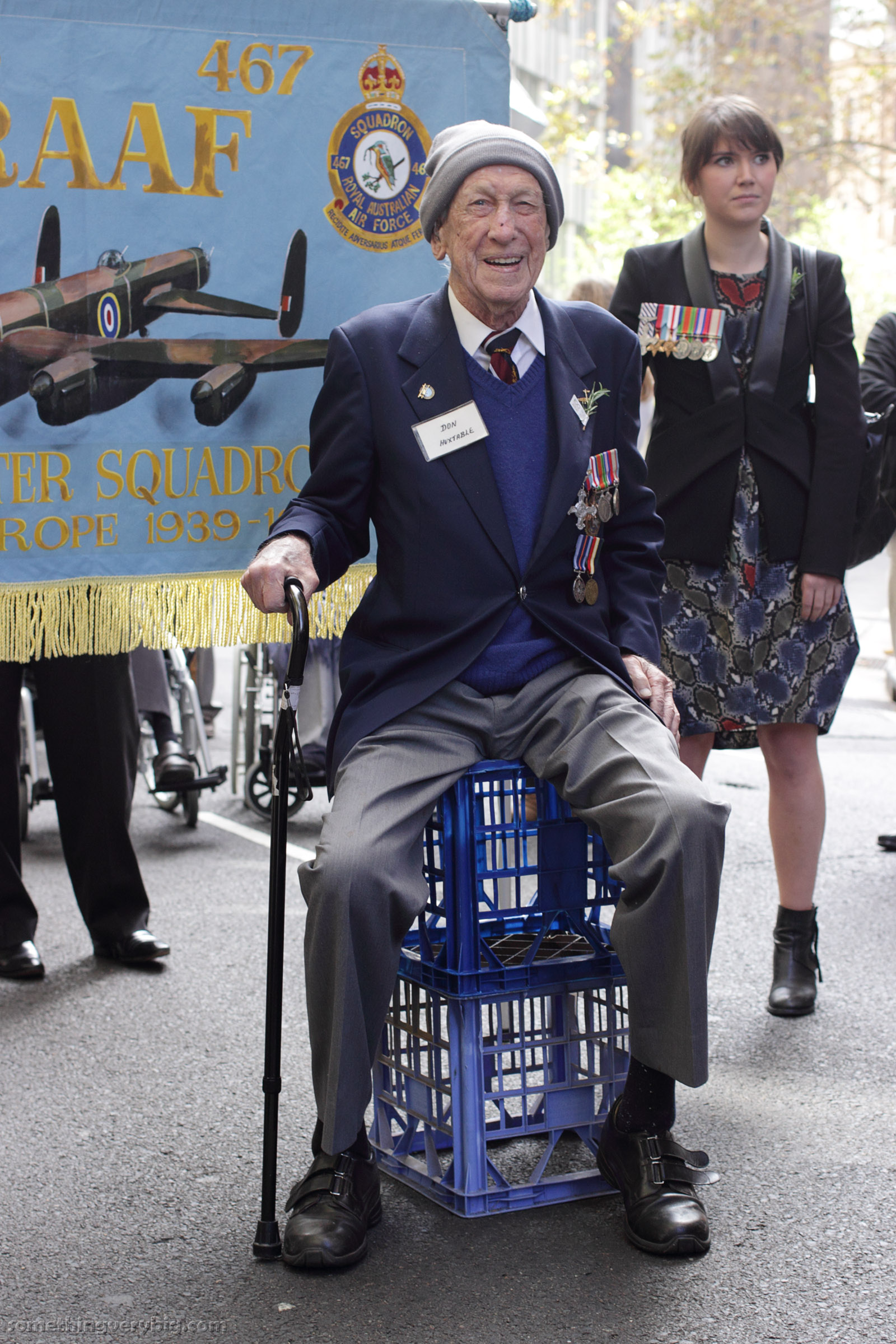
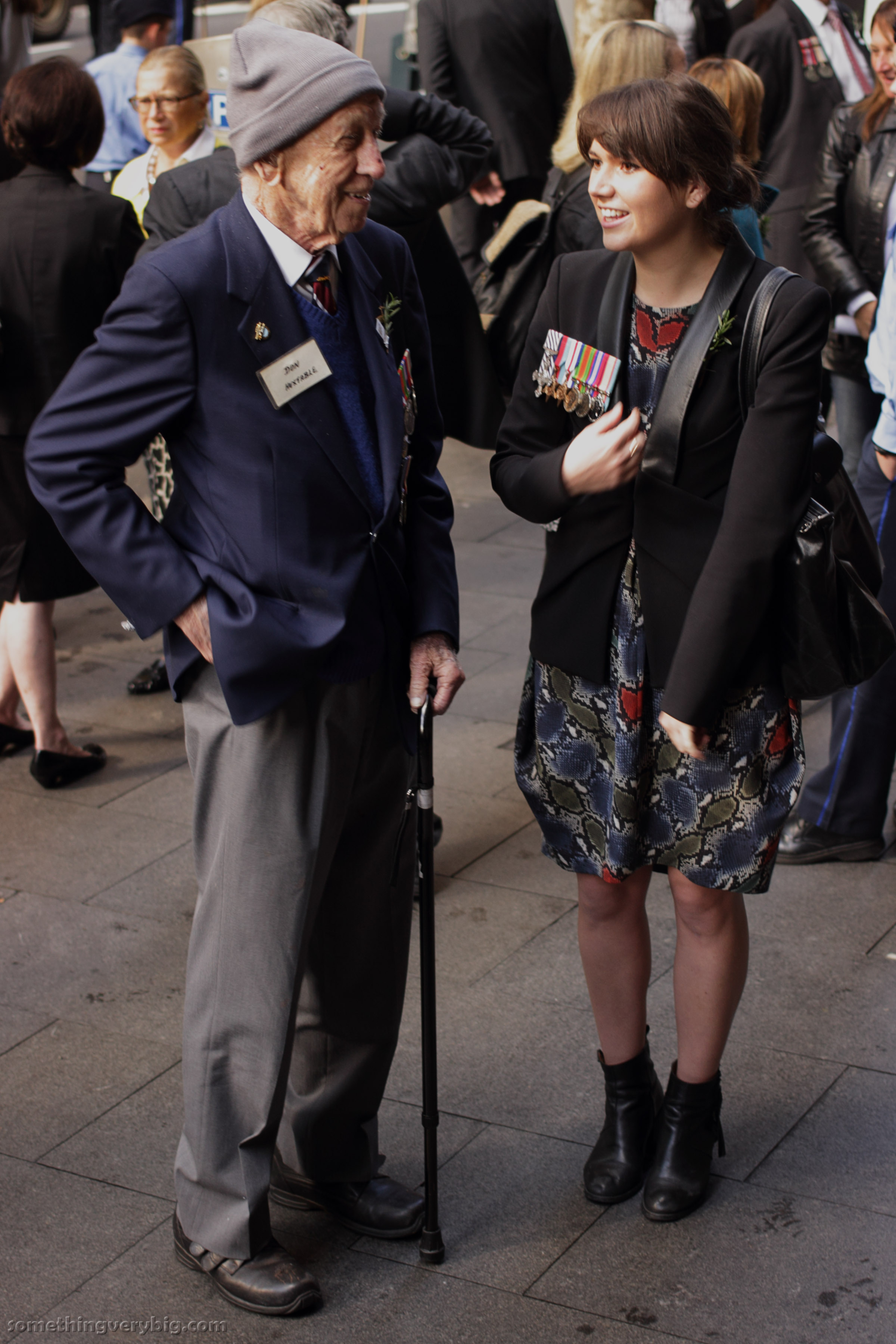
Just three veterans marched with the 463-467 Squadrons Association last year (with three more in trucks) and, with three of those having since suffered from deteriorating health, my fellow banner-carrier Bryan Cook and I were uncertain that we would have anyone marching at all this year. So we were both happy to find that numbers had in fact grown. In all there were eight veterans taking part. Bill Purdy missed last year as he was flying a Tiger Moth over the city. This year he led the 463-467 Squadron group. Don Southwell was back, feeling comfortable enough to march on foot for the first time in several years. Don Huxtable wasn’t going to let the trifling matter of a recent operation to remove a tumour from his neck stop him (he wore a beanie to cover the bandages). Riding in the trucks were Keith Campbell and Don Browning, and we had two veterans in wheelchairs: Albert Wallace and Harry Brown. Harry was pushed along by his grandson Geordie Jacobs, himself a member of the Royal Australian Air Force:

Jen Lill and Geordie Jacobs with Harry Brown
Harry Brown with his daughter Nancy Jacobs and grandson Geordie

And we had a ring-in with us too. David Wylie, a wireless operator, radar operator and air gunner who served on Coastal Command, had been ‘adopted’ by the Southwells.

A Coastal Command veteran marching with a bomber unit? “Well, we did air-sea rescue patrols,” David said, “and when these blokes ditched into the ocean, we’d go to fish them out!”

Sounds reasonable to me, I thought.

There was a rather long delay while waiting for the march to get going. Bryan found Hux a couple of milk crates to sit on in the meantime, which caused much merriment:

1504 Anzac Day005

But finally, we were off. There was just one thing missing.

“Where’s our music?!?” asked Bill Purdy from the front.

Just as he said that I heard a shouted command – and the Castle Hill Pipe Band appeared out of a side street and slotted themselves in behind us.

There’s our music, Bill.

With the pipes behind us and the cheers of the crowd the noise was spine-tingling, especially where Pitt St narrows just before we turned down Martin Place. It seemed to me, and to at least one or two others, like the biggest crowd ever, and it probably was. We heard later that there were some 220,000 people lining the streets. Hux – ably assisted by Hannah Beech-Allen, and I don’t think Hux was complaining at all about that – was determined to see through to the end of the march. I thought he had finally conceded defeat on the last leg up Bathurst St, but it turned out he just wanted to high-five some young kids who were hanging on the fenceline.

Hux with Hannah
Hux with Hannah

Intrepid leader Bill finally turned around when we reached the end of the march. I saw his eyes widen when he saw the rag-tag bunch of veterans and friends bunched behind the banner. “What a gaggle!” he said. We’d win no prizes for the crispness of our marching this year.

A short stroll followed across Hyde Park to the Pullman Hotel for lunch.

It was a bit squeezy. The room is built for about 45 guests – but we had almost 60, I think the biggest group ever, with more on a waiting list. Two more veterans joined the eight who had taken part in the march: Alan Buxton and my good friend Hugh McLeod. I’m not sure quite how I managed it but once again I had some extremely interesting dining companions. I was seated between Hugh and Bill Purdy, with Don Southwell off Hugh’s starboard wing. The conversation was as stimulating as you’d imagine with that calibre of gentlemen involved (“Did you ever have a nightfighter come in during the landing procedure?” Hugh asked Bill at one point, and I knew he was speaking from experience) and the lunch passed quickly.

The crowd
The crowd
Keith Campbell
Keith Campbell
Hugh McLeod
Hugh McLeod

I overheard an interesting conversation between Alan Buxton and David Wylie. They were talking about parachutes. David related the time when he and his crew were returning from a patrol in their Vickers Warwick (a development of the Wellington)and one of the wheels would not come down. The ground controller told them to point the aircraft east towards the sea and bail out, but they elected to try and land instead because, David said, “I’m afraid of heights”. Here Alan chuckled. He was wearing his little golden caterpillar badge, earned departing his Lancaster by parachute when all four engines caught alight crossing the English coast on the way home from an operation. “It’s different when you have to get out”, he said. “And we had to get out.”    

David Wylie
David Wylie
Alan Buxton
Alan Buxton

And so another Anzac Day passes. The World War II veterans are getting fewer, and many of those who were there are much more frail than they were even a year ago. But they are still there, and while they keep coming to march, I’ll keep carrying the banner they so proudly march beneath.

1504 Anzac Day007

Tommy KNox and Keith Campbell on the truck
Tommy Knox and Keith Campbell on the truck
Bill Purdy showing off his Legion d'Honneur
Bill Purdy showing off his Legion d’Honneur
The paparazzi at work. Back row, L-R: Bill Purdy, Alan Buxton, Hugh McLeod, David Wylie, Don Southwell, Don Browning. Front row, L-R: Albert Wallace, Keith Campbell, Harry Brown and Don Huxtable.
Don Huxtable
Don Huxtable

 Text and Photos (c) 2015 Adam Purcell


Before it’s too late

Tony Wright, National Affairs editor at The Age newspaper here in Melbourne, usually writes about the goings-on in and around Parliament House in Canberra. His series of Sketch columns usually throw an interesting light on the events of the day (and, if you’ve been following Australian politics, he’s had a not inconsiderable amount of material for inspiration recently).
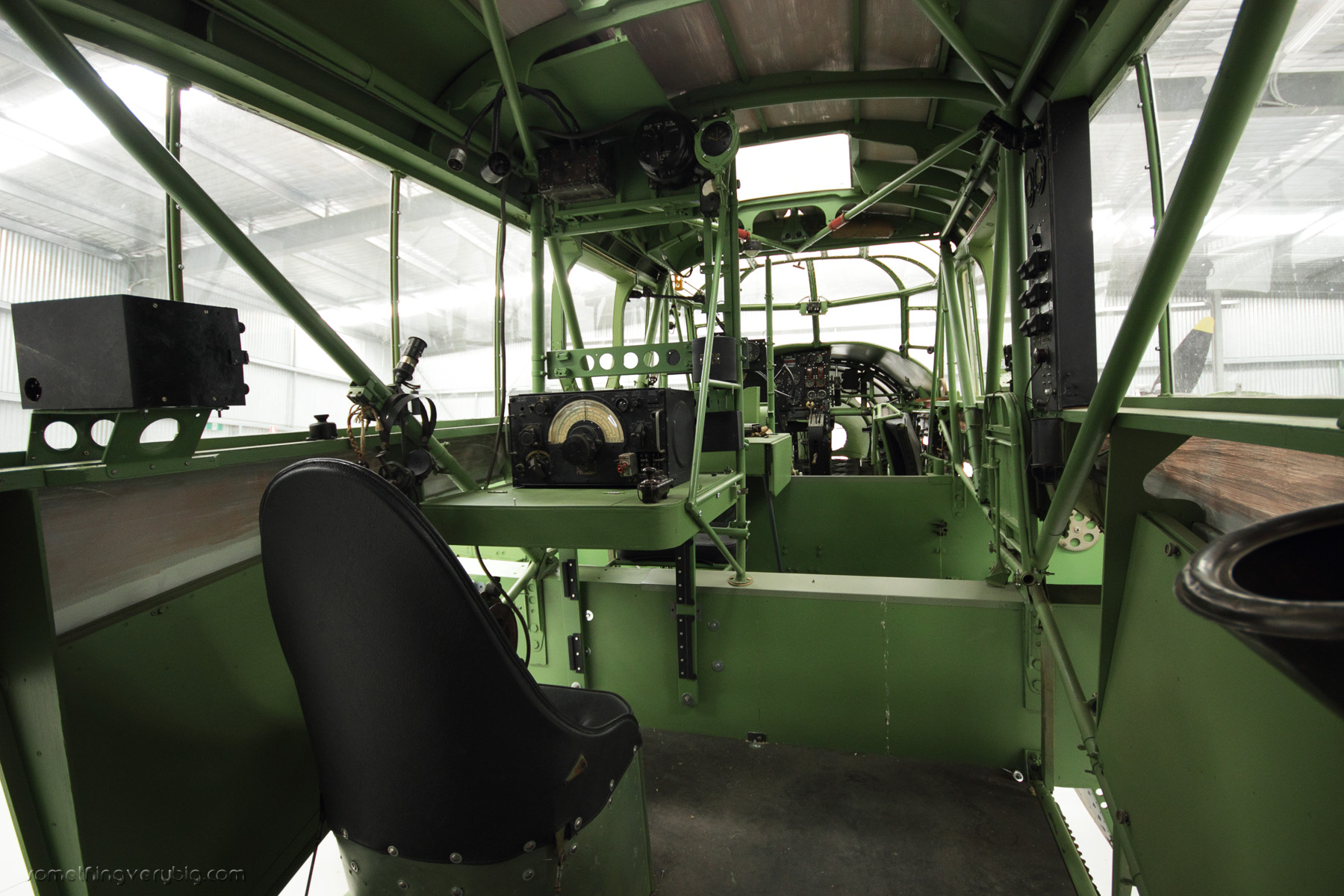
But every Saturday, Wright gets the opportunity to write about something other than politics. One week last year it was about Mike Druce, the man who made a modern-day escape from Colditz Castle in September, then walked unsupported to Switzerland. Wright wrote another interesting one early in February.

“They are disappearing fast now”, he wrote, “the generation who experienced a world war.”

It seems not so long ago that those who had lived through World War I and had seen horses step aside for internal combustion engines and a lot more were being put in the ground, but memory plays tricks – it’s 100 years since that war began.

Those who knew it, even those who lived to astonishing ages, breathed the last of this earth’s air a long time ago.

Now it is the turn of the last of the survivors of World War II.

Some of those shuffling off into the sunset in recent times, of course, were well-known in life and widely mourned in death. Giants of politics like Gough Whitlam (an RAAF navigator) and Tom Uren (a survivor of the Burma-Thai Railway). Journalist and Korean War correspondent Harry Gordon. “These are, of course, big and extraordinary lives”, Wright says:

…generous spirits well documented, celebrated on a broad stage, their stories teaching us something that transcends the experiences that will go into books about their achievements: call it wisdom.

But while these were some of the better-known men whose lives intersected with some of the biggest conflicts in the history of mankind, so many others were there too. In Wright’s words:

…each day others whose lives were not destined to be celebrated so publicly or granted obituaries pass beyond this existence. Every one of them has a story, and in those stories we can often find ourselves enriched, because wisdom often resides there.
He’s dead right.

This is more or less why I flew to Sydney last month to have lunch with a Bomber Command veteran who also happens to be a good friend of mine. Hugh is a former rear gunner and we arranged to meet at one of those very old and very exclusive clubs in the city, all cedar panelling and leather Chesterfield armchairs. Hugh has been a member for a quarter-century.

He’s clearly well-known here. As we entered the bar the bartender poured my beer but gave Hugh the bottle and an empty mug. “I like to pour it myself”, he explained. Somehow, I imagine, with its sharply-dressed, exclusively male clientele, beer in pewter mugs and discreet murmur of conversation, the atmosphere in the bar at a wartime Officer’s Mess (in one of its quieter moments) might have been something similar. And perhaps for Hugh that’s at least part of where the attraction lies.

With that thought in my head, it’s not surprising that our conversation very quickly turned to flying. As we drank our beers we shared experiences flying the Tiger Moth and I mentioned my recent visit to Nhill and the Anson that is under restoration there. “I loved the old Aggie”, he said simply. We continued talking in the dining room as we waited for and then enjoyed a scrumptious meal while looking out over the State Library across the street.

Hugh is a little unique. He actually trained as a pilot but when he arrived at his squadron, he was one of twelve who were asked/chosen to re-train as gunners to operate a special ‘secret weapon’. It turned out to be ‘Village Inn’, an automatic radar-guided gun system. Despite what you might read on that link, Hugh’s opinion of the equipment is not very high. It was unserviceable half the time, he said, and the rear turret was not a nice place to be. Nor was it safe. On his first trip – to Bremen, in October 1944 – two of the twelve Village Inn men failed to return.

Hugh flew on his last operation – his 32nd – a matter of weeks before the end of the war. There followed the traditional fortnight’s end-of-tour leave, part of which coincided with the regular 12-days-every-six-weeks leave of a good friend at the squadron called Johnny Garrett. Hugh had arranged to meet up with Johnny in Cardiff but was a bit surprised when he did not show up. On return to the squadron he found out why.

On 22 April 1945, 49 Squadron was moving from Fulbeck to Syerston. As happened frequently on these occasions, on departure each bomber “beat up” the control tower before setting course for their new home. One aircraft flew past at extremely low level. Johnny, like Hugh a pilot/rear gunner, was in the rear turret.

The pilot pulled the Lancaster up into the air.

Too late.

The tail of the aircraft hit the MT shed. The Lancaster fell to the ground, killing all six on board. Fifteen more people – part of the works party which were about to begin runway extentions at Fulbeck –  were killed on the ground.(1)

It was a sobering story to hear over an otherwise very civilised lunch. But that’s just the point. Such was life, and death, in Bomber Command. Tragic as they are, stories like these actually happened. While official records like the squadron Operational Record Book reveal something of what happened to the aircraft, they won’t include the personal details – like the friends of those killed who wondered why they did not show up for an arranged meet-up while on leave.

These are the sorts of details and stories that can only come direct from those who were there at the time. So I see part of my role, as a Bomber Command researcher, but also as a member of the human race, to collect those stories while I still can. Hugh is one of the younger Bomber Command veterans I know, but he turned 90 last year. He’s no spring chicken. And one day I’m going to want to ask him something… but he won’t be there anymore. So in the meantime, says Tony Wright as he finishes his piece:

…the rest of us could do worse than sit with those close to us and explore what they might have to share and teach before they are gone and we find ourselves turning, bereft, to their shadow.

Amen to that.


Hugh McLeod, 49 Squadron rear gunner and my good friend, died on 7 July 2015.


(1) The ‘Fulbeck Tragedy’, as it is known, is described in Ward, J 1997: Beware of the Dog at War: Operational Diary of 49 Squadron Spanning Forty Nine Years, 1916-1965, pp. 542-5. Thanks to Colin Cripps for the steer.


© 2015 Adam Purcell

A Cocktail Party in Melbourne

I love collecting veterans.

Though their numbers are undeniably dwindling, it seems that every time I go to a Bomber Command-related event I come away having met a new veteran or two. And last Saturday night, a fundraising cocktail party for the Bomber Command Commemorative Day Foundation (Vic) in Melbourne, was no different.

Because of my own history of living in Sydney most of the events I go to are still in the Harbour City, and so despite living in Melbourne for four and a half years now I regularly travel there for ANZAC Days or other events. Consequently I’m still getting to know the Melbourne-based Bomber Command community. So it was great to see that among the fifty or so guests who gathered on Saturday night at the Nurses’ Memorial Centre on St Kilda Road were five Bomber Command veterans, three of whom I had not properly met yet. Rest assured that was remedied by the end of the evening!

The other two I know well. 578 and 466 Squadron Halifax skipper Don McDonald brought his wife Ailsa, and was working the room as he always does. Though he was wearing a badge with joined Australian and French flags I didn’t get the chance, unfortunately, to ask him about his recent award of the Legion d’Honneur, but that story will have to wait until the next time we meet. 463 Squadron navigator Don Southwell came down from Sydney as a representative of the national Bomber Command Commemorative Day Foundation committee. Don, as well as being a friend of mine is very active on numerous Bomber Command committees and it was nice to have the chance to talk to him at an event which, for once, he did not organise.

Gerald McPherson and Don Southwell

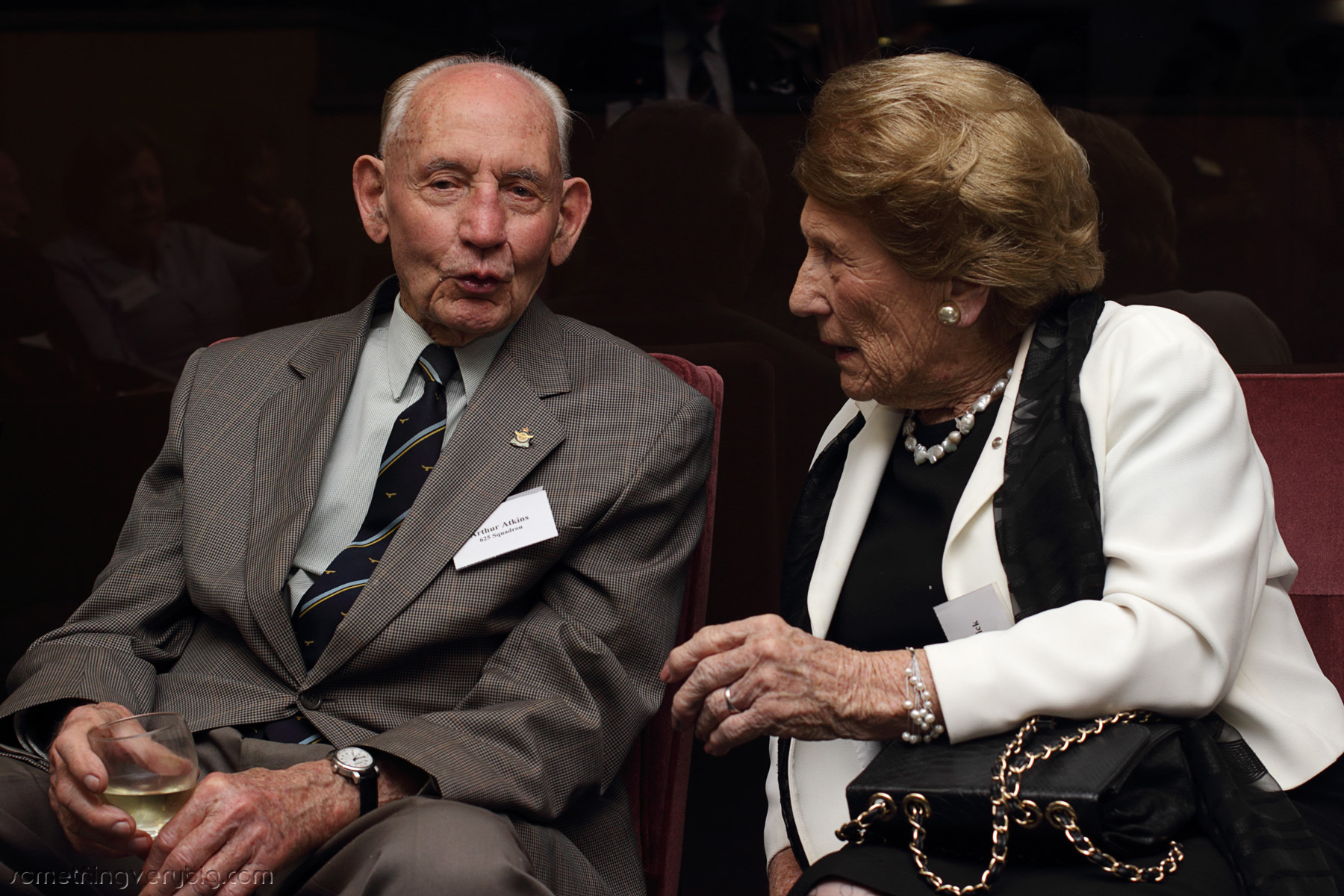
The other three are all Melbourne veterans. “Poor old Wally McCulloch”, as he introduced himself, was a 460 Squadron bomb aimer. He and his wife had braved a long and difficult journey to get to the function… from their apartment upstairs in the same building! And Arthur Atkins was a 625 Squadron pilot, with a DFC. He approached me after Don Southwell pointed me out as someone with a 463-467 Squadron connection, saying he had a mate who was lost flying from Waddington.

I’d briefly met the third Melbourne veteran, Gerald McPherson, at the panel discussion at the Shrine of Remembrance in 2013 but, until now, had not had a chance to talk to him. He was a rear gunner in 186 Squadron and related the story of his first ever trip in a Lancaster. Up to that point, he told me, flying Wellingtons and Stirlings, he’d always said a small prayer to himself at the top of the runway to help the aeroplanes take off safely. “I never needed to do that in the Lanc”, he said. “You could feel the power as it took off.” He was wearing a Bomber Command clasp so we talked about that for a little while. Coincidentally I had dropped the application for my great uncle Jack’s clasp into the postbox as I was walking to the tram to travel into the city for this event.

It’s not just the veterans, of course. I came away with some other useful contacts too. David Howell works at the Shrine as a Development Officer and is their resident Kokoda expert. In fact he even leads tours along the Kokoda Track (see www.kokodahistorical.com). David is clearly a military history nut – he turned up to the function wearing a WWII RAAF uniform, along with a mate:

1503-BCPartyMEL 065

I also, finally, met Andy Wright of Aircrew Book Review. We’ve corresponded before, mostly about blogging and book-ish issues, and we’ve been trying to arrange a time to catch up since he moved to Melbourne from central NSW with his young family a few months ago. This cocktail party offered a good chance to meet. Very generously, Andy had used some of his publishing contacts to source for us some very nice books for our raffle.

The raffle had been my main contribution to the running of the event. It turned out to be very successful with everyone getting involved, and Andy’s efforts, along with a couple more books and an Easter basket or two from Jan Dimmick (one of my fellow committee members), really made it worthwhile. Here are a couple of the winners:

Andy Wright with David Howell, the winner of the 'main prize' - a complete set of Chris Ward's Bomber Command Groups books, donated by Pen and Sword in the UK
Andy Wright with David Howell, the winner of the ‘main prize’ – a complete set of Chris Ward’s Bomber Command Groups books, donated by Pen and Sword in the UK
Ian Gibson with his prize, a Fighting High book donated by Capricorn Link (Australia)

Thanks to Capricorn Link (Australia) and Pen and Sword Books (UK) for their very generous donations. And I must also mention the Royal Australian Air Force Association (Victoria), whose treasurer Richard Orr announced a significant donation of funds to the group on the night.

And at the end of the day, fundraising was what it was all about. The Bomber Command Commemorative Day ceremony gets bigger in Melbourne each year, and it is beginning to cost a fair amount to put on. The aim of the cocktail party, as well as being a good chance to bring together people with an interest in Bomber Command in the city, was to raise money to ensure that the ceremony – set down for June 7 this year – can continue to be held. In this it was a success, and I think a good night was had by all.

One last thing, before I get stuck into some more photos. I wrote back in January about a programme run by the Shrine of Remembrance to connect veterans’ groups with schools, to pass the legacies of some of these groups on to a new generation. I’ve been holding this news back for a while now but, as it was effectively announced publicly on Saturday night, it’s time it got a run on SomethingVeryBig.

The Bomber Command Commemorative Day Foundation (Vic) is now part of this important Shrine initiative.

Present at the cocktail party was Scott Bramley, who is the Middle School Chaplain at Carey Baptist Grammar School, in Kew, Melbourne. (His seven-year-old son Hamish was also there and won the final prize in the raffle – a great big Easter basket – but no one believes me when I say it was emphatically not a set-up!!)

Scott Bramley
Scott Bramley

Carey was the school attended by Frank Dimmick, who was a 460 Squadron navigator and the husband of Jan Dimmick, one of my fellow committee members. Though Frank died in 2013 Jan has maintained contact with Carey’s Old Grammarians network and it is through this association that the school was approached and agreed to become part of the ceremony each June. Scott has been the main point of contact, and his enthusiasm for the project is infectious. He’s effectively thrown the resources of the school at our disposal. Year 9 students will learn about Bomber Command as part of their history studies and Carey students are expected to take an active role at the ceremony in June. Let’s hope it’s the beginning of a long and mutually beneficial association between the two groups.

RAAAFA (Vic) Treasurer Richard Orr
Don McDonald with David Howell
Arthur Atkins wih Jan Dimmick

1503-BCPartyMEL 037

Vic Leigh of the Royal Air Forces Association (Melbourne Branch). He is a veteran from an RAF Mosquito squadron but served in Australia and the Pacific, and so very modestly refused to appear in the group photograph. Lovely bloke though!
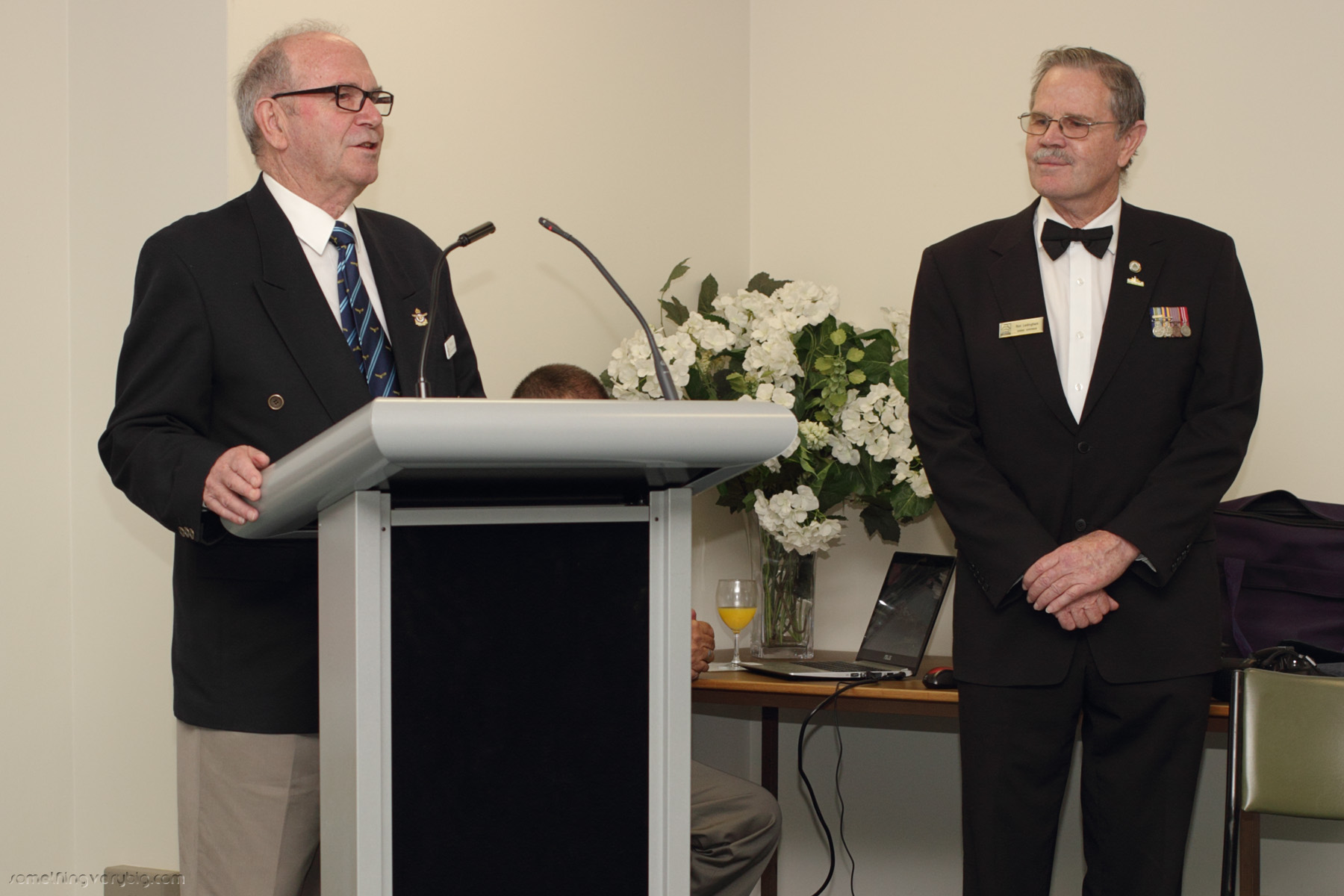
Don Southwell. Ron ledingham looking on.
Don Southwell. Ron Ledingham looking on.
1503-BCPartyMEL 052
Back, L-R: Robyn Bell (Organiser), Don Southwell, Don McDonald, Elaine McCulloch, Wal McCulloch. Front, L-R: Ailsa McDonald, Fay McPherson, Gerald McPherson, Arthur Atkins


Photos and text (c) 2015 Adam Purcell


Straight to the Pool Room!

Or are you a stranger, without even a name?

Forever enshrined, behind some glass pane?

In an old photograph, torn and tattered and stained,

And fading to yellow, in a brown leather frame?

-Eric Bogle, No Man’s Land

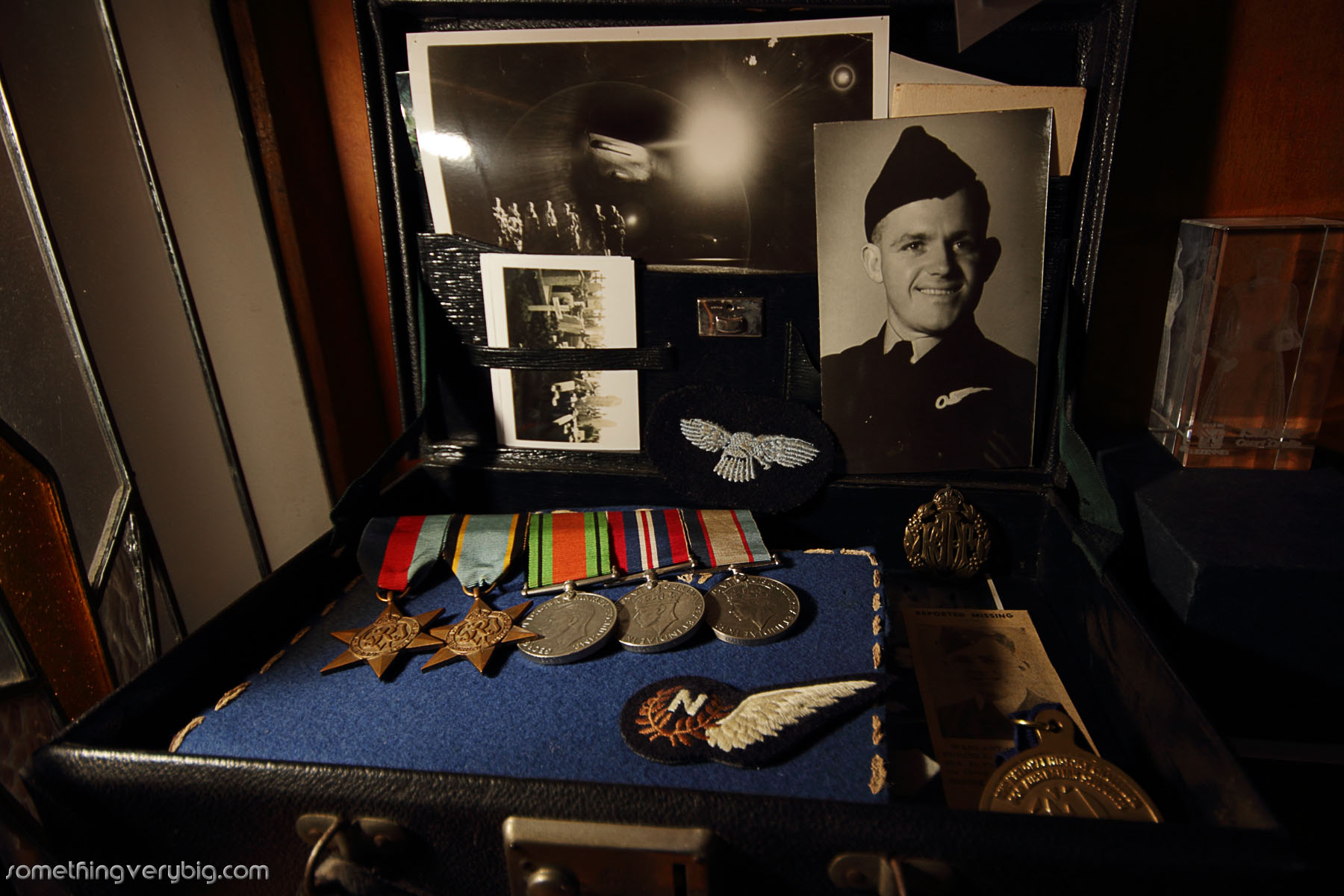
Perhaps because so little has survived, the few photos and original documents that I have of my great uncle Jack are treasured possessions for my family. They help to make real the legend that I grew up with. They are, literally, all that is left of the man. And for this reason, it’s critically important that I keep them safe.

When Dad was given the photos from his grandfather they lived in a shallow foolscap box. But by the time I saw them in the early 1990s the box was falling apart. Given my developing interest in the photos and the story they represented, something more practical needed to be found to allow them to be easily accessed. They spent the next few years in plastic sleeves in a green display folder, along with all the other material we’d gathered.

A few years later Dad found an old leather briefcase in an antique shop somewhere, and thought it would make an appropriate home for Jack’s memorabilia. He arranged the photos around Jack’ logbook in the briefcase, which sat open in a display cabinet at my parents’ place in Goulburn until he gave them to me earlier this year.

An antique cabinet at home serves as my ‘Pool Room’. I was keen to display Jack’s memorabilia there, along with other meaningful objects like the forage cap and my Lancaster model. (Not entirely coincidentally, the original oil painting of B for Baker hangs on the wall above). But some of the photos are fading and curling a little. Wanting to display them but not wanting to run the risk of further degradation, I needed another solution.

The first thing I did was get copies of the photos. I scanned them many years ago for a CD-ROM (remember those??) I put together in 2003 so I already had digital copies, but imaging technology has improved immeasurably in the decade since then so I recently had digital prints made at my local friendly photo retailer. The new copies I arranged in the briefcase that Dad had given me, along with Jack’s original logbook and service medals:

14Sep-Medals 026 copy

So I now have copies on display in my cabinet. Digital copies are available for study as part of my research if I need to, or for posting on this blog. But the originals have an atmosphere to them that the copies can never replicate. In part it is those imperfections collected over seven decades – the fading, the creases and the pin holes in some – that give the originals their character. Phil Smith’s handwriting on the back of one or two adds to their authenticity.

But while those imperfections add to the character of the originals and help make them ‘real’, there’s not much point if the photo degrades to such an extent that the original can no longer be viewed. To prevent further deterioration I have now mounted the original prints – seventeen of them in all – in a loose-leaf archival quality album, using photo corners. The album is now stored in a closet in my house where the temperature will, hopefully, remain reasonably constant. That way the photos are still easily available for closer examination if I want to get them out, but they are also stored as best I can in conditions that will not accelerate the aging process and the deterioration that comes from it.

They should last another couple of generations at least.

(c) 2014 Adam Purcell

Hangars, Ansons and Aeradio: A visit to Nhill

Most of the 40 or so locations around Australia that hosted aircrew training units during WWII are still in use today as aerodromes, both civil and military. Some are better-known than others. Mascot, for example, where the current Sydney International Airport is located, was No. 4 Elementary Flying Training School. Essendon – No. 3 EFTS – was, for a time, Melbourne’s main airport and remains in use by corporate aircraft, emergency services, freighters and trainers. Amberley and Pearce are still RAAF bases. While some were abandoned post-war (Cressy in Victoria, for example, or Uranquinty in NSW), a large number of the others are in use in regional and metro areas of Australia. Forest Hill – No. 2 Service Flying Training School – became Wagga Wagga Airport, now a reasonably busy training, maintenance and RPT hub for regional airline Rex. Many navigators trained at No. 1 Air Navigation School in Parkes, NSW, which remains active as a regional airport. And about five years ago I landed my last aeroplane, appropriately enough a Tiger Moth, on the grass runway at Camden, outside Sydney, which hosted for a time the RAAF’s Central Flying School where flying instructors were taught their trade.

Jack Purcell trained at four airfields in Australia, and all remain active. After he was scrubbed from pilot training at 8 EFTS, Narranderra (which today receives multiple scheduled air services each day to and from Sydney), he re-mustered and began his navigator training at No. 2 Air Observers’ School, Mount Gambier (hosting air services to Adelaide and Melbourne). Then he was posted to 2 Bombing and Air Gunnery School at Port Pirie, South Australia (a regional town on the eastern side of the Spencer Gulf). And finally, before being awarded the half-wing that denoted a qualified navigator in July 1942, he spent almost a month at No. 2 Air Navigation School, just outside the western Victorian wheatbelt town of Nhill, on the highway half-way between Adelaide and Melbourne.

Rachel and I happened to spend a night camped in the caravan park at Nhill on the way home from a holiday to Kangaroo Island late last year. Knowing that the name crops up in Jack’s logbook, I thought we might be able to have a quick look at the airfield to see if we could find interesting remnants of its wartime history. I was completely unprepared for what we actually found.

The first sign that something good is going on at Nhill was, quite literally, just that: a new-looking brown road sign. It was pointing, it said, to the “Historic RAAF Base”. Excellent, I thought, we’ll follow that in the morning. We arrived at the caravan park where a westerly wind was howling as we set up the tent. The roar of trucks passing on the highway was almost drowned out by the squawking and screaming of hundreds of white and pink corellas as they wheeled and soared and swung overhead.

Walking around the town looking for somewhere to have breakfast the next morning, we found a display in an otherwise empty shop window for the Nhill Aviation Heritage Centre. I rang the telephone number and was put on to a lady named Joan Bennett, who is the Secretary of the group. She readily agreed to open up the hangar at the aerodrome for us to visit.

And so an hour later after breakfast in a local café, that’s exactly where we headed. Unexpectedly, and despite the almost constant truck traffic, Nhill is a rather pretty little town. Heritage buildings line the main street and a long park, with bandstand and war memorials, sits between the two carriageways as the highway passes through the town itself.

The smaller of the two memorials looked, to me, to be quite new. And so it proved, being a memorial set up by the Nhill Aviation Heritage Centre in 2011:RAAF Nhill memorial in the town The northern end of the town is dominated by the concrete silos of the former Noske Flour Mills. When it was built in 1919 this was apparently the largest concrete silo in Australia. No doubt it was a significant landmark for trainee navigators during wartime. About two kilometres northwest of the town is the airfield.

In 1938 an Aeradio station began operating at Nhill. This was part of a national network of air/ground communications stations set up to give comms and navigation support to civil aircraft flying around Australia. It was, in effect, the forerunner of the Flight Service network which eventually developed into the enroute air traffic control system we now use. The first building we passed, right next to the road along the western boundary of the aerodrome, is the former Aeradio site. It looks to be in some disrepair but out of the seventeen original sites around the country this is, it seems, the most original and the best preserved, and so moves are afoot, in cooperation with the Civil Aviation Heritage Society based at Essendon Airport here in Melbourne, to restore it and turn it into part of the Nhill Aviation Heritage Centre.

There are two hangars at Nhill Airport. One is the last of five Bellman hangars built at Nhill during the war. It currently hosts the Wimmera Aero Club: The Bellman Hangar at Nhill Airfield; now the home of the Wimmera Aeroclub The other is virtually brand new. It was built in 2013 and officially opened in May 2014. Designed and built at cost by Ahrens, a steel and industrial supply company based in Adelaide but which owns a local Nhill business, the hangar now houses the beginnings of an air museum.

Joan was already there when we pulled up in front of the hangar. We paid our $5 each for admission (genuine 1972 prices!) and Joan showed us around. Pride of place in the middle is this: The Nhill Aviation Heritage Centre Avro Anson, undergoing restoration in their brand new hangar It’s the bones of an Avro Anson, serial W2364 to be specific. While this particular airframe was not itself based at Nhill during the war, most of the flying that took place from the airfield would have been in aircraft very much like it. Jack Purcell’s logbook records a total of 25 hours of flying from Nhill by both day and night, over seven flights in July and August 1942. All of it was in Ansons. Page from RW Purcell's logbook In recognition of Nhill’s association with Ansons, then, this one is undergoing a slow but steady and beautifully detailed restoration. Joan says the aim is to get it to taxying status and they have already got one of the engines running, evidenced by the drip trays catching oil from said engine. Over along one side of the hangar is the workshop area, where members of the group have been cleaning, repairing or fabricating components as they go. It’s taken five years and over 2,000 man-hours of work to get it to this stage and while there’s undoubtedly a very long way to go, the day in February 2014 when the work-in-progress was towed from Anson Restoration Project Manager Mick Kingwell’s shed to the new hangar was a significant one for the group and for Nhill – the first time an Anson had been on the airfield in some sixty years.

While none of the original wooden parts have been suitable for re-use on the restoration, they have been used as templates for copies to be made and the level of detail already in place inside the fuselage is quite stunning: Inside the Nhill Anson Joan emphasised the spirit of cooperation and assistance that has come out of the aviation heritage community around Australia. A good illustration of this is the pair of Link Trainers which sit in a corner of the hangar. They both come from the same South Australian-based family. One is more complete than the other. This has been loaned to the Nhill group to restore to operating status and then to use as a template while they work on restoring the second one. Once restoration is complete the first trainer is to go back to its owners – but the second is to be retained in Nhill.

Also around the airfield itself is a Heritage Trail, with sealed pathways and signage, that takes the visitor around and explains the significance of the remains of the airfield’s time as a RAAF base. While we didn’t have time to walk around it ourselves it’s another sign that good things are afoot at Nhill. There are even plans to hold a fundraising airshow at the airfield on October 10 this year (stay tuned for details – I intend to be there if I can).

It’s wonderful to see such a passionate group at work in Nhill. Their plans are ambitious but the work to date is, really, most impressive. They appear to have the support of the local council and the town itself and they are breathing new life into what would otherwise be just another quiet, dying little country airfield in a quiet, dying little country town. We certainly need more of that sort of enthusiasm, and that there is a direct connection to Jack Purcell’s wartime story is, for me, an added bonus. Joan and Adam in front of the Nhill Anson You can find the Nhill Aviation Heritage Centre’s website at http://nhillaviationheritagecentre.com.au/. Visits to the Ahrens Hangar can be arranged by phoning Joan Bennett on 0438 265 579. Tell her I sent you! © 2015 Adam Purcell

EVENT: Cocktail Party for the Bomber Command Commemorative Day Foundation (VIC)

Also just to hand is notofication from the Bomber Command Commemorative Day Foundation (Vic) of a cocktail party planned to raise funds to support the annual commemoration service. Details below…

WHEN: 18:00-21:00, Saturday 14 March 2015

WHERE: Nurses’ Memorial Centre, 431 St Kilda Road, Melbourne (entrance off Slater St)

WHO: All welcome – Veterans, Family, Friends

WHAT: Cost includes bubbly, beer, red and whit wine and soft drinks with finger food also provided

HOW MUCH: $40 per head

RSVP: Robyn Bell: brucebell (at) netspace.net.au or 0439 385 104, by 28 February

Details for payment can be found on the official flyer, here.


EVENT: Bomber Command Commemorations in Melbourne, 7 June 2015

An announcement just to hand from the organisers of the Melbourne edition of the Bomber Command Commemorative Day about this year’s ceremony:

The Bomber Command Commemorative Day Foundation (Vic) is pleased to announce the 4th year of commemorating the service and sacrifice of the men and women who served and those who paid the ultimate sacrifice in WWII.

In Conjunction with the Shrine of Remembrance we will be conducting the 2015 service at the Shrine at 12.00 noon on Sunday June 7th

Concurrent observances are held in Canberra, Queensland, South Australia and Western Australia together with overseas observances in New Zealand, Canada and the United Kingdom.

Enquiries:

Robyn Bell

03 9890 3107

0439 385 104

brucebell (at) netspace.net.au

Similar events are expected to be held around the country on the same day, including of course the flagship weekend in Canberra. Further details to be released in due course.

Ladies’ Day with the 463-467 Squadrons Association in Sydney, 16 November 2014

Some three decades ago, the 463-467 Squadrons Association (NSW) (Inc) needed to find a new venue for their Annual General Meeting. One of the squadron veterans was a member of the Killara Golf Club in what’s usually described as Sydney’s ‘leafy’ North Shore, and suggested that the salubrious surrounds of the art deco clubhouse there might be suitable. So they tried it, and it was. After a few years the meeting would be followed by lunch at the club and eventually wives and partners were invited along too. The gents had their meeting in the Billiards Room while the ladies got stuck into drinks in the Dining Room. And then they would all share lunch together.

Such were the origins, says veteran 463 Squadron wireless operator Don Browning, of the now-annual ‘Ladies’ Day’ luncheon. AGMs are no longer required following the winding up of the official body some years ago but the loose association continues to hold the lunches on the Sunday nearest Remembrance Day each November. This year’s edition took place yesterday. And I was there, one of about 55 people in the crowd.

There was a little shuffling of the seats happening at Table 3 when I arrived to stake my claim. No fewer than three Bomber Command veterans were at the table so I cunningly found a spot in between two of them. Don Southwell apologised as he took his seat on my left. “Sorry you got me,” he said. “I thought you’d want to sit next to someone interesting!” I raised an eyebrow. Sitting next to me on my right, was Ron Houghton, who flew a full tour as a Halifax pilot on 102 Squadron and after the war had a long career flying Constellations and B707s with Qantas. To his right, Keith Campbell, a bomb aimer who was the only survivor when his 466 Squadron Halifax was shot down over Stuttgart in June 1944. Keith wore the little gold caterpillar badge that denotes a member of the Caterpillar Club. Don Southwell himself, of course, flew nine operations as a 463 Squadron navigator.

Don Southwell (right), Ron Houghton and Keith Campbell

I reckon I’d have a hard time finding anyone more interesting than this trio.

I was, in reality, extraordinarily lucky to have three veterans at my table. In all there were nine present, down three on last year, mostly through illness both short and long-term. Most obviously missing for me were Tom Hopkinson, who had to cancel at short notice, and Harry Brown, who is still recovering from complications after breaking a hip a few months ago. Even some of those who were there have been a little in the wars lately. Keith Campbell got the most points for effort though. He’s had a hip operation recently but managed to wrangle a leave pass from hospital for the afternoon.

After a superb meal at which, as you’d expect in this company, the conversation was free-flowing, it was time for some speeches. Don Southwell welcomed the reasonably significant number of visitors, and proposed the traditional Toast to the Ladies:

SOLD! To the man in the blue suit!

Annette Guterres responded on behalf of the Ladies, both present and not:

14Nov-LadiesDay 031
Annette Guterres

The day’s main speaker was Bill Purdy. Before he spoke, however, Don Browning shared a story about him:

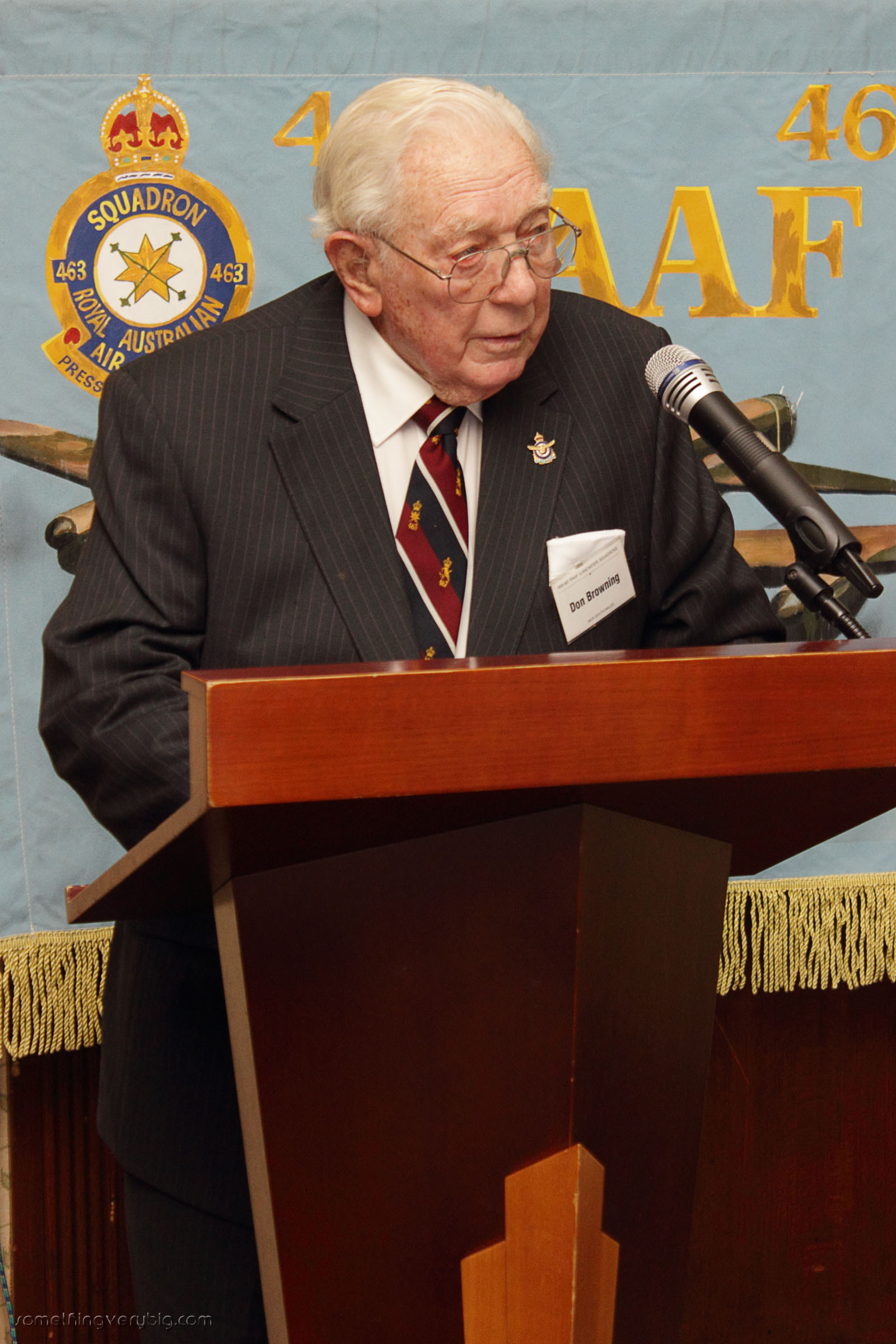
Don Browning
Don Browning

Following his tour of operations, Bill was posted to a Heavy Conversion Unit at Wigsley as an instructor. Returning from a training sortie one day Bill found himself close to Waddington and decided it would be fun to buzz the control tower there. So he did. Word of his indiscretion, of course, made its way back to Wigsley, where the Commanding Officer there happened to be the former CO from 463 Squadron, Rollo Kingsford-Smith. Kingsford-Smith gave Bill a good dressing-down and told him that Group Captain Bonham-Carter had demanded an apology in person.
“You are to go to Waddington”, Rollo said.

No problem, Bill thought. It’s only about nine miles away as the crow flies, a short hop in a Lancaster. No sweat.

But Rollo wasn’t finished yet.

“…by bicycle!”

Bill says he hasn’t forgotten that bike ride.

Apart from Phil Smith, of course, Bill was the first Bomber Command veteran I had met who actually flew on the Lille raid of 10 May 1944 from which the crew of B for Baker failed to return. He’s also the only Bomber Command airman I know who still has a pilot licence, flying around in a Tiger Moth from Luskintyre, north of Sydney. But this talk was about his experiences in June of this year, when a delegation of seven Australian veterans went to France to take part in the official 70th anniversary commemorations of the Normandy landings.

14Nov-LadiesDay 044

Bill had been on the raid on the morning of the invasion against Pointe du Hoc, a very large German gun emplacement, and it was in this capacity as a veteran of D-Day that he was selected. Interestingly another one of the seven was present at Killara: my lunch companion Ron Houghton.

In any case, Bill gave a good talk. Security on the French trip was tight, he said, with multiple checkpoints to negotiate on the way to the official ceremonies, and traffic was a nightmare with half a million people in the area. But it was one of the best-organised events he had ever been part of and a most memorable occasion, particularly seeing first-hand the damage their 1,000-pounders had done to Pointe du Hoc. Having been there myself a few years ago, he’s right – there are craters everywhere.

Bill was wearing his medals, and they included a particularly impressive-looking one hanging from a red ribbon. While the veterans were overseas the French presented each of them with the Légion d’Honneur, one of the country’s highest honours. It’s the one hanging from his left thumb in this photo:

14Nov-LadiesDay 045

Following the talk there was one more bit of official business to take care of: the group photo. Once again, all we were missing was a flight engineer… and a Lancaster, otherwise I would have suggested they all took us for a fly.

Back row L-R: Don Southwell (463 Sqn Navigator), Bill Purdy (463 Sqn Pilot), Hugh McLeod (49 Sqn Rear Gunner), Max Barry (463 Sqn Mid Upper Gunner), Roy Pegler (467 Sqn Bomb Aimer). Front Row L-R: Don Huxtable (463 Sqn Pilot), Don Browning (463 Sqn Wireless Operator), Ron Houghton (102 Sqn Pilot) and Keith Campbell (466 Sqn Bomb Aimer).

I really enjoy the company of these ‘old lags’ and I feel very lucky that I’ve been able to make the trip up from Melbourne to catch up with them a couple of times a year. May it continue for a good few years yet.

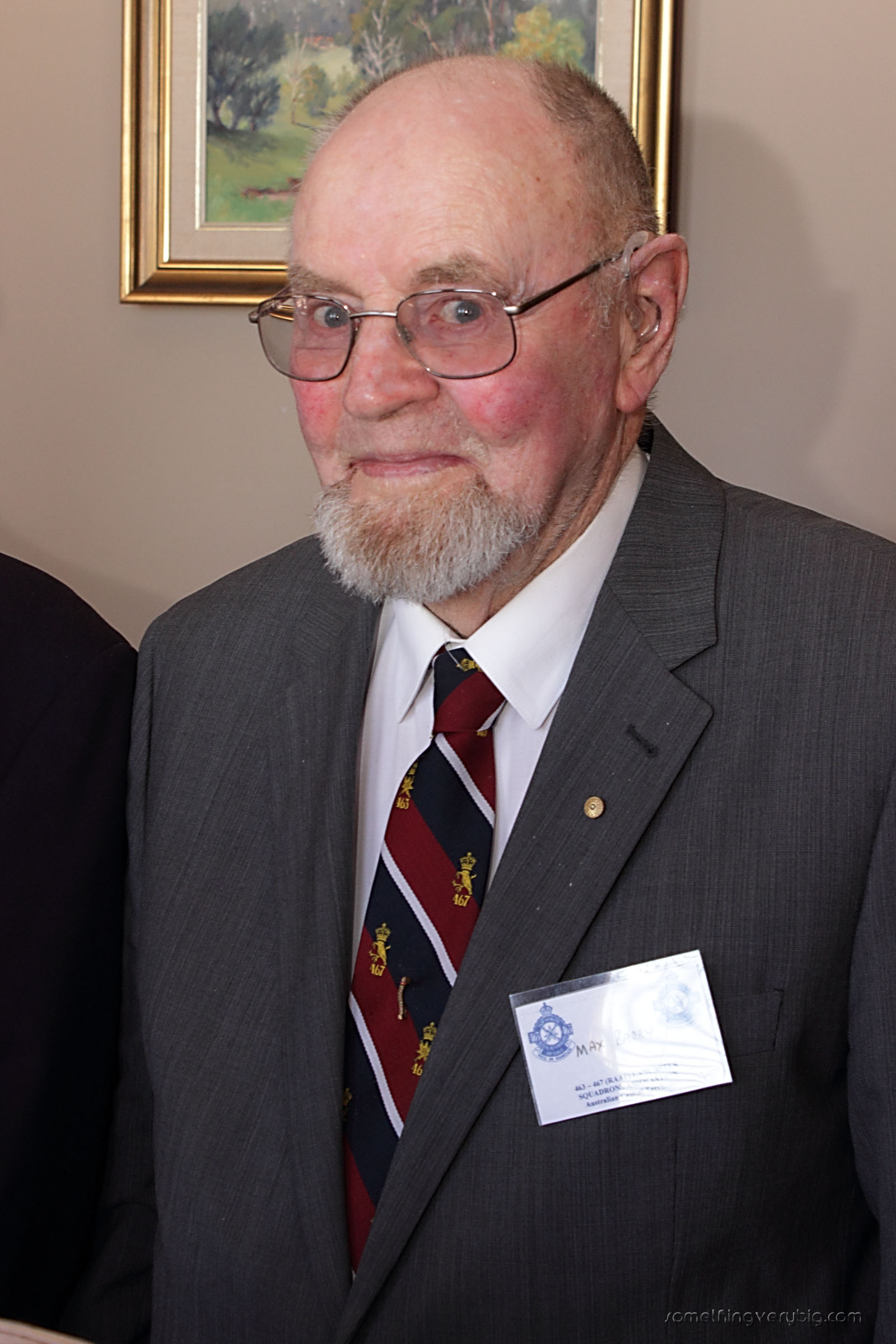
Max Barry
Max Barry
Roy Pegler
Roy Pegler
Don Huxtable
Don Huxtable
Ron Houghton
Ron Houghton
14Nov-LadiesDay 051
Keith Campbell
Hugh McLeod
Hugh McLeod
Keith Campbell and Ron Houghton
"How do you work this thing anyway?"
“How do you work this thing anyway?”
Hux and his 'Top Gun Hands". Once a pilot, always a pilot...
“There I was, nothing on the clock but the maker’s name…” Once a pilot, always a pilot…
Keith Campbell, Ross Browning and Ross' socks
Keith Campbell, Ross Browning and Ross’ socks

14Nov-LadiesDay 070

Text and images (c) 2014 Adam Purcell


Google Earth

The internet is full of tools to make the life of a Bomber Command researcher easier. There are forums to connect like-minded folk from across the globe. There is the National Archives of Australia website to view digital copies of original personnel and casualty files (among many many thousands of others). And there is Google Earth, which has for me proven invaluable in giving some sort of an appreciation of the geographical setting of the events I’m investigating from the other side of the world.

I made heavy use of the program while I was researching and writing my 467 Postblog series over the last couple of years. I pulled the approximate routes flown by the bomber streams on various operations from either logbooks or the Night Raid Reports, then stuck those ubiquitous virtual yellow pins into the map. Then I could plot the locations of casualties, nightfighter attacks or other interesting events in relation to the nominal track flown by the bombers. I could even, in some cases, locate the exact aiming point and trace the unfolding bombing operation in close detail.

As an example, take the Tours raid of 10 April 1944 (on which the crew of B for Baker did not take part). I wanted to find potential reasons for why the second wave of the attack was not as accurate as the first had been. I started with the Night Raid Report[1], which says that “the first red spot fires fell near the roundhouse and the bottleneck between the two yards”.

Off to Google Earth I went, where it was easy to find railway yards at Tours with a bottleneck between them and (though this image is quite low-resolution) a roundhouse visible just under the ’o’ in ‘Approx’. Excellent, I thought, and inserted a fire icon.

tours

What next? “The Master Bomber therefore ordered crews to bomb 500 yards to the E”, continued the Night Raid Report. So I picked an appropriate icon (a bullseye), and placed it some 500 yards east of the spot fire icon. It’s pretty close to the bottleneck – smash that and the entire marshalling yard complex will struggle to function effectively. So things are beginning to make sense.

The bombers approached the target roughly along the line from bottom right to the target pin (which is probably slightly displaced from the actual aiming point because of limits in the resolution of the coordinate system used by the aircrews). This image has been rotated slightly towards the east to fit the text in comfortably so the line of approach should actually be only slightly north of west.

While most crews were carrying high explosives only, the 463 and 467 Squadron Operational Record Books reveal that a number of crews also dropped incendiaries, the fires from which caused a lot of smoke to rise over the target. The ground wind, according to Wing Commander Willie Tait’s report on the 467 Squadron ORB, was coming from the west. One look at the target area on Google Earth reveals that the smoke would have been blown back along the path of the second wave of approaching bombers. It’s easy to see why the second wave had trouble identifying the target and thus, one reason for why their attack was not as accurate as the first had been.

This analysis came from a careful study of the data found in the Night Raid Reports and the 463 and 467 Squadrons Operational Record Books, combined with a Google Earth satellite view of the target area as it was in 2010. Perhaps a map of the area may have afforded a similar conclusion but it’s unlikely that the detail of the bottleneck and the roundhouse, which stick out clearly on the satellite photo, would have been on a map. I used a similar technique throughout the Postblog series, including tracing Phil Smith’s evasion as he walked south through France – I could even pinpoint the farmhouse where he spent a couple of nights in Orchies two days after his aeroplane crashed.

I visited the UK in 2009 on what was essentially a pilgrimage around various sites associated with the crew of B for Baker and with Bomber Command in general. However much they have changed in the intervening decades, there is nothing quite like seeing first-hand places I had, to that point, only read about in logbooks and diaries. But, when trying to trace these events from the other side of the world, if you can’t be there in person Google Earth comes closest for giving an impression of how everything fitted together.


[1] No. 576 – see here for full citation