Ladies’ Day with 463-467 Squadrons Association, Sydney

The 463-467 Squadrons Association (NSW) holds a luncheon every November, on the Sunday after Remembrance Day. For as long as anyone can remember it’s taken place in the rather classy surroundings of the Killara Golf Club in Sydney’s North Shore, and this year was no different. I was able to wrangle the day off work so I flew up from Melbourne last Sunday to attend.

I was staying at my sister’s place in Marrickville so I travelled to Killara by train, walking to the station in teeming rain. One of the stops along the way was Town Hall and here I noticed a tall, slim older gent and a middle-aged woman among the passengers getting on the train. I caught a fleeting glimpse of his tie and it looked rather familiar. They sat across the aisle from me in an otherwise nearly empty top deck compartment and continued the conversation they had been engaged in when they boarded the train. First I overheard the word ‘Killara’, then, a little later, ‘Southwell.’

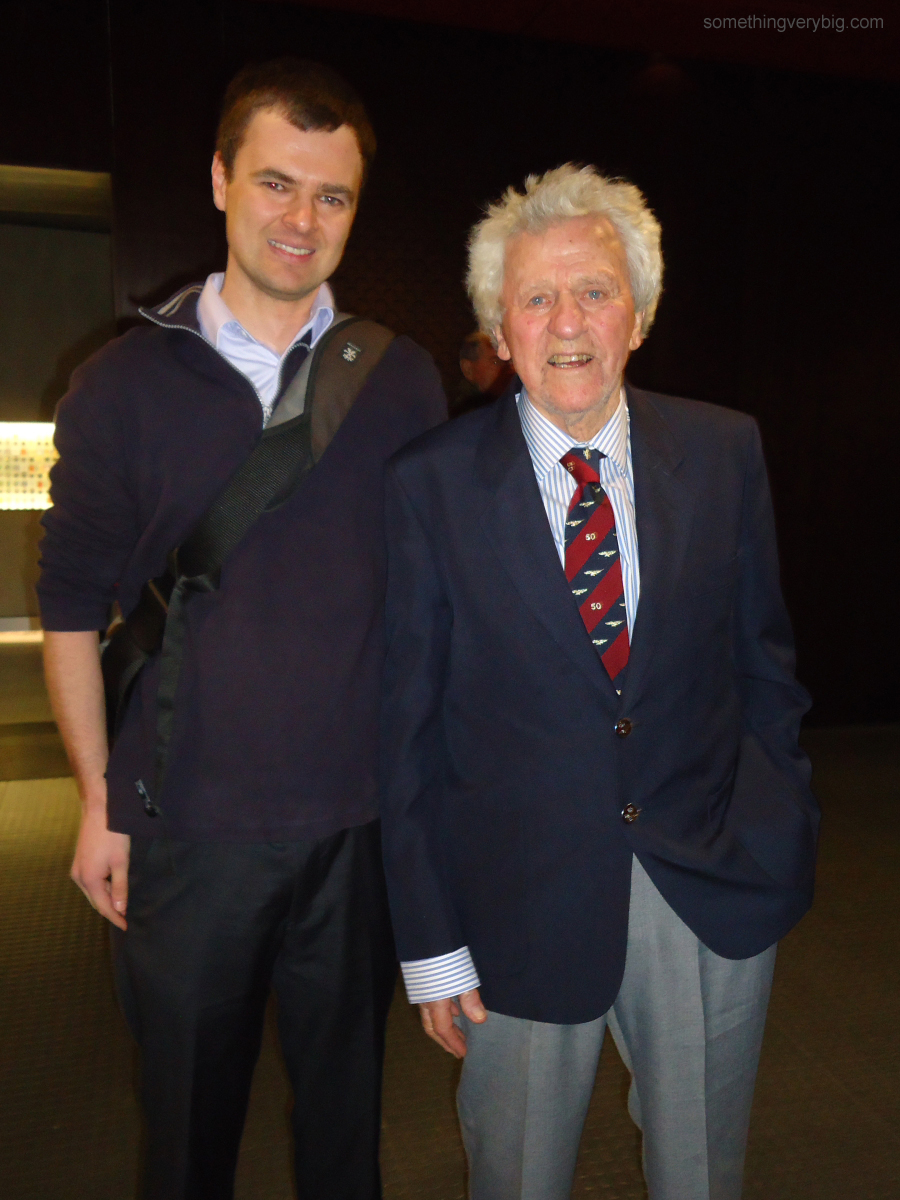
Clearly, I decided, we were going to the same place. So I moved across the seat and introduced myself. The older gent was Tom Hopkinson, a 463 Squadron mid-upper gunner. He was up from Canberra for the function, staying with his second cousin Pamela who was travelling on the train with him. We had a great little chat on the way and while sheltering from the rain waiting for our lift to arrive at the station to take us to the golf club. It’s not very far away and last year, I thought to myself, I got sunburnt as I walked it…

A nice little crowd had gathered in the atrium area when we arrived. Most of the usual suspects were around, though there had been one or two cancellations as a result of the weather (it was still bucketing down outside).

The next couple of hours saw some good conversation amongst forty-odd guests with twelve veterans in total present. I found myself seated between Ron Houghton, a 102 Squadron Halifax skipper, and my frequent neighbour at these sorts of events, 49 Squadron rear gunner Hugh McLeod. The Golf Club put on a good meal again and, as is traditional, Don Browning proposed a toast to the ladies, present and elsewhere, for their support of their veteran husbands, fathers and grandfathers, which is the reason that this function is known as Ladies’ Day.

A remarkable photograph followed. By my count we had three pilots, a navigator, a bomb aimer, three wireless operators, two mid-upper gunners and two rear gunners in the group. Between them they covered almost every position in a typical heavy bomber crew. Unfortunately there were very few Australian flight engineers, and none were present here or I would have suggested we find ourselves a Lancaster and go flying.
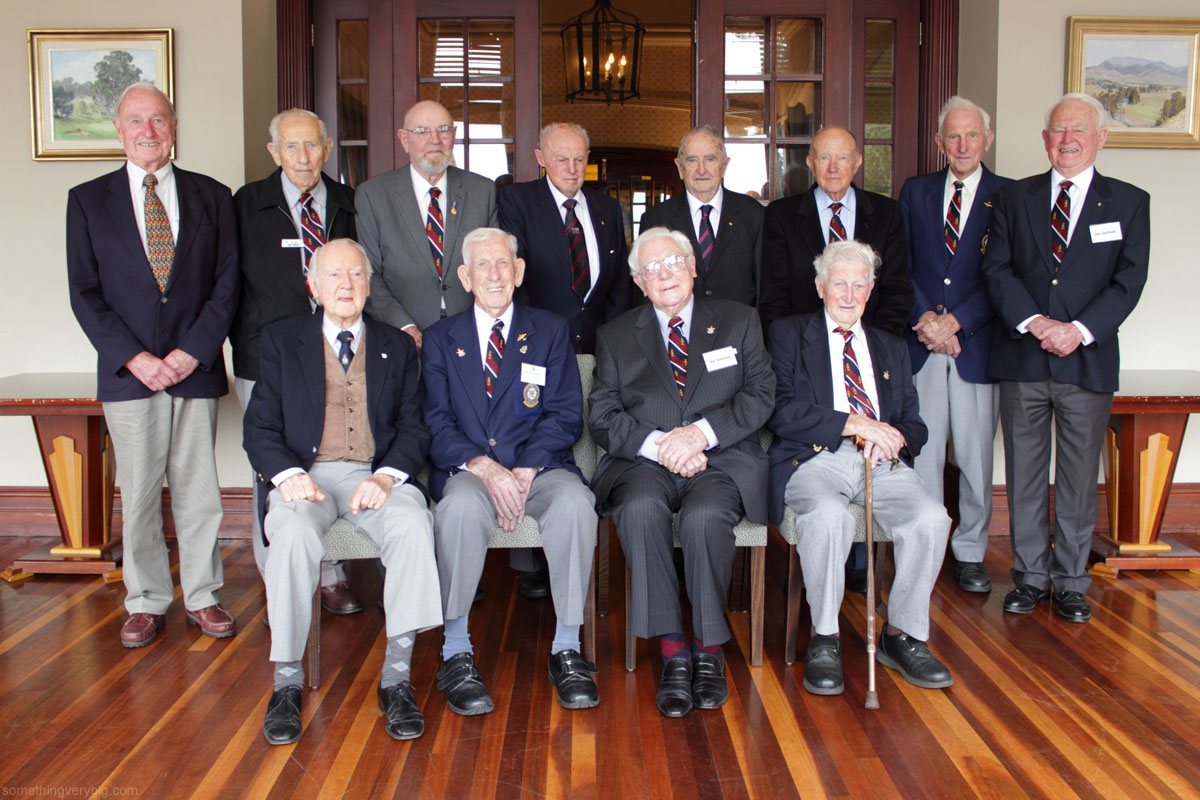
Bomber Command veterans in Killara, November 2013

Seated, left to right: Ron Houghton (102 Squadron Halifax pilot), Don Huxtable (463 Squadron pilot), Don Browning (463 Squadron wireless operator), Harry Brown (467 Squadron wireless operator)

Standing, left to right: Hugh McLeod (49 Squadron rear gunner), Roy Pegler (467 Squadron bomb aimer), Max Barry (463 Squadron rear gunner), Albert Wallace (467 Squadron mid-upper gunner), Ross Pearson (102 Squadron wireless operator/air gunner), Bill Purdy (463 Squadron pilot), Tom Hopkinson (463 Squadron mid-upper gunner), Don Southwell (463 Squadron navigator)

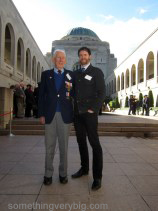
I also made sure that I got a photo with Albert Wallace. In June last year I received a comment on somethingverybig.com from a veteran called Albert Wallace. Unbelievably, it was a different Albert Wallace, who lives in Canada. At the opening of the Bomber Command memorial in London earlier that year he (Canadian Albert) was amazed to meet an Australian veteran of the same name who had also been a mid-upper gunner. I helped both Alberts get in touch with each other, though unfortunately they did not get a photo with both of them together!

Bomber Command veterans at Killara, November 2013

Left to right, in this photo we have Ron Houghton, Hugh McLeod, Albert Wallace and myself.

A couple of photos to finish off, then. Bryan Cook and Don Huxtable:
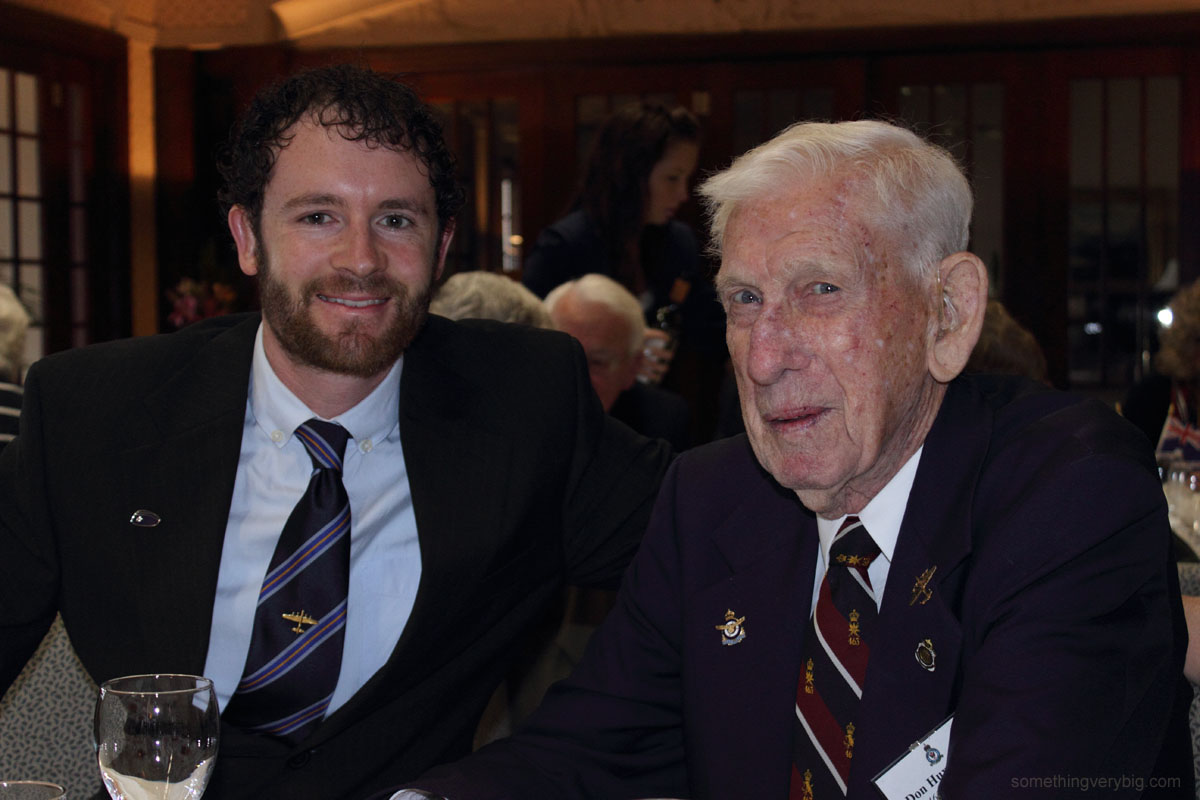
Bryan Cook and Don Huxtable

Hux had a minor heart attack a few months ago but though he looks a little more frail than I have seen him in recent years it clearly has not affected his mischievous nature. Here he is clowning about before the group photo:
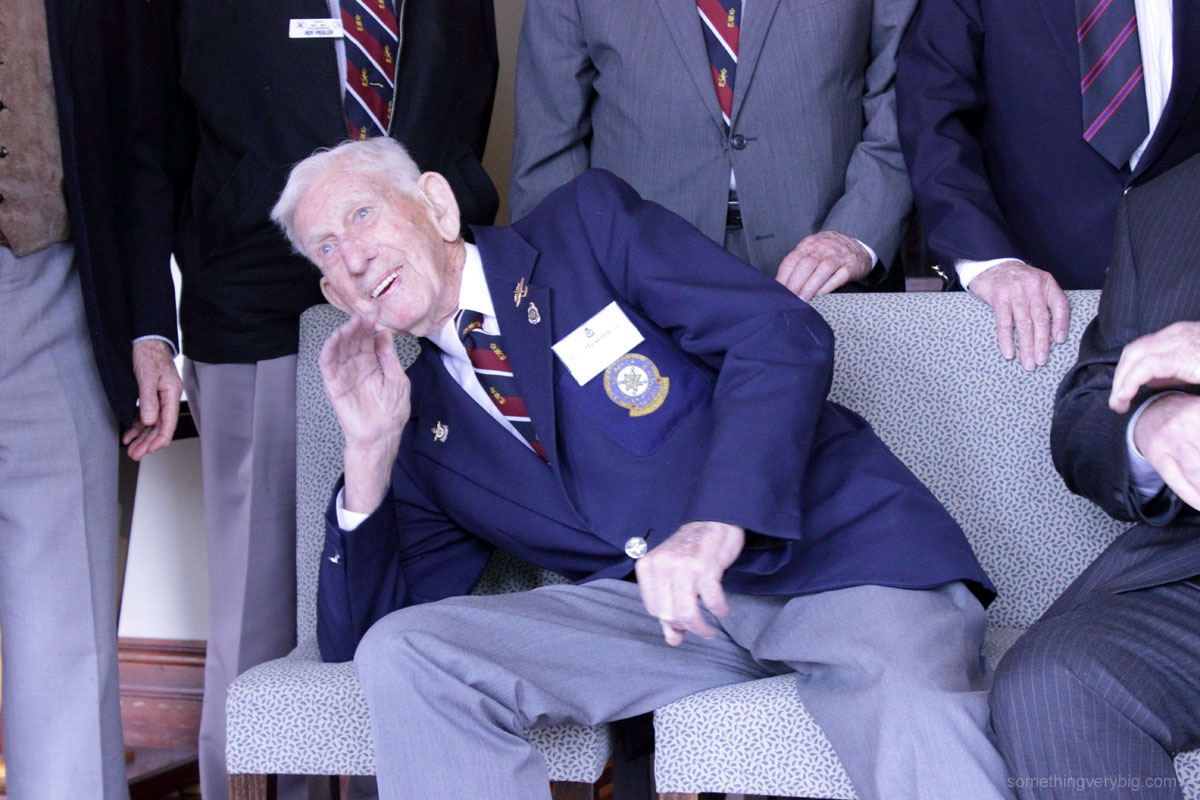
Don Huxtable

Again, a great little function and well worth making the trip up from Melbourne. I’ll be back next year.

© 2013 Adam Purcell
Bomber Command at the Shrine of Remembrance

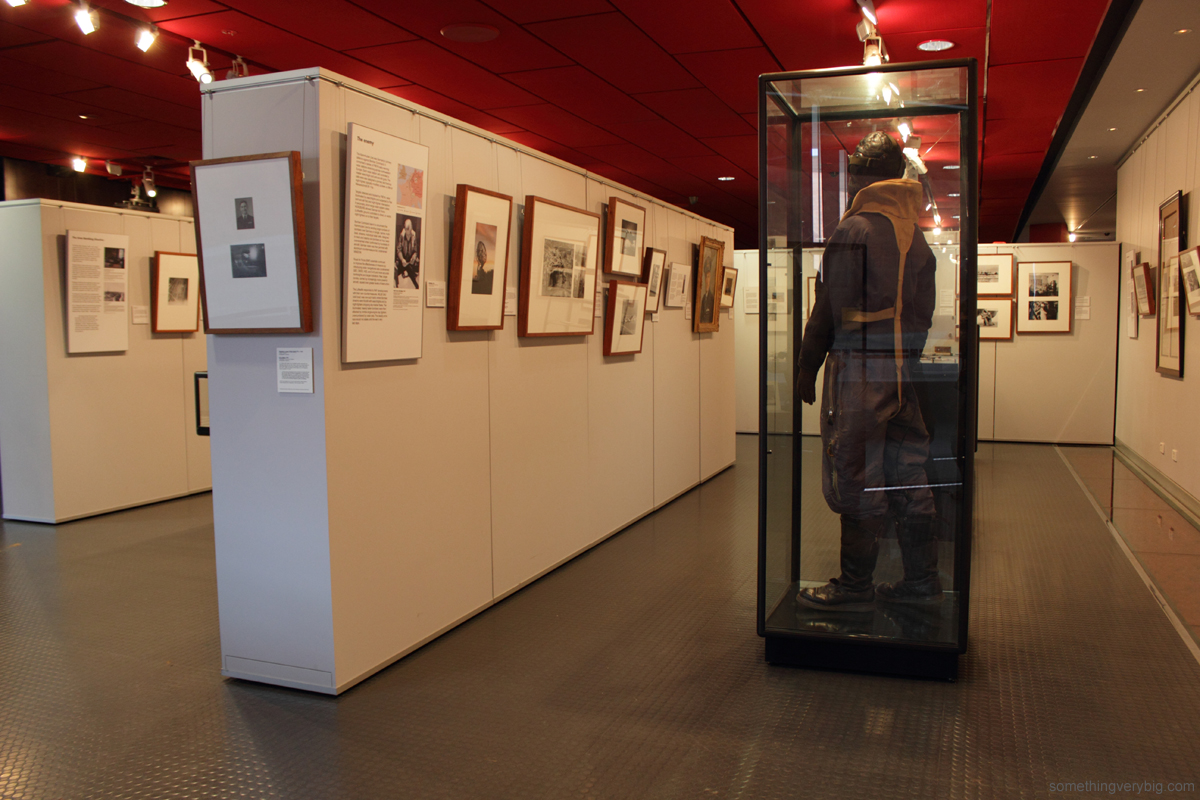
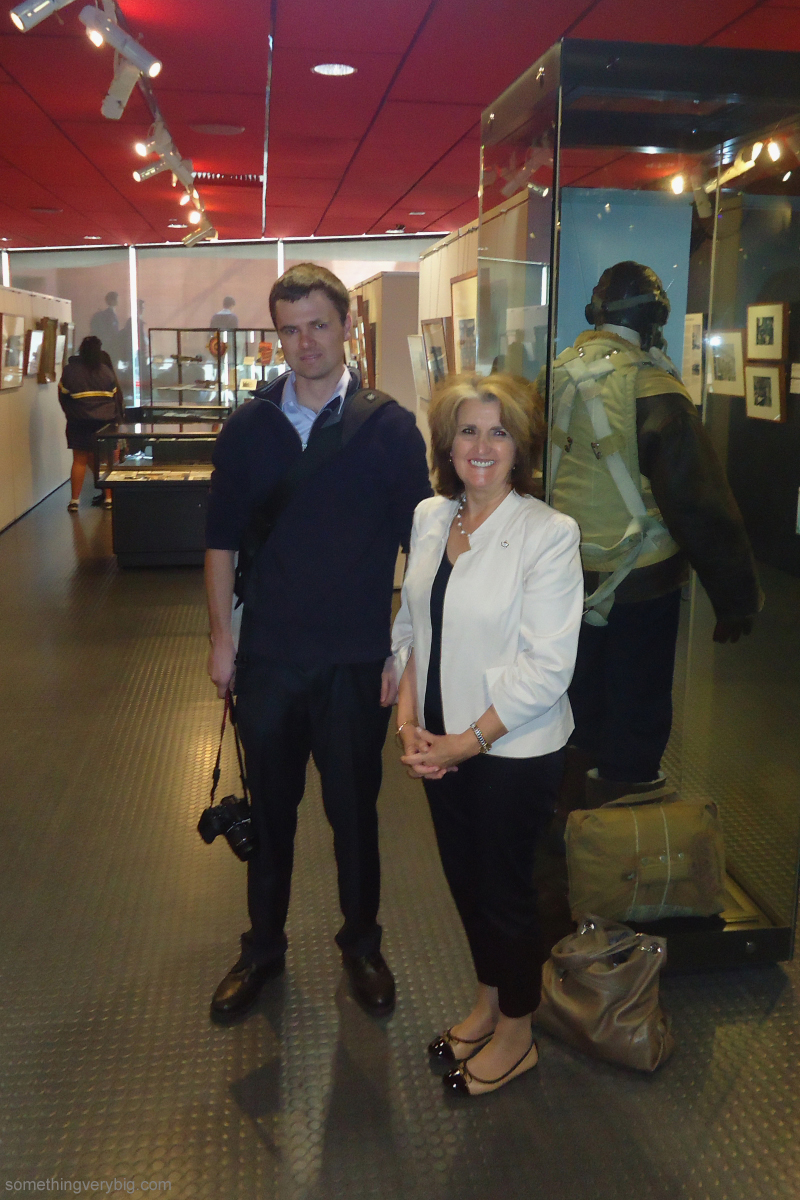
The Shrine of Remembrance in Melbourne has gone all Bomber Command on us. As I’ve posted previously, there are a number of events happening there over the next couple of months. All tie in with a major temporary exhibition which opened earlier this month in the Shrine Visitor Centre. Bomber Command: Australians in the air war over Europe 1939-45 is open until 1 May next year. It’s only a fairly small exhibition but it covers much ground concerning the Australian experience of Bomber Command, from enlistment, through training to operations and afterwards, including a significant section on prisoners of war. There are photos, artwork and memorabilia that have all been put together in a professional manner, and it is already beginning to draw visitors from all across Victoria and other parts of Australia. I visited last week with Robyn Bell, one of my Bomber Command contacts in Melbourne.

13oct-robyn-bells-pics-393 copy

I suspect that if you hang around this exhibition for long enough you’ll see a fair number of Bomber Command veterans coming through for a look. And, happily, so it was when we visited. There was an older gent wearing a blazer and an Air Force tie looking at the mannequin in the photo above, talking to a middle-aged man about parachutes. Robyn recognised him as Gordon Laidlaw, a 50 Squadron pilot who she has been in touch with before, and talking to his mate later I discovered that they had come up from Mornington, an hour or so south of Melbourne, especially to have a look at the exhibition. It was great to chat briefly with Gordon. He was also talking to another pair of visitors who were in Melbourne on holidays from Perth who had come to the Shrine to see the exhibition:

13oct-robyn-bells-pics-381 copy

Rosemary Grigg (on the left) was overwhelmed to meet a real-life Bomber Command veteran – Gordon – because her father had been an airman too. Allan Joseph Grigg was killed on 22 July 1944 in a Wellington accident near Lossiemouth in Scotland, where he had been serving with No. 20 Operational Training Unit. She is keen to find out more about her father’s service so I’ve given her a few pointers on where to begin. As always, the fact he was Australian makes life much easier.

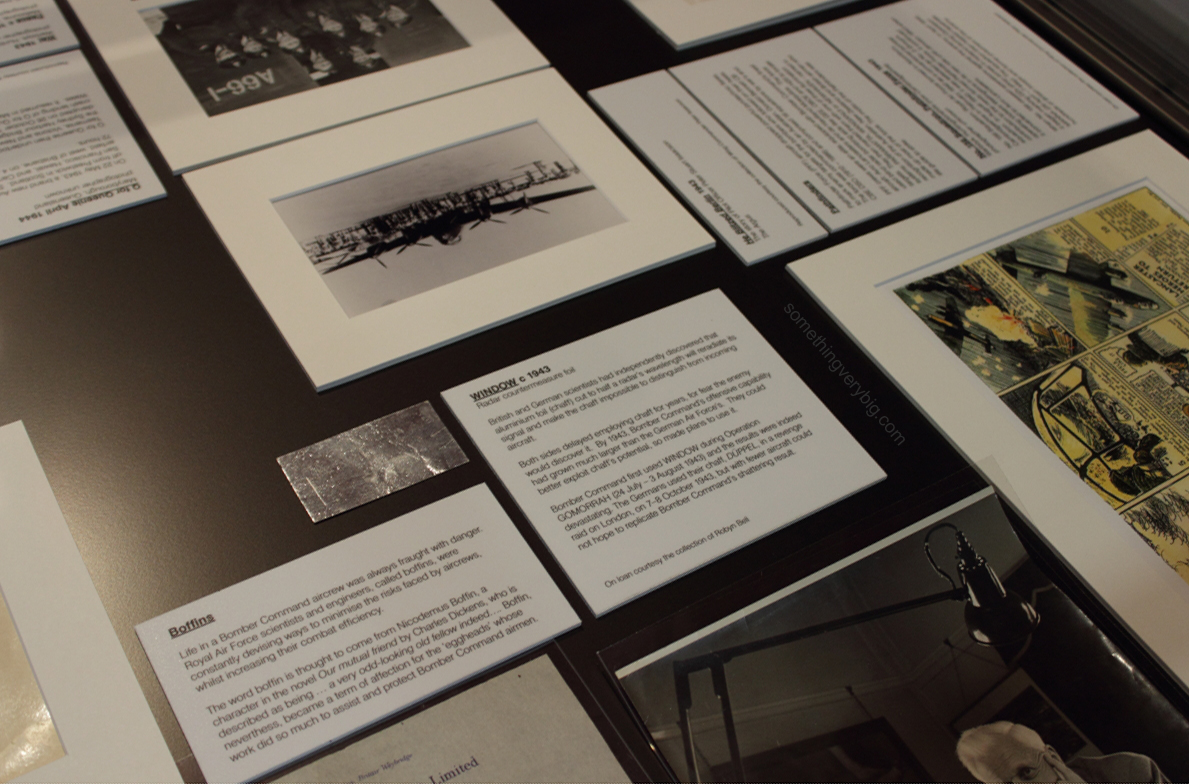
Moving around the exhibition, Robyn found her small contribution. She has been liaising with Neil Sharkey from the Shrine who was responsible for setting up the exhibition, and he was looking for some Window, the foil ‘chaff’ used to confuse German radar. As it happened Robyn had a small piece and was happy to allow it to go on display:

13oct-adamimport-183 copy

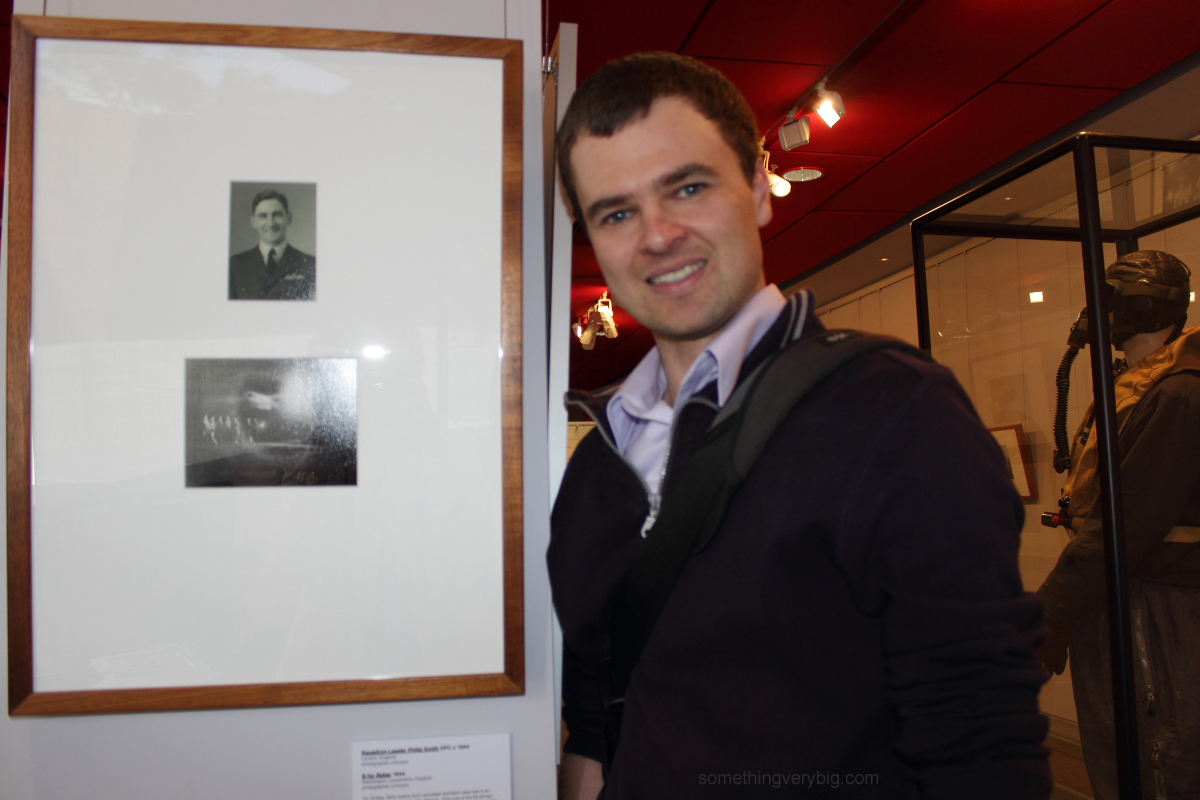
What was most unexpected for me, though, was in a frame hanging at the end of one of the exhibition partitions. We had almost finished our walk around when I found it:

13oct-adamimport-186 copy

Regular readers of SomethingVeryBig (those, at least, with very good eyesight) will recognise the lower photograph, the only known photo of the entire crew of B for Baker. And the one above it? It’s a portrait of a ridiculously young-looking Phil Smith, taken in London during the war. It was in fact sourced for the exhibition from this website, and has been credited to Mollie Smith at my request:

13Oct-MEL and Shrine 022

It’s clear that, in the last two or three years in particular, Bomber Command is finally receiving the recognition it deserves. An official memorial was opened last year in London. A Bomber Command clasp is now in the process of being awarded to surviving veterans, before being extended to the next-of-kin of those killed during service or who have died since. And the Canberra weekend is now the third largest annual event held at the Australian War Memorial (behind ANZAC Day and Remembrance Day). There’s no doubt that interest in Bomber Command, and respect and recognition for those who were involved, is growing. It’s great to see some of that interest manifesting itself in this exhibition. More people will visit and learn about Bomber Command and the men who were part of it. The stories will live on.

And that’s the most important thing.

13oct-adamimport-1841 copy

13Oct-MEL and Shrine 025


13oct-robyn-bells-pics-379 copy

© 2013 Adam Purcell

Two Railway Attacks: Tours and Lille, April-May 1944

By the beginning of April 1944, the crew of B for Baker had completed their first dozen or so operations. They had been members of 467 Squadron at Waddington for three months and their last time off had been in February. Consequently all seven spent the first week and a half of April away on leave.

But while they were away the war continued. I’ve been having a close look recently at the operations that were carried out during the period that the crew were at Waddington. On 10 April 1944 – the day that they were due back from leave – the rest of the squadron were part of a force of 166 aircraft that were sent to attack the marshalling yards at Tours in southern France. When I first saw the Tours raid in the Operational Record Books, I wasn’t intending to take too much time to study it closely because the crew of B for Baker were not themselves involved in it. But the Tours operation nevertheless shows some interesting parallels when compared with the operation a month later from which they failed to return, an attack on Lille on 10 May 1944.

Both operations were part of the so-called ‘Transportation Plan’, a series of attacks designed to cripple the Germans’ ability to move troops and equipment around France in preparation for the coming invasion of the continent. As such, each was one of a number of attacks made on railway targets on the same nights. 180 aircraft went to Tours, but only 89 went to Lille.

Interestingly, both were a little ‘different’ tactically when compared with the other raids they accompanied. While the four other raids carried out on 10 April (Aulnoye, Ghent, Laon and Tergnier) used Mosquitos to lay ground markers on the aiming point using the Oboe blind bombing aid, at Tours the marking was done visually by Lancasters under the light of white parachute flares, similar to the Pathfinders’ Newhaven tactics. Three other railway targets were attacked on 10 May 1944, each also using Oboe-equipped Mosquitos backed up by visual flares and using a Master Bomber to control the raid (Lens, Ghent and Courtrai). At Lille the same night, however, the marking was carried out entirely by visual means. At this stage in my research I can’t establish why Oboe was used for the other raids but not at Tours or Lille – perhaps it was a capacity issue, and the expected clear conditions and bright moonlight on each night meant that a visual technique was considered sufficient.

At both Tours and Lille, the first markers went down accurately. But on each operation problems arose after the first few bombs had fallen. At Tours, this was because the markers were laid on the actual aiming point itself, and smoke from the resulting bombing obscured the markers for later aircraft. The resulting delay before the target could be remarked caused some aircraft to circle in the target area for up to an hour. A new tactic was developed between the two operations so that markers were laid a short distance away from the actual aiming point, and bomb sights were adjusted accordingly so that bombs still fell onto the actual target, and Lille was the second time that this technique had been attempted. Unfortunately it failed when the first few bombs fell onto the target indicator anyway (perhaps because some early bomb aimers had not made the necessary adjustments to their sights) and it was extinguished or obscured by blast and smoke. A delay ensued, like at Tours, while the target was remarked and the appropriate wind correction was calculated for the bomb sights.

The biggest difference between the two raids, however, was that while the defences of Tours failed to take advantage of 180 bombers circling for up to an hour, at Lille it was rather a different story. Few fighters and little flak was encountered on the Tours trip and only one bomber was lost. But at Lille, while the delay was ‘only’ about 20 minutes and there was slight to moderate flak over the target, the fighters put up stiff opposition and twelve aircraft out of 89 failed to return.

————

Sources:

467 and 463 Squadron Operational Record Books for the Tours operation, 10APR44, and for the Lille operation, 10MAY44

Night Raid Reports Nos. 576 and 602

Lawrence, W.J. 1951. No. 5 Bomber Group, R.A.F. 1939-1945, Faber and Faber Limited, 24 Russell Square, London W.C.1, p. 185

© 2013 Adam Purcell

The First Flight in B for Baker

On Friday 3 March 1944, LM475, the aircraft that would become B for Baker, appears in Phil Smith’s logbook for the first time. Two flights are recorded on this day, and while on the face of it they appear perfectly normal – two sessions of High Level Bombing, one during the day and one by night – the entries would lead to much head-scratching on my part, some seven decades later.

Phil’s logbook records this for the first flight:

Lancaster LM475. Pilot: Self, Crew: W/Cdr Balmer, F/L McCarthy, Crew. HLB. Landed at Hunsdon. 2.05hrs Day.

There are a few curiosities in this entry. Wing Commander Balmer was the 467 Squadron Commanding Officer. It appears most likely that the other passenger was Flight Lieutenant Patrick Ernest McCarthy, who was probably the 467 Squadron Bombing Leader at the time. It is unclear whether Phil’s ‘normal’ bomb aimer Jerry Parker came along or not as Phil had a habit of not recording full crew names for non-operational flights. The reason for the trip to Hunsdon (a nightfighter airfield 20 miles north of London, or some 100 miles from Waddington) is unknown. There is a possibility that this could have been a check flight for either Phil Smith or for the new aircraft, though I don’t know if Squadron Commanders carried out this sort of activity. More likely, perhaps, is that Balmer needed to get to London and so Phil took the opportunity to take his new aeroplane for a spin to get him there.

The mystery deepens however when we throw the entry in Jack Purcell’s logbook into the mix:

Lancaster. Pilot S/Ldr Smith. Duty: Navigator. Remarks: Owethorpe – H.L.B. 1.25hrs Day.

Owethorpe is most likely a spelling error – there was a practice bombing range at Owthorpe (without the ‘e’), just east of Nottingham, and this was probably the destination for the bombing exercise. The High Level Bombing part agrees with what is in Phil’s logbook, but there is an alarming inconsistency here: Phil records the flight as having been 40 minutes longer than Jack did. My initial theory was that Balmer went along first for a 40-minute check flight in the Waddington circuit with Phil Smith only, and then the remainder of the crew with F/L McCarthy joined them for a flight to Hunsdon via the practice range at Owthorpe. But I’m not sure that 1.25 hours is enough time to get from Waddington to Hunsdon via Owthorpe, particularly when the later flight to another range close to Nottingham took 1.30 hours on its own.

This second flight appears to be recorded correctly in both logbooks. Phil says this:

Lancaster LM475. Pilot: Self. Crew: Crew, F/Lt McCarthy. HLB (5). 145yds bombing error. 1.30hrs Night with 0.45hrs Instrument.

And Jack says this:

Lancaster. Pilot: S/Ldr Smith. Duty: Navigator. Remarks: Eppistone – HLB. 1.30hrs Night.

These entries both clearly relate to the same flight (1.30 hours at night with S/L Smith), which was for more practice bombing. Once again F/L McCarthy went along (no mention if Jerry Parker was also on board though), and Jack has misspelt the destination (which come to think of it is a somewhat startling trait for a navigator!) which should probably be ‘Epperstone,’ the site of another practice bombing range seven miles north east of Nottingham. This also tallies with the entry in the 467 Squadron Operational Record Book:

No ops again today – instead we had 2 Bulls Eyes and plenty of Bombing Practice at night. With the moonlight conditions were ideal.

So this second flight is fairly easy to explain. But it’s hard to think of a scenario which could explain a flight on which practice bombing was carried out at Owthorpe AND a landing made at Hunsdon, with the Squadron Commander AND the Bombing Leader along for the ride, on a trip on which the pilot logged 2.05 hours but the navigator logged just 1.25 hours. The simplest explanation would be that Jack Purcell made a mistake. If we assume this was the case, it would be quite reasonable to fly from Waddington to Hunsdon, either to drop off W/C Balmer or simply as an exercise on which Balmer came along to observe, via a few practice bombing runs at Owthorpe range, and then back to Waddington again inside 2.05 hours. Judging on other parts of his logbook Jack’s record keeping was never particularly fantastic so a mistake is a distinct possibility. It does not sit well with the fastidious nature of his job as a navigator though.

There is insufficient information in the sources currently available to me to explain what might have happened in a definitive sense. The ORBs do not record non-operational flights in adequate detail and Phil did not write of this trip in his post-war manuscript so the only way of being sure would be to compare the logbooks of all those involved. But as far as I know out of the crew of B for Baker only Jack’s and Phil’s logbooks have survived, and they disagree with each other. This one will probably remain a mystery.

(c) 2013 Adam Purcell


Air Traffic Control, Bomber Command-style

Around the time that Jack Purcell and his crew were on active service with 467 Squadron (January – May 1944), Bomber Command was routinely sending forces numbering six or eight hundred aircraft on large-scale raids against German cities. Even the ‘smaller’ raids on French targets still involved a couple of hundred aircraft each. Landing everyone safely at their airfields after the operation, in the dark, with no lights or radar, and contending with fatigued aircrew, battle damage and the odd German intruder attack, required the development of some remarkably sophisticated and highly efficient systems, and thus laid the foundations for what we now know as air traffic control.

There were a number of local variations depending on which Group the airfield fell under, but the basic procedure was that incoming aircraft would call up the control tower as they approached their home airfield to identify themselves. Flying Control would respond with instructions to either land immediately if there was no-one in front of them, or to circle the airfield, stacked above earlier arrivals at 1,000’ intervals. As No. 1 was in the circuit at 1,000’ and preparing to land, No. 2 would be circling at 2,000’, No. 3 would be at 3,000’ and so on. No. 1 flew around the circuit, following the ‘Drem’ lights located around the airfield, and the pilot would report on the radio as he passed each position: ‘crosswind’ as he passed over the upwind end of the runway, perpendicular to it; ‘downwind’ as he passed the mid-point of the runway, flying parallel to it (which is also where he would begin a slow descent from 1,000’ to land), and ‘funnels’ as he made the final turn to line up with the runway, facing into wind. Then he would wait for the green light from the aerodrome controller (who was located in a caravan parked next to the landing end of the runway) before landing and taxying off the runway to dispersal. Meanwhile, No. 2 became No. 1 and would leave the stack. He would adjust his circuit spacing and speed to position himself one reporting position behind the aircraft in front. As each aircraft left the bottom of the stack, everyone else still circling above them could be stepped down a level until, in turn, they were at the bottom and next to land.

Arrival over base could be inside 10/10ths cloud. In this case, according to 49 Squadron veteran rear gunner Hugh McLeod, the navigator would use the ‘Gee’ navigation aid to home in to the airfield. He would be calling instructions to the pilot in much the same manner as the bomb aimer would while over the target: “Starboard a bit, Skipper… hold it there… should be coming into view now”. Hugh says it was accurate enough to take the aircraft all the way to ‘funnels’ – quite astounding accuracy for the time. In the event of an intruder alert (“this happened to me on three occasions,” Hugh said), an emergency call would come over the radio, lights everywhere would be turned off and the arriving bombers would all scatter until the all-clear sounded or they diverted to other ‘dromes.

It’s interesting to study how the ‘Quick Landing Scheme’ worked in practice on a typical operation. My interest was piqued by an entry in the 467 Squadron Operational Record Book, following a Berlin raid on 15/16 February 1944. Pilot Officer Clive Quartermaine, flying in Lancaster LM338, said this in his interrogation report:

Had to circle base for 40 minutes before landing. Quick Landing Scheme disappointing.

This was an intriguing comment, I thought, and warranted further investigation. Happily, the ORBs for both 463 and 467 Squadrons record landing times for each aircraft at Waddington. I plotted reported landing times in five-minute blocks, for all aircraft landing between midnight and 1 a.m. LM338 landed at 00.53 (in red). The resulting table looks like this:

Time Aircraft   Landing Times
0000-0004 0001 0001 0003 0004
0005-0009 0008
0010-0014 0010 0011 0012 0014
0015-0019 0015 0015 0015 0017 0019
0020-0024 0022 0023
0025-0029 0025 0029 0029
0030-0034 0032
0035-0039 0036 0039
0040-0044 0040 0041 0043
0045-0049 0045 0047 0048
0050-0054 0053
0055-0059 0056

During this hour, thirty aircraft landed at Waddington. The longest gap between arrivals is five minutes (it comes immediately before Quartermaine landed). Without a modern-day radar controller judging approach paths and in darkness, the odd ‘blow out’ of a few extra minutes in the landing sequence is quite understandable. Shorter intervals are far more common and, assuming the times recorded in the ORB are indeed accurate, there were an amazing three arrivals in a single minute at 00.15. Tellingly, this was about 40 minutes before Quartermaine landed, so was quite possibly about the time that LM338 arrived overhead – to find a large stack of aircraft already awaiting their turn to land.

In the next 40 minutes, as Quartermaine and his crew circled overhead the field, a total of 21 aircraft landed. At a rate better than one aircraft every two minutes, this is actually a reasonably efficient use of the runway given wartime conditions (blackout, no lights, no radar control, fatigued crews etc). There is insufficient evidence about the timing of when other aircraft arrived over the field, but there is a good chance that other captains faced similar waiting times.

So while P/O Quartermaine may well have felt a little hard-done-by having needed to wait for so long, it was a simple case of too many aircraft arriving at once and not enough runways for them to use. This basic cause of airborne delays is still a common occurrence in modern-day air traffic control. Nothing ever changes… someone still has to wait!


Descriptions of aerodrome control come from C07-014-123, The Trenches in the Sky by Dan Conway, and C07-050-023 Takeoff to Touchdown by Don Charlwood. Hugh’s recollections were related in a phone call in May 2013.

© 2013 Adam Purcell

Flying around the bases

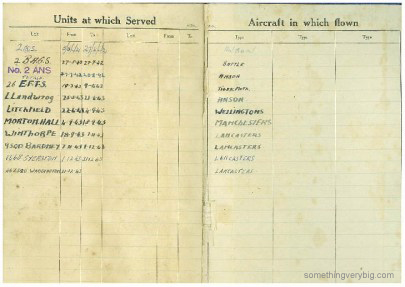
In the very back of my great uncle Jack’s wartime logbook is a list of places and dates. It records the places at which he served, from Air Observer School right through to the Squadron. Jack evidently wasn’t the world’s most fastidious record keeper because the list is missing some places that are shown on his service record, but it does list all of the airfields he was stationed at.

jacklog-postings copyThe last eight names on the list are in the UK. When I was over that side of the world in 2009 I hired a light aeroplane and a local instructor from Tatenhill Aviation and flew over four of them, plus a number of others.

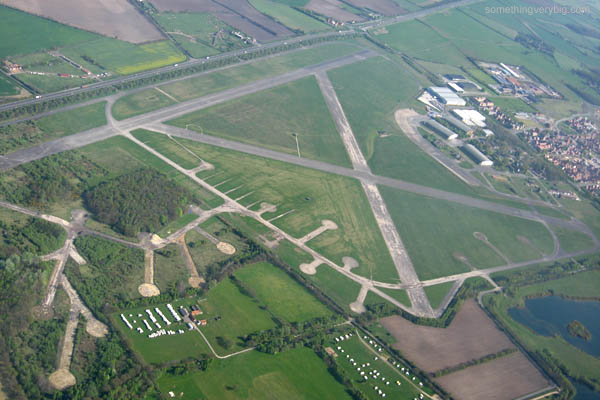
Tatenhill was a satellite airfield for 27 Operational Training Unit, RAF Lichfield. As it turns out, Lichfield itself is not very far away. Just after we took off we turned left – and there it was, less than seven miles to the south.

22APR09 064 copy

At first it took me a moment to recognise it as an airfield. Parts of a runway and a number of hangars are still extant, but on top of what used to be a runway is now a great big Tesco warehouse. The northern corner, with half a runway, some taxiways and a couple of blister hangars, is the best-preserved section of the old airfield, though now in considerable disrepair.

Morton Hall was not an airfield, though it is very close to the remains of RAF Swinderby. It became No. 5 Group Headquarters a few months later but it appears that it was a venue for lectures about security and significant physical training at the time that Jack was there (C07-014-067). It was a prison when I drove by in 2009 and is now an immigration detention centre, so no photos. On my flight however we did see Swinderby.

22APR09 013

I was quite pleased to discover what appeared to be a relatively well-preserved RAF airfield when I visited on the ground a day or so later – but just a few months later the whole site was flattened for development.

But enough of that. Onwards with the aerial tour through Jack’s logbook. Winthorpe was a Heavy Conversion Unit, where Jack and his crew got to grips with the Lancaster for the first time.

22APR09 047

One corner of the airfield is now the Newark Showgrounds, and across from those is the fantastic Newark Air Museum.  There’s very little remaining of the original airfield, and the runways, which were used for gliding until recently, are no longer fit for use. But at least one corner of the old airfield still has some sort of aviation activity taking place on it.

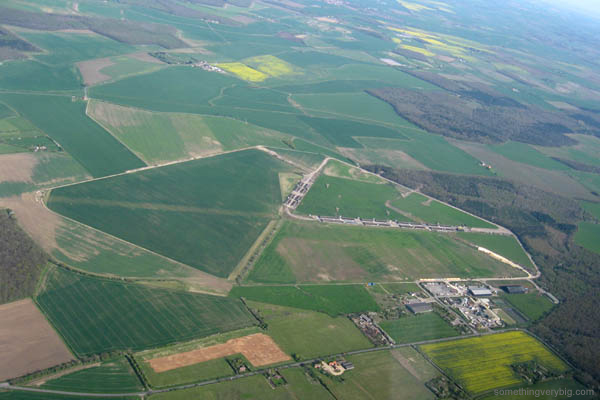
Bardney is only a few miles from Lincoln. From the air, the triangle of the runway layout is still visible, though most of the hard surface has been removed.

22APR09 029

The old airfield has reverted to the farmland it one was, with thousands of chickens now occupying sheds on what used to be the runways. Jack was only here for a few months serving on 9 Squadron, losing his pilot in a ‘second dickey trip before flying operationally himself. The crew did record some training flights from here however.

After losing their pilot Jack and (most of) his crew were posted to another Heavy Conversion Unit, this time at Syerston, where they joined up with Phil Smith. We skirted around Syerston on my flight but didn’t actually go over the top so I have no aerial photos of it – though I did visit the RAF Gliding squadron that now occupies the site on weekends.

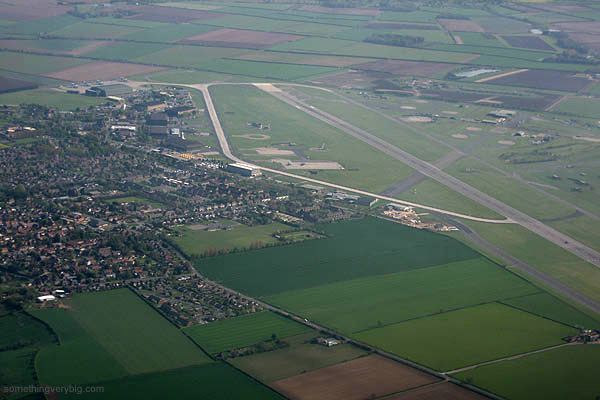
The last unit in Jack’s logbook is of course 467 Squadron at RAF Waddington. This is where, on 10 May 1944, he and his crew climbed aboard B for Baker and took off in the direction of Lille on their final flight. Waddington remains an active RAF station and retains very little of its wartime ‘feel’, though remnants of the original triangle runway layout are still used as taxiways.

22APR09 016

There were a number of other airfields that we also flew over on this trip, with names like East Kirkby, Conningsby, Metheringham, Bottesford and Tollerton. What was perhaps most telling for me, used to the wide open spaces you get flying in Australia, was how close by everything is. I logged 1.5 hours for this trip, out and back, and we flew over at least ten separate wartime airfields that I could recognise, with a good few others nearby that I couldn’t identify. It’s not hard to imagine how crews could get lost and land at the wrong airfield, particularly during the wartime blackout, and the proximity of the bases would have considerably heightened the collision risk.

Most poignant, however, was at the most easterly point of our flight, near East Kirkby. From there, the coast is about fifteen miles away. That coast line was extraordinarily significant to the aircrew of Bomber Command. On the way out, it marked the end of friendly territory – beyond it was the enemy. And on the way home some hours later, it meant they were back among friends.

© 2013 Adam Purcell
Bonus Photo Post: Bomber Command Commemorative day, Amberley, Queensland

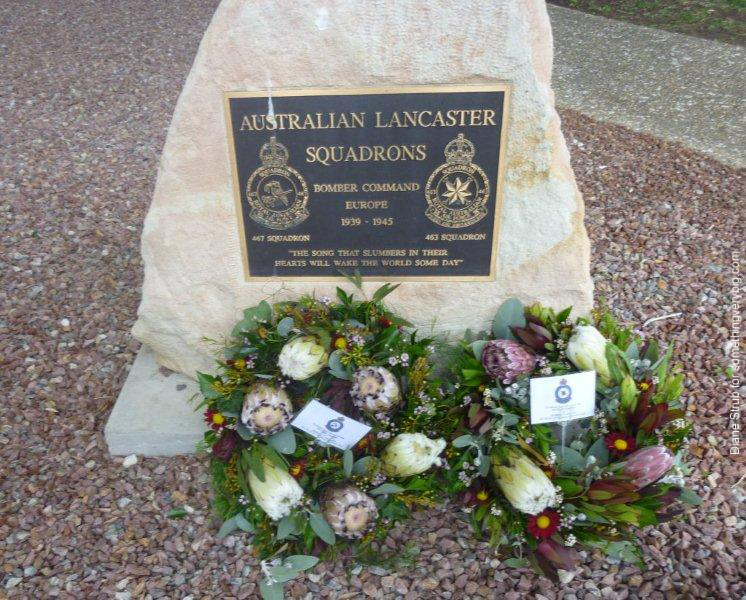
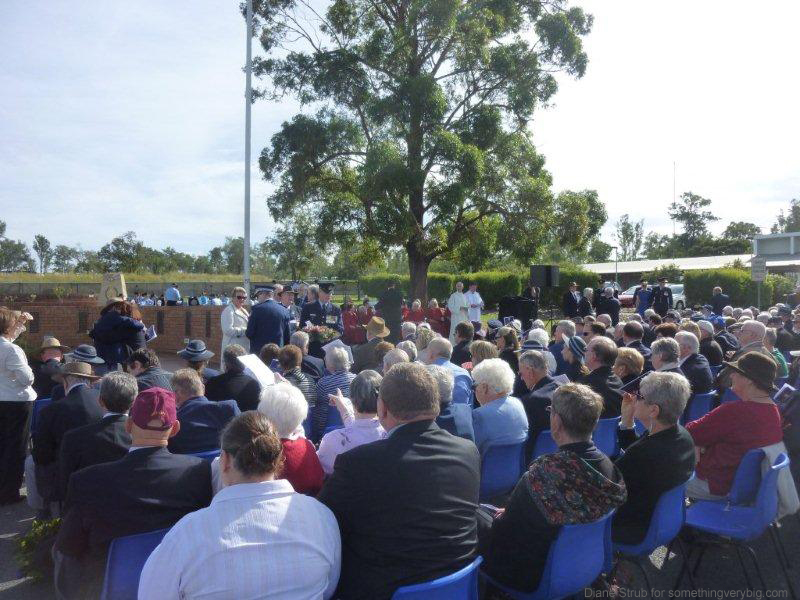
While many of us were in Canberra last weekend for the annual Commemorative Day Weekend, simultaneous events were also being held elsewhere around the country. Groups of veterans, families and interested others gathered to remember the men and the deeds of Bomber Command at ceremonies held in Sydney, Adelaide, Melbourne and Brisbane.

I had a ‘spy’ at the Brisbane event, held at RAAF Amberley (itself the site of the wartime No 3 Service Flying Training School, to which Phil Smith was posted in 1941). Diane Strub, the Honorary Secretary of the 467-463 Squadrons Association in Queensland, was there and sent me these photos:

 bcm-day-467-463-wreaths-bcm-day-amberley-2013 copy

bomber-command-veterans-bcm-day-amberley-2013 copy

the-crown-amberley-bcm-day-2013 copy

It looks like a fair-sized crowd was there, with a good number of veterans present (I counted 23 in the above photo). Everyone looks a little warmer than we were in Canberra!

Good show, Brisbane. And thanks to Diane for the photos.

Bomber Command in Canberra 2013

It was a very wet weekend in south-eastern Australia.

It rained so much in Adelaide on Friday that the automatic rain gauge at the airport gave up. 70mm fell in Melbourne on the same day. It was still raining when I walked to the train station in Sydney on my way to the airport on Sunday morning and, as we were taxying out, the heavy jets weren’t so much ‘landing’ as ‘splashing down’. We were in cloud all the way to Canberra.

Things were not looking good for the sixth annual Bomber Command Commemorative Day.

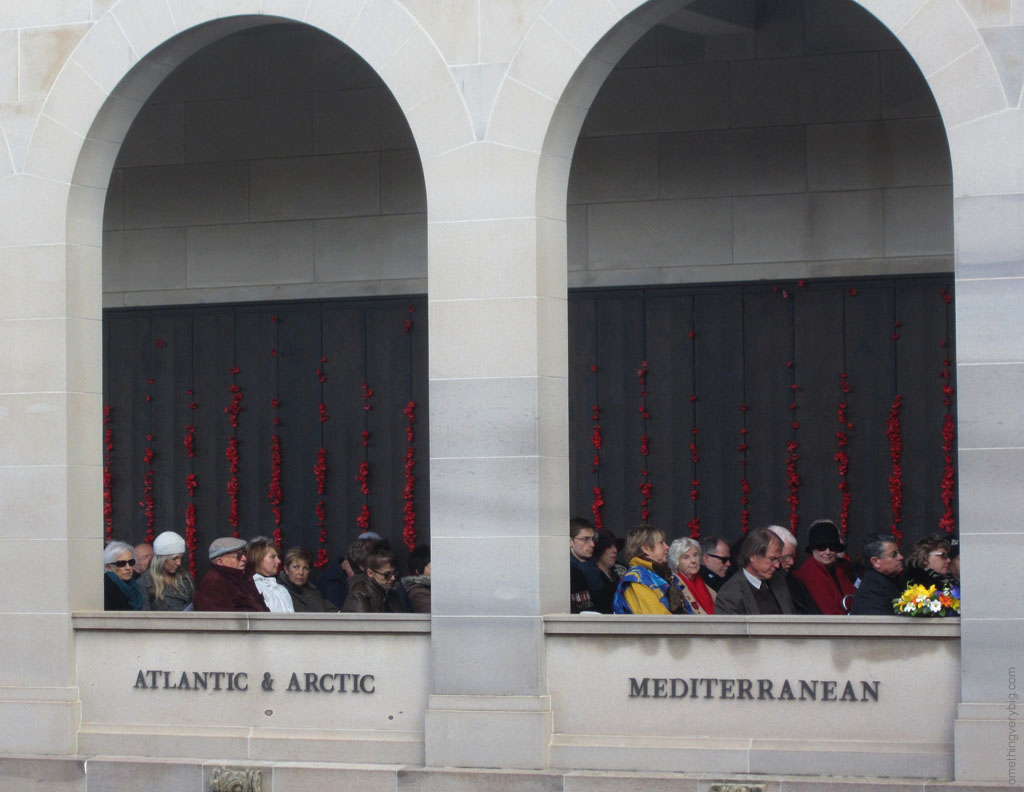
Though the tarmac was noticeably wet on arrival, the sky showed signs of clearing as I took a taxi to the Australian War Memorial. On arrival I discovered that, because the grass near the Bomber Command sculpture was still rather squelchy underfoot, the ceremony had been moved to the Commemorative Area within the War Memorial itself. As the clouds gradually moved off parts of the crowd were soon sitting in that glorious autumn sunshine for which Canberra is famous.

The Commemorative Area was a spectacular location for the ceremony.

13jun-weedingcanberra-092 copy

13jun-weedingcanberra-091 copy

The crowd was sitting underneath the thousands of names on the Roll of Honour. A statue of an airman, on the eastern side, in turn cast his bronze gaze down onto the gathered crowd. To the rear, immaculately dressed members of the current iterations of 460 and 462 Squadrons, Royal Australian Air Force, were lined up in parade order. Those veterans who could were invited into the Hall of Memory to watch and take part in the wreath-laying, at the Tomb of the Unknown Australian Soldier. As the bugler sounded the Last Post, the notes echoed off the cloisters and faded away to silence. The singing of the Australian National Anthem, with the support of the Australian Rugby Choir, was spine-tingling stuff. The ceremony was enhanced by the atmosphere of the place it was in.

13jun-weedingcanberra-099 copy
The speakers, too were excellent: in particular, former Defence Minister and Leader of the Opposition Dr Brendan Nelson who is now the Director of the Australian War Memorial. His opening address, delivered mostly without notes, was impressive. He quoted the words of Charles Bean which are scribed on the wall in the Welcome Gallery of the War Memorial:

Here is their spirit, in the heart of the land they loved; and here we guard the record which they themselves made.

Some of those who made that record, of course, were the veterans of Bomber Command.

Following the ceremony itself came an organised photo opportunity in the shadow of G for George, with almost all the veterans present. My count is 32 (including one who is not in this photo):

13jun-weedingcanberra-119 copy

And then to lunch. Once again, the networking and reunion opportunities offered at this function for someone like me in this country are second to none. Among others, I met a Mosquito navigator named Alan Beavis, and his good mate Alan Pugh, who was training at 1661 Heavy Conversion Unit (Winthorpe – Jack Purcell was there in 1943) at the end of the war. And of course I also caught up with many of the usual suspects again – Don and Ailsa McDonald, the three other Dons Southwell, Huxtable and Browning, Keith Campbell, Harry Brown and Tommy Knox (the latter commenting to me, ‘you can really see it this year… age is certainly catching up with them!’). There was some good discussion on a few potential projects for the next couple of years, much reminiscing and many stories.

The Southwells dropped me off at the airport again, and I flew home to Melbourne with a notebook full of ideas and addresses to follow up on.

Bomber Command, over the last few years, is finally beginning to see some recognition for its deeds during the Second World War, and acknowledgement of the legacy it left. This was a common theme among many of the speakers at the weekend this year. Peter Rees (who recently published Lancaster Men and is rumoured to be planning a follow-up for the next couple of years) spoke briefly at the lunch and cited this as one of his key motivations. Air Marshal Geoff Brown, current Chief of Air Force, also gave a good talk at the lunch about what today’s Air Force can learn from the bomber offensive. His main points were that a coalition of nations in a common cause is far more powerful than trying to do it alone, a reminder of the importance of close links with technological and research organisations, how vital it is to gain and maintain control of the air in a combat scenario, the continued value of electronic countermeasures and the critical importance of teamwork and people all united by a common purpose and common aims. He effectively demonstrated that, while the airmen of Bomber Command fought their battles so long ago, and while they fought a battle so unique in scale and circumstance, what they did has continued relevance in current operations – and that in that very practical way their legacy will live on.

13jun-weedingcanberra-108-copy copy

Remembering the history – the raids, the stories, the men – is of course vital. But learning from that history and applying the lessons in practical ways in modern times can also form part of the legacy of Bomber Command. It is far too late for most of those who served, but I hope that some of the veterans who were in Canberra over the weekend can take some comfort in the knowledge that this legacy is living on and will continue to do so.

© 2013 Adam Purcell

A photoset by the Australian War Memorial’s official photographer is available to view here.

Book Review: Lancaster Men: The Aussie Heroes of Bomber Command, by Peter Rees

Published in April this year, Lancaster Men: The Aussie Heroes of Bomber Command is a new book by Australian journalist and author Peter Rees. It’s one of many books by Australian authors to be published on the subject over the last few years, and I think it’s one of the better ones.

Inspired by the stories told to him by Kathie Pickerd, daughter of Ted, a 463 Squadron navigator and later one of Australia’s highest-ranking Air Force officers, Rees began interviewing a large number of Bomber Command veterans and came to realise, he says, “that history had treated them harshly. It was time for their stories to be told in their own words.” The book, then, does not claim to be a definitive account of Australia’s role in Bomber Command – the Official Histories take care of that. Instead, it’s based on personal accounts taken from interviews, transcripts and memoirs, both published and unpublished. The result is a more or less chronological account of the experiences of Australians in Bomber Command, from enlistment to operations and from the earliest bombing raids to Dresden and beyond, as seen by those who were there. Given the vast spread of the campaign, over time, over different units and over a large geographical area, this is an appropriate way to look at things, though the concentration on Australians sometimes omits the airmen of other nationalities who flew in the same crews.

Rees’ journalistic talent is evident in his vivid descriptions and the book is well-written in an engaging style. The focus on the personal shows in the way that he tends to use first names for the main ‘storytellers’ throughout his book, and in some of the stories of off-duty life in wartime England, which arguably were as much a part of the experience of Australians in Bomber Command as the operational trips themselves. He also covers some interesting ground looking at life under the bombs – notably the effects of the 22 November 1943 raid to Berlin, which caused a tiger to escape from the zoo. The beast “made its way to the Café Josty, gobbled up a pastry and promptly [fell] down dead. […] Although nearly all the major hotels had been wrecked, the premier hotel of the Third Reich, the Adlon, survived relatively intact, but it had no heating and could muster up only cold cuts and potato salad.” (p.138) Stories like these add life to the history and are an important reminder that there were indeed people in those cities too.

There is a good section putting D-Day in the context of the war in general, and Bomber Command’s operations in the context of that (Chapter 26 and on and particularly p.242-243), and a very interesting discussion of the politics between Australia and Britain when dealing with Australian bomber crews, as evidenced by a ‘manpower fiddle’ that left 463 and 467 Squadrons short of aircrew in April 1944, when the British wanted to avoid disadvantaging RAF squadrons after the Australians demanded tour-expired airmen be sent home to fly against the Japanese (p.181 and on).

And then we get to Dresden, for which Rees says the reputation of the airmen has been unfairly tarnished. He is at great pains to note that it was not Arthur Harris who chose Dresden as a target (despite his copping much of the blame in the aftermath of the war), but Churchill (p.342). Rees’ sympathies clearly lie with the airmen but he gives, in my view, a reasonably balanced examination of the politics of the raid, explaining the origins of the inflated casualty figures and looking at the Dresden Stadt Museum to see current German views on the issue. The airmen who took part, he argues, “have had to wear the blame for the destruction wrought on the city for far too long due to their political leaders distancing themselves from responsibility.” (p. 356)

The only problem with Lancaster Men is that Rees is a journalist, not necessarily a historian. As a result historical rigour is not necessarily always present and he tends to take quotes directly from secondary sources without checking the original documents for accuracy. For example, he quotes the 467 Squadron Operational Record Book but cites another book (Dan Conway’s The Trenches in the Sky) as its source. He also takes figures for aircraft losses on the 10 May 1944 Lille raid directly from Rollo Kingsford-Smith’s memoirs without cross-checking with the ORBs… and so perpetuates the error that seven aircraft were lost on that trip from 463 and 467 Squadrons (it was only six – the mistake probably has its genesis in Nobby Blundell’s Squadron histories). He gets the figure right on a later page but the contradiction hasn’t raised any flags in the editing phase. Errors like these are an occupational hazard when dealing with personal accounts of history, particularly when those accounts were created upwards of seventy years after the events described, so it would have been nice to see a little more cross-referencing occurring.

But otherwise Peter Rees has painted a vivid picture of life as an Australian in Bomber Command. Lancaster Men is well-written, engaging, shocking, exciting, funny and sad, and well worth a read.

Lancaster Men (ISBN 9781741752076) is published by Allen & Unwin, and retails for AU$32.99.

An interview with Peter Rees, as broadcast on Radio National on ANZAC Day 2013, is available for download here.

(c) 2013 Adam Purcell
Event: Bomber Command Commemoration Weekend, Canberra, 1-2 June 2013

Details have just been mailed out for people interested in attending the sixth annual Bomber Command Commemorative Day weekend in Canberra, 1-2 June 2013.

There are three parts to this weekend:

  • The Ceremony

Grass area in front of the Bomber Command Memorial, in the grounds of the Australian War Memorial

Sunday 2 June 2013

Ceremony begins 11am (please be seated by 10.50am).

Attending the Ceremony is free but if you intend to be there please RSVP to Don Southwell, details below, by 27 May.

  • The Meet & Greet Function

ANZAC Hall, Australian War Memorial (under the shadow of G for George)

6-8pm Saturday 1 June 2013

Canapes, beer, wine, soft drink all included, $50 per head.

  • The Luncheon

Rydges Lakeside Hotel, Canberra

12pm for 1pm lunch, until 4pm, Sunday 2 June 2013

Two-course sit-down lunch included – note a cash bar will be in operation on the day. $60 per head.

To book for the Meet and Greet and/or the Luncheon, please contact Don Southwell on (02) 9499 6515 or southwelldonald@gmail.com.

RSVP for the Meet and Greet and/or Luncheon closes 17 May 2013.

RSVP for the Ceremony closes 27 May 2013.

This is by far the largest gathering of Bomber Command veterans, relatives, friends, family and other interested parties in Australia and is always a good event. Highly recommended!